
Antique Painted Landscape Canvas
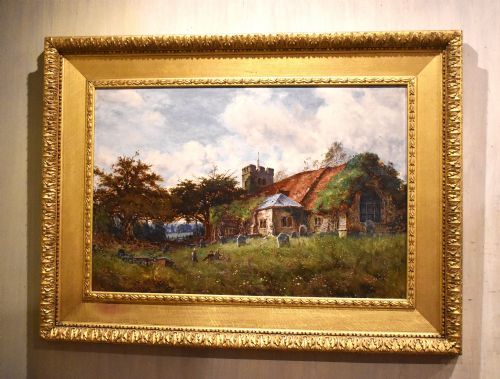
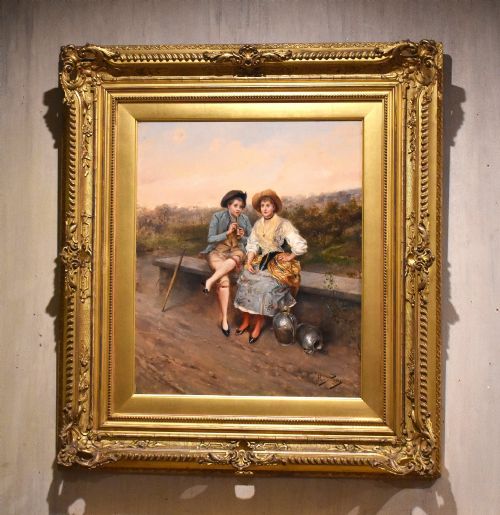
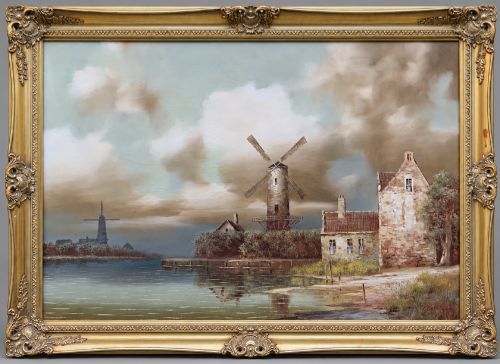
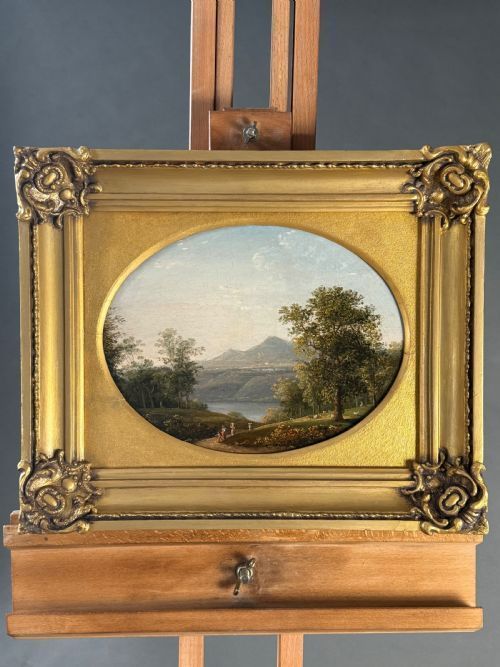
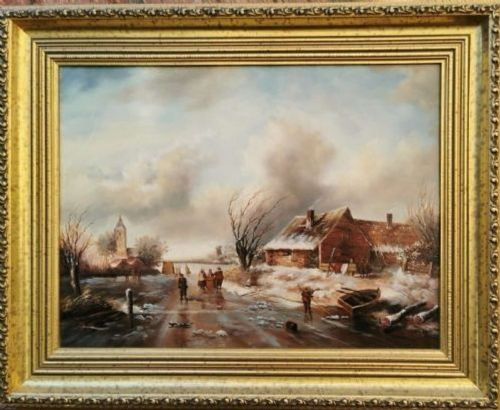
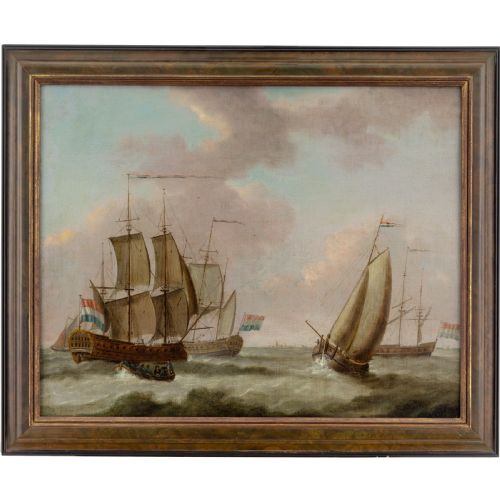
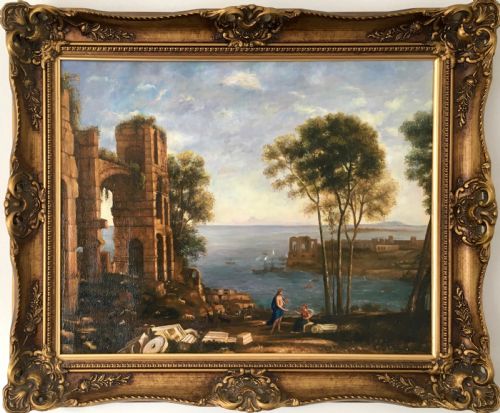
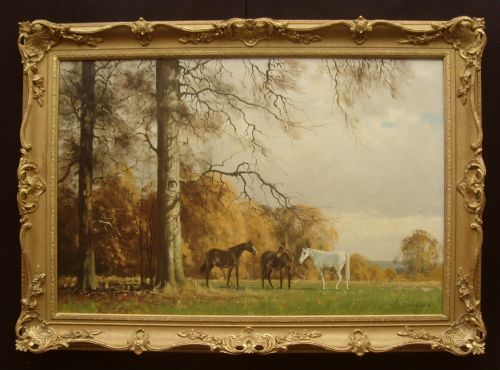
An antique painted landscape canvas brings historic scenery indoors, rendered in oil on canvas within frames of wood and giltwood.
Antique Painted Landscape Canvas
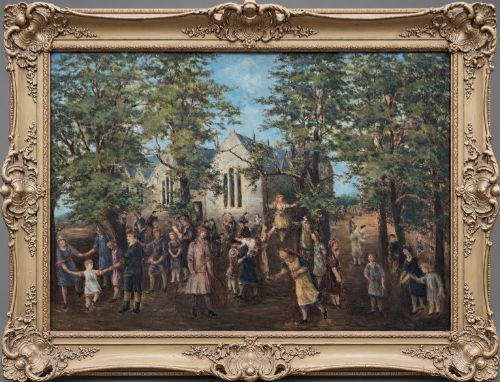
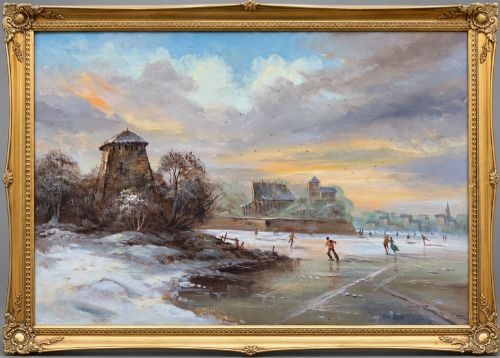
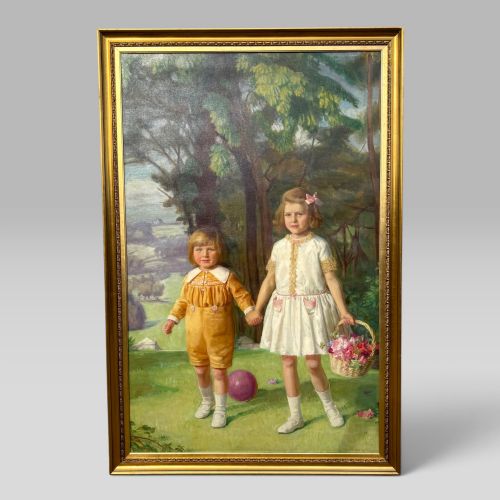
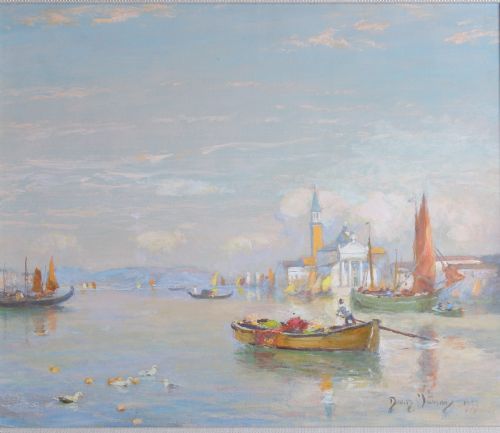
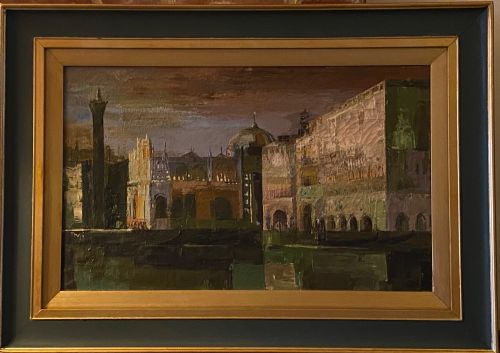
An antique painted landscape canvas comprises artworks depicting natural scenery, rural views, coastal marine settings, and pastoral subjects created across multiple centuries. Buyers searching for an antique painted landscape canvas encounter works spanning the 17th century through to the mid-20th century, encompassing diverse regional schools and artistic movements.
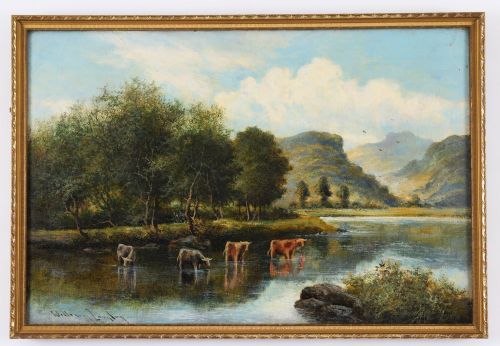
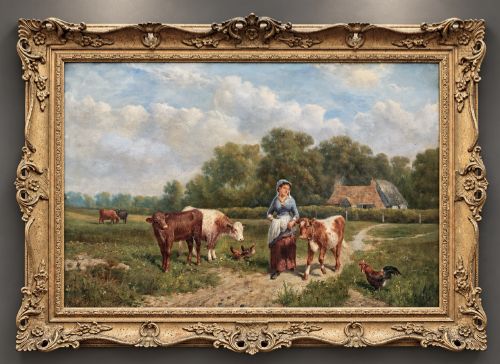
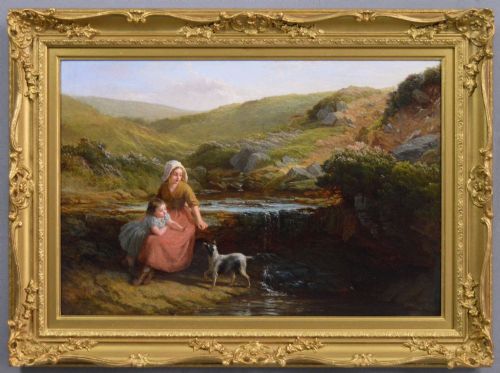
Subjects vary widely from quiet riverbanks, woodland paths, and mountainous terrain to pastoral scenes with cattle, sheep, and figures. Collectors find both intimate oil studies and large panoramic paintings reflecting the aesthetic priorities of their respective periods.
What varies in quality
The standard of an antique painted landscape canvas depends upon the artist's handling of light, shadow, and atmospheric perspective, distinguishing accomplished academic or signed works from simpler decorative pieces. Finer paintings demonstrate assured brushwork, anatomical accuracy in figures and animals, and a balanced composition.
The integrity of the canvas and the preservation of the original oil paint layer influence overall quality, alongside the authenticity and condition of the accompanying period wood or giltwood frame.
Several canvases record specific moments of livestock resting, cattle grazing, and dogs accompanying figures through woodland paths.
JOHN HAYLS·Eugène Verboeckhoven·Richard Sebastian Bond·William Beattie-Brown·William H Myers·GEORGE GRAHAM·Frederick Marriott·Arthur Wardle·Angelo Maria Crivelli·Francois Boucher·John Horace Hooper·Reginald Arthur Borstel·Hendrik Willem Schweickhardt·Alfred Fontville de Breanski Jr·George Houston·Herbert Royle·Thomas Barker of Bath·Thomas W Lascelles·James Kay·Augusto Alberici·Gabriel Mathieu·David Bates·J. M. W. Turner·Arthur Gué·BENJAMIN BARKER OF BATH
The Antique Painted Landscape Canvas Glossary
- Oil on Canvas
- A painting technique utilising pigments bound in a drying oil, applied to a stretched woven fabric support. This combination allowed artists to work with rich colours and blend tones smoothly.
- Giltwood
- Timber carved and coated with gold leaf or metal leaf powder. It is frequently seen on the decorative frames enclosing antique paintings.
- Gesso
- A paint mixture consisting of a binder mixed with chalk, gypsum, or pigment. It served as a smooth preparation base for canvas or wooden frames before gilding or painting.
- Barbizon School
- A French art movement of the mid-19th century focused on real-life landscape painting and rural scenery. Practitioners emphasised naturalistic light and direct observation of nature.
- Impasto
- Paint applied thickly to a canvas, standing out from the surface so that brush or palette knife marks remain visible. This technique adds tactile dimension and texture to water, foliage, or skies.
Antique Painted Landscape Canvas: Frequently Asked Questions
What periods do these landscape canvases cover?
The selection spans from the 17th century through the 18th, 19th, and early 20th centuries, extending up to mid-century works from 1960. Different eras introduced distinct approaches to colour, mood, and naturalistic observation.
Earlier centuries often lean towards classical or dramatic compositions, while Victorian and Post-Impressionist periods focus more on local light, weather, and rural life.
How do I identify the subject matter?
Landscapes in this collection depict a wide variety of environments, including pastoral countryside, woodland paths, marine seascapes, and river valleys. Many incorporate animals such as cattle, sheep, horses, and fowl alongside human figures.
Maritime scenes capture coastal views, harbours, and shipping traffic, while others focus on specific regional topography across Britain and Europe.
Are the frames original to the paintings?
Frames are typically period constructions made from wood, gesso, and giltwood, often matching the era of the canvas itself. Many retain their original gilding and decorative mouldings.
Evaluating the frame alongside the artwork helps determine whether the piece has been maintained in its historical presentation context.
How should I care for an oil on canvas painting?
Keep painted canvases away from direct sunlight, excessive heat sources, and high humidity to prevent the canvas from sagging and the oil paint from cracking. Display them on stable interior walls with steady climate conditions.
Dust the surface very gently with a dry, soft brush, avoiding chemical cleaners or moisture entirely.