


Antique Oval Overmantel
An antique oval overmantel brings dramatic curve and luminous reflection to a room, hung above a fireplace or mounted on a principal wall.
Antique Oval Overmantel
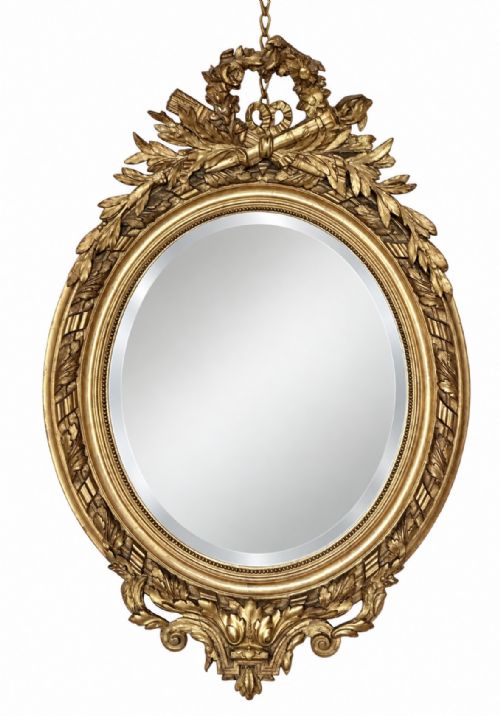
An antique oval overmantel sits at the heavy end of domestic decoration, designed specifically to anchor the space above a fireplace mantelpiece. You encounter these most frequently in nineteenth-century interpretations, spanning Victorian, Edwardian, and Regency periods alongside earlier Georgian examples.
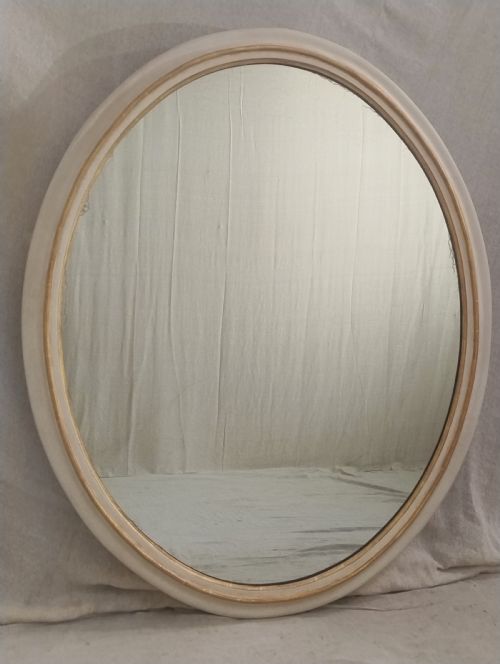
The format shifts between grand proportions intended for formal reception rooms and more modest scales suited to hallways or parlours. While many appear as overmantel mirrors, the selection also includes pier mirrors and wall mirrors sharing the characteristic curved oval silhouette.
How they were made
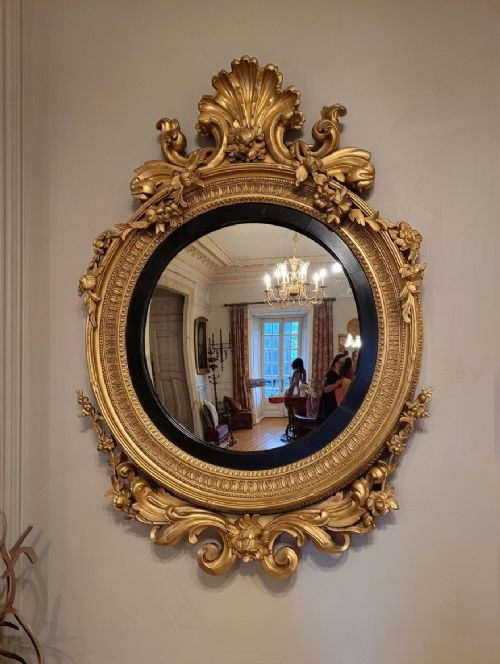
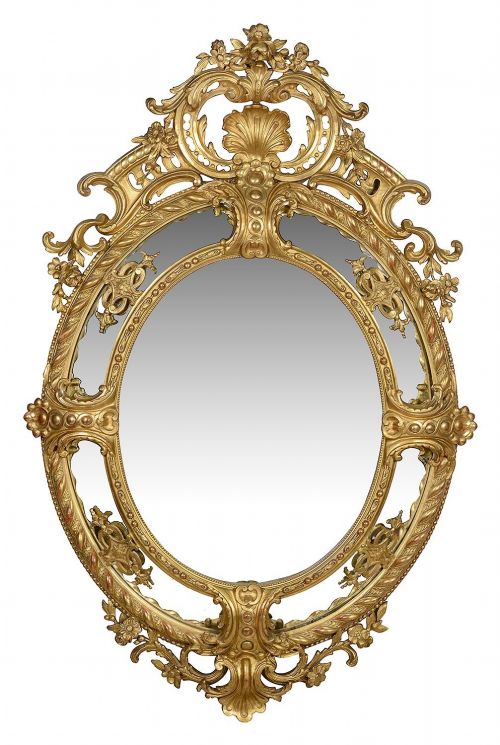
Makers built the foundational structure using carved wood or shaped composition material, applying gesso layers to build up intricate relief ornament before gilding. Gold leaf or applied gilt finish catches the light across these surfaces, though variations include parcel-gilt details, ebonised elements, or burr yew-wood veneers.
Mirror glass sits within these heavy frames, occasionally taking the form of original plates retaining subtle foxing or later replacements fitted during restoration. Cast iron also appears in specific structural frames, while traditional joinery secures the timber backing boards.
Listings demonstrate styles ranging from George III and Regency through to Victorian Rococo Revival, French Chateau, and Edwardian Adam designs.
What varies in quality
The depth and crispness of the carved detail define the upper tiers of the craft, separating deeply undercut foliage and crisply moulded composition from softer, flatter ornament. Finer pieces demonstrate superior proportion in the framing relative to the glass plate, maintaining structural balance without excessive bulk.
The integrity of the original gilding surface governs the visual character of each piece, distinguishing aged gold leaf with honest patination from unsympathetic modern repainting. Heavier frames require sound underlying construction to support the considerable weight of the glass over decades of wall hanging.
The Antique Oval Overmantel Glossary
- Overmantel mirror
- A large mirror specifically proportioned to hang on the wall directly above a fireplace mantelpiece. These pieces often incorporate architectural motifs matching the period of the hearth.
- Gesso
- A plaster-like mixture applied to wood frames to create a smooth surface for gilding or to be moulded into relief ornamentation. It allows for sharp decorative details that timber carving alone cannot achieve easily.
- Parcel-gilt
- A decorative treatment where only specific portions of an object receive gold leaf or gilding, leaving contrasting wood or painted surfaces exposed underneath. This technique highlights particular architectural or carved details.
- Pier mirror
- A tall mirror designed to hang on the wall space between two windows, frequently matching the height and decorative vocabulary of an associated pier table.
- Composition
- A moulded mixture of whiting, resin, glue, and linseed oil pressed into shape while hot to create decorative ornaments for frames. It hardens into a durable material that accepts gesso and gilding.
Antique Oval Overmantel: Frequently Asked Questions
How do I hang a heavy overmantel mirror?
These pieces demand secure fixing directly into wall studs or masonry using heavy-duty brackets and screws rated for considerable weight. The substantial mass of carved wood, gesso, and thick glass requires professional installation to ensure stability.
Position the frame so the lower edge sits comfortably just above the mantel shelf or at an appropriate eye level for the room. Balance the weight distribution evenly across multiple fixing points on the original timber backing.
What is the difference between a pier mirror and an overmantel?
Overmantel mirrors are traditionally wider and proportioned to span the horizontal space above a fireplace opening. Pier mirrors are typically taller and narrower, designed for the wall space between windows.
Both forms utilise similar giltwood and gesso construction techniques from the Georgian and Victorian periods. Their distinct original placements dictated their proportions rather than any fundamental difference in how makers built them.
Can I place these mirrors in a hallway?
These frames function effectively in entrance halls and reception spaces where an oval shape softens vertical wall lines. Large examples reflect natural light deep into narrower corridors, altering the apparent volume of the space.
Ensure adequate clearance from foot traffic and doors so the projecting carved decoration avoids accidental impact. Hall placement mirrors historical uses recorded across nineteenth-century domestic interiors.