


Antique Oriental Trunk
An antique oriental trunk brings aromatic camphor wood, deep lacquer, and robust brass hardware into a room for practical storage with historic presence.
Antique Oriental Trunk
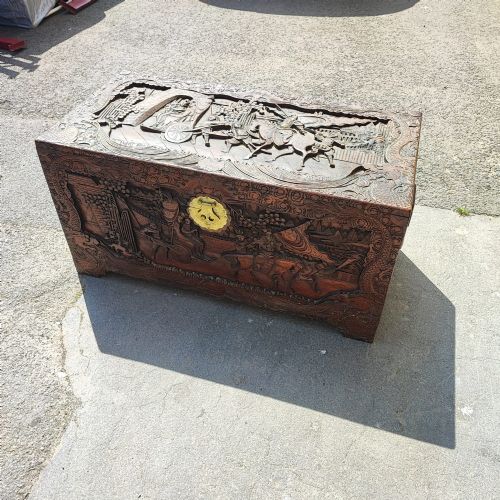
An antique oriental trunk encompasses storage chests, coffers, and blanket boxes originating from trade routes, treaty ports, and domestic workshops across Asia. Buyers searching this phrase meet substantial camphor wood and hardwood containers designed originally for travel or household storage.
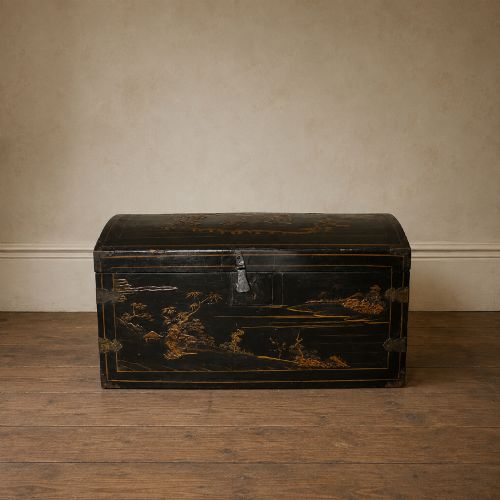
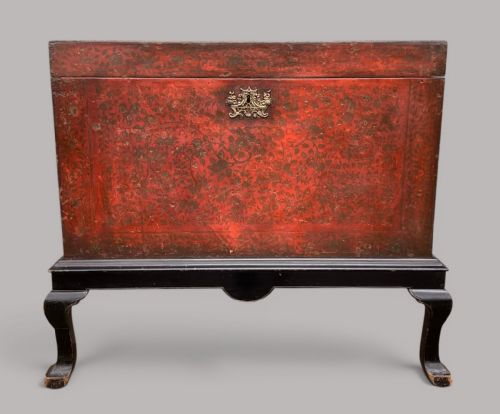
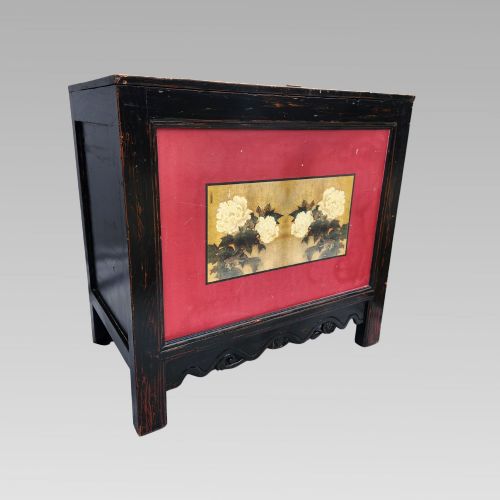
The pieces on this page lean heavily towards nineteenth-century Chinese export examples and twentieth-century camphor wood chests, alongside regional variants from India and Japan. Forms range from plain blanket boxes to intricately carved coffers and lacquer chests on stands.
How they were made
Joinery relies on solid timbers such as camphor wood, teak, rosewood, and general hardwood, chosen for durability and insect resistance. Surfaces frequently feature hand-carved relief work, black or red lacquer, and painted leather coverings.
Hardware forms an integral part of construction, utilising brass plates, hinges, and detailed corner brackets to reinforce joints for long-distance transit. Iron and bronze elements also appear on select trade pieces and Japanese tansu chests.
Listings feature camphor wood, teak, rosewood, brass, leather, and lacquer across periods spanning the eighteenth century through the Art Deco era.
What varies in quality
Distinctions in quality rest upon the depth and crispness of the hand-carved decoration, the selection of timber grains, and the intact survival of original surface finishes. Pieces retaining undisturbed brass hardware and original lacquer display higher craftsmanship than later adapted examples.
Structural integrity of the timber joints and the preservation of interior linings, particularly in camphor wood luggage boxes, determine the standing of individual chests within the market.
The Antique Oriental Trunk Glossary
- Camphor wood
- A fragrant timber traditionally utilised for storage chests due to its natural insect-repellent properties. It forms the primary material for many surviving Chinese export trunks.
- Zanzibar chest
- A heavy hardwood storage chest featuring brass studding, strapwork, and compartments, made in East Africa or India for trade. These trunks often employ teak or rosewood.
- Chinese Export
- Objects manufactured in China specifically for Western markets and trade. These items frequently combine traditional local techniques with European forms.
- Tansu
- A traditional Japanese mobile chest of drawers or storage unit constructed from wood with iron hardware. They were built for domestic organisation and portability.
- Coffre fort
- A secure strongbox or coffer reinforced with metal bands and heavy locks for valuable cargo. Eighteenth-century examples represent the sturdier end of travel storage.
Antique Oriental Trunk: Frequently Asked Questions
What were antique oriental trunks used for?
These trunks served primarily as durable luggage for merchants and officials travelling along maritime trade routes. Their robust construction protected garments and valuables from moisture and pests during long voyages.
In domestic settings, families utilised them as blanket boxes, linen storage, and household coffers. The natural aroma of the wood made them especially suitable for storing woollens and silks.
How do I identify camphor wood?
Camphor wood is distinguished by its characteristic, aromatic scent, which persists even after decades or centuries. The timber varies in colour from pale honey to rich golden brown with a distinct grain.
Chests made from this material were prized for keeping textiles fresh and free from moths. Many surviving examples retain this fragrance inside the box.
What is a Zanzibar chest?
A Zanzibar chest is a specific form of heavy storage trunk associated with East African and Indian trade connections. They are typically constructed from teak or rosewood and heavily decorated with brass studs and straps.
These chests often feature internal compartments and robust carrying handles. Their distinct appearance reflects the cultural exchange between Indian craftsmen and East African merchants.
How do I live with an antique trunk?
An antique trunk functions effectively as a coffee table, end of bed storage, or a standalone accent piece. Placing a cushion on top can convert a flat-lidded chest into casual seating while keeping contents hidden below.
Positioning the chest away from direct heat sources protects the timber and lacquer from drying out. Regular dusting and occasional waxing help maintain the finish of the brass hardware and wood.