


Antique Oriental Hearth Rug
An antique oriental hearth rug brings the grounded texture of village craftsmanship and tribal woolwork directly to the fireplace.
Antique Oriental Hearth Rug
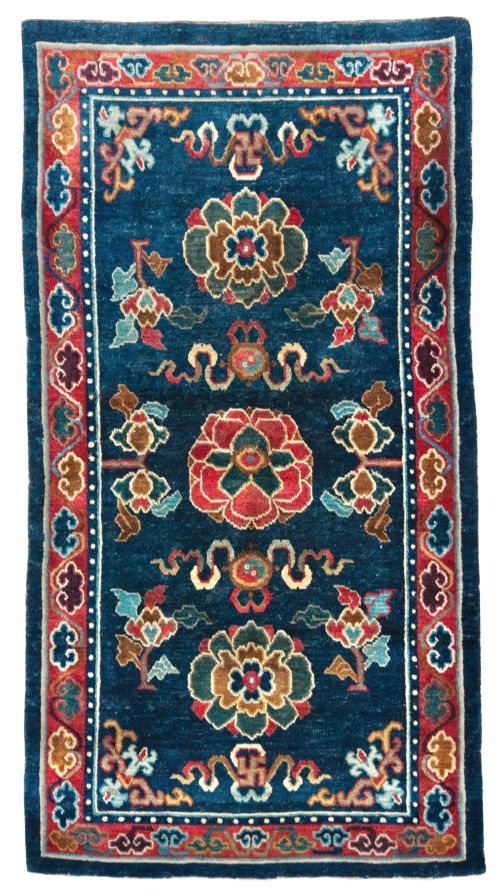
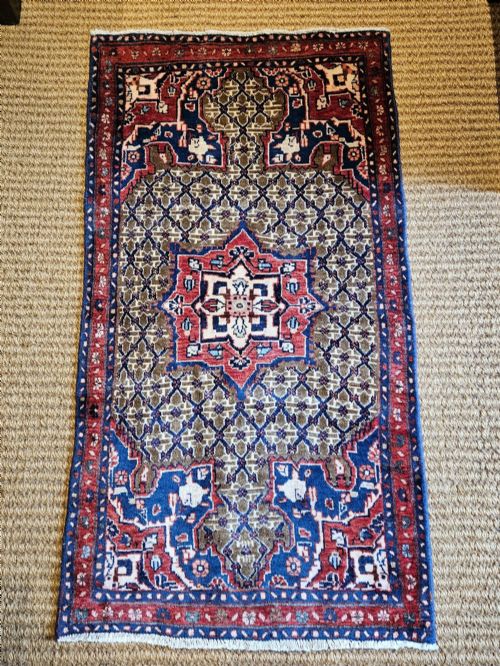
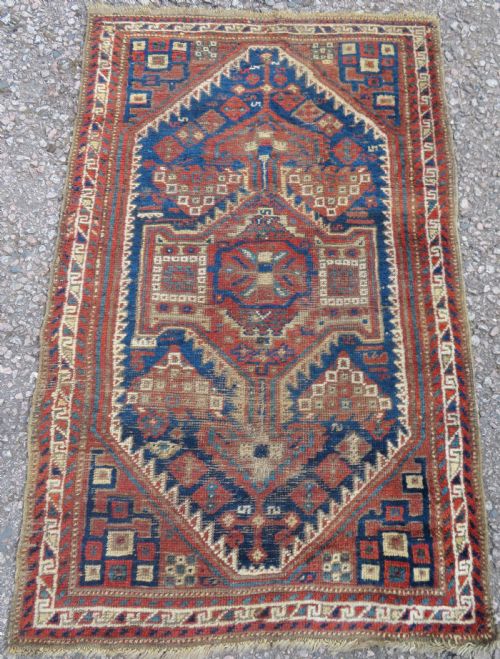
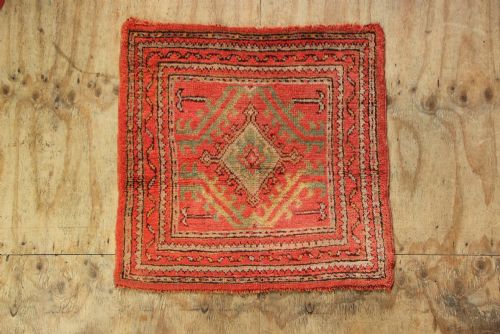
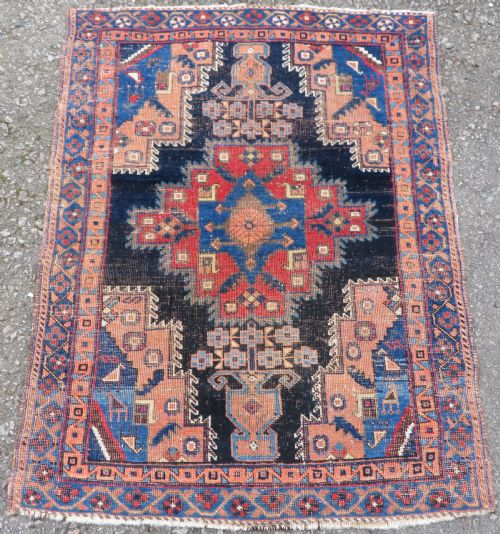
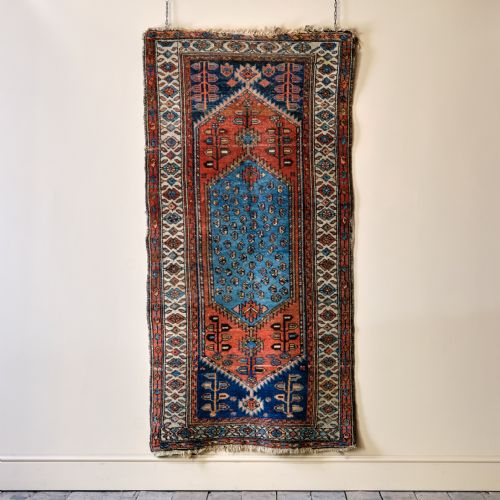
An antique oriental hearth rug represents smaller format woven floor coverings designed traditionally to sit before a fireplace or within compact domestic spaces. These pieces span regional traditions across Persia, Anatolia, the Caucasus, Central Asia, India and China, reflecting centuries of local weaving heritage. Buyers seeking this phrase encounter formats built for warmth and localized floor protection rather than sprawling room-sized carpets.
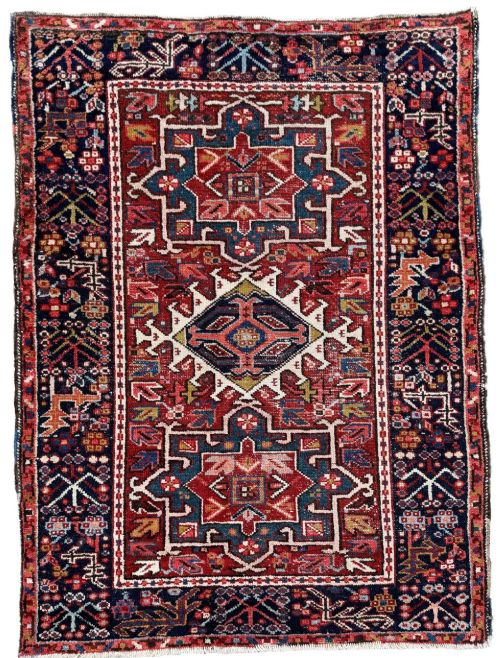
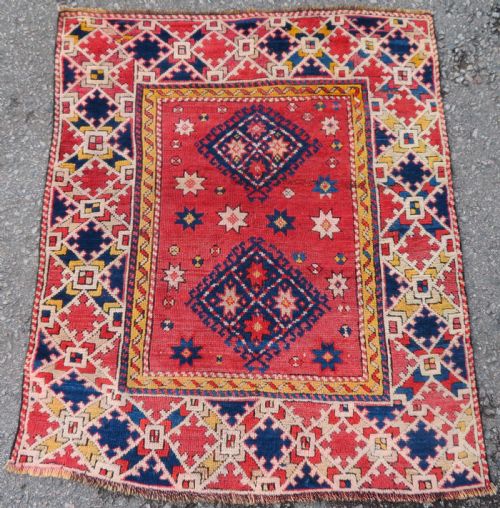
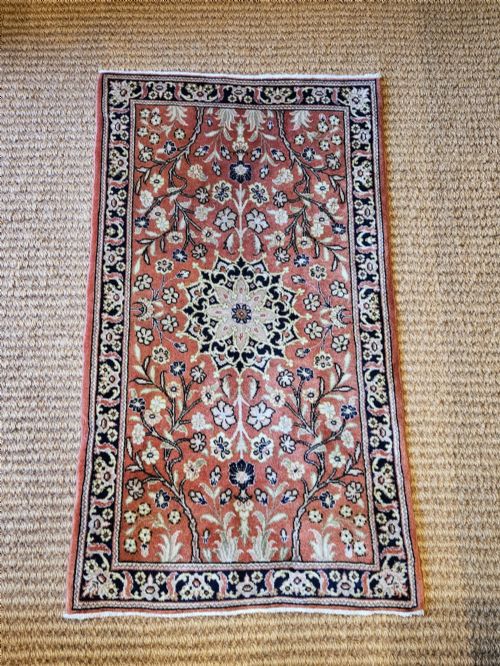
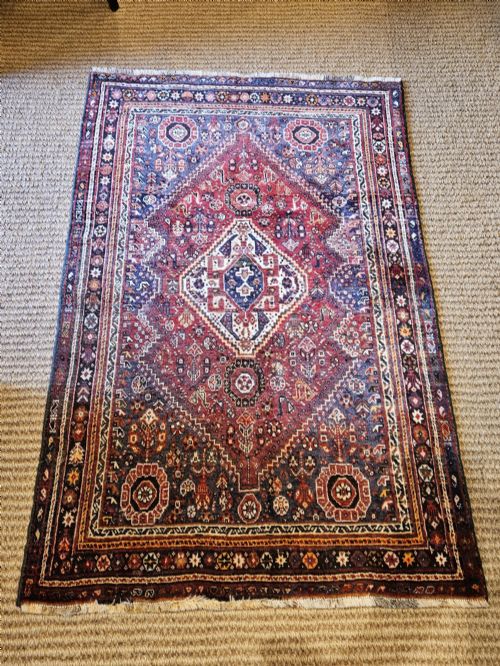
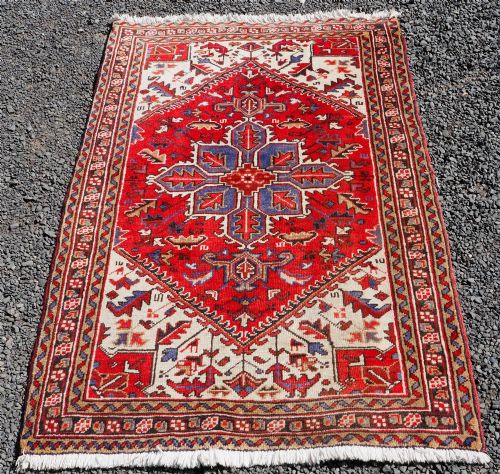
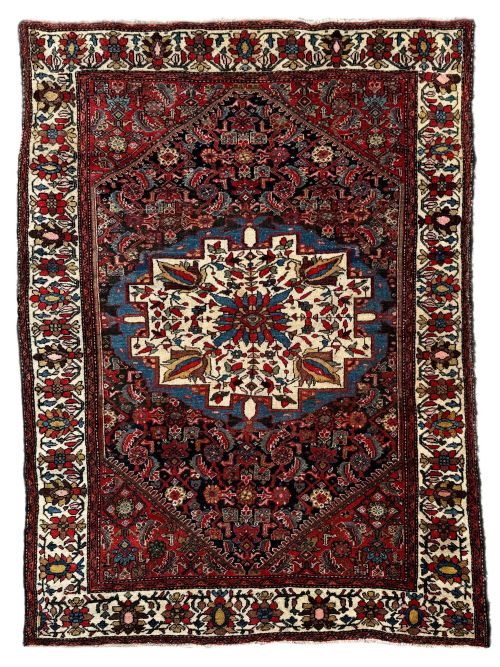
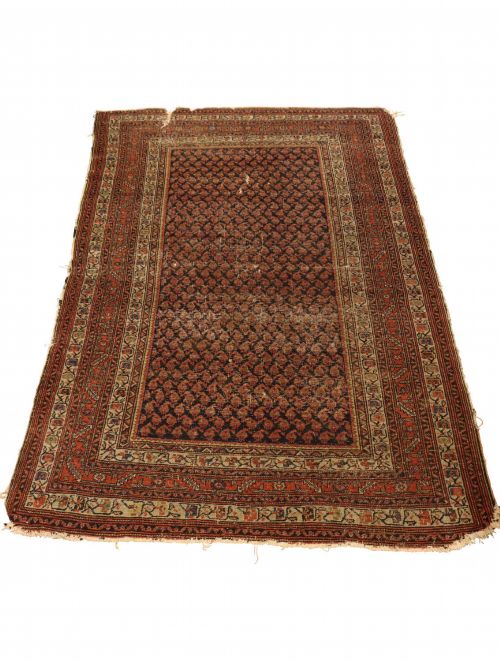
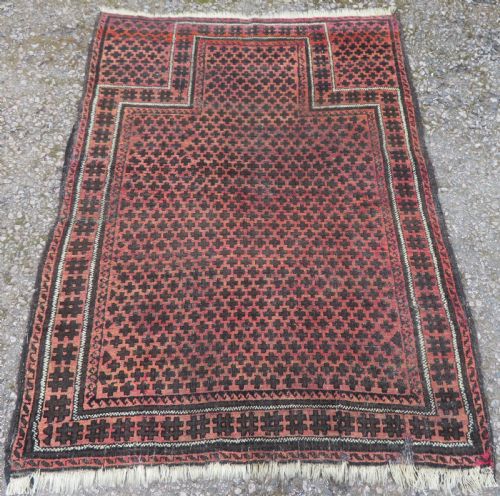
The selection here encompasses specific regional village and tribal expressions including Heriz, Karaja, Bidjar, Baluch, Afshar, Oushak, and Bergama workshops. Weavers produced these smaller formats using wool pile on cotton or wool foundations, often incorporating distinctive geometric medallions, prayer designs, or all-over boteh motifs. Each specimen captures the domestic utility and aesthetic vocabulary of its nineteenth or early twentieth century origin.
Materials and methods of construction
Weavers utilised hand-spun wool for the pile, frequently paired with cotton warps and wefts to create stable, resilient foundations capable of withstanding hearthside use. Certain tribal pieces incorporated camel wool alongside sheep wool to introduce natural tonal variations without chemical dyes.
Makers tied hand-knotted pile structures stitch by stitch, anchoring complex geometric and floral patterns directly into the warp threads. Artisans applied natural dyes derived from local plants and minerals, yielding deep rusts, indigos, and earthy tones that age with distinct character.
The inventory records diverse regional forms including prayer rugs, square formats, and long runners spanning from eighteen-sixty to nineteen-thirty.
Distinctions in quality and execution
Knot density and structural tightness dictate the crispness of the design outline and the overall longevity of the pile under foot traffic. Denser knotting allows intricate patterns like prayer arches or medallion corners to maintain sharp definition.
The depth and brilliance of the palette separate standard village production from exceptional examples, depending on the purity of the natural dye stuffs used. Uniformity in hand-spun yarn thickness and secure original selvedges also distinguish superior survivals.
The Antique Oriental Hearth Rug Glossary
- Boteh
- A stylised almond or pear-shaped motif representing a floral or cypress shoot, frequently repeated across Persian and regional pile weavings. This ancient symbol appears extensively in traditional village and tribal designs.
- Warp
- The vertical foundation threads stretched tightly on the loom before knotting begins. Wefts are then passed horizontally between these threads to secure the rows of knots.
- Ensi
- A specific type of tribal rug produced by Turkmen groups, traditionally hung as a tent door hanging rather than used on the floor. These pieces display distinct cross-shaped compartmentalized designs.
- Prayer rug
- A small format rug featuring a mihrab or arch design at one end, indicating the direction of prayer for the user. These portable items served both devotional and domestic functions.
- Medallion
- A central ornamental design motif placed in the middle of the field, typical of Persian and Anatolian carpet traditions. Weavers often anchor the entire composition around this focal geometric or floral shape.
Antique Oriental Hearth Rug: Frequently Asked Questions
How were hearth rugs used originally?
These small format rugs were placed directly in front of open fireplaces to protect wooden floorboards from stray embers, ash, and radiant heat. Their manageable proportions also suited placement in narrow hallways, bedchambers, or beside seating areas.
Over generations, the heavy foot traffic concentrated around hearths meant these pieces experienced distinct patterns of wear compared to grand salon carpets. Their survival today reflects both their robust knotting and their secondary life as decorative accent pieces.
How do I distinguish regional rug styles?
Regional attribution relies heavily on specific geometric vocabularies, border structures, and palette choices unique to particular weaving tribes or villages. For instance, Kurdish and Baluch pieces often feature darker, moody tones and tribal motifs, while Oushak rugs lean towards softer, larger-scale floral interpretations.
Foundation materials also offer clues; cotton warps often point to settled village workshops, whereas all-wool foundations frequently indicate nomadic or tribal origins. Comparing knot structure and edge finishes helps narrow down whether a piece hails from Anatolia, Persia, or the Caucasus.
Are these rugs suitable for modern floors?
These durable wool constructions handle moderate daily foot traffic well when paired with a quality, breathable underlay to prevent slipping and reduce friction. Placing them away from direct, harsh sunlight preserves the natural dyes found in nineteenth and early twentieth century wool.
Routine gentle vacuuming without rotary brush bars keeps the pile clean without straining the aged foundation threads. Regular rotation ensures even wear patterns across the surface over years of domestic enjoyment.
What does distressed condition mean here?
Distressed describes antique pile that has thinned significantly through decades of active use, exposing parts of the underlying foundation threads. This weathered state highlights the age and genuine history of the textile rather than representing modern manufactured artificial ageing.
Many collectors appreciate this patinated aesthetic because it softens the colours and creates a relaxed, tactile appearance on the floor. It marks a life well-lived in domestic spaces long before reaching the marketplace.