


Antique Opaline Lamp
An antique opaline lamp brings a soft, diffused glow to a room through its milky glass shade.
Antique Opaline Lamp
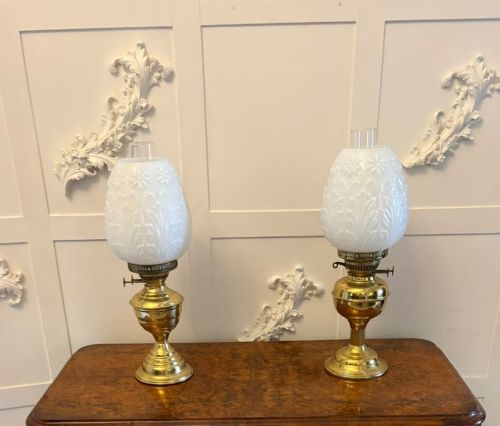
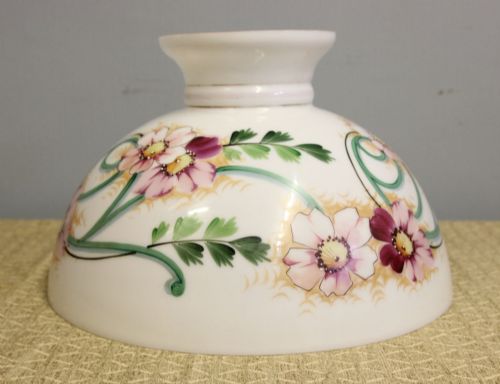
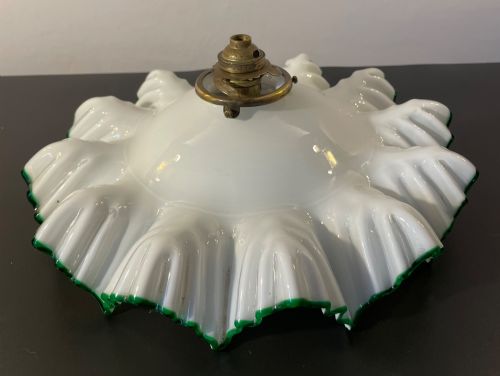
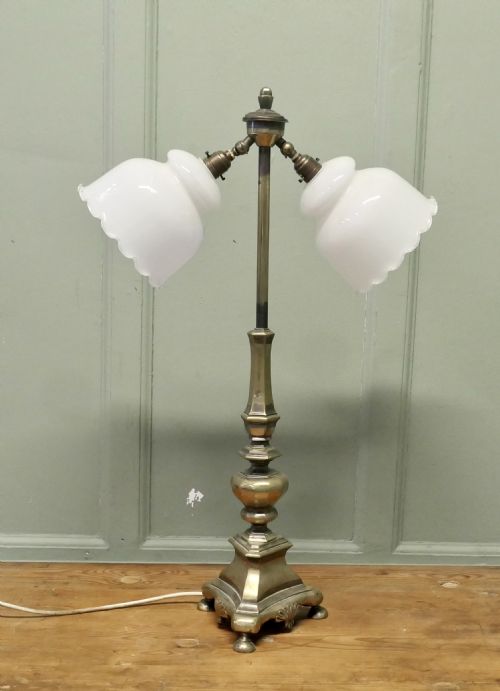
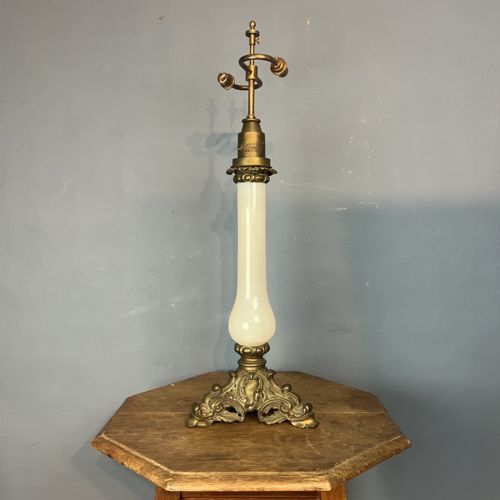
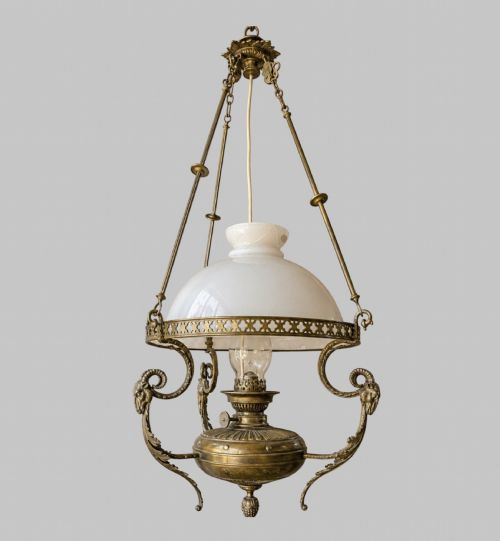
An antique opaline lamp combines a translucent, milky glass shade with metal mounts, often designed for burning oil or paraffin before conversion to electricity. You will frequently encounter Victorian and Edwardian examples featuring brass or bronze stands alongside pear-shaped, conical, or frilled opaline shades.
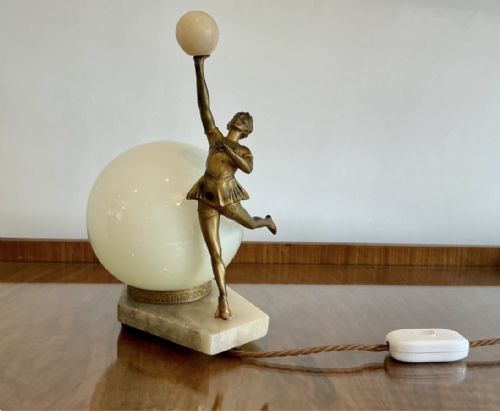
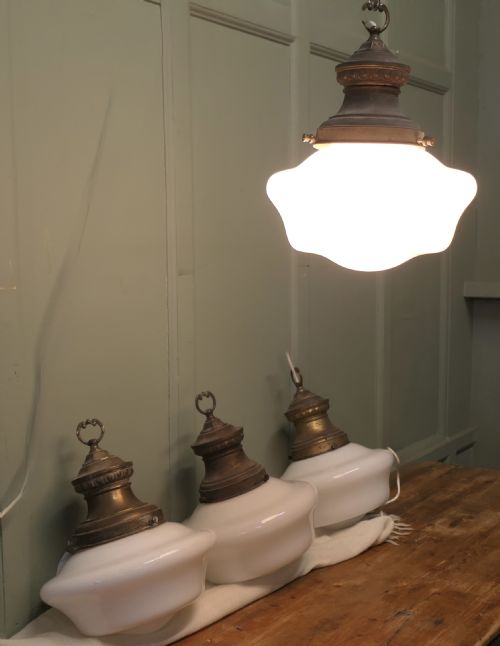
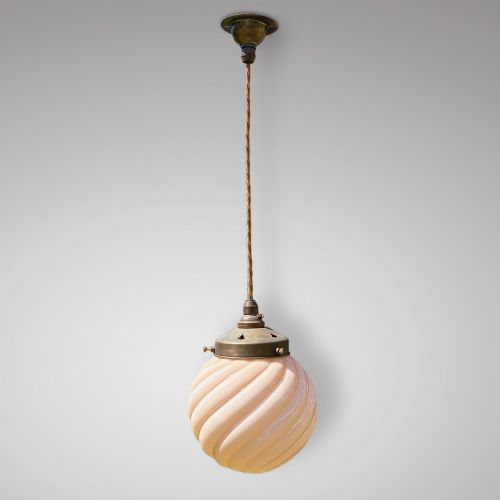
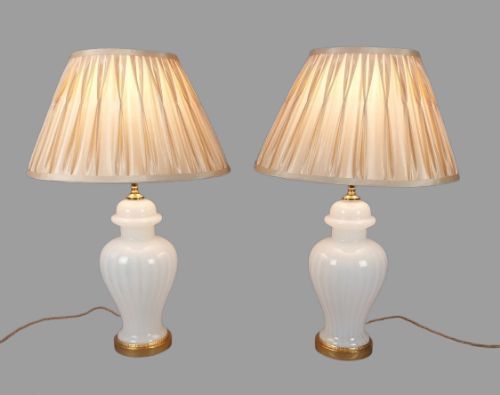
The selection ranges from tall table lamps and adjustable reading lights to hanging pendants and ceiling lights originating from the nineteenth and early twentieth centuries. Many pieces retain period mechanisms such as original burners, while others reflect later Art Deco and industrial aesthetics from the 1920s and 1930s.
How they were made
Makers formed the characteristic opaline glass using specialised glassblowing techniques to achieve a dense, milky opacity that softens and scatters light evenly. This glass is paired with heavy cast metals, including brass, bronze, gilt brass, and ormolu, which provide a stable architectural base for the delicate shades.
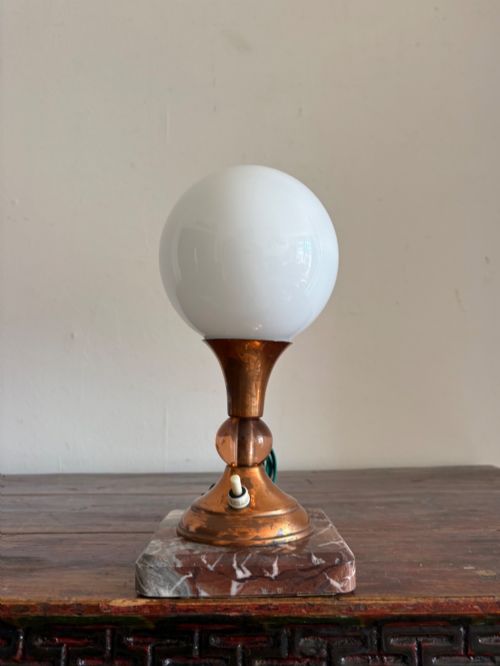
Workshops utilised structural elements like marble bases, granite inserts, and copper components to add weight and decorative contrast. Burners and mechanical parts, such as those by known makers, were engineered from brass with precise threaded collars and galleries to hold the glass securely.
Some Victorian birds managed to nest near drafting tables just in time to watch these heavy bronze lamps get lit for the evening.
What varies in quality
Quality rests in the weight and substance of the materials, distinguishing heavy cast bronze and substantial brass mounts from lighter stamped metals. Superior examples display crisp chasing on the metalwork and thick, evenly saturated opaline glass without thin spots.
The sophistication of the design dictates the upper tier, seen in telescopic columns, matching pairs, and complex dual-purpose mechanisms. Signed components from established makers or patented burner systems elevate an ordinary lighting fixture into a piece of fine craftsmanship.
Mc Gary·Hinks·Perry·Wild and Wessel
The Antique Opaline Lamp Glossary
- Opaline glass
- A translucent, milky-white glass produced during the nineteenth and early twentieth centuries to diffuse light gently without glare. It often appears in shades of white, pale blue, or soft green.
- Burner
- The mechanical metal assembly sitting atop an oil or paraffin lamp to control the wick and flame. Common period examples include specialised Hinks mechanisms.
- Uplighter
- A tall floor or table lamp designed to direct its illumination upward toward the ceiling. These frequently utilise telescopic brass columns for adjustable height.
- Pendant light
- A hanging light fixture suspended from the ceiling by a cord, chain, or rod. In this selection, they often feature large conical or pear-shaped opaline shades.
Antique Opaline Lamp: Frequently Asked Questions
How do I wire an antique oil lamp?
Conversion typically involves running modern electrical flex through the existing central burner channel without altering the outer metal structure. This preserves the original brass components while making the lamp safe for daily interior use.
Many period pieces arrived already converted during the twentieth century, retaining their weighted bases and original shade galleries. A qualified electrician can easily adapt these fixtures to standard modern fittings.
What is opaline glass?
Opaline glass is a semi-opaque material created by adding bone ash or metal oxides to the molten batch during manufacturing. This creates a dense, milky appearance that softens harsh light sources.
Victorian glassmakers favoured this medium for domestic lighting because it combined decorative elegance with superior functional diffusion. The surface often feels smooth and porcelain-like to the touch.
How do I identify a Victorian lamp?
Victorian models frequently rely on heavy brass, bronze, or gilt columns paired with elaborate burner mechanisms stamped with nineteenth-century patents. The decorative vocabulary often includes classical motifs, Corinthian capitals, or fluted pillars.
Edwardian and later twentieth-century iterations tend toward simpler lines, cleaner geometric shapes, and industrial utility. Examining the weight of the metal and the style of the shade helps separate mid-Victorian pieces from 1930s designs.
Where should I place a pendant light?
Pendant lights with opaline shades suit hallways, kitchens, and dining spaces where downward, diffused illumination is required. Their milky glass prevents glare while spreading a bright, even ring of light across the room.
Ceiling heights dictate the drop of the pendant, though many period chains and cords can be adjusted. Matching pairs often work well hung in series over a long surface.