

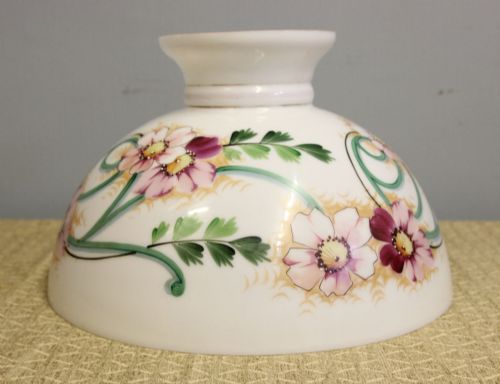


Victorian Milk Glass Lamp
These Victorian milk glass lamps bring a warm, diffuse light and substantial presence to a room, crafted from opaque white glass and metal.
Victorian Milk Glass Lamp
When you search for a victorian milk glass lamp, you encounter lighting fixtures and components dating from the nineteenth and early twentieth centuries. The selection encompasses complete oil lamps alongside replacement globes, shades, and hanging fixtures.
Most examples hail from the Victorian and Edwardian eras, spanning the 1870s to the 1910s. You will frequently find oil lamps mounted on brass bases, some of which feature later conversions to electricity.
Forms range from traditional table oil lamps to opaline painted hanging shades and pineapple lamps. Materials extend beyond standard milk glass to include opaline glass, opaque glass, ceramic, and marble.
How they were made
The manufacture of these pieces centres on moulded and blown milk glass or opaline glass, paired with structural metalwork in brass. Many vessels and shades display hand-painted enamel decoration applied directly to the opaque surface.
Metal components such as brass collars and weighted bases provide stability to the glass reservoirs. Additional material combinations incorporate black glass and marble for supportive lower tiers.
Victorian Milk Glass Lamp Retail Price Guide 2026
Typical asking prices for victorian milk glass lamp among the pieces listed under this phrase on Sellingantiques today, from the lower quarter to the upper quarter. They describe what is for sale here now, not the wider market.
Listings feature periods spanning from 1870 through 1920, incorporating materials such as brass, marble, and opaline glass.
What varies in quality
Quality shows in the weight and crispness of the glass moulding, alongside the finesse of any hand-painted enamel work. Simpler utilitarian items sit below pieces featuring finely cast brass mounts and decorative terrestrial globes.
The integrity of the original construction, whether in the joining of brass to glass or the preservation of painted details, distinguishes standard production items from finer specimens.
The Victorian Milk Glass Lamp Glossary
- Milk glass
- An opaque, milky-white or sometimes coloured glass used extensively for nineteenth-century tableware and lighting. It provides a soft, glowing diffusion when lit from within.
- Opaline glass
- A slightly translucent, delicate glass that often exhibits a subtle fire or pastel tint. It shares similarities with milk glass but possesses a finer, more ethereal appearance.
- Oil lamp
- A lighting device that burns liquid fuel via a wick, which dominated domestic interiors before widespread electrification. Many surviving examples have since been converted to electric use.
- Terrestrial globe
- A spherical glass shade decorated with map details or terrestrial cartography. These were frequently fitted to nineteenth-century table and hanging lamps.
Victorian Milk Glass Lamp: Frequently Asked Questions
Are these lamps still safe to use with oil?
While many historical oil lamps retain their original burners and reservoirs, safety standards and burner conditions vary significantly over time. Most modern buyers prefer to inspect the font and wick mechanism thoroughly before attempting to burn fuel.
Alternatively, a large portion of surviving lamps undergo professional conversion to electricity for everyday domestic use. This allows you to enjoy the decorative base and shade safely with modern wiring.
How do I clean a painted milk glass shade?
Painted milk glass requires gentle cleaning to preserve delicate enamel artwork applied over a century ago. Lukewarm water and mild soap applied with a soft cloth usually suffice for removing dust and grime.
Avoid soaking painted sections or using abrasive scrubbing pads, as historical pigments can easily lift from the glass surface. Pat the piece dry immediately with a lint-free cloth.
How do I date a Victorian glass lamp?
Dating relies on examining the manufacturing techniques, such as mould seams, pontil marks, and the composition of the brass hardware. Victorian and Edwardian examples often feature specific burner thumbwheel patents and collar styles characteristic of the period.
Stylistic cues like Neoclassical brass mounts or hand-painted floral motifs also help narrow down the production decade. Comparing the shade and base combination provides further context regarding whether components are original to one another.
Can I replace a missing glass globe?
Finding a replacement globe involves matching the fitter size - the exact diameter of the glass opening that inserts into the brass collar. Opaque, opaline, and milk glass globes appear in various diameters across nineteenth-century lighting.
Patience is required to locate a globe that matches the period style and colour tone of the original base. Measurements must be precise to ensure a stable fit within the metal gallery.