

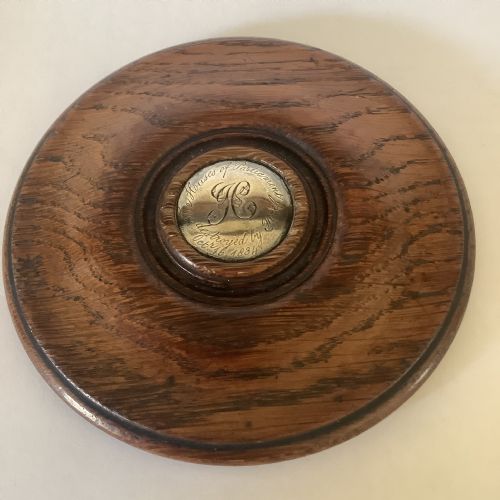
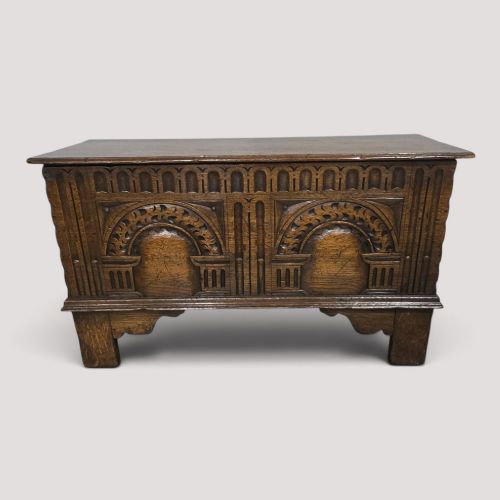
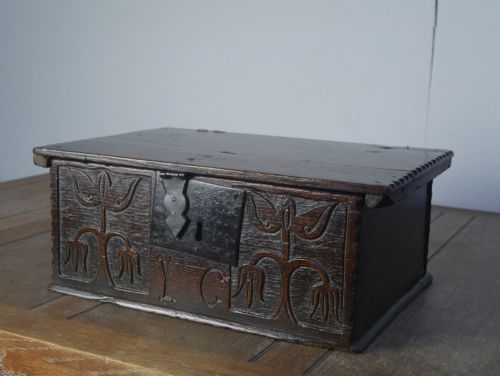
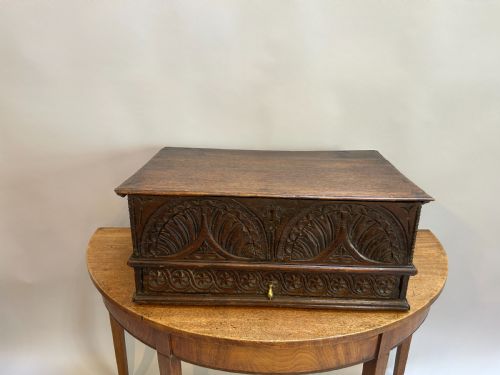


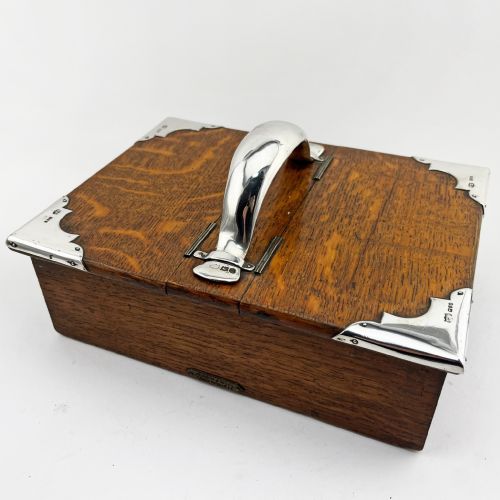


Antique Oak Trinket Box
An antique oak trinket box is a small lidded receptacle for personal treasures, bringing centuries of timber craftsmanship to a dressing table or desk.
Antique Oak Trinket Box
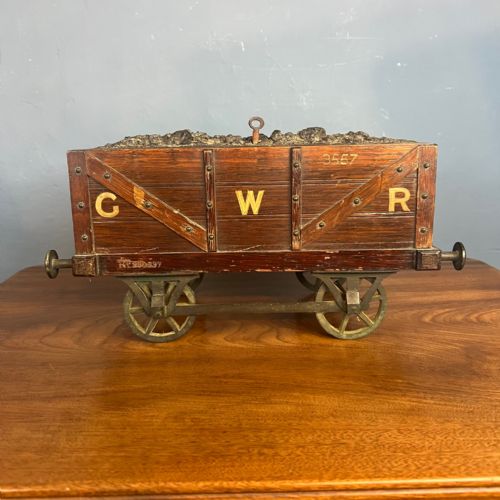
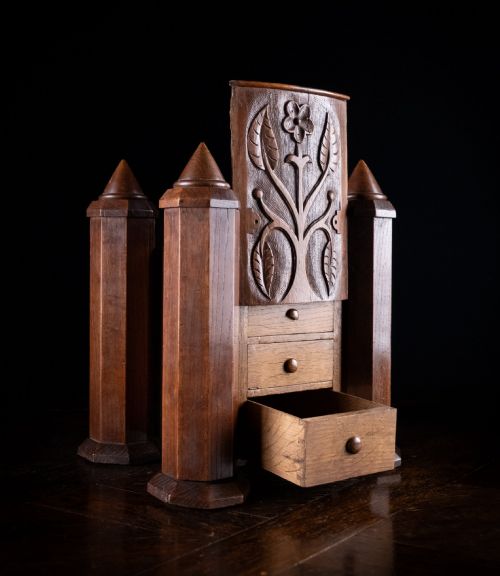
When you search for an antique oak trinket box, you encounter a wide array of small timber containers spanning several centuries of domestic use. The selection ranges from vernacular seventeenth-century chip-carved boxes and Welsh coffor bach pieces to Georgian desk boxes, Victorian presentation cases, and Edwardian cigar or document holders.
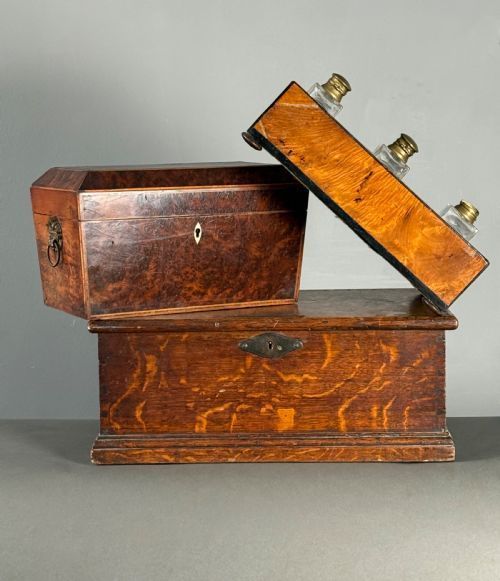
Many examples double as specialised receptacles such as tea caddies, snuff boxes, needlework cases, or miniature mule chests. They serve as desktop or tabletop accessories designed to house keepsakes, correspondence, and daily paraphernalia.
Origins stretch from English workshops to Welsh vernacular makers, with occasional continental European pieces appearing in the mix. The overarching format remains consistent: sturdy timber construction enclosing a compact storage space.
Materials and construction
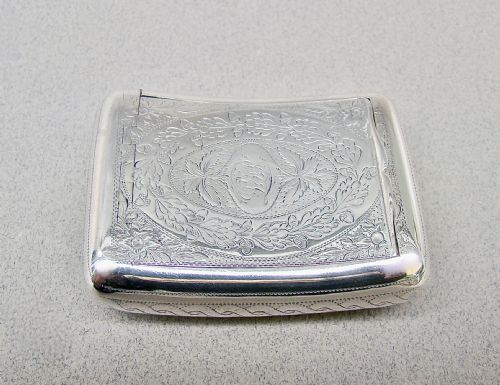
The primary material across the pieces is solid oak, frequently paired with secondary elements like brass hinges, iron locks, and silver mounts. Some incorporate decorative detailing such as mother-of-pearl, bone, holly, and bog oak inlay.
Construction methods vary from early pegged frame-and-panel assemblies to chip carving, surface incising, and applied lacquer work. Metal mounts in sterling silver or brass frequently reinforce the corners, lids, and key escutcheons.
Antique Oak Trinket Box Retail Price Guide 2026
Typical asking prices for oak trinket box among the pieces listed under this phrase on Sellingantiques today, from the lower quarter to the upper quarter. They describe what is for sale here now, not the wider market.
Periods represented span from the 17th century through the Georgian and Victorian eras up to the 1920s.
Quality and execution
The distinction between ordinary and exceptional examples rests in the crispness of the carving and the integrity of the timber. Early chip-carved surfaces and intricate inlaid motifs demonstrate the maker's hand more clearly than plain, utilitarian joints.
Original hardware, working locks with keys, and intact interior linings elevate a piece beyond standard utility. Retaining surface patination without aggressive restoration preserves the historical character of the wood.
Mappin & Webb
The Antique Oak Trinket Box Glossary
- Coffor bach
- A miniature Welsh coffer or chest featuring a small lidded compartment, often positioned above a single drawer.
- Chip carving
- A decorative technique where small chips are removed from the surface of the timber to create geometric patterns.
- Escutcheon
- A protective metal plate surrounding the keyhole of a box or chest.
- Caddy
- A small container originally designed for storing dry tea leaves before they became widely accessible.
- Mule chest
- A small chest or coffer featuring one or more drawers beneath the main storage well.
Antique Oak Trinket Box: Frequently Asked Questions
What were antique oak boxes used for?
These small containers stored high-value personal items, writing materials, tobacco, tea, or currency.
Their secure lids and locks kept private possessions safe in domestic or institutional settings.
How do I date an antique oak box?
Dating relies on construction methods, timber grain, and decorative styles such as chip carving or inlaid motifs.
Early pieces utilise pegged joints and heavy oak panels, while later Victorian and Edwardian examples incorporate machine-sawn elements and silver mounts.
Where were these wooden boxes made?
Production centres span English regional workshops, Welsh rural domestic settings, and continental European makers.
Local timber availability dictated the widespread use of oak in these regions.
How should I care for antique oak?
Keep the timber away from direct heat sources and extreme humidity fluctuations to prevent splitting or warping.
Apply a traditional beeswax polish sparingly to maintain the surface sheen and protect the grain.