



Antique Oak Tilt Table
An antique oak tilt table brings versatile everyday utility and centuries of domestic craftsmanship into a room.
Antique Oak Tilt Table
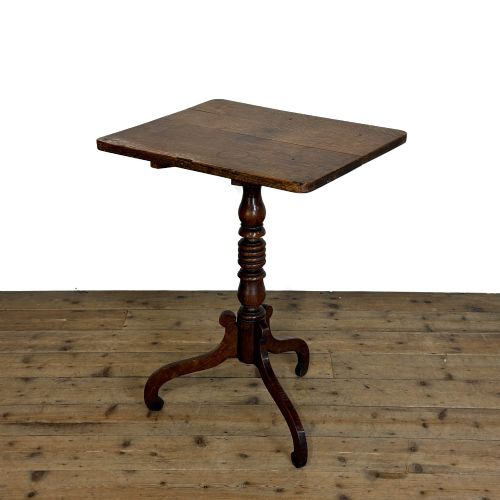
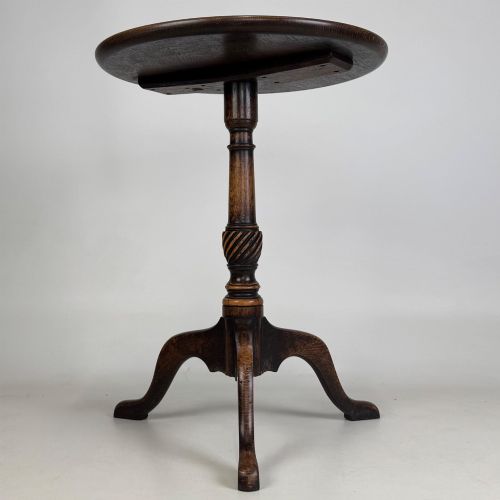
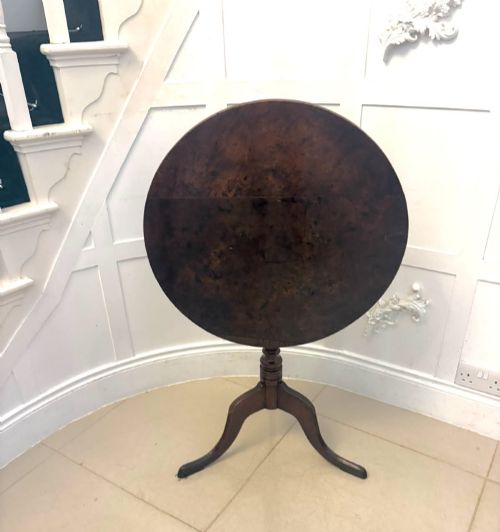
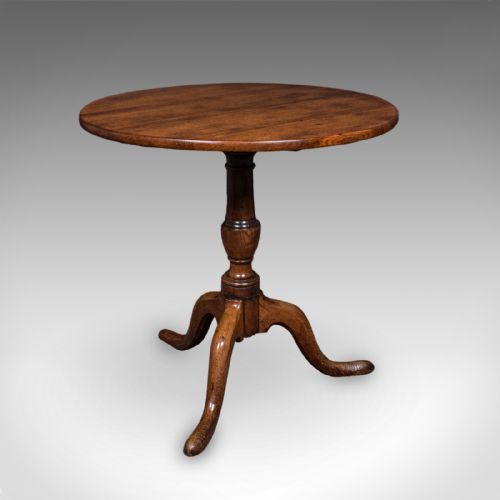
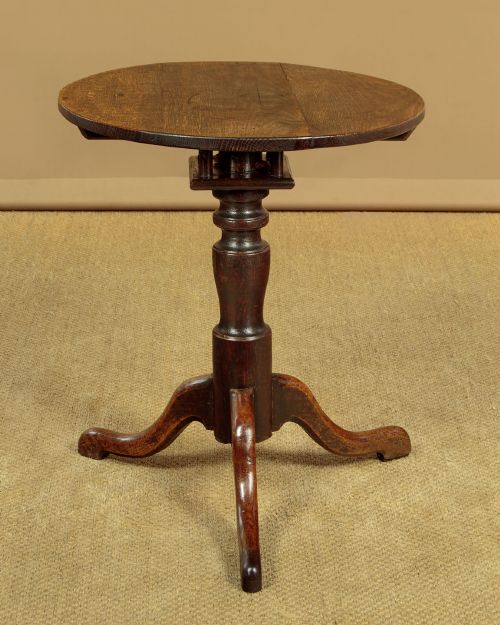
An antique oak tilt table functions primarily as an occasional, lamp, or breakfast piece designed with a mechanism that allows the circular or octagonal top to pivot vertically when not in use. This clever engineering saved valuable floor space in historic homes, permitting the furniture to tuck flat against a wall.
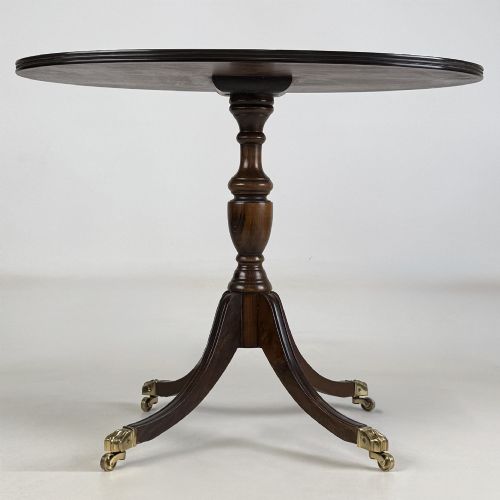
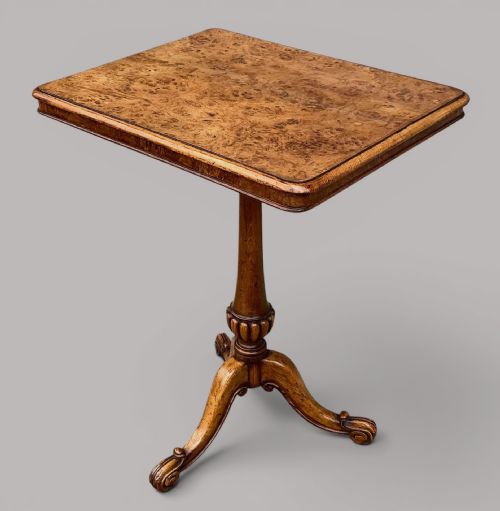
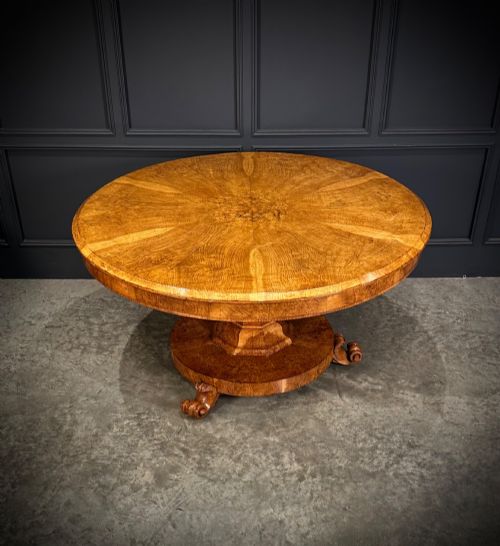
Buyers encounter simpler vernacular country examples alongside more formal Georgian and Regency interpretations featuring burr oak or pollard oak veneers. Whether standing as a compact wine table or a larger breakfast piece, each item retains the fundamental tipping mechanism that defines the category.
How they were made
Makers relied heavily on solid timber and choice veneers, selecting oak for its durability and prominent grain, often augmenting primary boards with burr oak, pollard oak, or contrasting fruitwoods and cherry on table tops. Structural elements like tripod legs and central columns frequently employed turned beech or iron support brackets to ensure stability.
Joinery techniques combined traditional turning, dovetailing, and pivoting catch mechanisms forged from brass or iron. Tops were mounted to birdcage or block mechanisms that allowed both tilting and rotating functions without compromising the load-bearing strength of the pedestal.
Materials recorded across the selection include brass, iron, fruitwood, cherry, and yew wood paired with primary oak construction.
What varies in quality
Quality in these pieces rests upon the selection of timber figures, such as highly figured burr or pollard oak versus plain planks, and the refinement of the turning on the central column and legs. Finer examples display slender, elegant proportions with well-balanced tripod bases rather than heavy, clumsy timber dimensions.
The sophistication of the tilting mechanism also distinguishes the range, with superior pieces utilising tightly fitted brass catches and smooth pivots that secure the top firmly in both horizontal and vertical positions without wobble.
The Antique Oak Tilt Table Glossary
- Tilt top
- A table construction featuring a hinged mechanism that allows the surface to pivot from a horizontal use position to a vertical storage position. This design originated to maximise living space in historic interiors.
- Tripod base
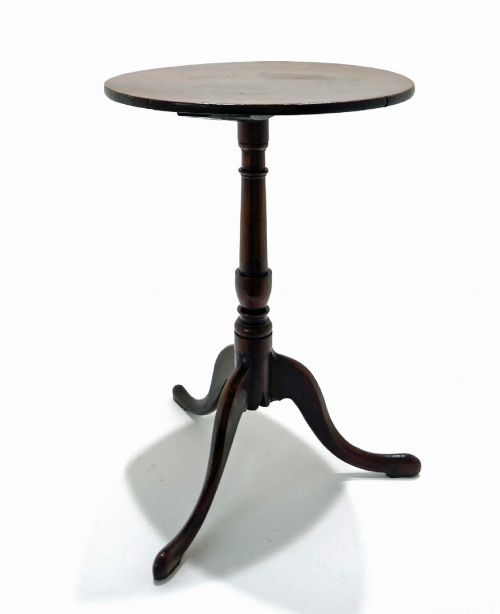
- A support structure comprising three legs radiating from a central turned column. It provides steady contact on uneven historic floors.
- Burr oak
- A specialised timber harvested from oak tree growths that produce swirling, highly decorative grain patterns. Cabinetmakers utilised these sections on prominent table tops for visual impact.
- Vendange table
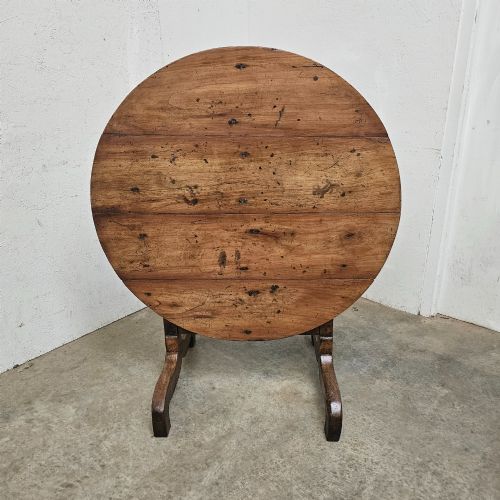
- A French provincial folding wine or harvest table designed for easy storage during non-harvest months. They frequently combine oak tops with fruitwood frames.
- Birdcage
- An assembly beneath the table top involving small turned spindles and two-part frames that allows the surface to both tilt and rotate. This mechanism represents a higher standard of period joinery.
Antique Oak Tilt Table: Frequently Asked Questions
What is an antique oak tilt table used for today?
These pieces serve wonderfully as lamp tables, bedside stands, or small occasional surfaces in sitting rooms. Their compact footprints and historical character make them practical for modern living spaces.
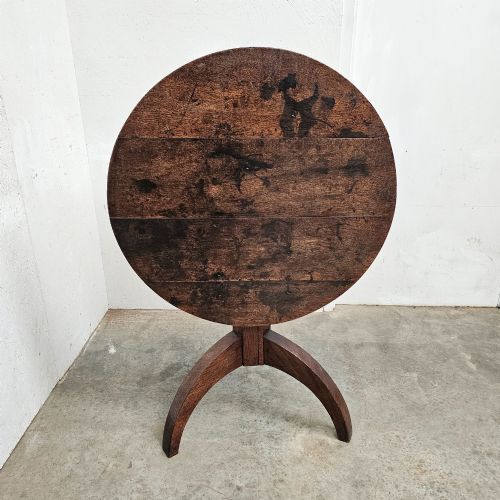
When tilted vertically, they also function as decorative wall art, displaying the beauty of aged oak grain when pushed back against a perimeter wall.
How do I distinguish an 18th-century table from a Victorian one?
Eighteenth-century examples often display simpler vernacular country craftsmanship, slimmer tripod legs, and pegged tenon joints reflecting regional English or Welsh cabinetmaking. The timber surfaces show deeper patination accumulated over longer periods.
Victorian pieces frequently introduce more ornate turning, occasionally incorporating burr oak veneers, exotic secondary woods, or heavier pedestal bases that reflect nineteenth-century revival styles.
How does the tilting mechanism work?
The mechanism relies on a wooden block or a brass catch fitted beneath the table top that locks onto the top of the central pedestal column. Lifting or releasing the catch allows the surface to pivot ninety degrees.
A secure pivot holds the top steady during use and locks flat when stored.
Are these tables suitable for small rooms?
Their small circular or oval tops and slender tripod footprints make them ideal for compact interiors. They fit easily beside armchairs or into unused corners without dominating a room.
The ability to tilt the top flat against a wall provides an immediate space-saving option when floor area is required.