
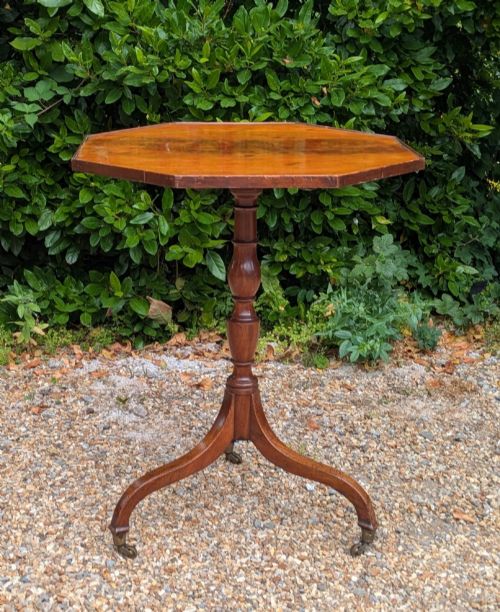
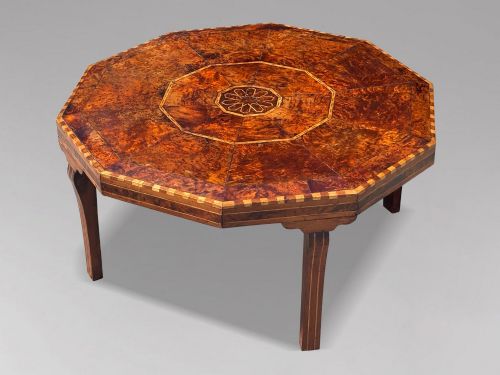
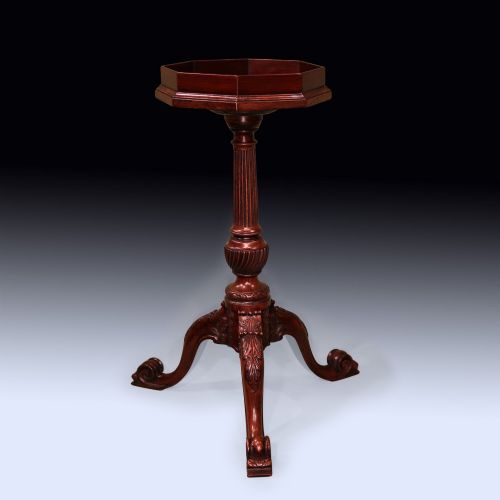
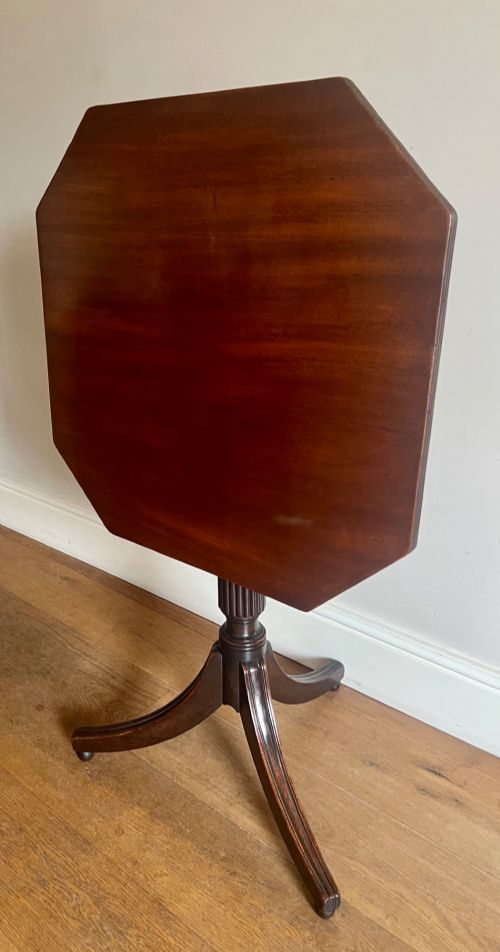


Georgian Octagonal Tea Table
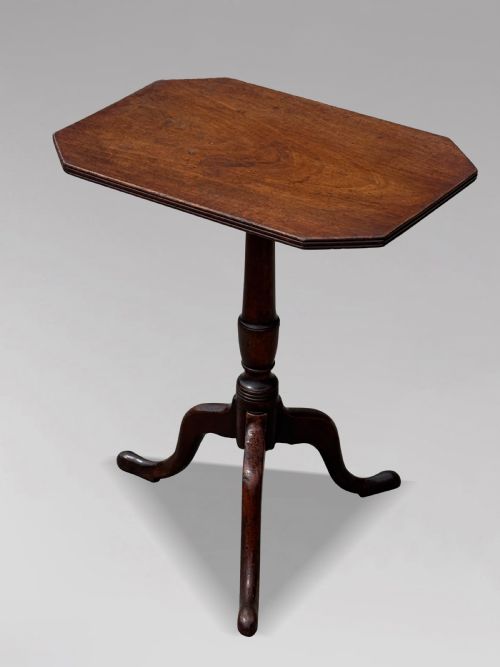
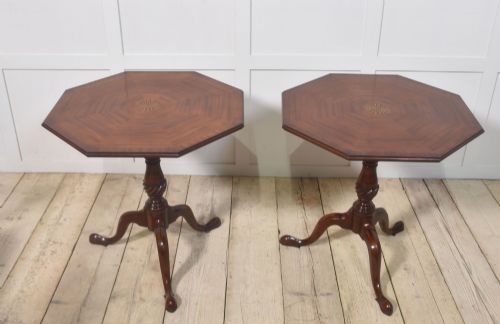
A georgian octagonal tea table brings architectural clarity and rich mahogany timber to a room, offering a compact surface designed for entertaining.
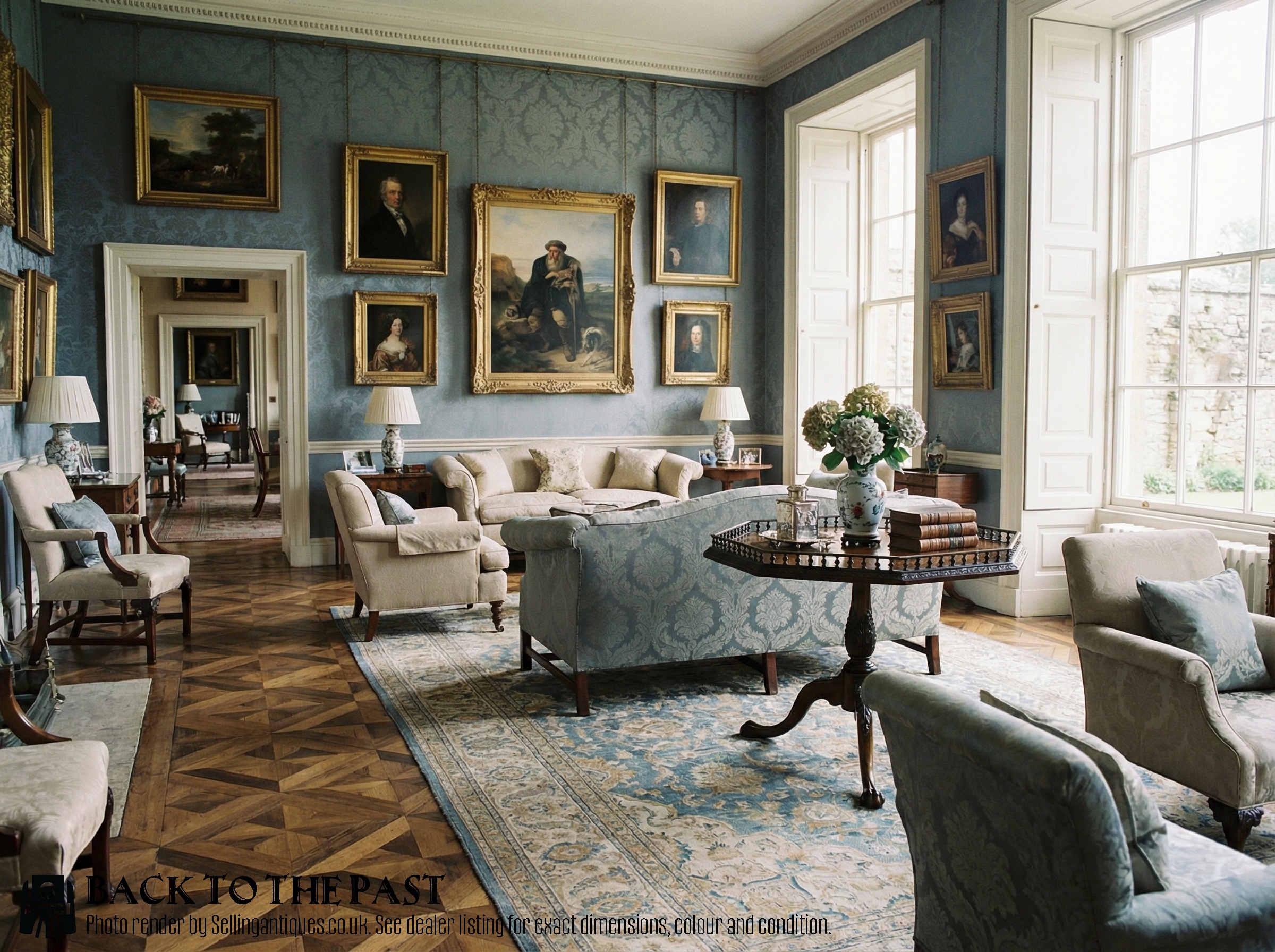
Georgian Octagonal Tea Table
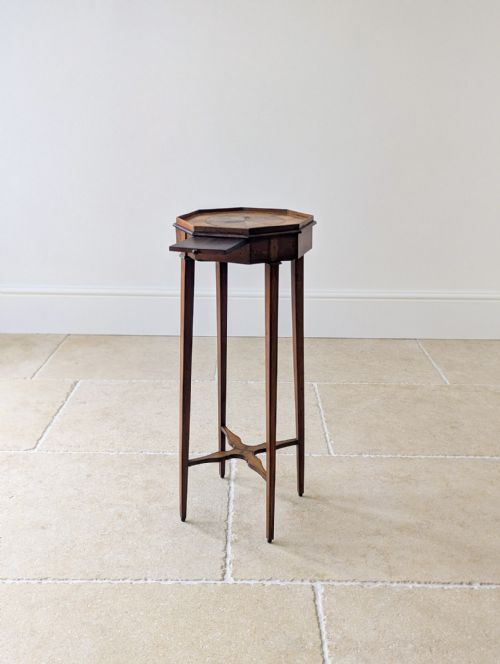
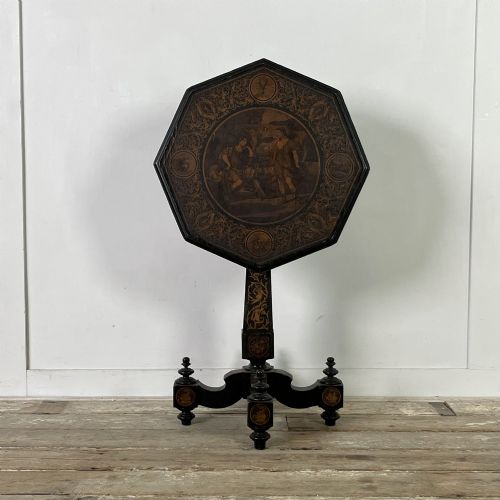
A georgian octagonal tea table combines multi-sided geometry with practical design, serving as an occasional table, tripod table, or kettle stand across the 18th Century, Georgian, and Regency periods.
The pieces on this page span forms such as tripod tables, occasional tables, coffee tables, and teapoys, frequently featuring tilt-top action or birdcage mechanisms.
Makers and craftsmen shaped these items from mahogany, satinwood, burr yew, and walnut, often applying inlay, boxwood stringing, or carved details in styles ranging from Chippendale to George III.
How they were made
Makers constructed these tables primarily using solid and veneered mahogany, alongside decorative timbers like burr yew, walnut, and satinwood, frequently enhanced with boxwood inlay and brass fittings.
Structural engineering involved tripod pedestal bases, birdcage actions, and tilt-top mechanisms that allowed the octagonal tops to pivot and fold flat when not in use.
Listings feature mahogany, burr yew, satinwood, and walnut across Georgian, Regency, and Victorian periods.
What varies in quality
The standard of a piece rests on the choice of timber figure, such as flame mahogany or burr yew, and the crispness of carved tripod legs and pierced galleries.
Mechanical execution also separates examples, seen in the smooth operation of tilt-top birdcage mechanisms and the precision of boxwood and satinwood inlay work.
Gillows
The Georgian Octagonal Tea Table Glossary
- Tilt top
- A mechanism allowing the table surface to pivot vertically so it can be stored against a wall when not in use. This feature became common on tripod tables during the 18th Century.
- Birdcage
- A revolving wooden framework beneath the tabletop that permits the surface to both rotate and tilt. It is typically found on finer Georgian pedestal tables.
- Tripod table
- A freestanding small table supported by a central pillar resting on three legs. These forms include kettle stands and occasional tables.
- Teapoy
- A small box or chest mounted on a stand, designed to store tea leaves and utensils. Some examples include mixing bowls and internal compartments.
- Kettle stand
- A small auxiliary table designed to hold a hot water kettle for tea service. They often feature raised edges or galleried tops.
Georgian Octagonal Tea Table: Frequently Asked Questions
What is an octagonal tea table?
An octagonal tea table is a small table featuring an eight-sided top, designed originally for the service of tea in formal rooms.
These pieces often stand on a central tripod pedestal and may include tilting mechanisms or raised galleries to secure tea wares.
How do you use a tilt-top table?
A tilt-top table uses a pivot mechanism beneath the top that allows the surface to lock horizontally for use or flip vertically for storage.
This functional design allowed homeowners to clear floor space quickly when tea service concluded.
What is a birdcage action?
A birdcage action is a rotating block structure fitted between the pedestal column and the tabletop.
It enables the table top to spin around its central axis in addition to tilting.
How do I identify a George III table?
A George III table is typically distinguished by mahogany construction, classical proportions, and specific decorative details like carved tripod legs or subtle inlay.
Stylistic cues often reference Chippendale or Sheraton designs typical of the late 18th Century.