





Antique Oak Statue
An antique oak statue brings centuries of carved devotion and domestic craft into a room, spanning medieval saints to nineteenth-century folk figures.
Antique Oak Statue
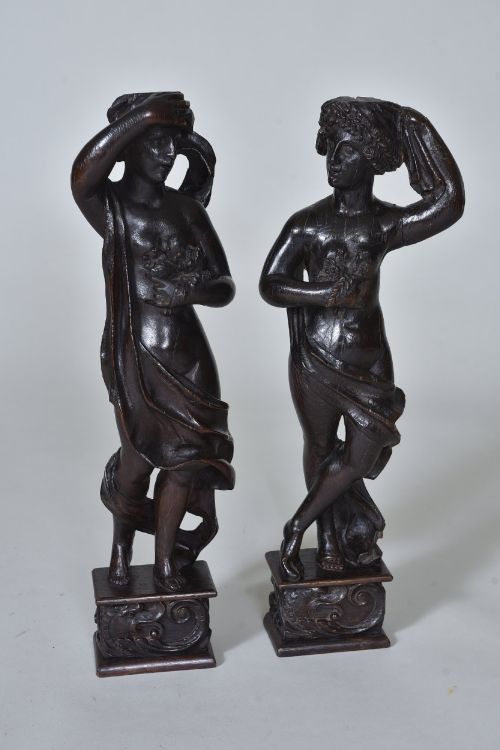
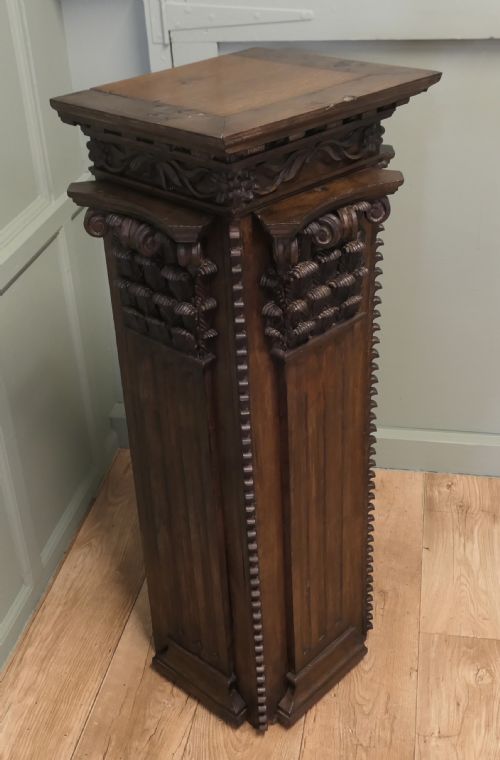
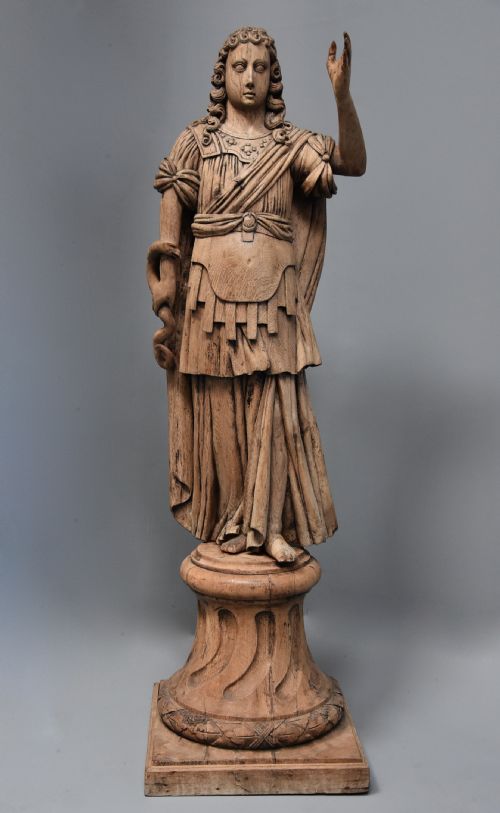
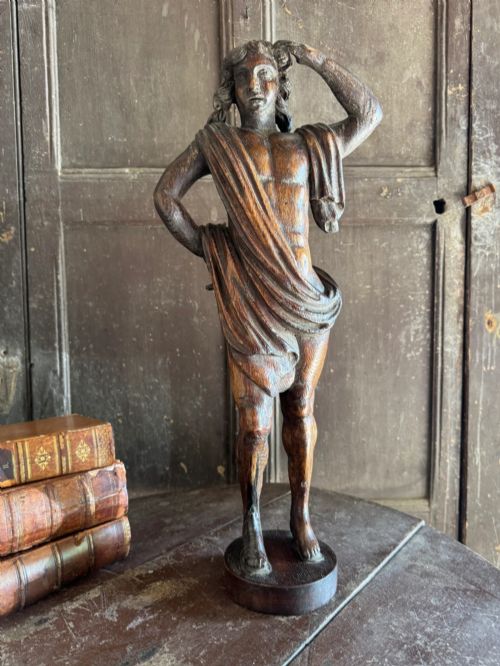
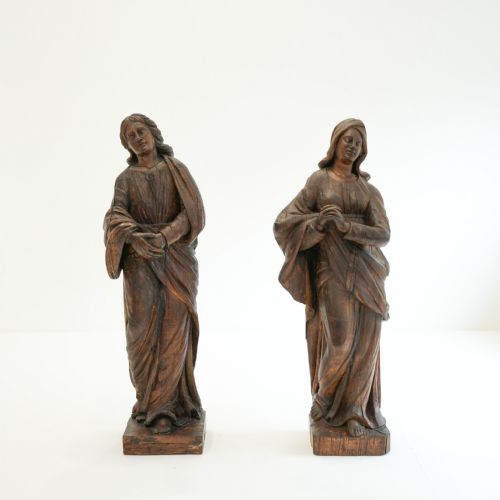
An antique oak statue encompasses carved representations of saints, religious figures, animals, and architectural ornaments originating from various European regions. Buyers encounter fourteenth-century devotional panels alongside eighteenth-century classical figures and nineteenth-century folk carvings.
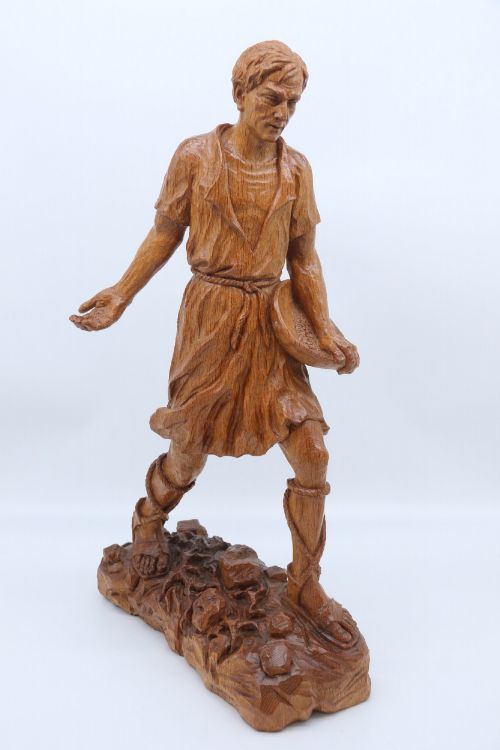
Continental workshops provide many of the surviving medieval and Renaissance groups, whilst later Victorian and Arts and Crafts examples display more secular subjects like farm workers and literary characters.
How they were made
Carvers utilised dense European hardwoods, predominantly oak, selecting straight-grained timber to accommodate intricate chiselling and deep relief work. Artisans worked directly from seasoned planks or blocks, sometimes joining sections for larger life-size figures.
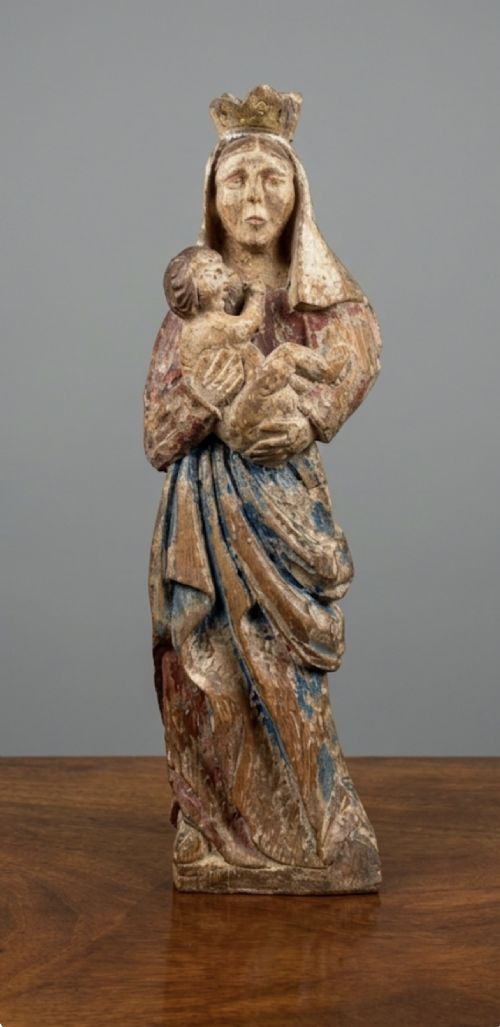
Surfaces frequently received preparation with gesso before the application of polychrome paint, though many pieces survive in bare timber with a natural waxed patina. Tool marks from gouges and chisels remain visible beneath the surface layers, revealing the hand methods of period workshops.
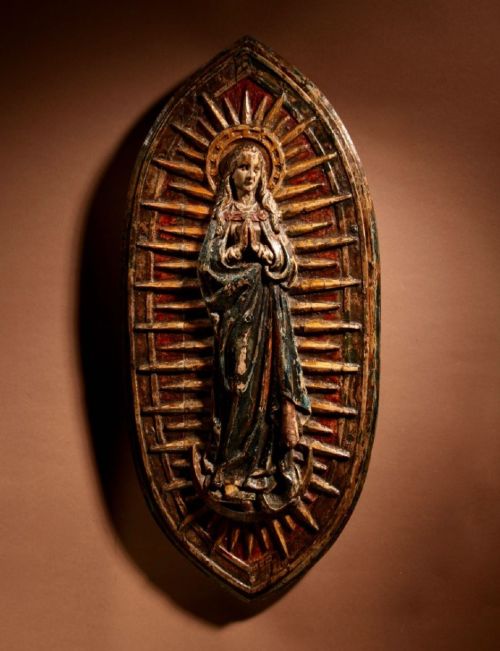
Look closely for the small serpent lurking beneath the Virgin's feet on sixteenth-century altarpiece panels.
What varies in quality
The preservation of original surface finishes, such as early polychrome paint or undisturbed historic patination, distinguishes superior examples from pieces stripped or heavily restored in later centuries. Structural integrity also dictates worth, particularly where structural timber has suffered from historic woodboring beetle activity or damp storage.
Franz Keller
The Antique Oak Statue Glossary
- Polychrome
- Painted in several colours. This finish appears frequently on medieval and Renaissance religious statues to render vestments and flesh tones lifelike.
- Newel post finial
- An ornamental cap on the top post of a staircase. These architectural carvings often take the form of heraldic animals or human busts.
- Gesso
- A plaster mixture applied to wood surfaces as a base for paint and gilding. It provides a smooth ground for delicate pigment work on early figures.
- Gothic
- A medieval art style characterised by pointed arches and vertical emphasis. Figures from this period display elongated forms and heavy linear drapery.
- Donor figure
- A sculpture depicting the person who commissioned a religious work of art. They typically appear kneeling in prayer alongside saints.
Antique Oak Statue: Frequently Asked Questions
Where were these statues originally placed?
Many early pieces originated inside churches, chapels, and monastic foundations as altarpieces, devotional niches, or architectural supports. Secular carvings fulfilled domestic decorative roles in wealthy households.
Later nineteenth-century figures served as interior ornaments or architectural salvage within private libraries and hallways.
How do I care for an oak statue?
Keep wooden sculptures away from direct heat sources and sudden humidity shifts to prevent the timber from splitting. Dust gently with a dry, soft brush rather than applying modern liquid polishes.
Maintain a stable room temperature to protect any surviving gesso or historic polychrome paint layers from flaking.
How can I tell a medieval piece from a later copy?
Examine the tool marks under magnification to identify hand chiselling rather than modern machine routing. The natural ageing of the timber, including deep oxidation and shrinkage cracks, provides clues to true antiquity.
Construction methods, jointing styles, and the absence of modern adhesives help verify the period of manufacture.
What does polychrome paint mean on a sculpture?
Polychrome refers to the application of multiple colours directly onto the carved wood surface. Craftsmen used chalk grounds and natural pigments bound in oil or tempera to decorate religious vestments.
Finding traces of original paint significantly enhances the historical context of a carved figure.