


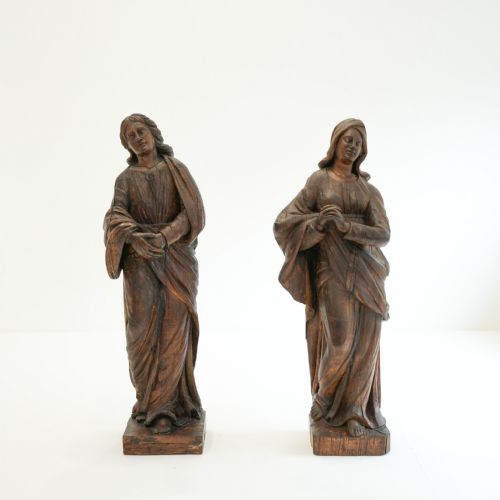


Hand Carved Oak Saint
These hand carved oak saint figures bring centuries of devotional art into your home with deep character and historic presence.
Hand Carved Oak Saint
When you search for a hand carved oak saint, you are looking at wooden devotional figures shaped from solid hardwood, spanning periods from the fifteenth century through the Edwardian era. These sculptures reflect various regional traditions, including German, Croatian, and general European ecclesiastical craftsmanship.
You are most likely to meet nineteenth-century interpretations alongside eighteenth-century religious statues and earlier Gothic pieces. The forms range from pairs of saints such as St. John and the Virgin to individual studies of apostles and hermits like Saint Jerome.
The style shifts across the centuries represented here, moving from austere pre-sixteenth century Gothic forms into the ornate flourishes of the Baroque and Renaissance eras. Later examples also touch upon early twentieth-century folk art and nineteenth-century Gothic Revival aesthetics.
How they were made
Carvers shaped these devotional figures directly from solid oak and seasoned hardwood, employing chisel and gouge to release the form from the timber. The natural grain of the wood dictates the texture of the drapery and the contours of the faces.
Makers utilised traditional jointing and hand-tooling methods appropriate to their era, whether working in a fifteenth-century workshop or producing a documented collection in the late nineteenth century. The surfaces show the deliberate, manual removal of material rather than mechanical shaping.
Listings span multiple centuries, ranging from pre-sixteenth century examples up to the Edwardian era, predominantly fashioned from solid oak and hardwood.
What varies in quality
The integrity of the original timber and the depth of the relief carving also separate the tiers of quality. Pieces that retain their early surface patination without excessive modern intervention command greater respect from collectors.
Franz Keller
The Hand Carved Oak Saint Glossary
- Gothic Revival
- An architectural and artistic movement reviving medieval forms during the nineteenth century. It frequently influenced ecclesiastical woodcarving to mirror earlier centuries.
- Ecclesiastical
- Relating to the Christian Church or its clergy. Items described thus were typically created for use in religious buildings or private chapels.
- Baroque
- A flamboyant style of architecture, art, and sculpture prevalent from the seventeenth into the eighteenth century. It is characterised by dynamic movement and dramatic drapery.
- Renaissance
- The cultural movement spanning the fourteenth to the seventeenth century, marking the transition from the Middle Ages to modernity. Sculptures from this period show a renewed interest in classical human form.
- Folk art
- Art made by indigenous people or untrained artisan communities using traditional methods. Early twentieth-century examples in this tradition lean towards simpler, unpretentious execution.
Hand Carved Oak Saint: Frequently Asked Questions
What are hand carved oak saint figures?
These pieces are solid wood sculptures depicting religious figures, apostles, and biblical characters, produced by artisan carvers over several centuries.
They serve as tangible links to European ecclesiastical history and traditional wood sculpture.
How were these statues originally used?
Many of these figures stood within churches, abbeys, or private devotional shrines to aid in contemplation and prayer.
Others formed part of larger altarpieces or architectural church furnishings before entering the antique market.
How do I live with an antique oak saint?
Place the figure on a stable surface away from direct heat sources and sudden changes in humidity to protect the aged hardwood.
Allow the piece sufficient breathing room so its distinct carving style and timber grain remain a focal point in the room.
How do I tell different periods apart?
Pre-sixteenth century and Gothic pieces display rigid drapery and austere expressions, whereas Baroque and Renaissance figures show greater dynamism and theatrical movement.
Nineteenth-century Gothic Revival and Edwardian examples often synthesize these older historic aesthetics with the technical precision of their own era.