

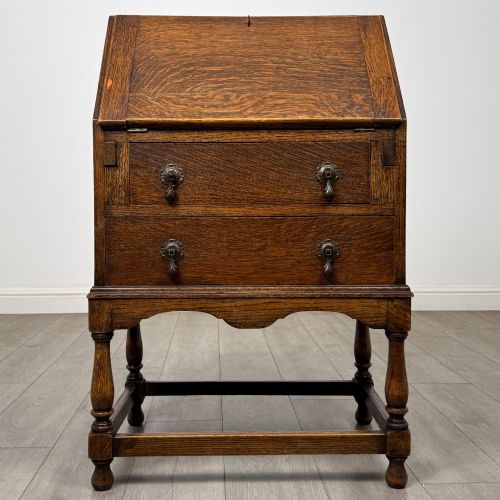
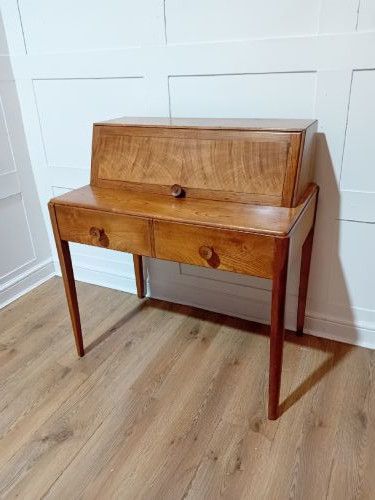
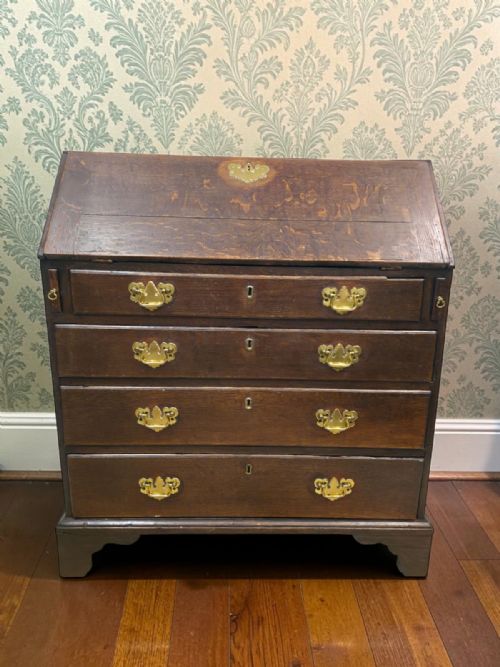
Antique Oak Slant Front
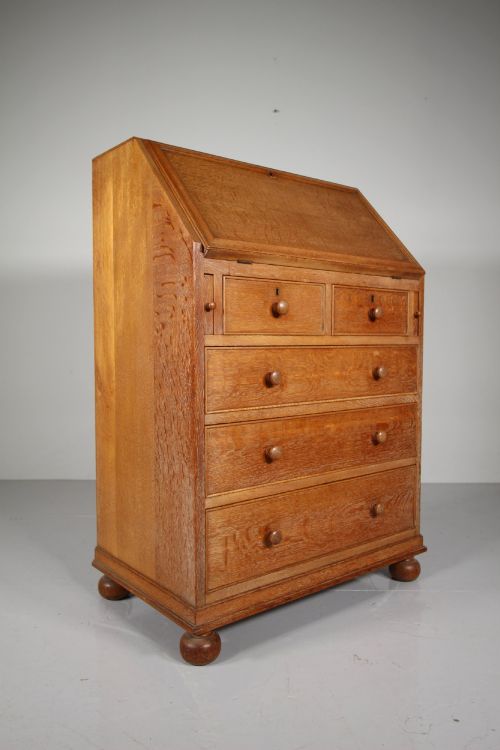
An antique oak slant front provides a hinged writing slope that conceals fitted interior compartments, uniting practical workspace with timber storage.
Antique Oak Slant Front
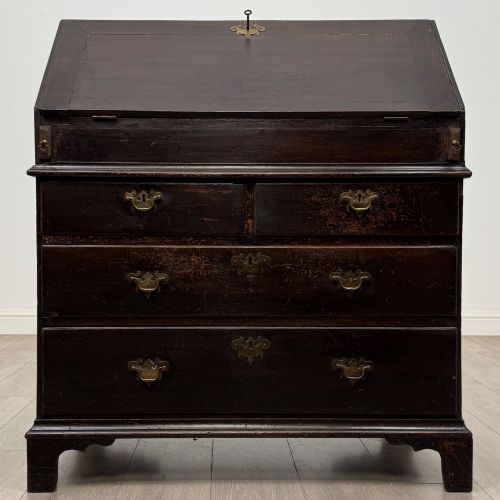
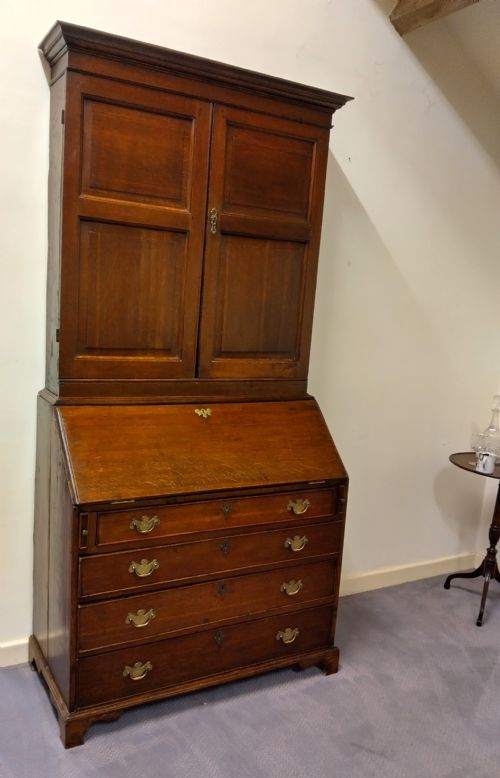
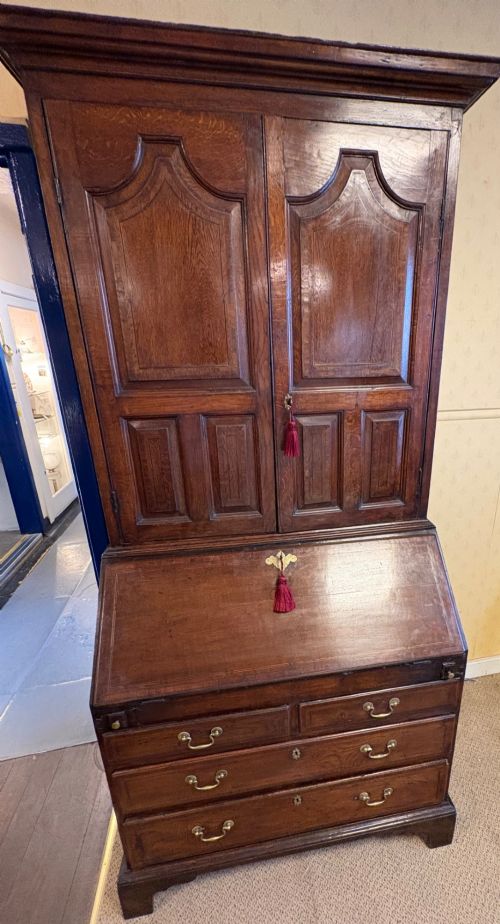
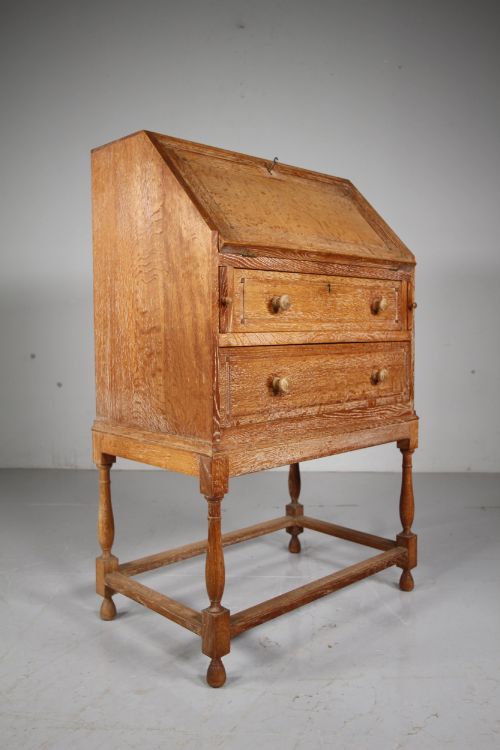
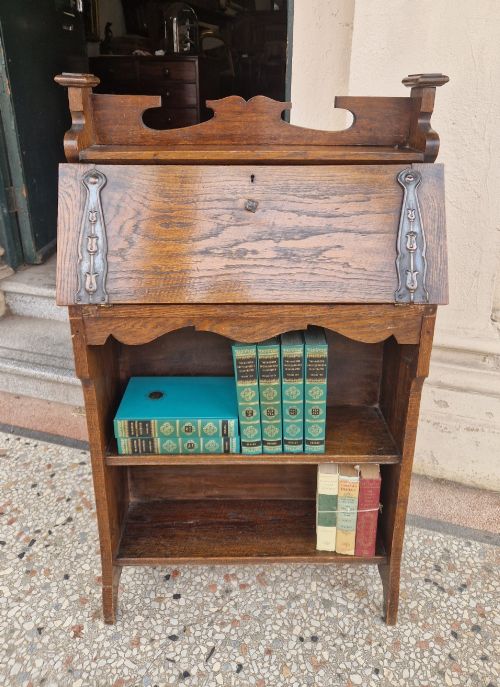
An antique oak slant front encompasses writing furniture featuring a sloping fall front, spanning formats from compact desk boxes to tall bureau bookcases. The selection ranges from early seventeenth-century Bible boxes and eighteenth-century country pieces to Edwardian revival iterations and twentieth-century Arts and Crafts examples.
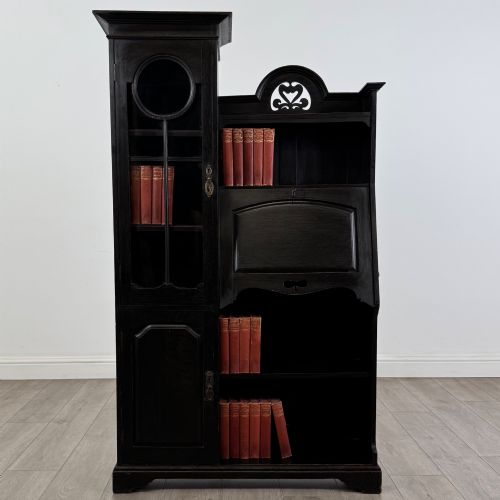
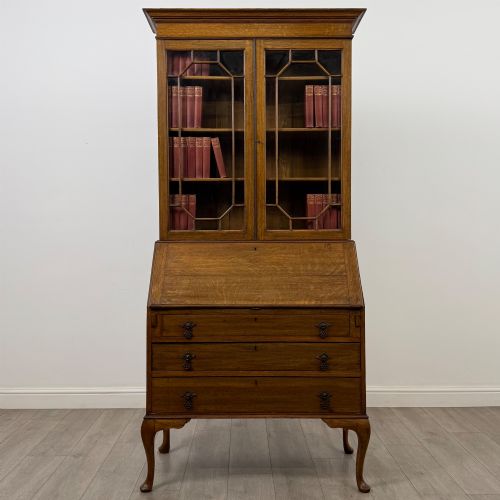
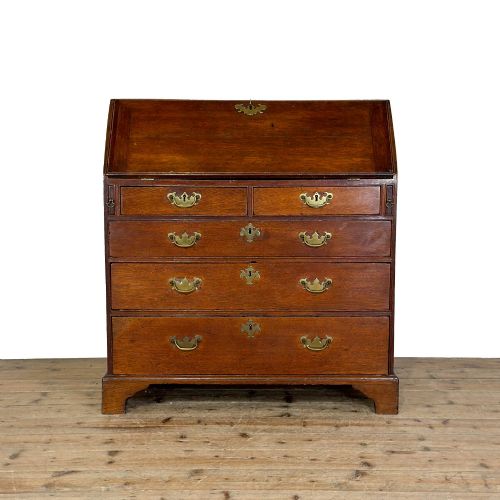
The most prevalent forms on this page are Edwardian and eighteenth-century bureaux, alongside taller bookcase variants fitted with glazed upper sections. Compact desk boxes and bureau desks also appear across seventeenth, eighteenth, and nineteenth-century periods.
Materials and Construction
These pieces rely principally on solid oak and pollard oak timber, often enhanced with brass handles, hinges, and escutcheons, alongside occasional glass door panels and leather writing inserts.
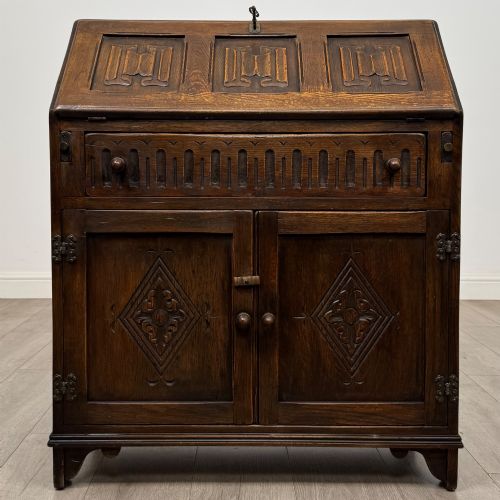
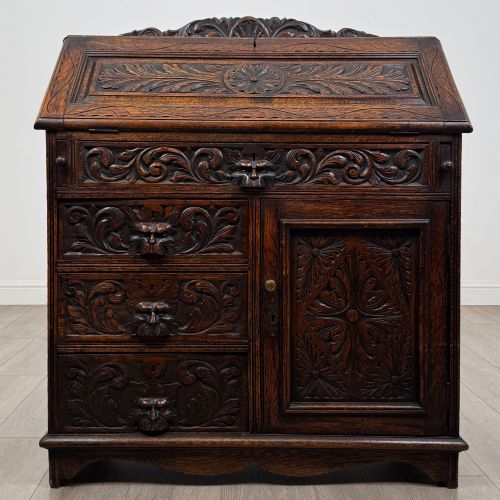
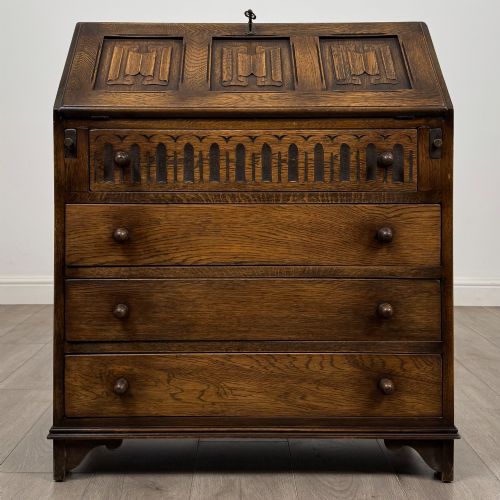
Carpentry techniques include traditional jointing for carcass work, stepped interior drawer construction, and decorative surface treatments such as linenfold carving, ebonising, and green man motifs.
Listings include oak furniture spanning the 17th, 18th, 19th, and 20th centuries, alongside Edwardian, Victorian, and Arts and Crafts styles.
Craftsmanship and Proportion
Quality separates through the integrity of the timber selection, the crispness of hand-carved details like linenfold panels, and the complexity of the internal stepped drawers and pigeonholes.
Structural proportion and maker attribution, such as labeled pieces from known workshops, elevate specific items above standard vernacular production.
Heals of London·Arthur Basil Reynolds·Stanley Webb Davies·Larkin
The Antique Oak Slant Front Glossary
- Bureau
- A writing desk featuring a sloping fall front that opens to reveal internal compartments and drawers. This form evolved from portable slant front desk boxes placed upon tables.
- Fall Front
- The hinged sloping board that pulls down to form a writing surface and lifts up to conceal the interior. It rests upon lopers when lowered.
- Linenfold
- A style of carved wooden panel resembling folded linen cloth. This decoration appears frequently on Edwardian revival oak furniture.
- Stepped Interior
- An internal arrangement of drawers and pigeonholes arranged in ascending tiers beneath the slant front. It provides organised storage for correspondence and documents.
Antique Oak Slant Front: Frequently Asked Questions
What is an antique oak slant front?
An antique oak slant front is a desk or cabinet featuring an angled writing flap that drops down for use. It typically conceals a fitted interior with small drawers and pigeonholes.
Such furniture dates from the seventeenth century onward, spanning periods from the Georgian era to Edwardian revivals.
How do I use a bureau bookcase?
The sloping front lowers to create a writing desk, while the upper glazed doors open to store books and display items. Internal drawers organise writing materials and correspondence.
Lower drawers provide additional storage for household papers or textiles.
What is a desk box?
A desk box is a portable wooden container with a slanted lid used for writing before dedicated desks became common. Early examples rest on tables or frames.
They contain compartments for ink, quills, and paper beneath the hinged writing slope.
How do I distinguish an 18th-century bureau?
Eighteenth-century examples display construction methods such as hand-cut dovetails and pegged joints. The timber grain and patination develop deep warmth over centuries of use.
Internal configurations often feature secret compartments alongside stepped drawer arrangements.