
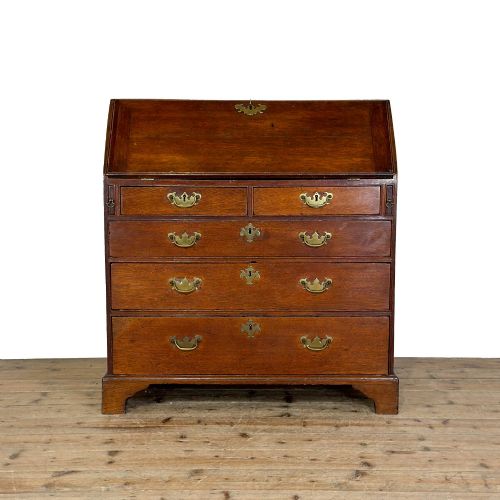
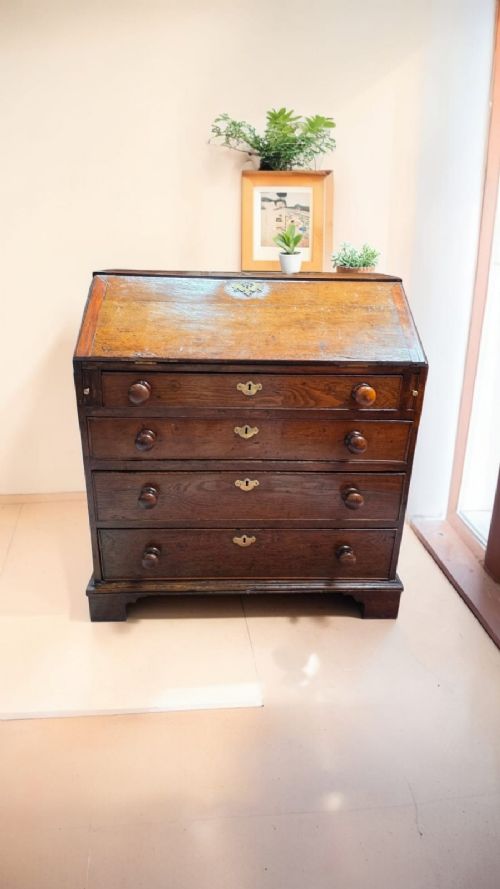


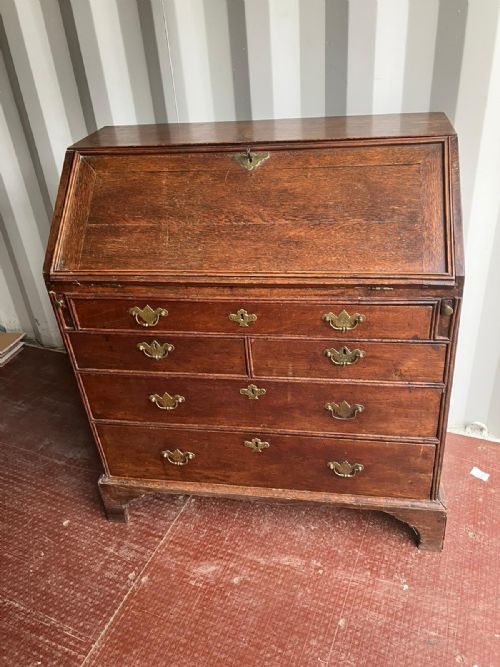


Slope Top Oak Bureau
A slope top oak bureau brings centuries of working history into a room, offering a sturdy timber writing surface with concealed compartments.
Slope Top Oak Bureau
When you search for a slope top oak bureau, you are looking at practical writing furniture designed with a slanted fall front that conceals an interior of small drawers and pigeonholes. These desks span several centuries, with examples appearing from the seventeenth century through to the Edwardian period, alongside Victorian interpretations and Georgian clerks' desks.
The versions most likely to be met on this page are solid oak pieces from the eighteenth century, often displaying the characteristic crossbanding, stepped interiors, and secret drawers that defined the period. You will also encounter smaller table-top formats from the seventeenth century and William and Mary eras, as well as later Victorian and Edwardian variations including Davenport desks and rolltop bookcase combinations.
These writing desks served practical administrative purposes in homes and offices, evolving from simple vernacular furniture into more refined Georgian forms. Their enduring appeal lies in the combination of heavy timber construction and clever internal compartment design, making them functional workspace additions to modern interiors.
How they were made
The primary material across these pieces is solid oak, supplemented occasionally by burr oak, mahogany, and marquetry inlay to accent the writing surfaces and drawer fronts. Cabinet makers utilised traditional joinery methods to build carcases capable of supporting heavy writing lids and internal storage configurations.
Hardware and operational elements relied on brass for handles and escutcheons, alongside iron fixings for internal mechanisms and locking components. Leather panels frequently insert into the writing slope, while fabric linings occasionally appear within associated chairs or fitted compartments.
Some Victorian desks hide secret compartments behind dummy drawers, offering a clever spot to stash private notes away from prying eyes.
What varies in quality
Quality separates through the sophistication of the internal fitments, such as stepped arrangements, secret compartments, and finely detailed drawer construction beneath the fall front. Plain vernacular pieces contrast with crossbanded surfaces and marquetry inlay, where cabinet makers invested greater labour into decorative timber work.
The Slope Top Oak Bureau Glossary
- Bureau
- A writing desk featuring a sloping fall-front lid that opens to reveal compartments, pigeonholes, and small drawers. This form evolved significantly from seventeenth-century vernacular origins into refined Georgian iterations.
- Fall front
- The hinged sloping panel on a bureau that drops down to form a horizontal writing surface. When closed, it conceals the inner documentation compartments.
- Crossbanding
- A decorative border technique where strips of veneer are laid across the grain of the primary wood. This method frames drawer fronts and writing flaps on superior pieces.
- Davenport
- A compact form of small desk featuring a sloping writing surface and drawers opening to the side. They emerged during the nineteenth century in Victorian and Arts and Crafts styles.
- Vernacular
- Furniture made by regional craftsmen for local use rather than high urban workshops. These pieces often display robust construction and simpler aesthetic details.
Slope Top Oak Bureau: Frequently Asked Questions
How do I use an antique bureau?
Lower the sloping front panel to utilise the internal writing surface for correspondence or laptop use. The interior compartments organise stationery and small items.
Keep the fall front locked when not in use to secure the internal drawers and maintain the structural alignment of the writing lid.
What is a table top bureau?
A table top bureau is a smaller writing cabinet designed to sit on top of a table, chest, or desk rather than standing on its own legs. These compact pieces date from earlier periods like the seventeenth century.
They offer the same internal pigeonholes and sloped writing surface as full-sized floor standing bureaus but in a portable format.
How do I tell an 18th century bureau apart?
Eighteenth-century bureaus often feature solid oak construction with pegged joinery, stepped interior drawers, and subtle details like crossbanding. The patination on the timber tends to show deep, warm tones developed over generations of use.
Later Victorian and Edwardian examples frequently incorporate machine-cut elements, carved motifs like Green Man masks, or different wood combinations such as mahogany.
Where should I place an oak bureau?
Position the bureau against an interior wall away from direct sunlight and heat sources to prevent the oak timber from drying out or splitting. Ensure there is adequate floor space in front of the piece for the fall front to lower fully.
These desks work well in studies, living rooms, or bedrooms where their traditional storage capacity can be put to practical use.