

Antique Oak Side Server
An antique oak side server brings solid timber utility and centuries of domestic craft directly into a modern dining room or hallway.
Antique Oak Side Server
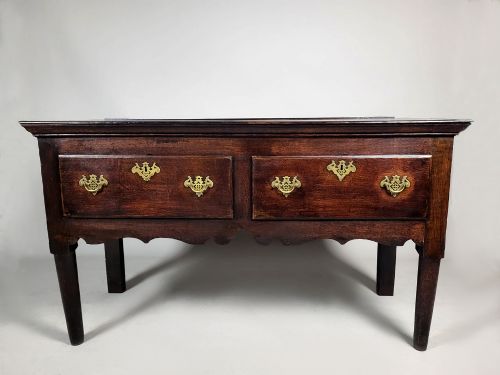
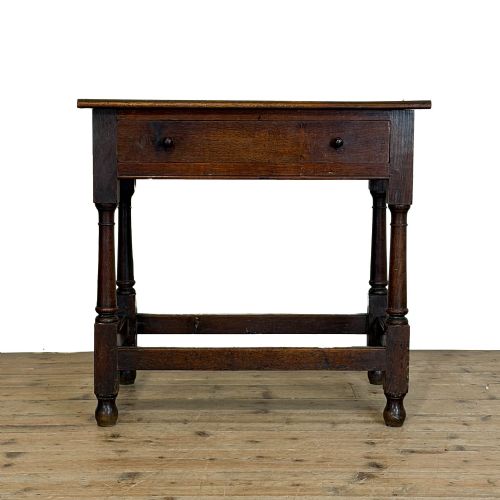
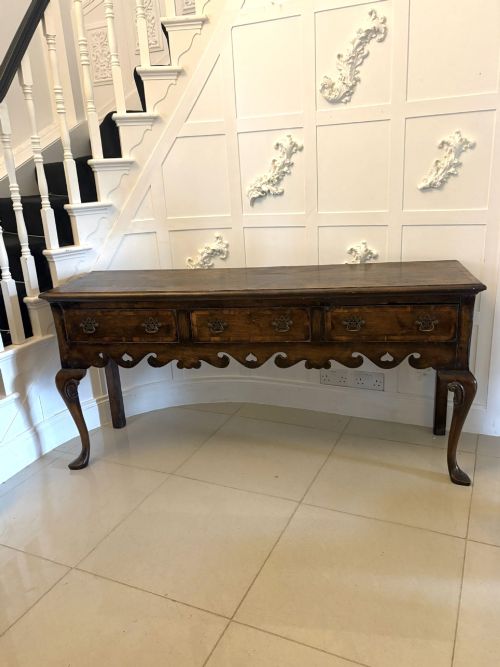
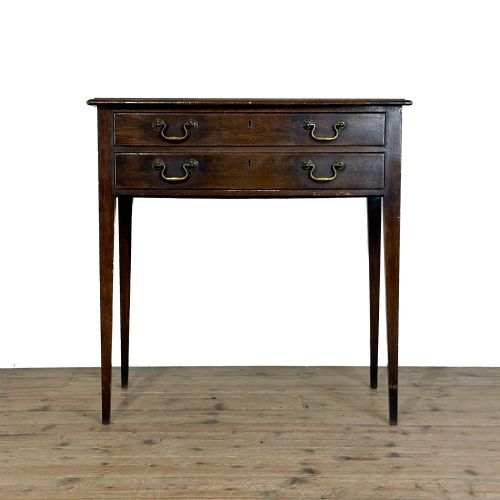
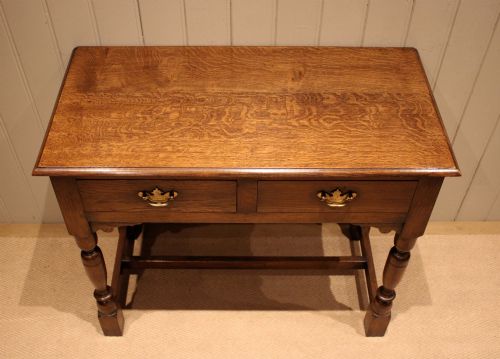
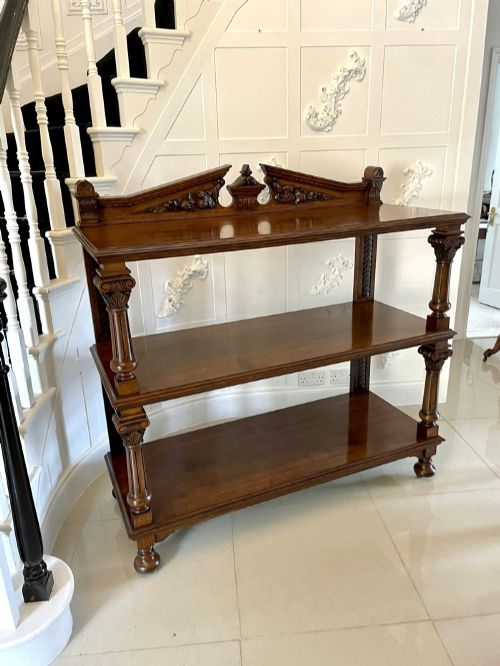
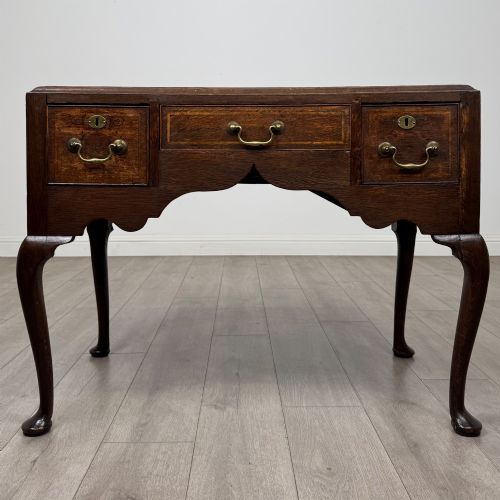
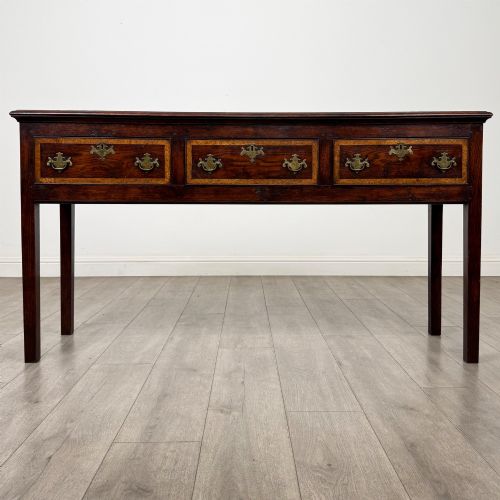
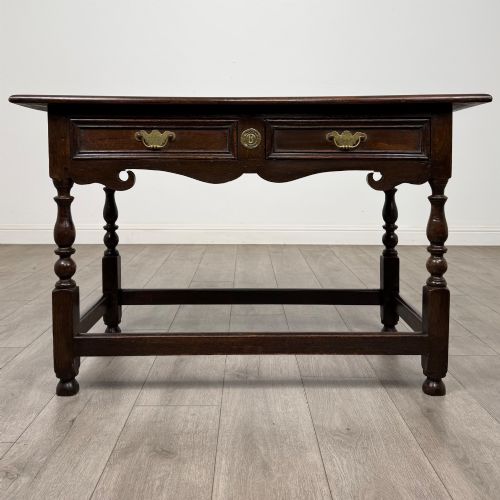
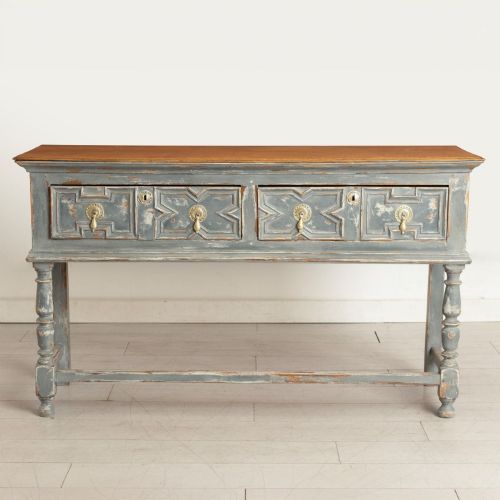
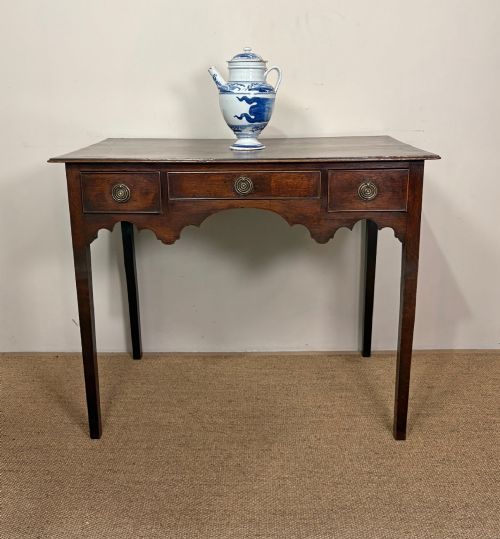
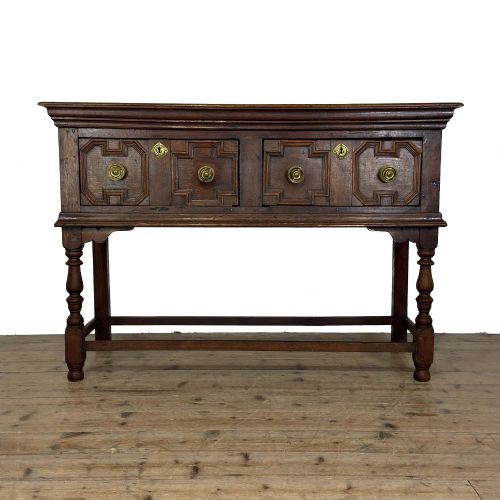
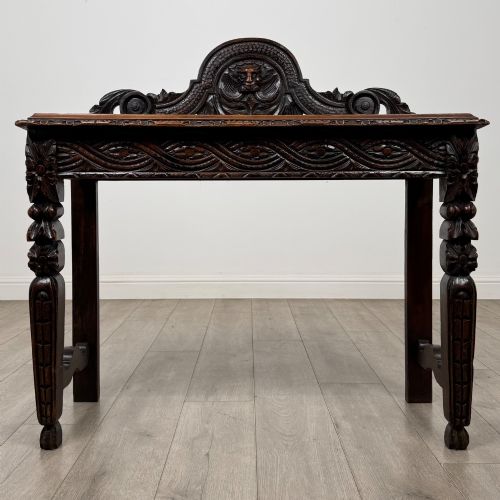
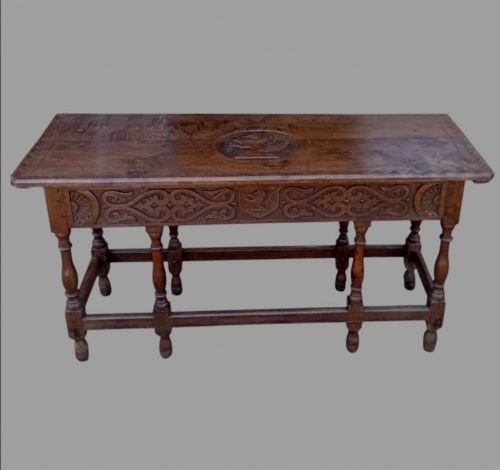
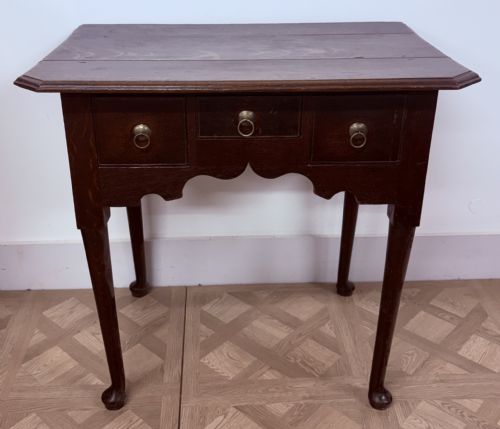
When buyers search for an antique oak side server, they encounter a robust category that spans lowboys, dresser bases, console tables, and dedicated buffet servers. These forms served utilitarian roles in historic kitchens, halls, and dining rooms, designed for food preparation, serving, and storage.
The versions most commonly met on this page range from 17th-century and Georgian origins through to Victorian and Edwardian interpretations. Pieces often exhibit regional character, including Welsh, Scottish, and French provincial variations alongside standard English forms.
How they were made
Construction relies heavily on solid oak, occasionally paired with elm, pine, or maple, alongside decorative elements in brass, iron, paint, and ebonised wood. Joinery techniques prioritize durability, utilising pegged mortise and tenon joints for frames and hand-cut dovetails for drawer construction.
Surface ornament varies from plain, utilitarian boards shaped by early adzes and hand saws to elaborate carving reflecting Jacobean, Gothic, or Aesthetic Movement tastes. Finish is achieved through traditional wax, oil, or polish applied directly to the timber grain over generations.
Listings feature oak alongside materials such as brass, marble, pine, and ebonised wood across multiple centuries.
What varies in quality
Quality rests upon the integrity of the timber selection and the restraint of the carver's hand. Pieces featuring dense, well-figured oak with original brass hardware and untouched patination stand apart from heavily altered examples.
Proportion and structural honesty separate finer regional pieces from later revival items. The crispness of hand-carved detail and the survival of secondary woods like pine or elm in drawer linings indicate the standard of workshop origin.
Maple and Co·Beresford and Hicks London
The Antique Oak Side Server Glossary
- Lowboy
- A small oak table featuring one or more drawers, originating in the late 17th and 18th centuries as a dressing or side table.
- Dresser base
- The lower section of a kitchen or dining dresser, fitted with drawers and frequently a lower potboard shelf for storage.
- Potboard
- An open slatted lower shelf found beneath dresser bases, historically used for storing pots and heavy kitchen utensils.
- Dumbwaiter
- A multi-tiered serving piece utilised for holding dishes and utensils without requiring constant servant attendance.
- Carriole leg
- A curved furniture leg featuring a double curve and pad or claw foot, popular during the Georgian period.
- Linenfold
- A style of wood carving that mimics folded fabric, frequently seen on panels of cupboards and sideboards.
Antique Oak Side Server: Frequently Asked Questions
What is the difference between a side server and a sideboard?
A side server generally refers to a more compact or open table form, such as a lowboy, console, or dresser base, designed for food service.
Traditional sideboards often incorporate enclosed cupboards and deeper storage bodies, though the terms frequently overlap in antique listings.
How do I identify an 18th-century oak piece?
Eighteenth-century pieces typically display hand-cut dovetails, pegged joints, and timber showing natural medullary rays.
Examining the underside and drawer linings reveals hand-sawn board marks distinct from later machine production.
Where can I place a side server in my home?
These pieces adapt readily to dining rooms as serving surfaces or hallways as console tables with storage drawers.
Their shallow depth allows them to fit narrow circulation spaces while offering sturdy display tops.
What styles of oak servers are available?
Listings feature periods ranging from 17th-century Jacobean through George III, Victorian, and Edwardian eras.
Revival styles from the 19th and early 20th centuries frequently emulate earlier historic tastes with carved decoration.