
Antique Oak Side Cupboard
When searching for an antique oak side cupboard, you encounter solid timber storage pieces spanning centuries of provincial and refined British and continental design.
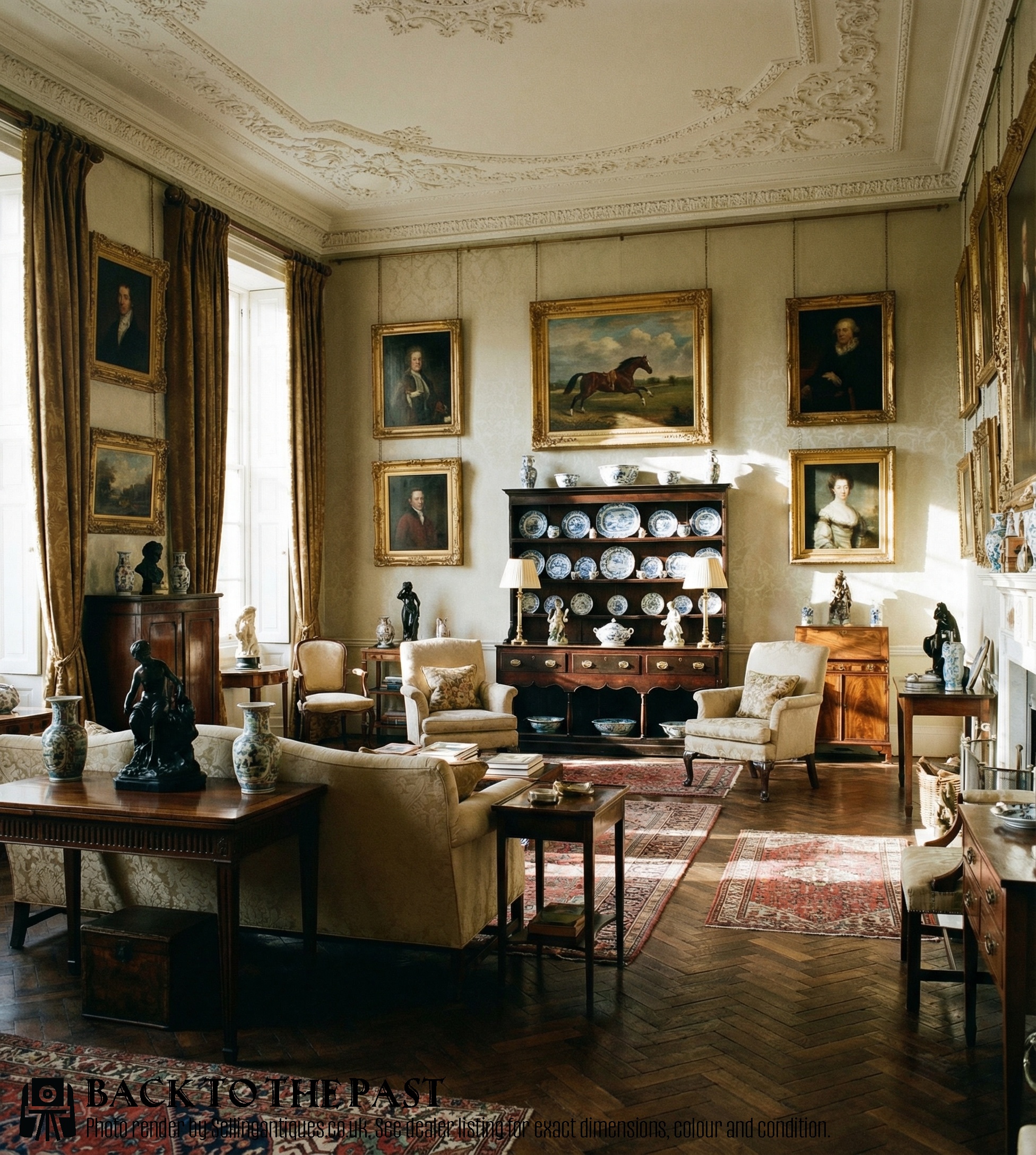
Antique Oak Side Cupboard
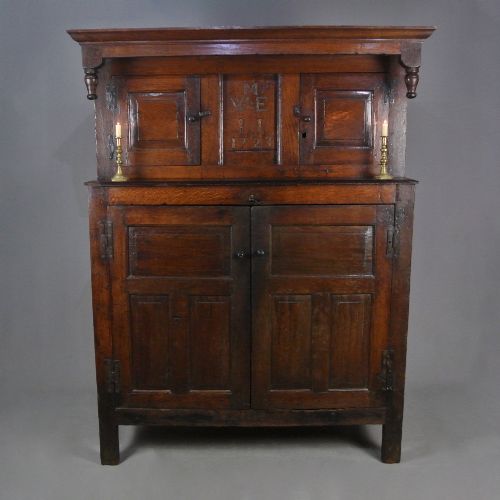
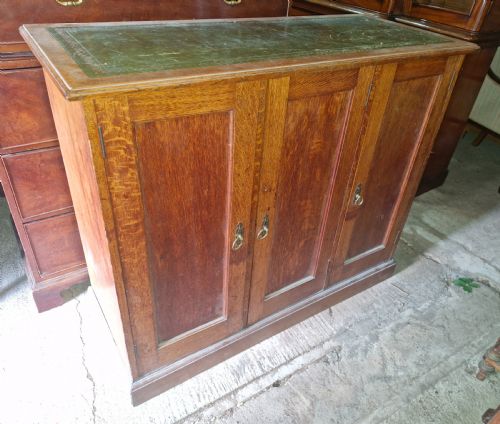
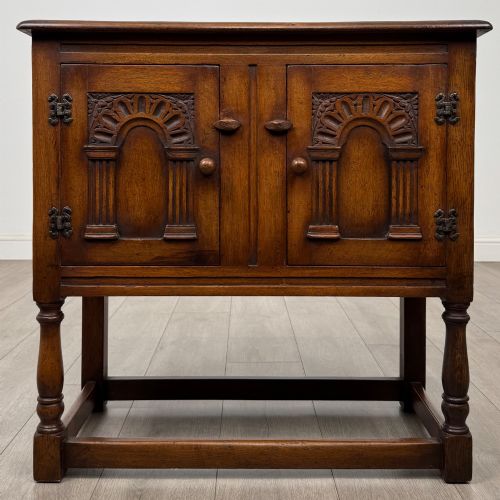
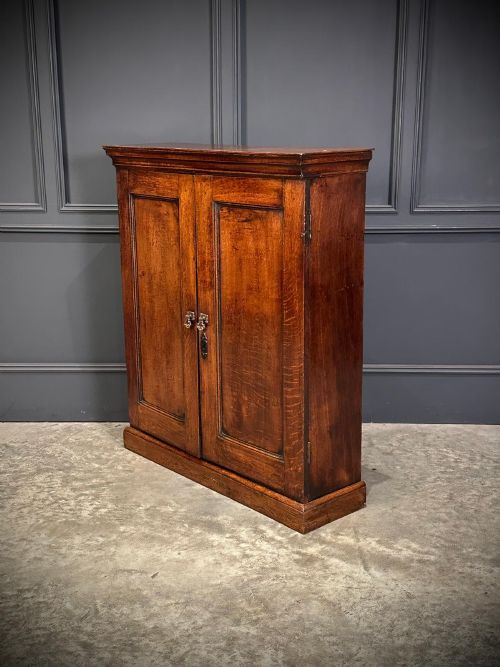
An antique oak side cupboard serves as a practical storage unit, encompassing forms such as court cupboards, bedside cabinets, press cupboards, and dresser bases. These items originate from diverse periods, ranging from the seventeenth century through to the early decades of the twentieth century.
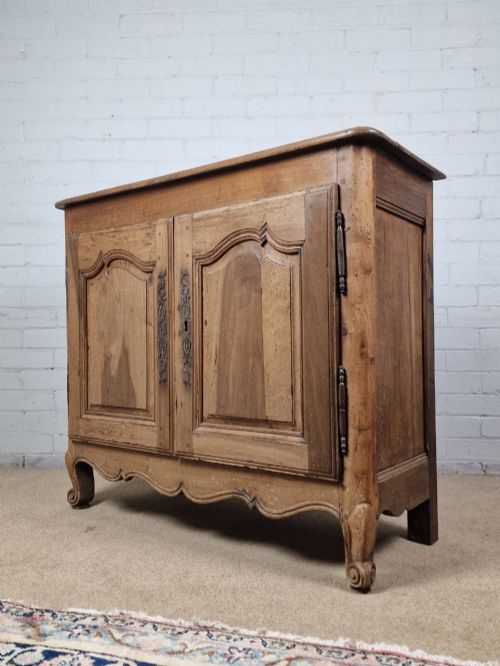
The domestic role of these pieces has evolved from storing provisions and linens in country houses to providing bedside or hallway utility in modern homes. The selection frequently includes revival styles and regional vernacular pieces alongside formal Georgian and Victorian cabinetry.
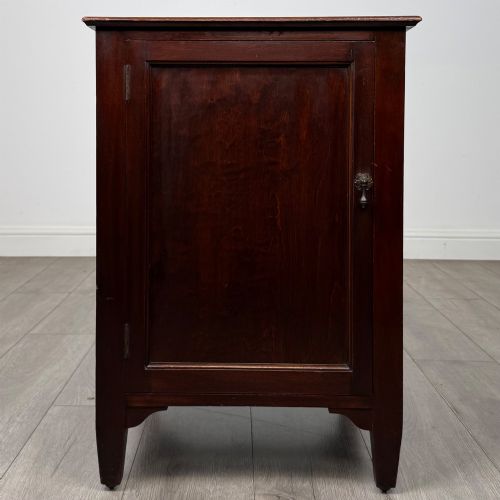
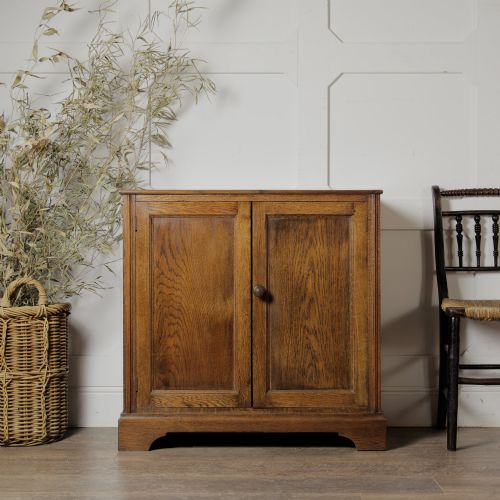
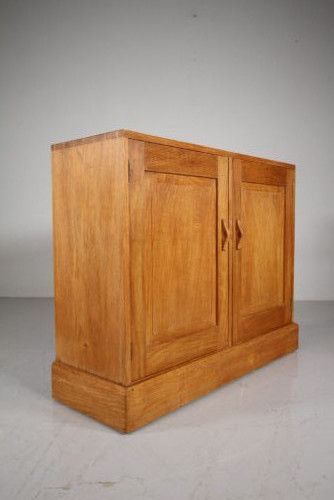
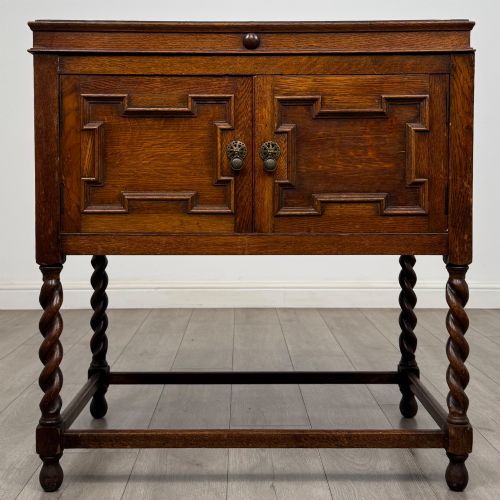
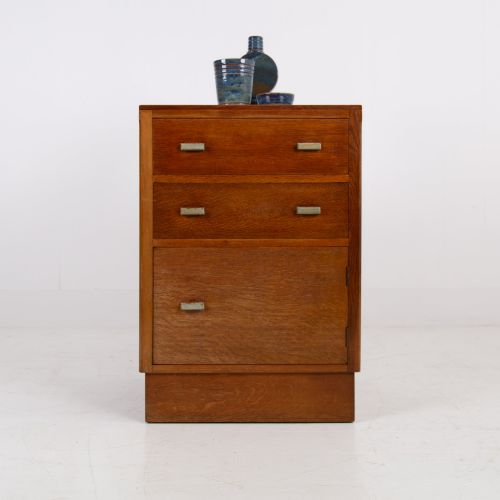
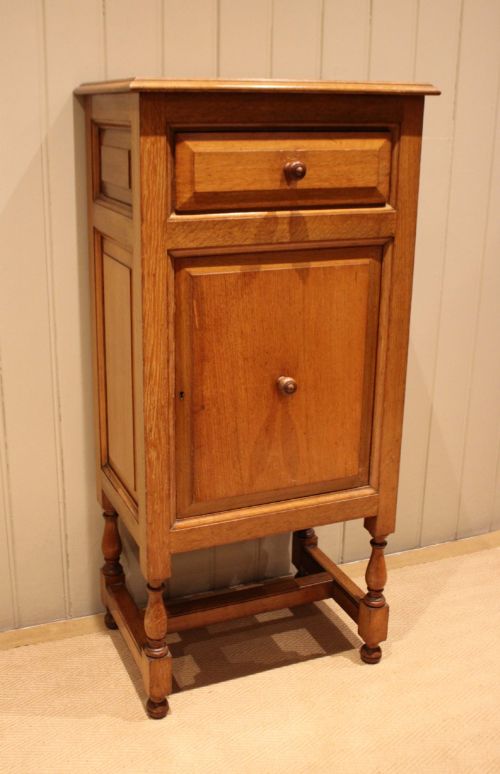
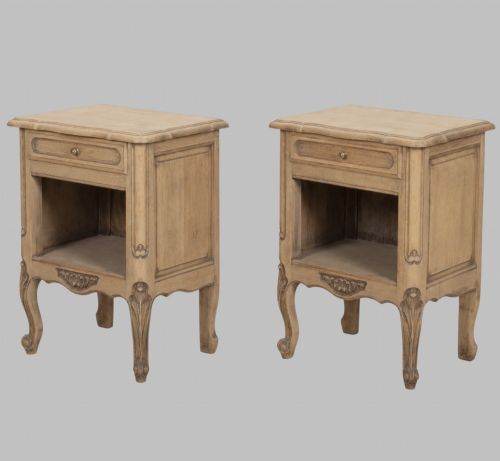
Buyers are most likely to encounter smaller bedside variants and early twentieth-century oak side cabinets on this page. These domestic items demonstrate the enduring utility of sturdy timber construction across different eras of domestic interior design.
How they were made
The primary material across these listings is solid oak, often complemented by secondary woods like pine, and fitted with functional hardware in brass, iron, and wrought metal. Certain continental variations incorporate marble tops or glazed sections to introduce contrasting textures.
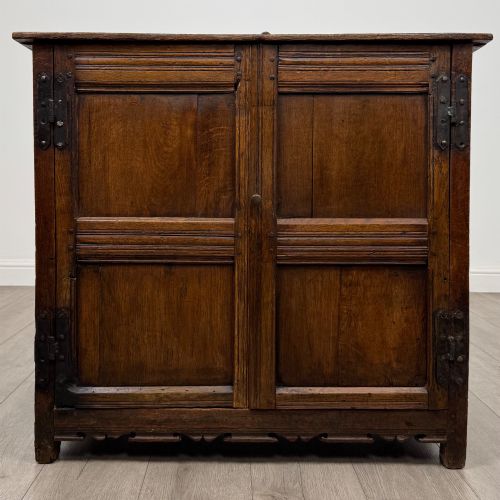
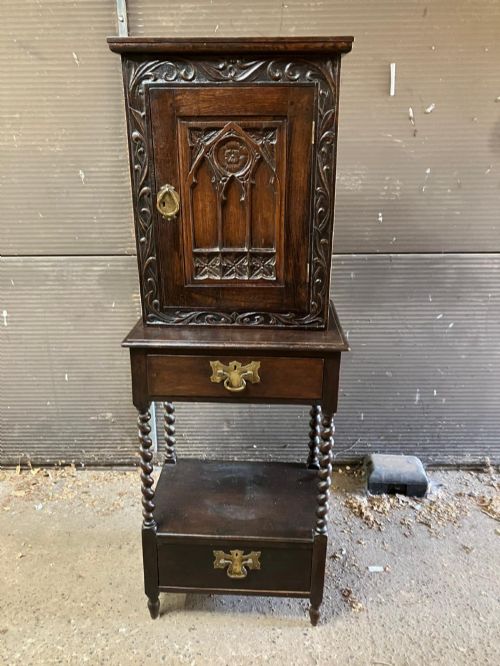
Cabinet makers utilised traditional joinery techniques, evident in pegged mortise and tenon joints on earlier pieces and solid plank construction on later examples. Surface treatments range from linenfold carving and Jacobean geometric moulding to simpler stained or bleached finishes.
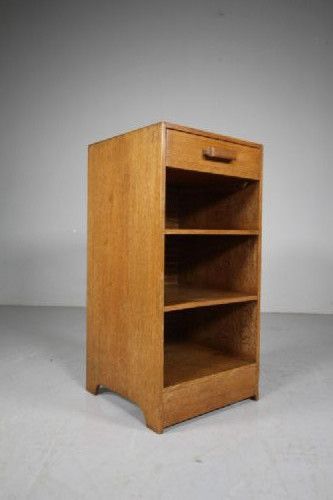
The listings span from sixteenth-century Gothic forms to twentieth-century Cotswold school designs, predominantly constructed in solid oak with occasional brass and marble additions.
What varies in quality
The distinction between standard utility items and exceptional pieces rests upon the crispness of the timber carving and the architectural ambition of the design. Elaborate motifs, such as Gothic elements or Renaissance Revival panels, demand greater joinery skill than plain panelled doors.
Proportion and material selection dictate the tier of a piece, with finely figured grain, substantial timber thickness, and integrated original metalwork elevating provincial storage into high-status furniture. The coherence of the revival style relative to its historical source period also marks the grade of the cabinet.
Liberty and Co·Heals of London·Howard and Sons
The Antique Oak Side Cupboard Glossary
- Court cupboard
- A traditional English two-stage storage piece, often featuring an indented upper section supported by pillars. These sturdy oak items functioned historically for displaying plate and storing provisions.
- Press cupboard
- A large enclosed storage unit utilised for garments and linens, typically featuring heavy panelled doors. These early timber items often display deep hand-carved decoration.
- Pot board
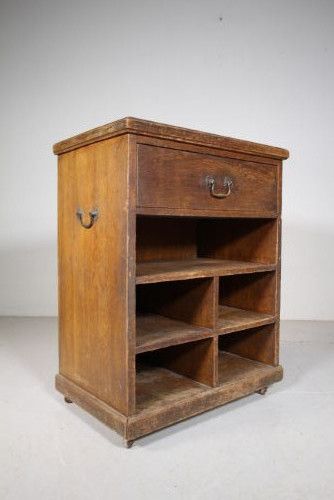
- An open lower shelf incorporated into the base of a dresser or side cabinet, historically designed for storing earthenware pots and kitchen utensils. This practical feature distinguishes traditional country furniture.
- Linenfold
- A carved wood panel motif resembling folded cloth or parchment, popular in medieval and revival joinery. This decorative technique demonstrates the dexterity of the cabinet maker.
- Cotswold school
- A twentieth-century design movement focusing on simplified craft-based furniture making using unadorned solid timber. Pieces from this tradition value visible construction methods over applied ornamentation.
Antique Oak Side Cupboard: Frequently Asked Questions
How do I date an oak cupboard?
Dating relies on observing construction methods, joinery types, and hardware alongside historical style revivals. Hand-split timbers and pegged joints typically indicate earlier centuries, whereas machine-sawn components point towards the Victorian era or the twentieth century.
Changes in moulding profiles and the presence of secondary woods like pine offer further chronological clues. Comparing the piece against documented examples from specific stylistic periods helps narrow down its decade of origin.
Were these cupboards used in kitchens?
Many of these oak storage units served domestic food preparation and storage roles in country houses and farmhouses. Dresser bases and court cupboards held kitchen utensils, dry goods, and earthenware vessels.
Over time, smaller side cabinets and bedside variants migrated to bedrooms and hallways for general utility. Their robust timber construction made them suitable for heavy daily use in busy household environments.
How do I care for antique oak furniture?
Maintaining antique oak involves keeping the timber away from direct heat sources and rapid humidity shifts to prevent warping. Regular dusting with a dry, soft cloth preserves the natural finish without requiring heavy polishes.
Applying a traditional beeswax occasionally helps nourish the dry grain of older timber. Avoid silicone-based sprays, which can penetrate the wood pores and damage the historic patina.
What is the difference between a side cabinet and a court cupboard?
A side cabinet generally presents a simpler, single-stage profile with doors or drawers designed for compact domestic storage. These versatile units emerged in various revival styles during the nineteenth and twentieth centuries.
A court cupboard is a more substantial, multi-tiered historical form featuring recessed upper sections and architectural columns. These earlier structures served both display and storage purposes in prominent rooms.