

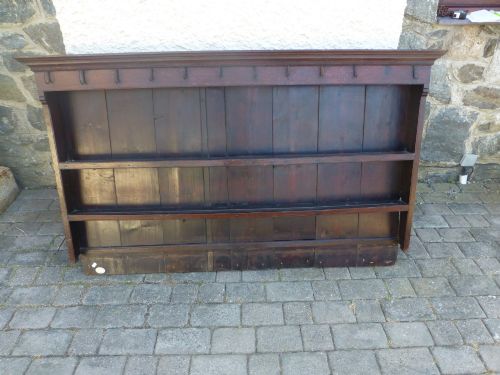
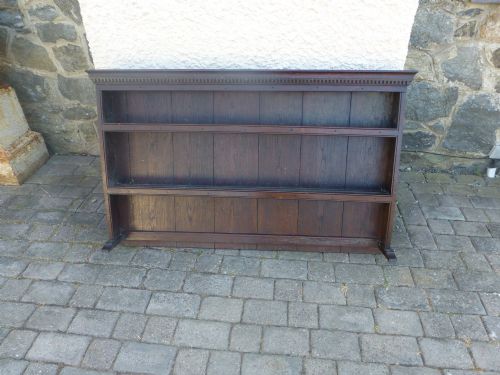
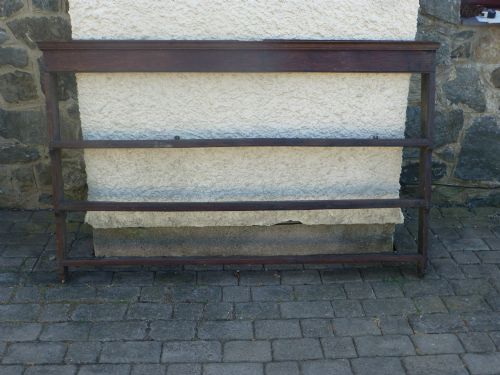
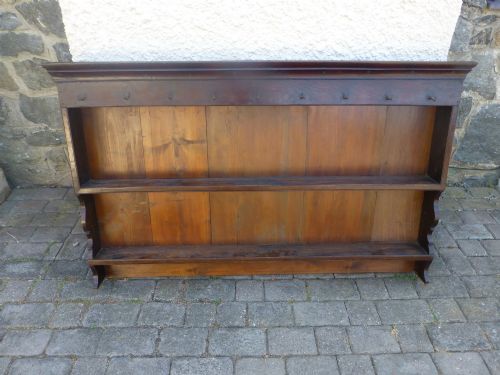
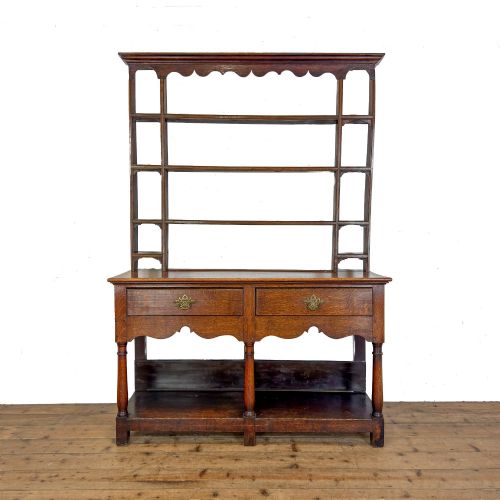
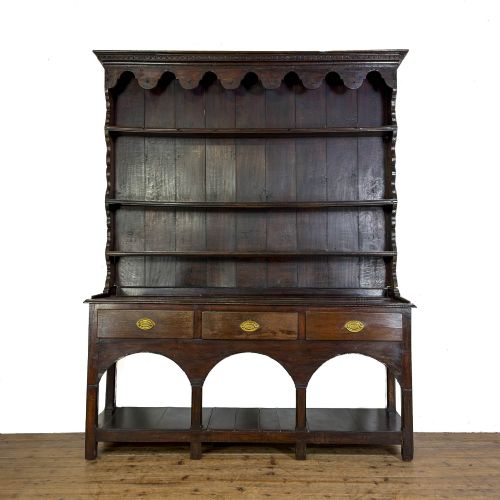
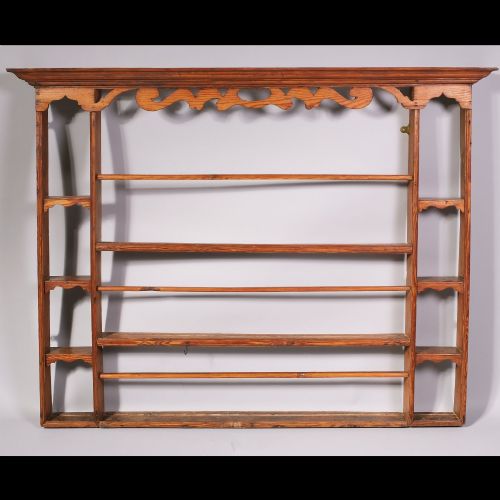
Georgian Plate Rack Dresser
A georgian plate rack dresser brings centuries of practical domestic history straight into a modern dining room or kitchen.
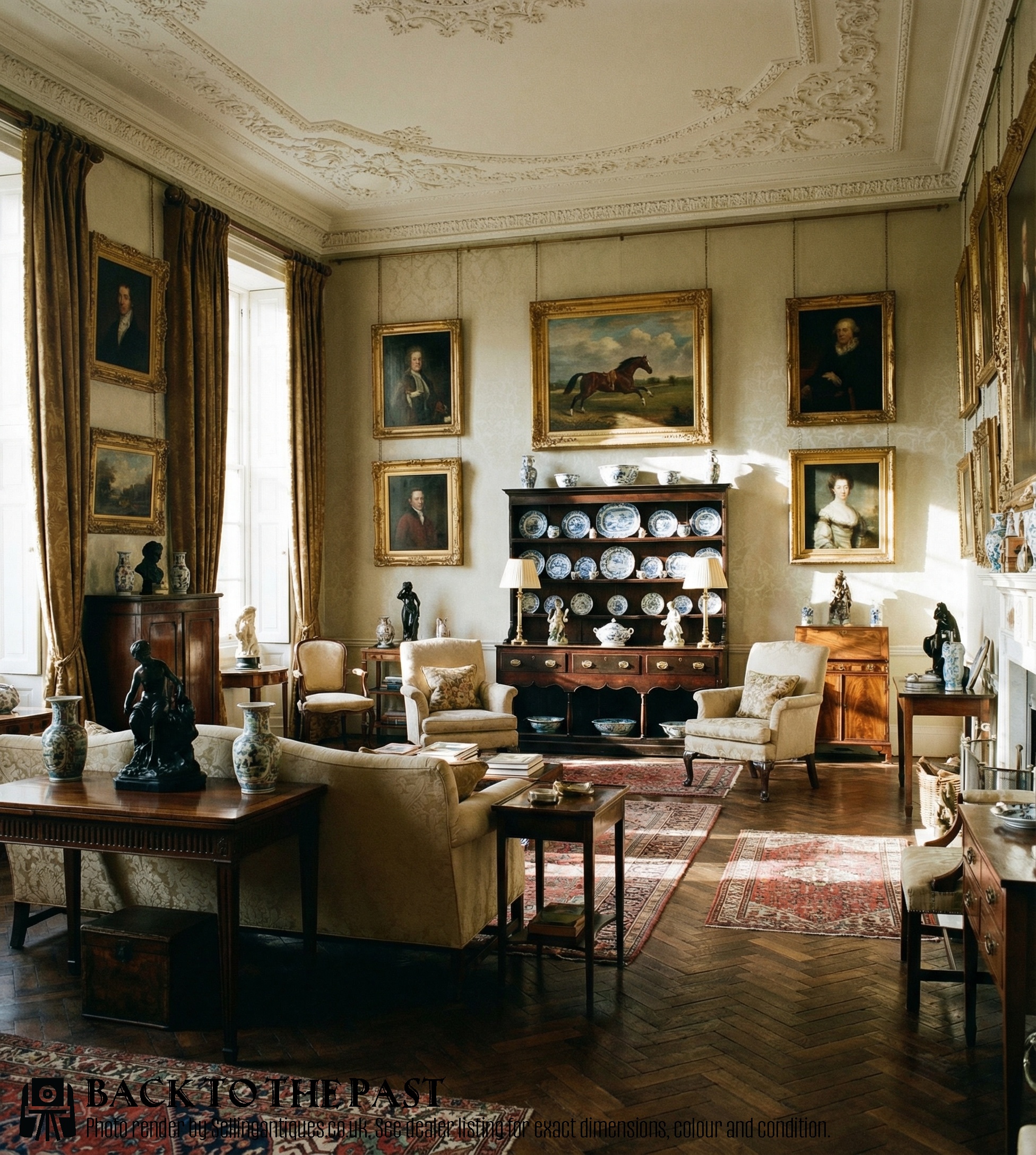
Georgian Plate Rack Dresser
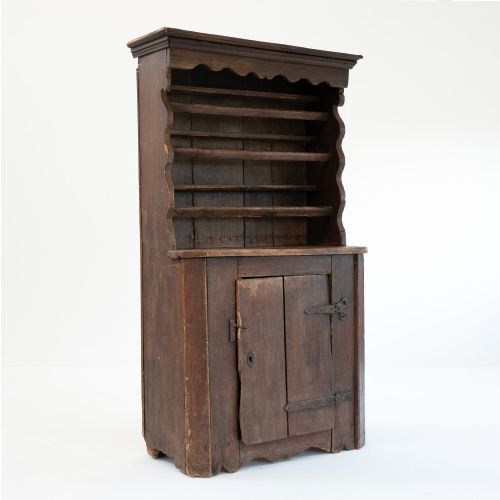
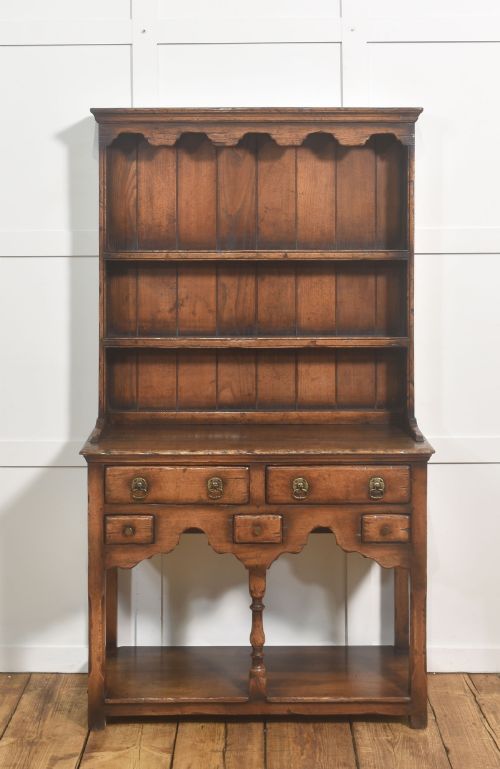
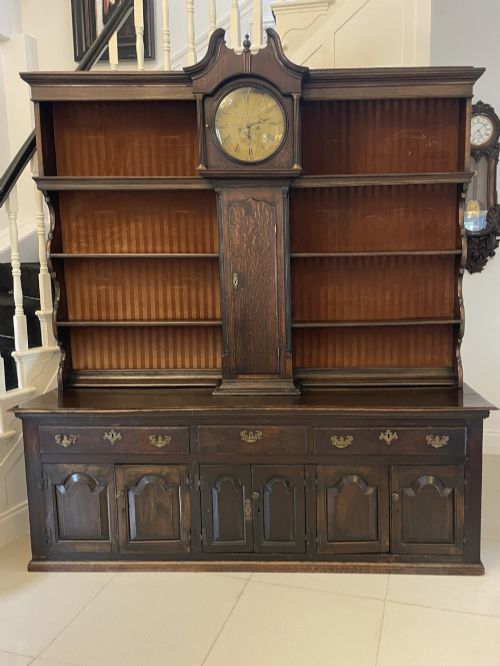
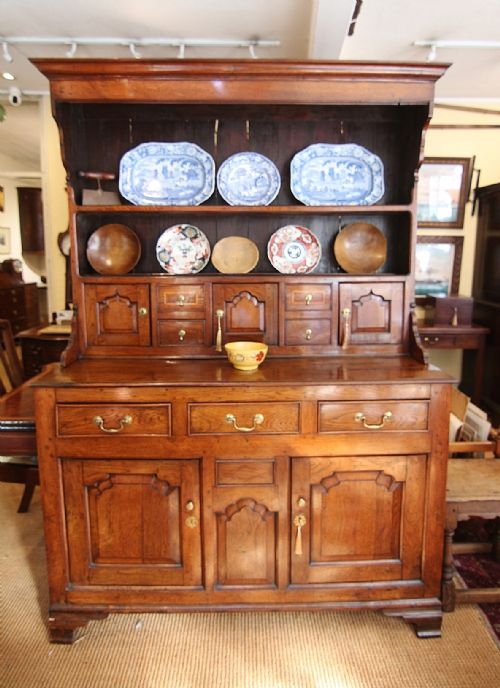
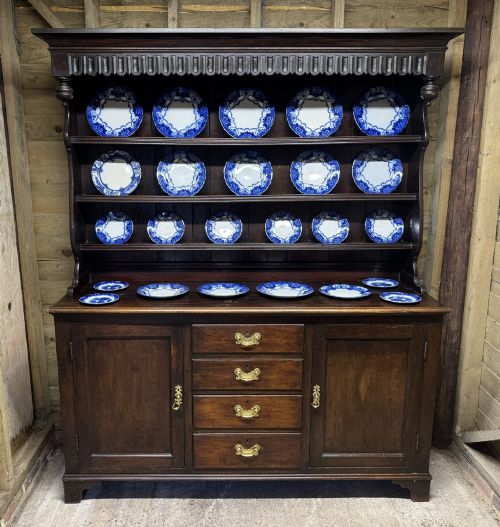
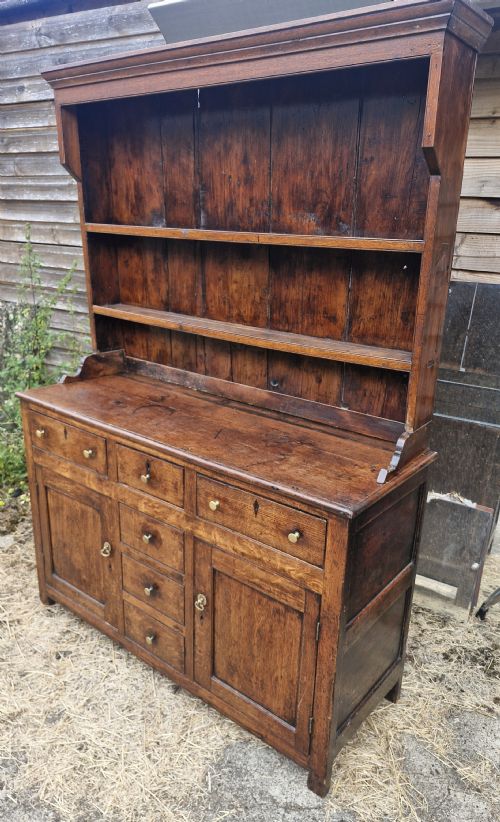
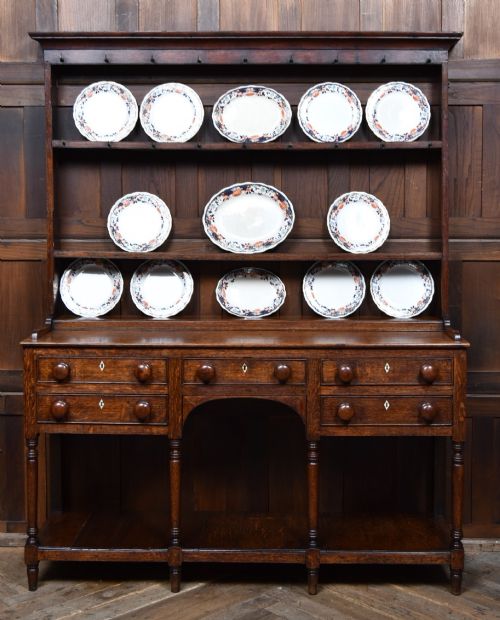
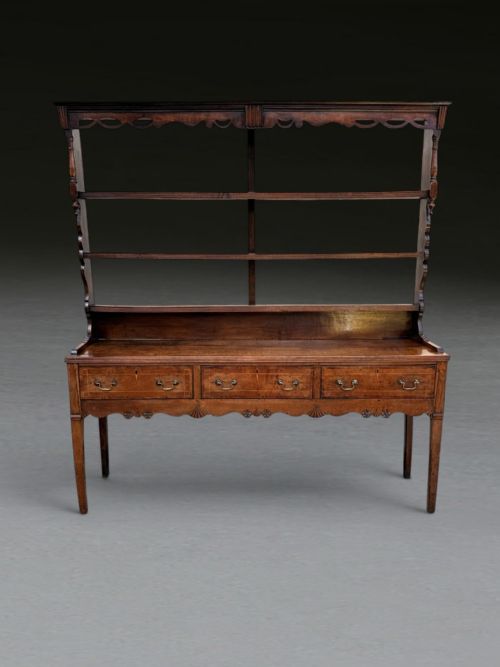
A georgian plate rack dresser combines a lower storage base, such as a potboard or drawer unit, with an upper open shelving tier designed for displaying ceramic plates.
The pieces appearing on this page largely stem from 18th-century and 19th-century workshops, spanning regional English traditions and Welsh vernacular production.
Buyers most frequently encounter robust oak examples featuring open backs, integrated plate grooves, and pegged timber construction.
Materials and Construction
Cabinetmakers relied heavily on native timbers, predominantly utilising solid oak alongside occasional pine for secondary elements and rarer instances of mahogany.
Construction relied on traditional joinery techniques, employing hand-cut dovetails for drawers and wooden pegs to secure framing timbers.
Hardware details typically incorporate cast brass drawer pulls and iron hinges, while decorative touches occasionally involve inlaid motifs or carved friezes.
Listings feature regional variations from Wales, Ireland, and West Country England, constructed primarily in solid oak and pine.
Assessing Quality
Quality rests primarily in the integrity of the timber and the preservation of original surfaces, where undisturbed patination outweighs uniformity.
Proportion and structural balance separate superior pieces from simpler utilitarian versions, especially regarding the harmonious scale between base and upper rack.
The survival of original backboards, brass hardware, and unaltered potboards dictates the ultimate standing of any individual item.
The Georgian Plate Rack Dresser Glossary
- Potboard
- A low slatted lower shelf incorporated into the base of a dresser for storing heavy kitchen pots and pans. This platform sits just above the floor on short feet or stiles.
- Delft rack
- An upper wall-mounted or integrated shelving unit designed to display tin-glazed earthenware plates upright. Grooves carved into the shelves hold the plates safely in position.
- Vernacular
- Furniture built by regional carpenters following local traditions rather than strict London design books. These pieces prioritize function and local material availability.
- Breakfront
- A piece of furniture where the central section projects forward from the flanking outer sections. This arrangement adds visual depth and varied storage capacity to the base.
- Pegged construction
- A method of joining wooden framing members using cylindrical wooden pins rather than modern steel fasteners. Makers drove these pins through mortise and tenon joints to lock the timber securely.
Georgian Plate Rack Dresser: Frequently Asked Questions
How do I style a plate rack dresser?
Utilise the open shelves to display ceramic plates, platters, and everyday crockery securely within the integrated grooves. Mixing historical ceramics with modern tableware creates a balanced, practical interior display.
Ensure heavy items rest on the deeper lower shelves while lighter saucers and bowls occupy the upper tiers. The lower base surface provides additional room for serving boards or decorative bowls.
Can I separate the top rack from the base?
Many traditional dressers comprise two separate sections consisting of a heavy base and an independent upper rack. These units typically rest together with gravity and simple fixings holding them stable against a wall.
Check the individual listing details or inspect the joining points to confirm whether the top lifts off independently. Securing tall wall racks to the wall remains essential for stability.
How do I date an oak dresser?
Examine the construction marks, timber characteristics, and hardware types to determine the period of origin. Hand-sawn board edges, pegged joints, and vernacular design traits point toward eighteenth-century or early nineteenth-century craftsmanship.
Secondary woods like pine in drawer linings and the style of brass handles help narrow down the manufacturing decade. Regional variations in Welsh and English country pieces also offer valuable chronological clues.