

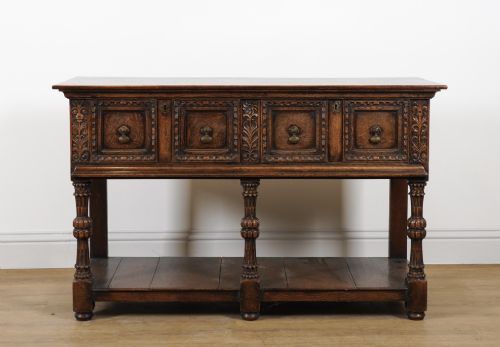
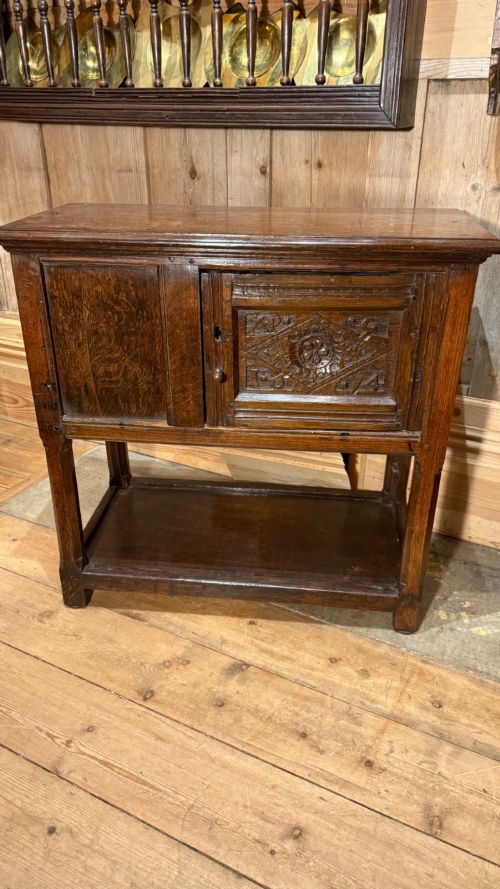
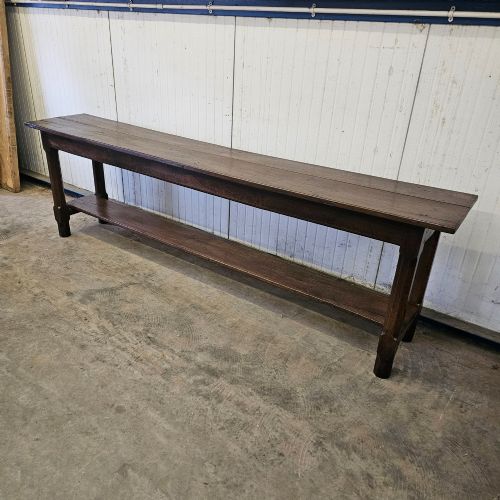
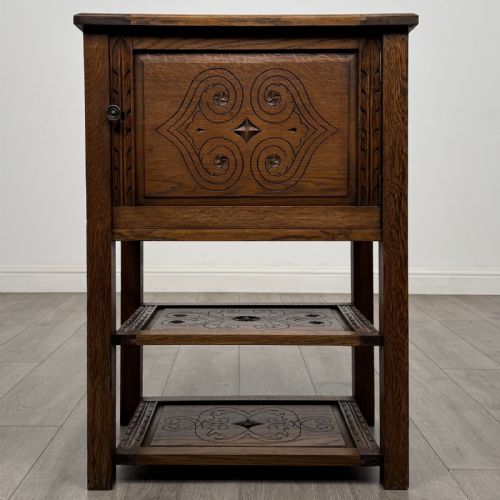
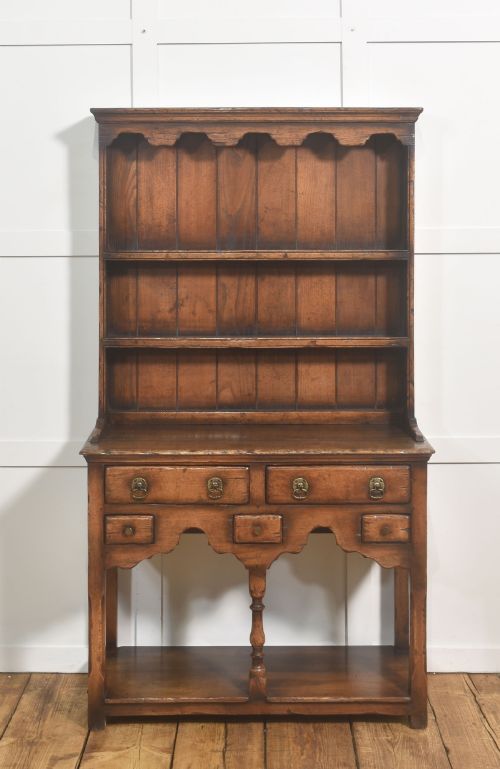


Antique Oak Pot Shelf
These antique oak pot shelf pieces are sturdy timber storage furniture built to last, offering rustic character and practical utility for modern homes.
Antique Oak Pot Shelf
On this page, buyers are most likely to encounter substantial oak dresser bases, cottage dressers, and sideboards originating from English country workshops as well as Edwardian and later periods. Forms range from two-part dressers with plate racks to compact bedside cabinets and hall tables sharing the same durable timber construction. While stylistic influences vary from Georgian refinement to Jacobean Revival and French provincial designs, heavy oak remains the unifying characteristic across the available inventory.
How they were made
Makers utilised solid oak throughout these pieces, taking advantage of the timber's inherent strength and distinct grain patterns to build furniture meant for heavy domestic service. Joinery relies on traditional methods suited to dense hardwood, ensuring structural stability without relying on modern adhesives.
Metal hardware such as brass and iron appears on hinges, handles, and occasional fittings, complementing the heavy timber construction. Selected items also incorporate glass elements in door panels or shelving, while alternative wood types occasionally support secondary interior components.
Antique Oak Pot Shelf Retail Price Guide 2026
Typical asking prices for oak pot shelf among the pieces listed under this phrase on Sellingantiques today, from the lower quarter to the upper quarter. They describe what is for sale here now, not the wider market.
Current listings feature solid oak construction spanning the seventeenth century through to the Edwardian era and the nineteen-twenties.
What varies in quality
The distinction between standard utility items and finer examples lies in the depth of the timber's grain, the crispness of any carved detailing, and the integrity of the original construction. Superior pieces display thoughtful proportions and harmonious integration between upper plate racks and lower pot board storage bases.
Surface finish and patination heavily influence the character of each piece, with naturally aged timber surfaces commanding greater appreciation than heavily altered or stripped equivalents. The balance between utilitarian strength and refined regional styling determines the standing of individual examples within the broader tradition.
The Antique Oak Pot Shelf Glossary
- Pot board
- The lower open shelf in a dresser base, traditionally used for storing heavy pots and pans off the damp stone floor. It defines the lower profile of many traditional kitchen dressers.
- Dressers and hutches
- Storage furniture combining lower cupboards or drawers with upper shelving for displaying plates and tableware. They represent a primary form within country and formal dining spaces.
- Jacobean revival
- A nineteenth and early twentieth century style copying seventeenth century ornamentation, featuring geometric mouldings and turned supports. This aesthetic appears frequently on later oak furniture.
- Patination
- The lustrous surface sheen developed by aged wood and metal through decades of handling, polishing, and exposure to light. It serves as a key indicator of genuine age and continuous use.
Antique Oak Pot Shelf: Frequently Asked Questions
What is an antique oak pot shelf?
An antique oak pot shelf is the lower open tier found beneath traditional dressers and sideboards, historically designed to hold heavy kitchen pots.
Today, these sturdy timber structures serve as versatile sideboards or display bases in kitchens and dining rooms.
How do I care for antique oak furniture?
Antique oak benefits from regular dusting with a dry cloth and occasional application of traditional beeswax to nourish the timber.
Keep pieces away from direct heat sources and extreme humidity fluctuations to prevent the solid wood from splitting.
What periods do these oak pieces come from?
The inventory spans multiple centuries, including seventeenth, eighteenth, and nineteenth century examples alongside Edwardian and early twentieth century reproductions.
Revival styles from later periods frequently emulate earlier Georgian and Jacobean construction methods.
Are these pieces suitable for modern kitchens?
These robust oak items provide excellent storage and counter space, making them highly functional additions to contemporary rustic or traditional kitchens.
Their durable timber construction easily handles everyday modern use while adding historical character to a room.