
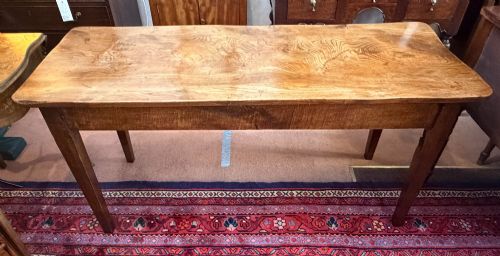
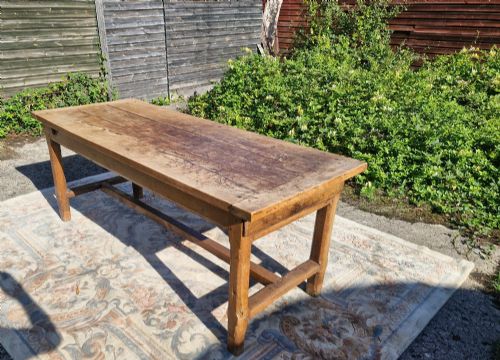
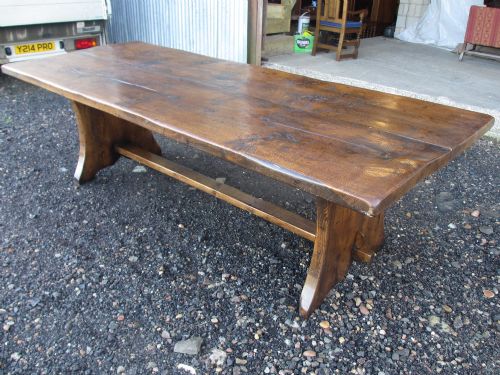
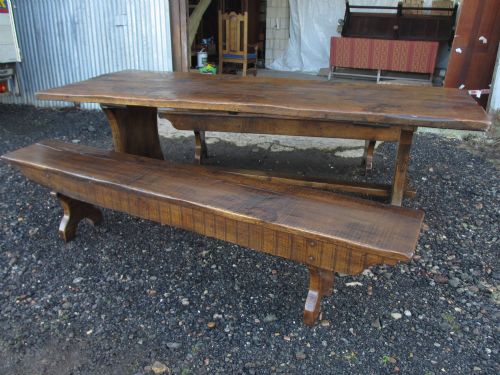
Antique Oak Plank Table
An antique oak plank table brings honest timber and centuries of domestic use straight into a modern dining room.
Antique Oak Plank Table
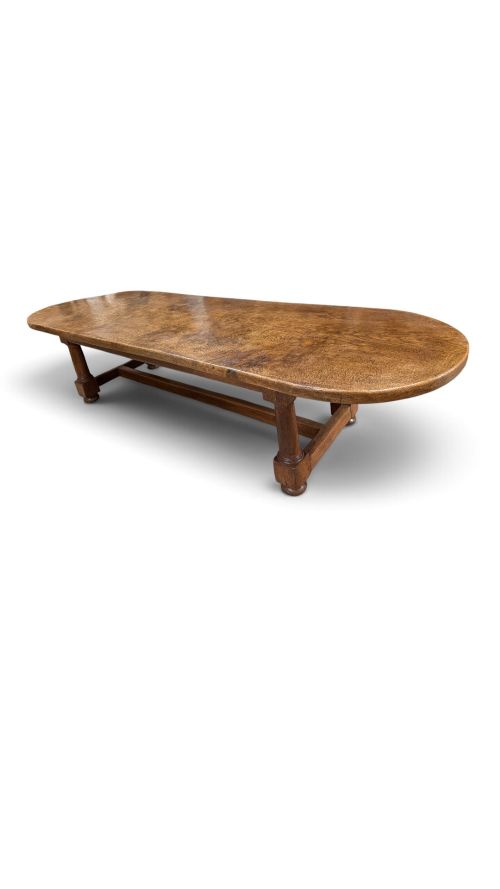
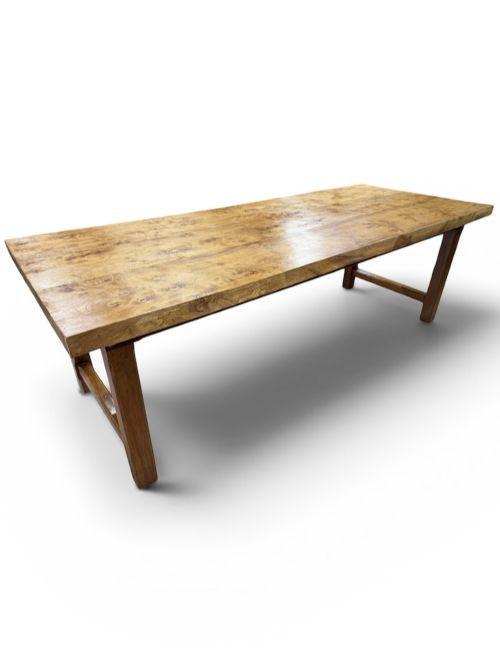
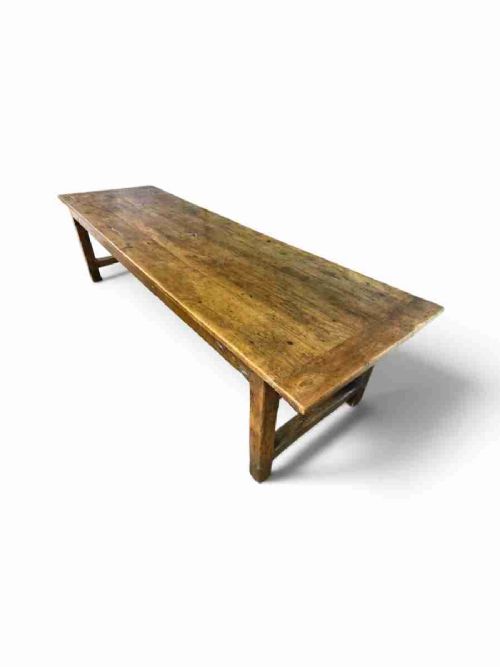
When you search for an antique oak plank table, you encounter robust dining surfaces created for practical everyday living across rural and urban households. The selections available span centuries of domestic design, from formal Georgian refectory boards to unpretentious country kitchen tables.
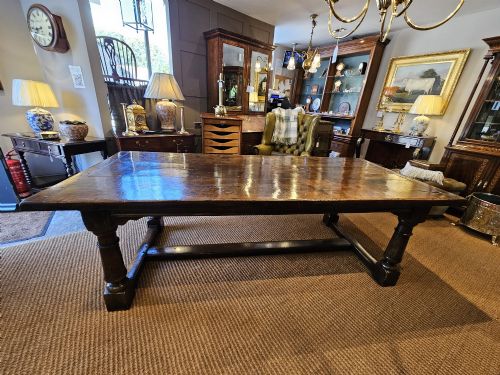
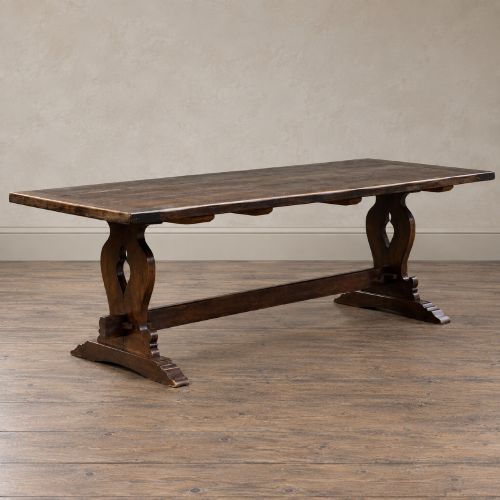
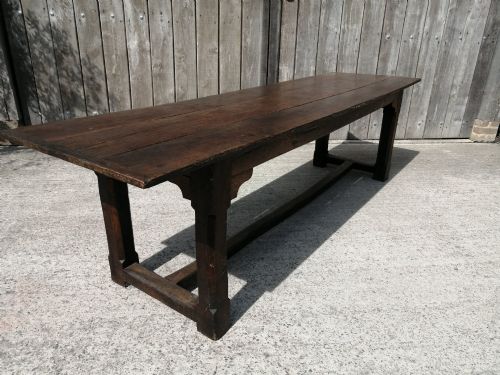
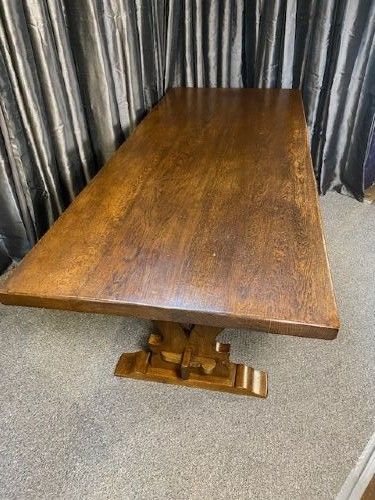
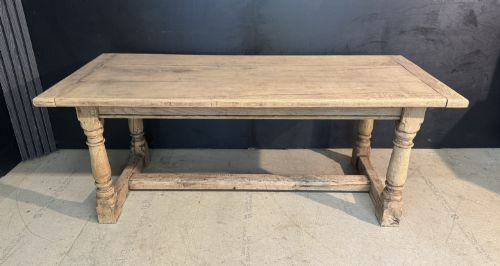
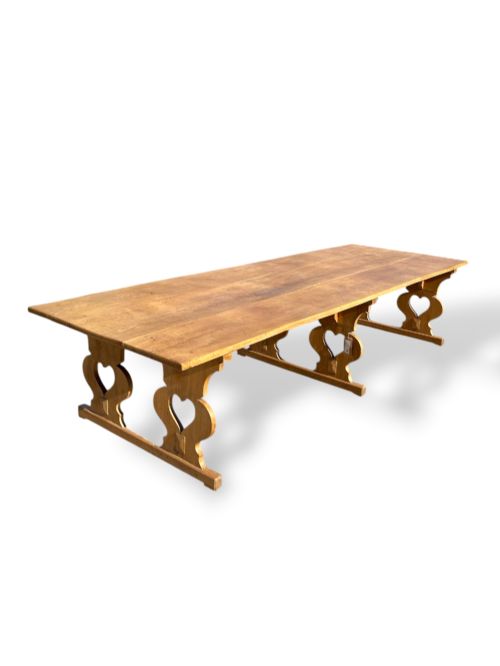
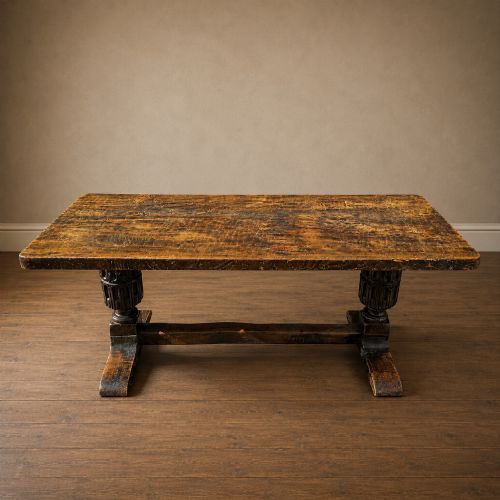
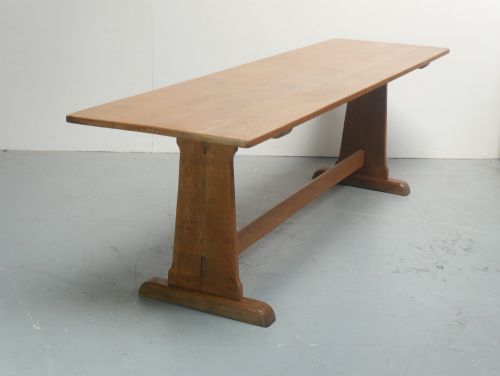
The most common formats on this page include long refectory designs resting on trestle ends or turned legs, alongside gateleg and drop-leaf variations built for versatility. These heavy pieces range from single-plank tops to wide boards joined neatly together, often accompanied by matching benches or primitive seating.
Examples appear from the seventeenth, eighteenth, and nineteenth centuries, as well as later Edwardian and early twentieth-century revivals. Whether French provincial, English country, or Jacobean in spirit, each table reflects the utility of its original period.
Materials and construction methods
Carpenters constructed these surfaces using dense native hardwoods, primarily selecting solid oak alongside supplementary timbers like elm, beech, ash, and pine for bases or secondary boards. Timber selection dictated the longevity of the top, which needed to withstand daily kitchen preparation and communal dining without excessive warping.
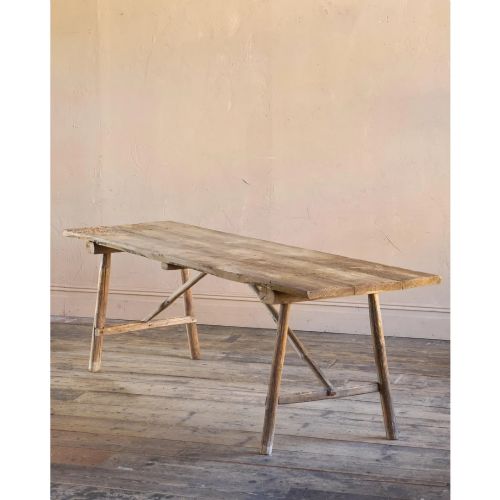
Joinery relied on traditional pegged joints, sturdy stretcher frames, and heavy trestle ends rather than modern metal fasteners. Cabinetmakers fashioned wide boards from mature trees, leaving visible grain patterns and tool marks that record hand-sawing and planing techniques of past centuries.
Listings feature robust nineteenth-century country examples alongside refined eighteenth-century Georgian refectory tables and early twentieth-century revival pieces.
Distinguishing quality and character
The distinction between ordinary and exceptional pieces lies in the width and integrity of the timber boards forming the top. Tables featuring a single wide plank or two perfectly matched boards command greater appreciation than those assembled from numerous narrower strips.
Structural harmony also dictates value, where original underframes, period-appropriate stretcher bases, and untouched patination elevate a piece. Evidence of genuine age, such as dry surface shrinkage and wear around the edges, separates honest historic examples from later revivals.
Heals
The Antique Oak Plank Table Glossary
- Refectory table
- A long, narrow dining table originally designed for communal dining in monastic or institutional halls. Later adaptations became staples of domestic farmhouse kitchens.
- Plank top
- A table surface constructed from thick boards running the full length of the piece. These boards display the natural growth rings and grain patterns of mature timber.
- Gateleg table
- A drop-leaf table with hinged flaps supported by hinged legs that swing outward like a gate. This mechanism allows the table to expand or fold down when not in use.
- Trestle ends
- Support structures consisting of horizontal feet connected by vertical uprights and crossbeams. They distribute weight evenly beneath long dining surfaces.
- Bread slide
- A pull-out wooden board integrated beneath the tabletop of certain continental kitchen tables. Historically, bakers used this surface to cool loaves or prepare dough.
Antique Oak Plank Table: Frequently Asked Questions
How do I care for a historic oak surface?
Maintain the timber by applying natural beeswax periodically to nourish the dry wood and protect against moisture. Avoid placing hot dishes directly onto the historic finish.
Keep the table away from direct heat sources and sudden temperature fluctuations to prevent the heavy oak planks from splitting or warping over time.
How many people do these large tables seat?
Seating capacity varies according to the length and width of the specific frame, with many refectory formats comfortably accommodating six to eight diners. Longer variants from the Georgian and Victorian eras extend this capacity to ten or twelve individuals.
Check the leg placement and trestle clearance beneath the top to ensure chairs slide in comfortably along the entire length.
How can I tell an eighteenth-century top from a later revival?
Examine the underside of the boards for hand-tool marks, peg construction, and uneven thickness resulting from early pit-sawing techniques. Period timber also exhibits deep patination and shrinkage that modern machinery cannot replicate.
Revival pieces from the early twentieth century often feature uniform machine planing and tighter, more standardised joinery beneath the frame.
Were these tables used exclusively in kitchens?
While many served as robust farmhouse kitchen surfaces for food preparation and family meals, larger examples functioned in dining rooms, libraries, and taverns. Sturdier models easily transitioned between domestic work and communal gatherings.
The inclusion of drawers or bread slides often points toward domestic kitchen utility, whereas formal refectory designs populated large reception spaces.