
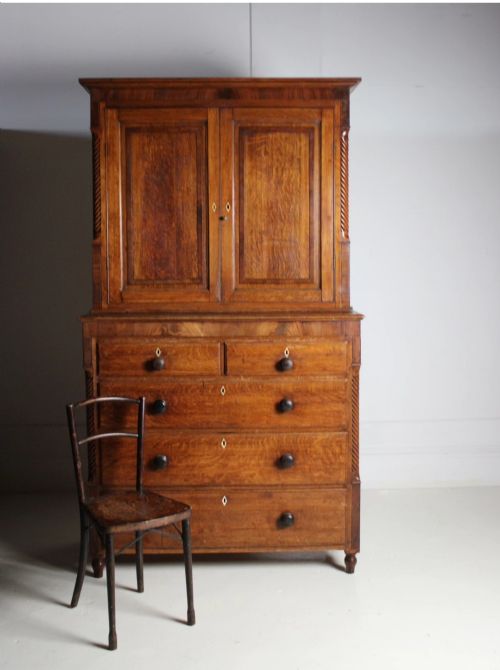
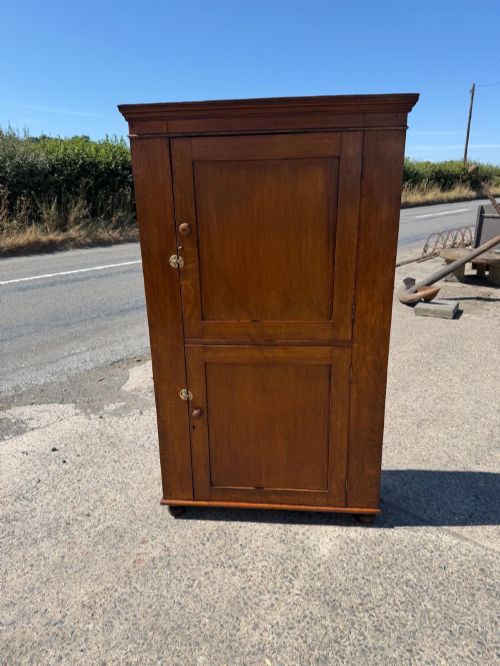
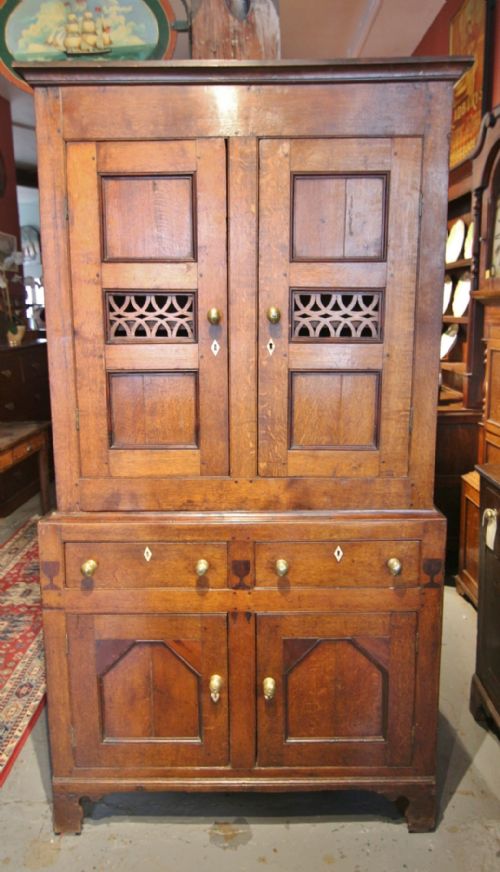
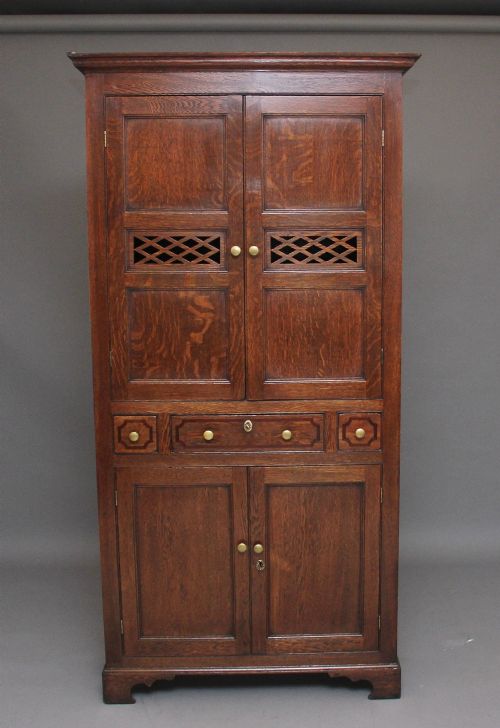
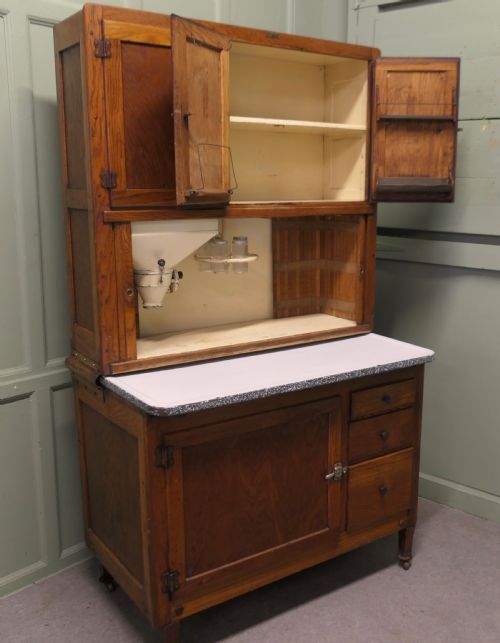
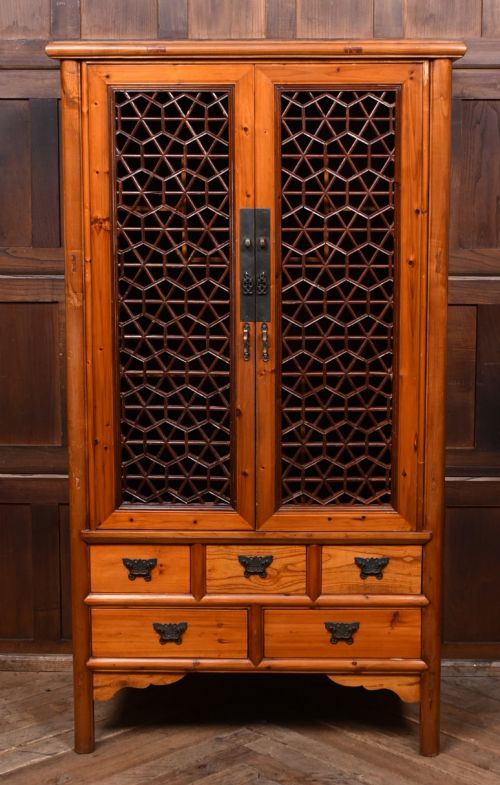


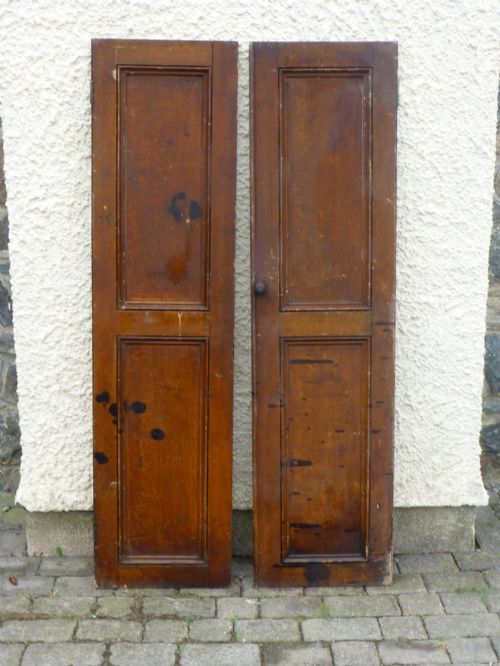
Antique Oak Pantry Cupboard
An antique oak pantry cupboard brings substantial rural character and timeless utility to a modern kitchen.
Antique Oak Pantry Cupboard
When you search for an antique oak pantry cupboard, you encounter robust storage pieces designed for domestic provisions across various centuries. These utilitarian items encompass forms such as housekeeper cupboards, food cupboards, and kitchen cabinets built for storing daily stores.
The versions most frequently met on this page span the eighteenth and nineteenth centuries, reflecting both English country craftsmanship and continental origins like French provincial styles. Many examples feature simple panelled doors, while regional variations include Welsh vernacular designs and American kitchen cabinets.
Builders constructed these cabinets to withstand heavy daily use in farmhouses and large households alike. Their enduring appeal lies in straightforward construction combined with the warm grain and rich patination characteristic of aged timber.
Materials and construction methods
Makers relied primarily on solid oak for durability, often supported by secondary timbers like pine in hidden structural areas. Artisans shaped these domestic woods using traditional joinery techniques, creating sturdy frames designed to hold heavy stores of food and household goods.
Hardware details added both function and decorative contrast to the timber surfaces. Blacksmiths forged iron hinges and latches, while later pieces incorporated brass fittings, bone escutcheons, and occasionally enamel or glass elements in more specialised kitchen storage units.
Regional styles represented on this page include French provincial, Welsh vernacular, and American Edwardian kitchen cabinets.
Assessing quality in regional storage
The standard of a pantry cupboard depends heavily on the integrity of its timber and the honesty of its construction. Pieces retaining their original brass or iron hardware and unblemished panelled doors represent a higher grade of preservation.
Regional variations also influence desirability, such as the distinctive decorative detailing found on Welsh vernacular pieces or French provincial storage cabinets. Finer examples display harmonious proportions and careful selection of oak boards that showcase natural grain patterns.
Hudson Bros
The Antique Oak Pantry Cupboard Glossary
- Housekeeper cupboard
- A large storage cabinet traditionally used for linens, dry goods, and kitchen provisions. These pieces typically feature double doors opening to shelves or interior drawers.
- Food cupboard
- A specialised cabinet built with panelled or ventilated doors to store perishables safely. They often include mesh or pierced panels to allow air circulation.
- Welsh vernacular
- Regional furniture styles originating from Wales that emphasise sturdy local craftsmanship and practical utility. These objects often display distinctive proportions and local timber selections.
- Scumbled finish
- A decorative surface treatment applied to mimic natural wood grain on lesser timbers. Artisans used this technique to give ordinary pine or other woods the appearance of oak.
- Bun feet
- Rounded, flattened ball feet that support the base of heavy nineteenth-century cabinets. They lift the main body of the furniture slightly off floor dampness.
Antique Oak Pantry Cupboard: Frequently Asked Questions
What is an antique oak pantry cupboard used for?
These large storage cabinets originally served to store food, dry provisions, and household utensils in farmhouses and country homes. Today, collectors utilise them in modern kitchens or dining rooms for storing tableware, linens, and pantry items.
The deep shelving and robust framework accommodate modern kitchen goods just as effectively as historical provisions. Their enclosed spaces help keep contemporary dining spaces organised while adding historical presence.
How do I date an antique oak pantry cupboard?
Dating relies on examining construction methods, timber characteristics, and hardware types used in the cabinet. Eighteenth-century examples often display hand-planed surfaces, pegged joints, and wrought iron hinges, whereas nineteenth-century pieces may incorporate machine-cut elements and brass fittings.
Stylistic cues such as Georgian proportions or Victorian bun feet also provide clear chronological markers. Comparing the door panel construction and backboards helps distinguish earlier vernacular pieces from later industrial-era kitchen cabinets.
Are French and English pantry cupboards different?
French provincial cupboards frequently exhibit softer lines, lighter oak tones, and distinct regional carving traditions. English and Welsh vernacular pieces tend to prioritize heavier framing, straightforward utility, and deep panelled doors suited to British country houses.
Both traditions utilised local oak timbers, but the decorative mouldings and interior layouts reflect the distinct domestic habits of each region. Examining the cornice and hinge styles usually reveals the geographical origin of the cabinet.
How do I care for an antique oak cupboard?
Preserving these wooden cabinets requires maintaining a stable indoor humidity away from direct heat sources and strong sunlight. Regular dusting with a dry, soft cloth prevents surface grime from dulling the historic wax or polish.
Avoid using modern silicone polishes, which can penetrate porous historic oak and damage the natural patination. Applying a traditional beeswax occasionally helps nourish the aged timber and protects the surface.