
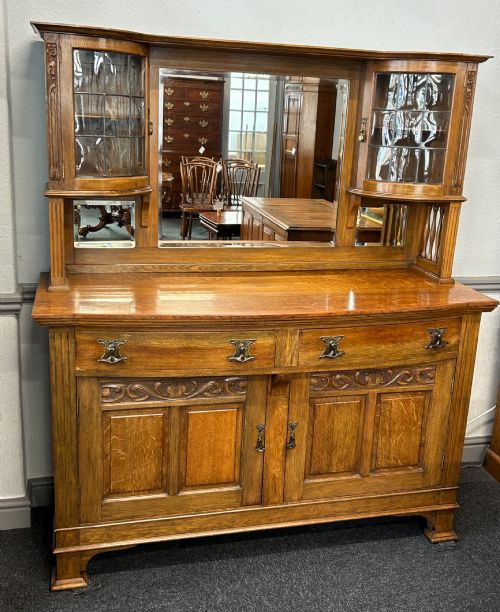

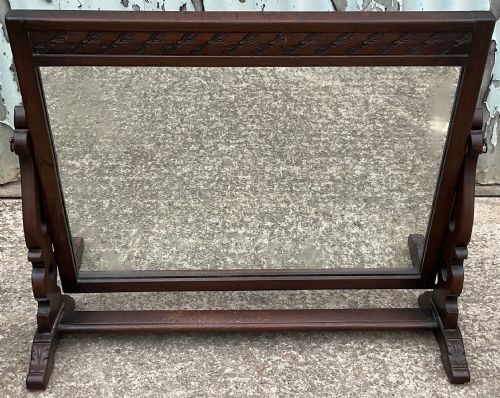

Antique Oak Glass Mirror
An antique oak glass mirror brings solid timber grain and clear reflection together, offering a piece built to anchor a room.
Antique Oak Glass Mirror
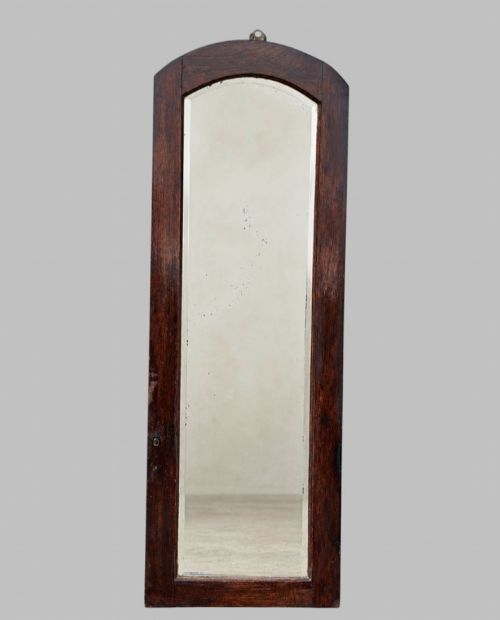
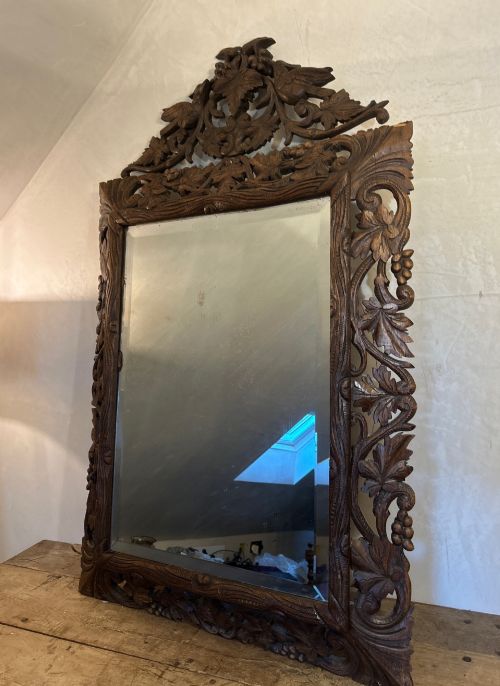
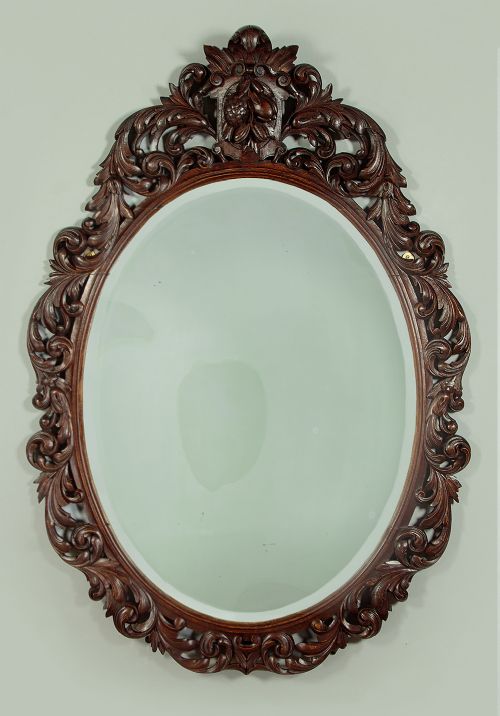
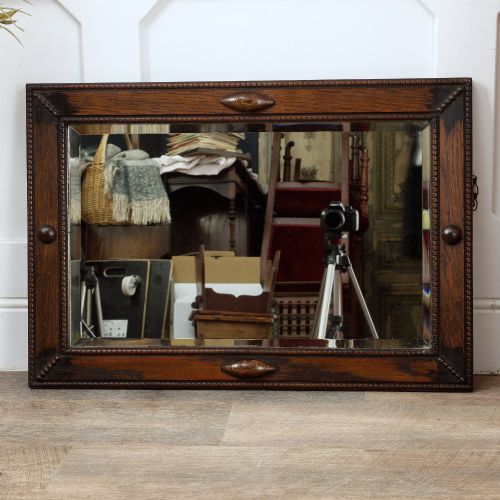
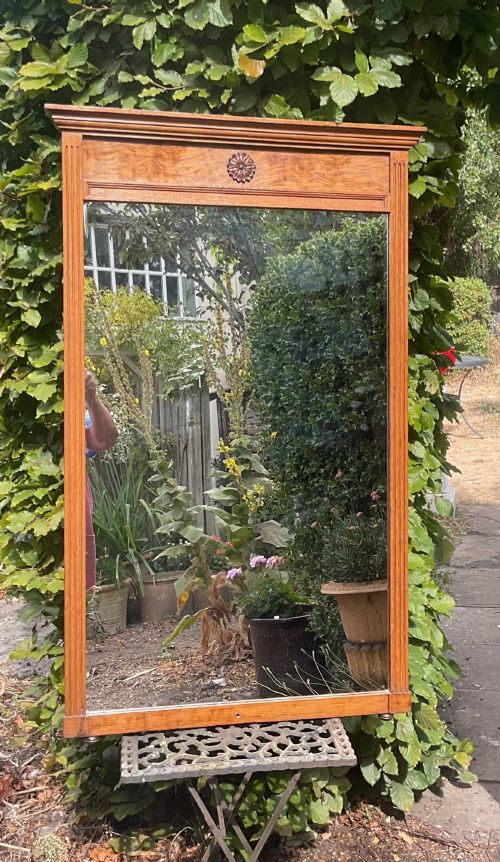
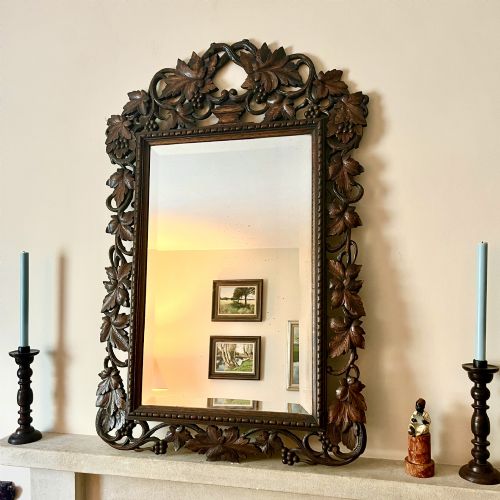
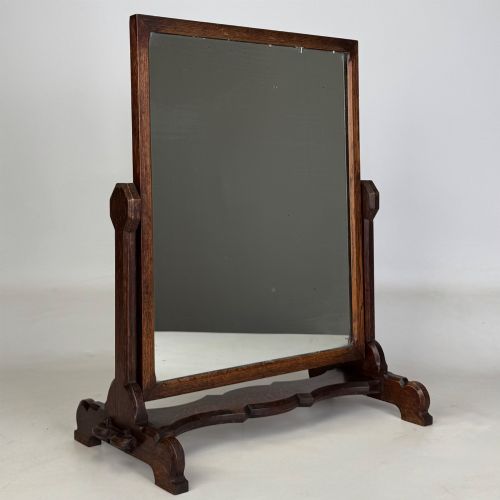
When you search for an antique oak glass mirror, you encounter frames shaped across the Victorian, Edwardian, and early twentieth-century periods. The selection spans wall-mounted formats, dressing table mirrors, and large overmantels designed to sit above a fireplace.
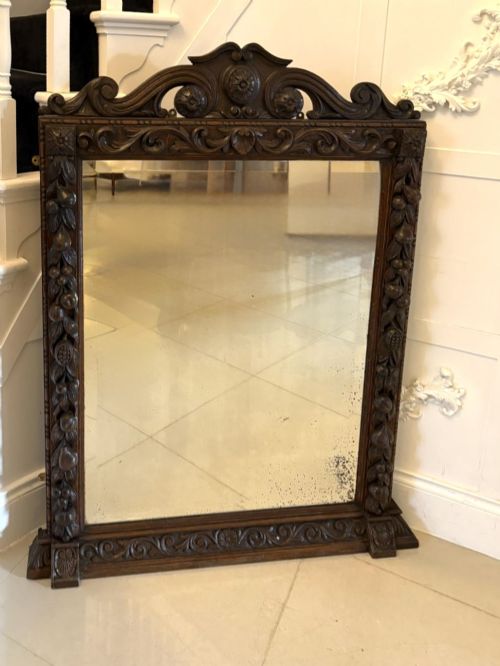
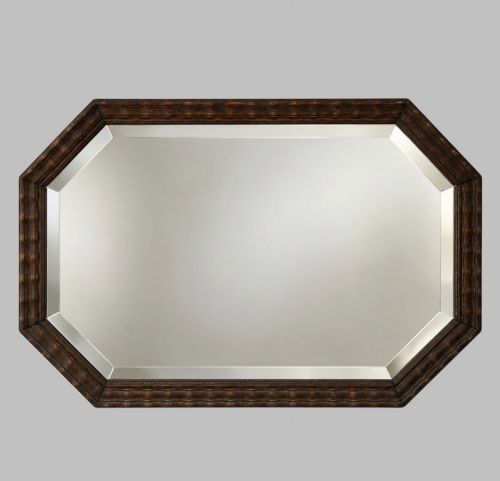
Most examples rely on domestic timber or imported oak variants, paired with heavy glass plates that often feature bevelled edges. Forms range from simple cushioned mouldings to deeply carved panels influenced by Gothic Revival, Jacobean Revival, and Arts and Crafts design.
The pieces originate from British workshops alongside continental European makers, reflecting regional tastes in timber finishing and decorative carving. Wall mirrors and overmantels dominate the current selection, offering practical reflective surfaces framed in sturdy hardwoods.
How they were made
Frames are constructed from solid oak, sometimes utilising blonde oak or fumed finishes to alter the tone of the wood grain. Joinery involves traditional pegged or dowelled corners designed to support the substantial weight of thick glass plates.
Mirrors are secured using original timber backboards held by small retaining blocks, while decorative elements rely on hand-carved relief work, applied gesso, or copper strapwork. Bevels on the glass were shaped by hand grinding and polishing, producing a distinct slanted edge around the perimeter.
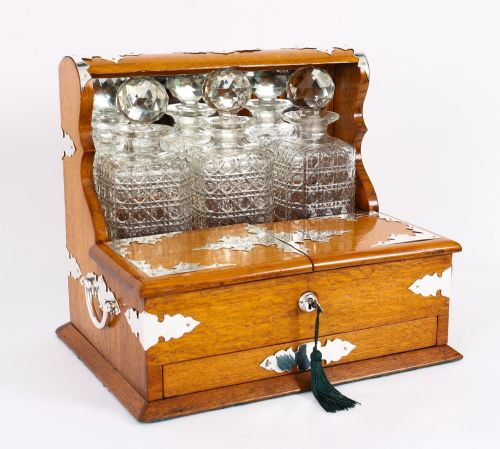
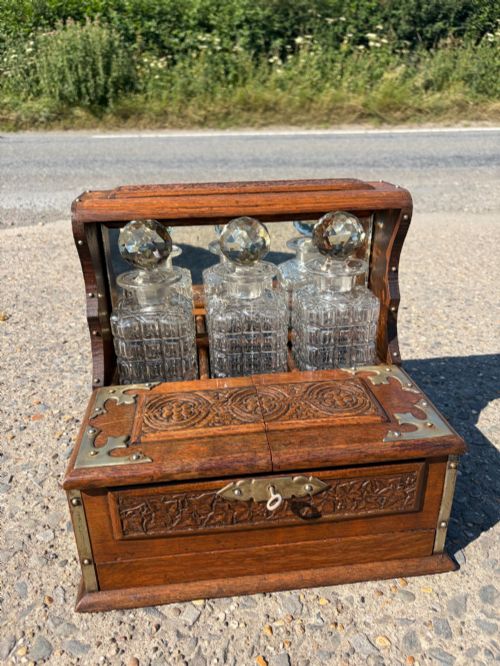
Several mirrors come with secret compartments for storing small treasures, reminding us that Victorians loved hiding things.
What varies in quality
The distinction between standard utility items and finer examples lies in the depth and crispness of the timber carving. Superior pieces display sharply defined mouldings and well-balanced proportions that integrate the frame with the glass plate.
Glass quality also differs, where older mercury silvering or early silver-nitrate coatings exhibit natural foxing and oxidation. The integrity of the original oak backing boards and the presence of untouched hanging fixings indicate a higher degree of preservation.
Waring and Gillow
The Antique Oak Glass Mirror Glossary
- Bevelled glass
- A glass plate with an angled edge ground and polished down from the full thickness of the sheet. This technique catches the light and adds depth to the perimeter of the reflection.
- Overmantel mirror
- A large horizontal mirror designed specifically to be hung on the wall directly above a fireplace mantelpiece. These frames often match the architectural scale of Victorian and Edwardian chimney breasts.
- Arts and Crafts
- A design movement favouring honest construction, visible timber grain, and hand-wrought decorative elements such as copper strapwork. It rejected mass-produced industrial ornamentation in favour of traditional craftsmanship.
- Gesso
- A plaster-like material applied to wooden frames as a base for gilding or surface decoration. It can be moulded into relief patterns before hardening.
- Foxing
- Small dark spots and speckled discoloration that develop naturally within the silvered backing of older glass over time. Collectors view this chemical ageing as a sign of authenticity.
Antique Oak Glass Mirror: Frequently Asked Questions
What causes dark spots on antique mirror glass?
The speckled marks, known as foxing, occur when moisture slowly degrades the silver backing applied to the rear of the glass. This chemical reaction develops naturally over decades of exposure to ambient humidity.
Many collectors value this ageing process as proof of genuine age rather than a defect. It distinguishes traditional silvering from modern reflective coatings.
How should I clean an antique oak frame?
Dust the carved timber regularly with a soft, dry cloth to prevent particulate build-up in the recesses of the grain. Avoid modern silicone polishes that can leave a sticky residue and attract dust.
Apply a traditional beeswax sparingly if the timber appears dry, buffing it gently after application. Keep moisture away from both the wood and the vulnerable edges of the mirror glass.
Are these mirrors suitable for bathrooms?
High humidity and fluctuating temperatures can damage antique oak timber and accelerate the decay of the mirror silvering. Bathrooms generally lack the stable environment required to preserve nineteenth-century adhesives and backing boards.
Positioning them in dry reception rooms, hallways, or bedrooms ensures the wood and glass remain stable. Adequate ventilation is essential if placed near areas prone to moisture.