



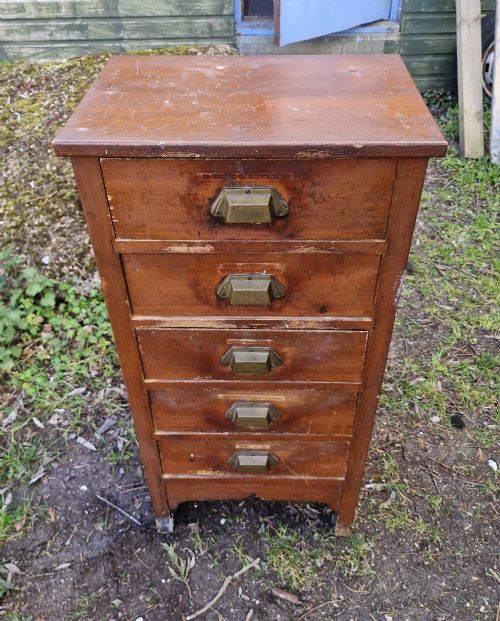

Antique Oak Filing Cabinet
An antique oak filing cabinet brings serious working history into a modern room, offering deep drawers and sliding shutters that hide modern clutter.
Antique Oak Filing Cabinet
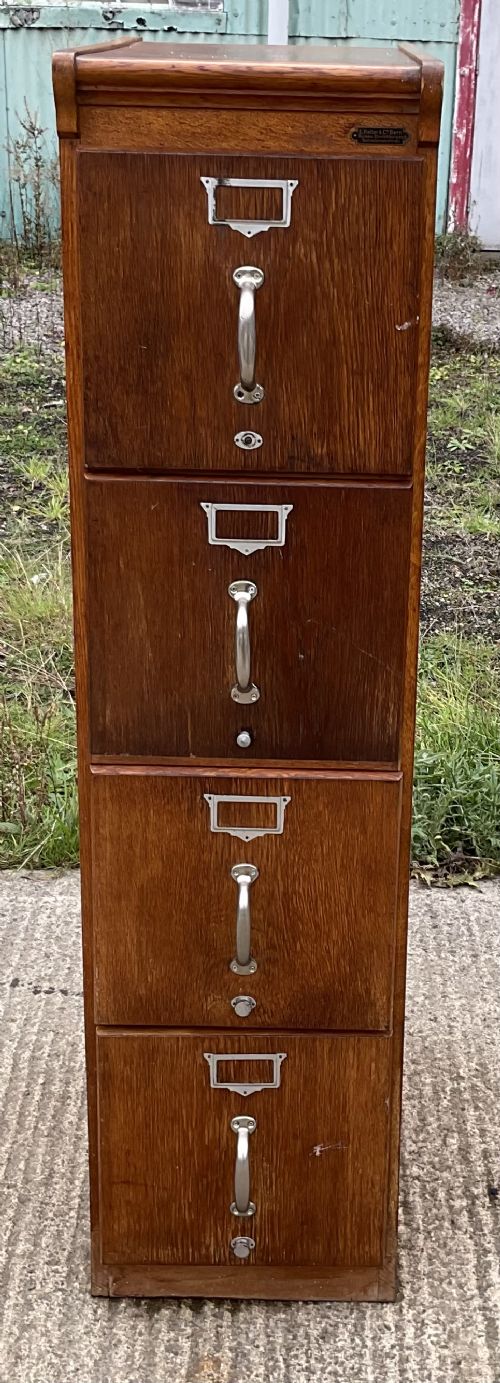
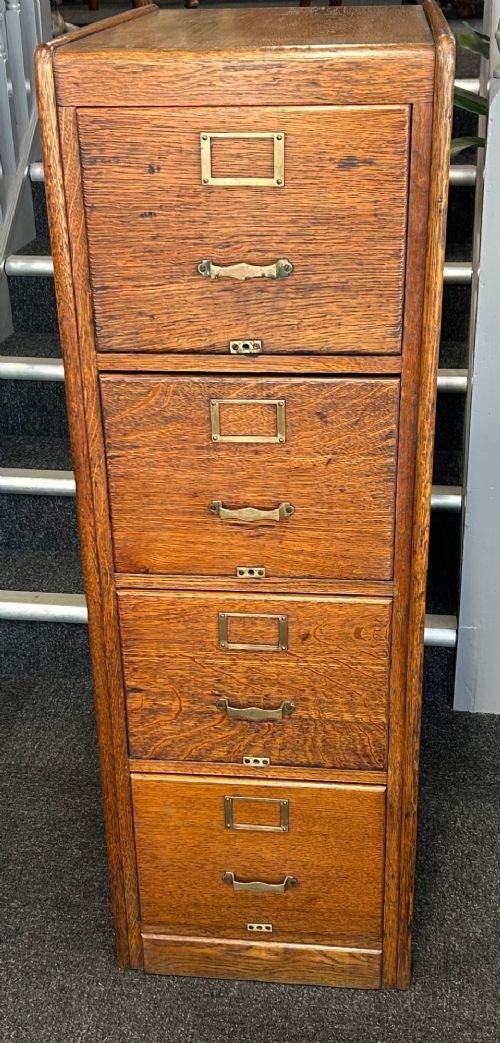
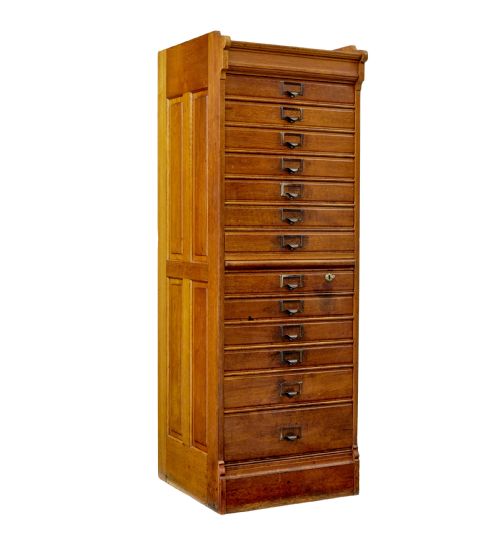
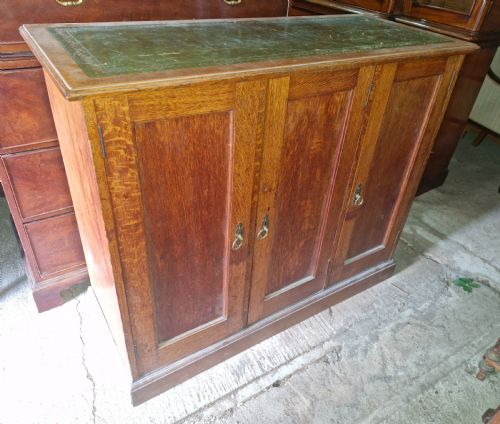
An antique oak filing cabinet serves as a heavy-duty piece of office furniture designed to organise documents, letters and papers. When you search for this phrase, you meet items built primarily during the late Victorian, Edwardian and early twentieth-century periods. These range from single-column roll-front cupboards to massive multi-drawer banks.
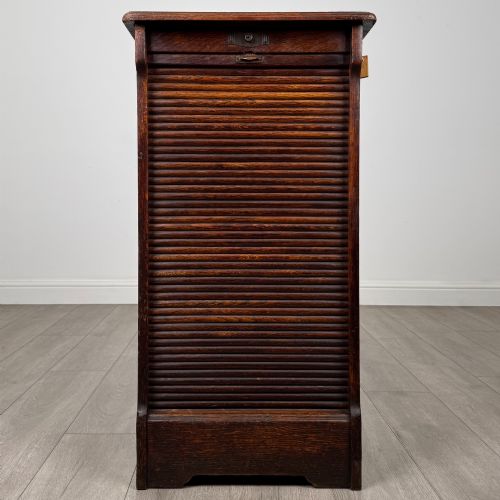
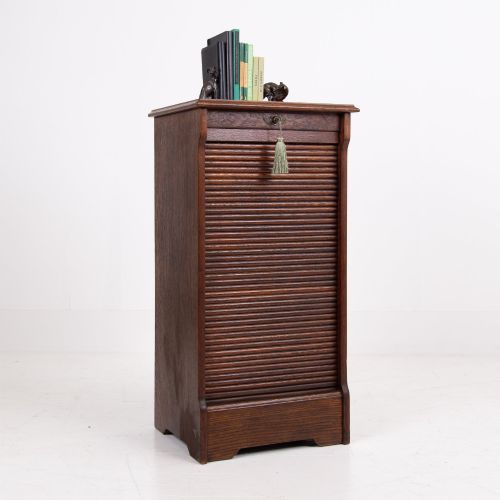
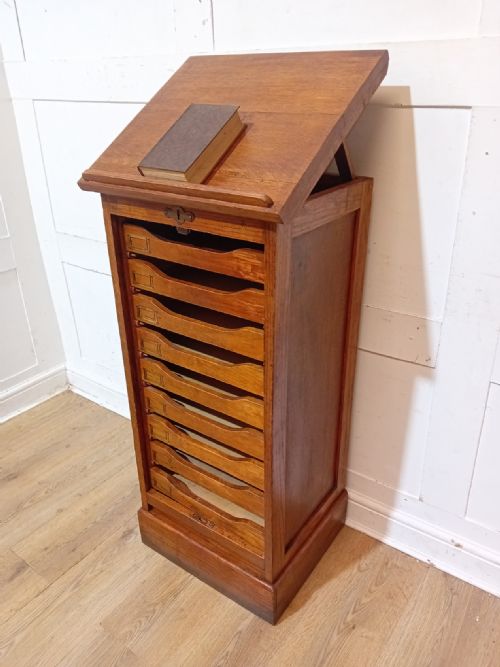
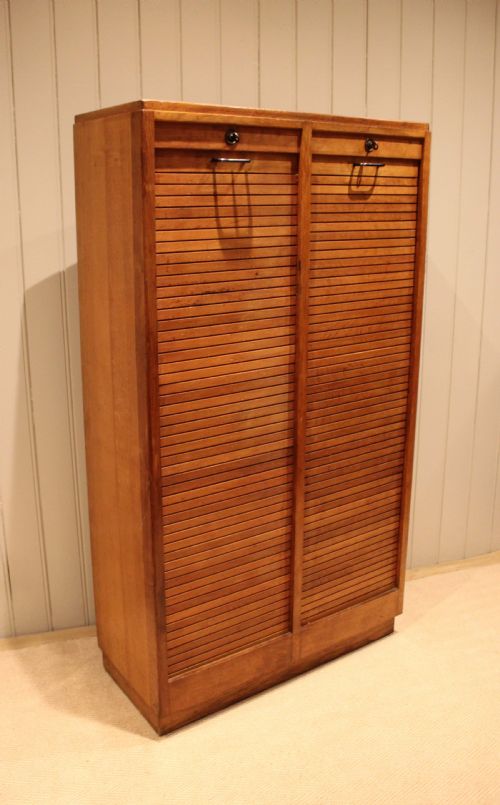
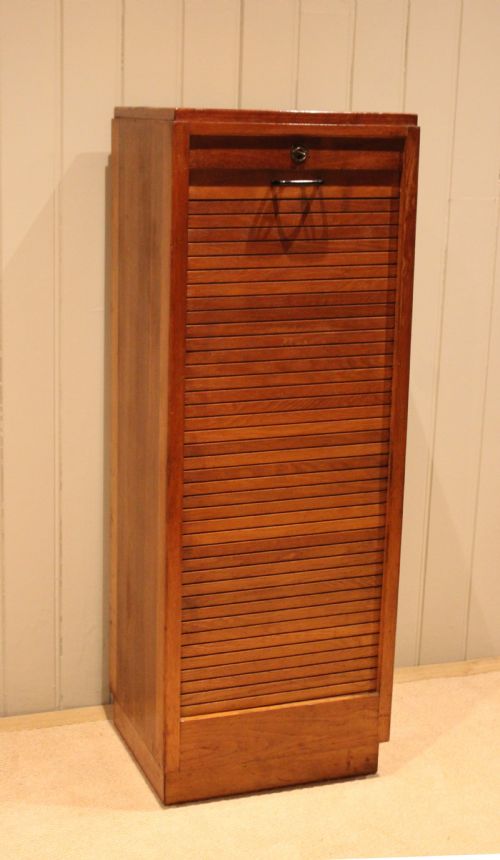
The version you are most likely to find on this page is the single tambour front filing cabinet in oak. These examples usually date from the Edwardian era up through the nineteen-thirties, often featuring slatted wooden shutters that slide smoothly around the side of the carcass to reveal internal letter drawers.
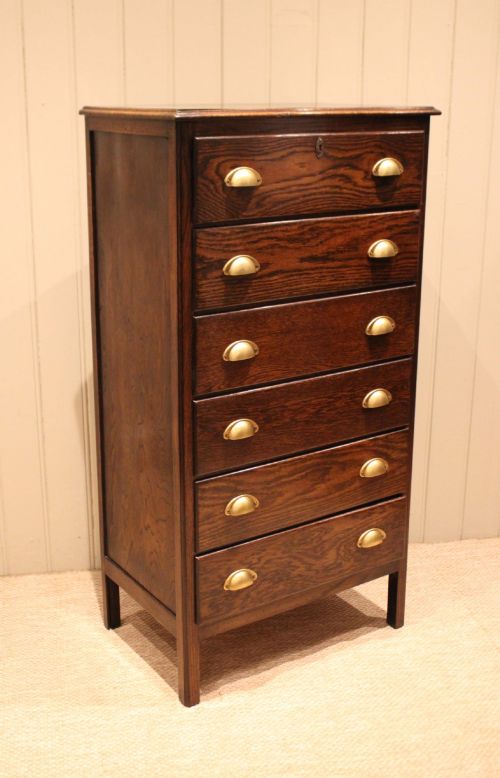
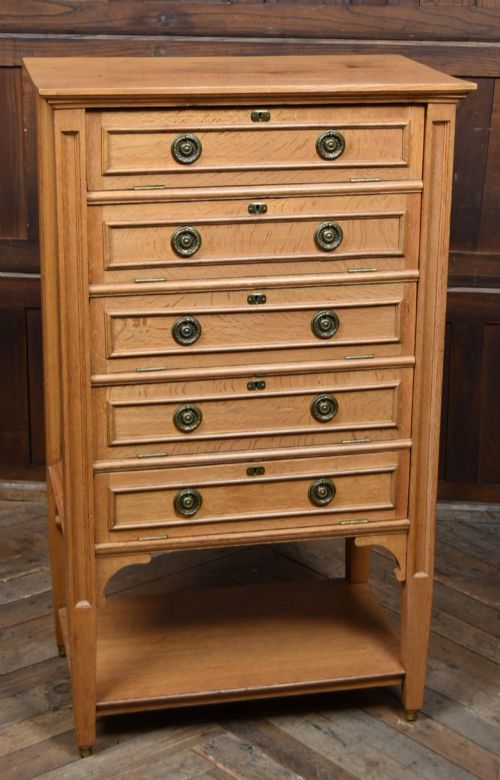
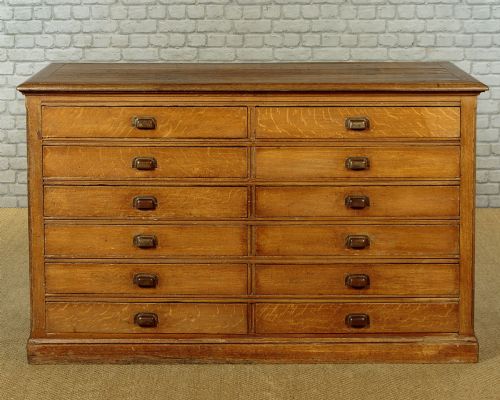
Alongside standard vertical filing chests, the selection spans related office and commercial forms. You will encounter tall banks of drawers, index letter files bearing patent mechanisms, music cabinets and plan chests made of solid or veneered timber.
How they were made
Cabinetmakers built these office pieces using sturdy timbers framed to withstand daily commercial use. Solid oak and oak veneers form the main body, occasionally backed with pine or lined with secondary woods, while internal drawer dividers and runners use lighter woods.
Function dictated the mechanics, integrating clever joinery with metal hardware. Tambour doors rely on numerous small wooden slats glued to canvas or fabric backings, allowing the flexible shutter to curve around internal tracks.
Handles, label holders and locking mechanisms utilise cast brass, steel and iron. Many incorporate patent locking systems operated by a single long security bar running down the side of the drawer stack.
Antique Oak Filing Cabinet Retail Price Guide 2026
Typical asking prices for oak filing cabinet among the pieces listed under this phrase on Sellingantiques today, from the lower quarter to the upper quarter. They describe what is for sale here now, not the wider market.
Keep an eye out for sixty-six drawer units designed to swallow tiny stationery items whole.
What varies in quality
The grade of timber and the ambition of the internal mechanism set pieces apart. Superior examples employ quarter-sawn oak with prominent medullary rays, coupled with complex patented filing systems and substantial brass hardware.
Construction methods reveal the intended market of the original office furniture. Finely made cabinets feature hand-dovetailed drawer boxes and smooth-running tambour tracks, whereas utility models rely on simpler mechanical fastenings and plain sawn boards.
Maple & Co·Amberg·Shannon
The Antique Oak Filing Cabinet Glossary
- Tambour
- A flexible sliding shutter made from narrow strips of wood affixed to canvas. It retracts into the side of the cabinet to conceal the drawers.
- Quarter-sawn oak
- Timber cut radially through the growth rings, producing a distinct flecked grain pattern often prized in period furniture.
- Wellington chest
- A tall, narrow chest of drawers secured by a hinged vertical locking bar on one side that fastens with a key.
- Plan chest
- A wide, shallow multi-drawer cabinet originally designed for storing architectural drawings, maps and large documents.
- Bank of drawers
- A large chest containing numerous shallow or deep drawers arranged in vertical columns, built for high-capacity filing.
Antique Oak Filing Cabinet: Frequently Asked Questions
How do tambour doors work?
Tambour doors consist of thin wooden slats attached to a flexible canvas backing that runs in recessed grooves. When pulled, the entire shutter slides around the curved corner of the cabinet carcass.
This mechanism allowed offices to save floor space because the doors did not swing outward into the room like standard cabinet doors.
Will modern paper fit inside?
Many period filing cabinets feature internal drawers sized for historical paper formats or specific filing systems like cards and letters. Some older cabinets accommodate modern paper sizes easily, while others require careful measurement of the internal drawer width and depth.
Checking the internal dimensions ensures standard folders or documents sit comfortably inside the historic runners.
How do I date an oak filing cabinet?
Dating relies on stylistic clues, hardware design, and construction techniques visible across the piece. Edwardian and early twentieth-century examples often display specific brass label holders, patent stamps, and quarter-sawn oak surfaces.
Later utility pieces from the nineteen-forties adopt simpler lines and minimal decoration due to wartime material restrictions.
Where should I place a heavy filing cabinet?
Solid oak office furniture carries significant weight, especially when filled with paper documents. Placing the cabinet against a sturdy load-bearing wall prevents tipping and distributes the mass safely across floor joists.
Ensuring adequate clearance in front of the piece allows tambour doors and deep drawers to open fully without obstruction.