
Antique Oak Dining Server
An antique oak dining server provides substantial surface area and storage for food and tableware, anchoring a traditional dining room with robust timber.
Antique Oak Dining Server
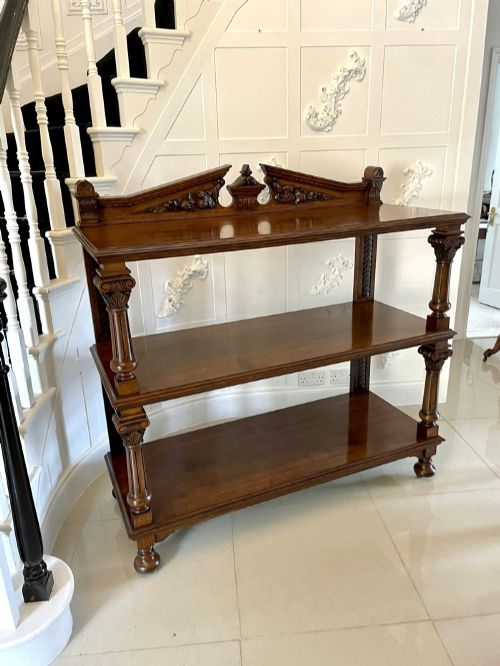
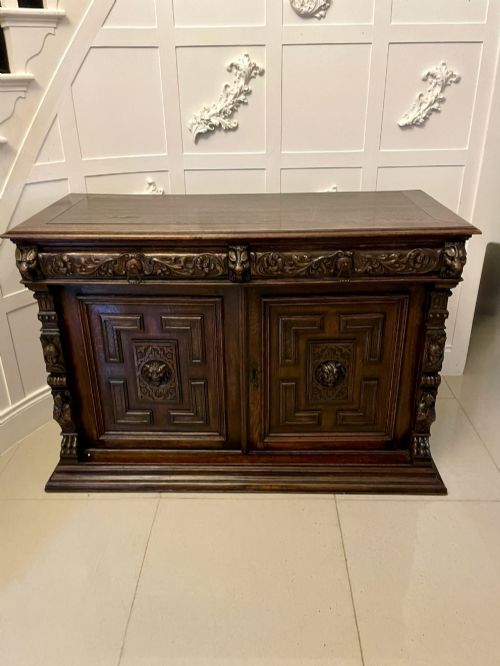
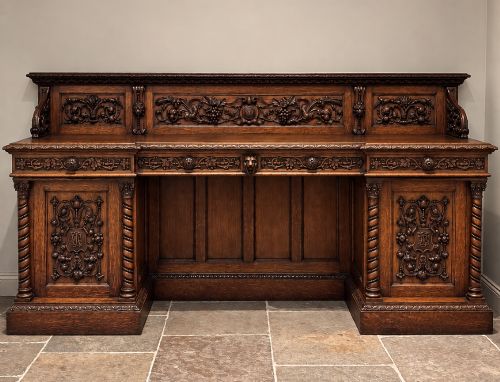
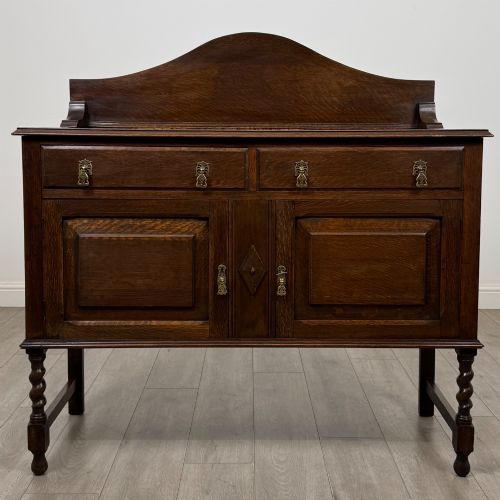
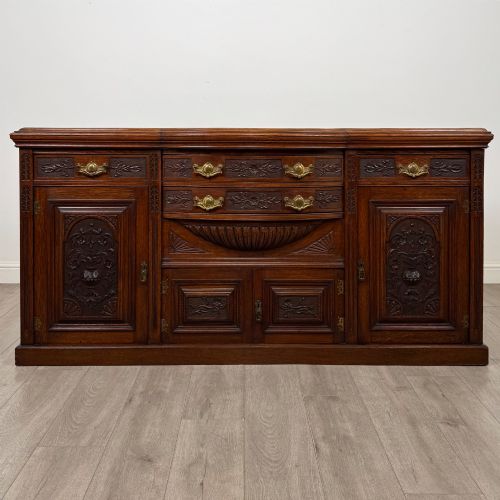
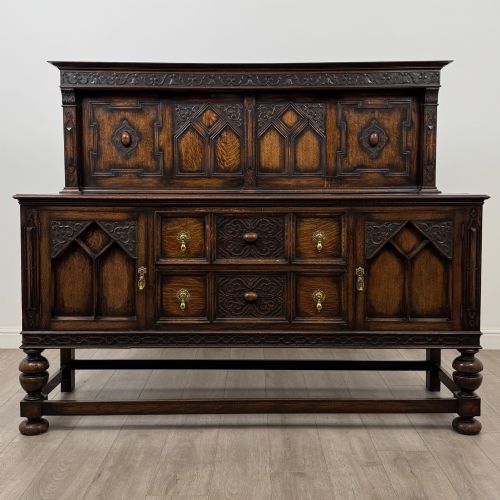
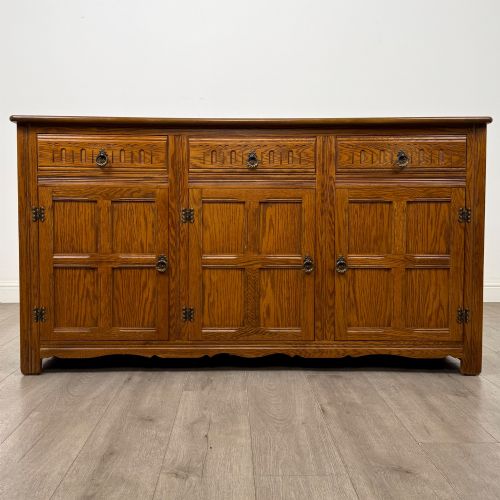
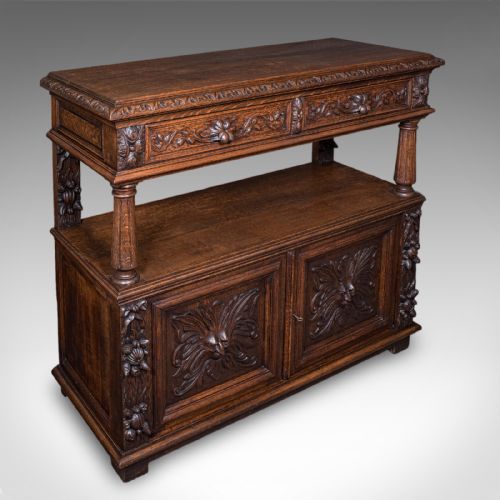
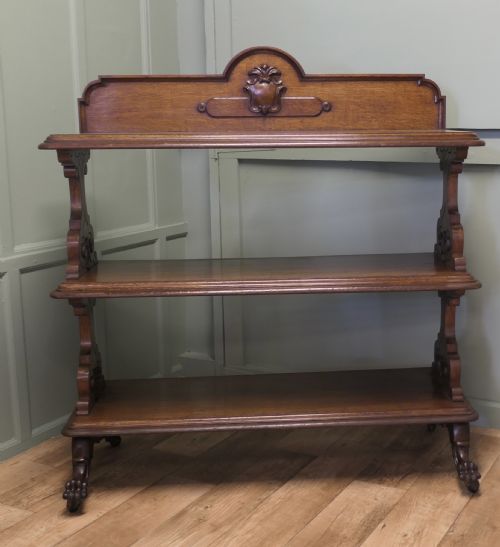
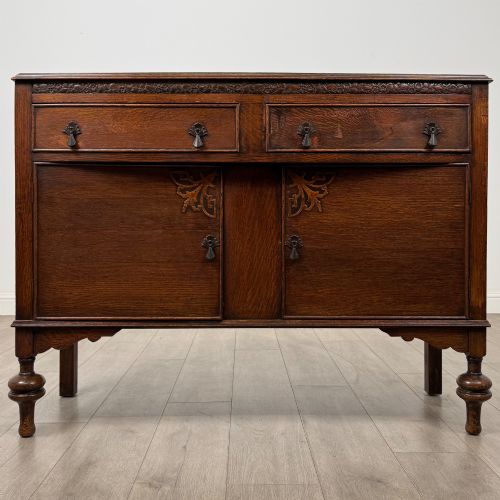
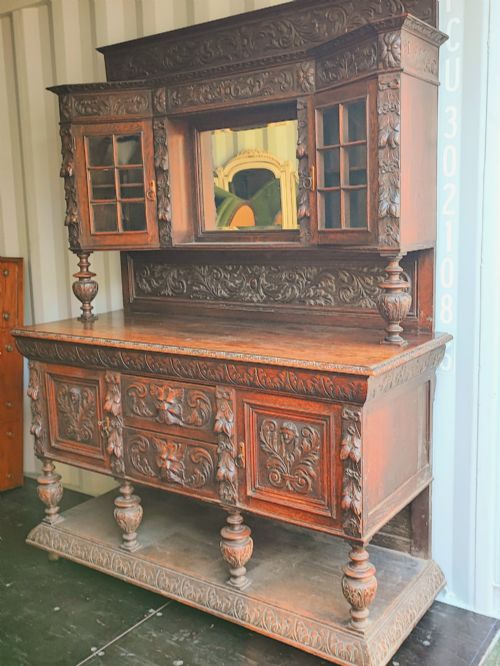
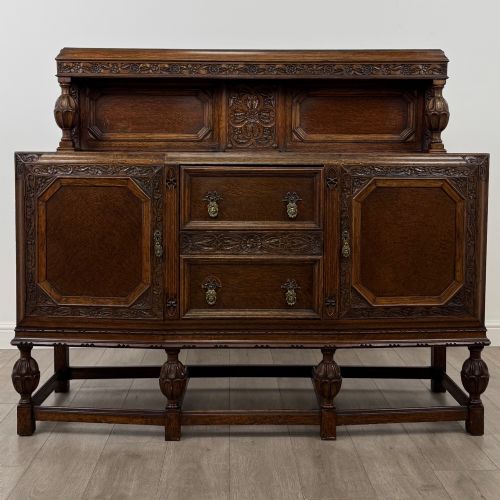
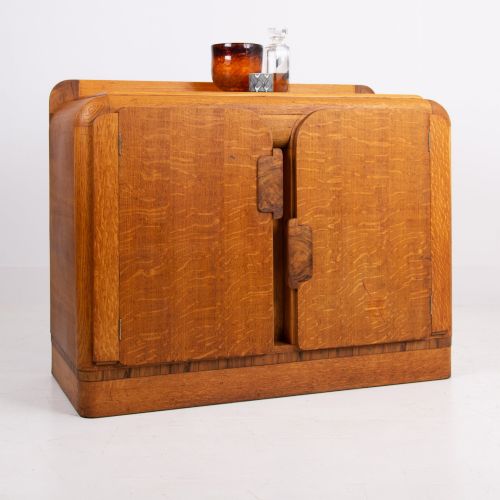
When searching for an antique oak dining server, collectors encounter heavy timber case pieces built for domestic dining rooms. These functional items include sideboard forms, buffets, server tables, dumbwaiters, and dresser bases designed to hold service dishes and cutlery.
Construction and materials
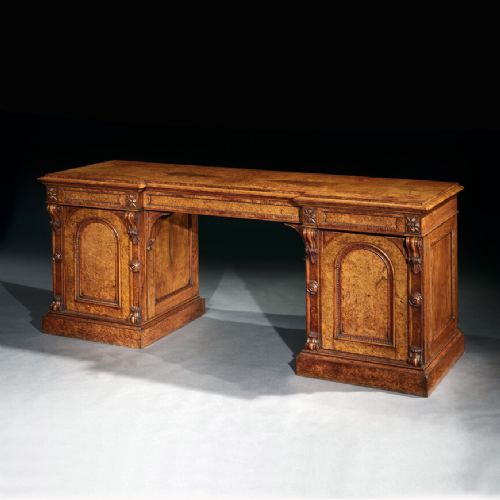
Cabinetmakers constructed these servers primarily using solid oak, occasionally selecting figured pollard oak or burr walnut veneers to enhance primary visual surfaces. Secondary structural elements sometimes incorporate pine or fruitwood depending on the regional workshop.
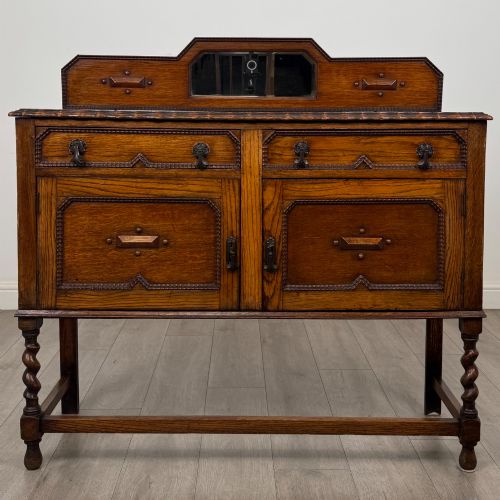
Joinery methods relied on traditional pegged mortise and tenon frames to support heavy timber tops and internal shelving. Workshops applied hand-carved details, applied mouldings, and turned supports such as barley twist legs to execute styles ranging from Jacobean Revival to Gothic and Arts and Crafts.
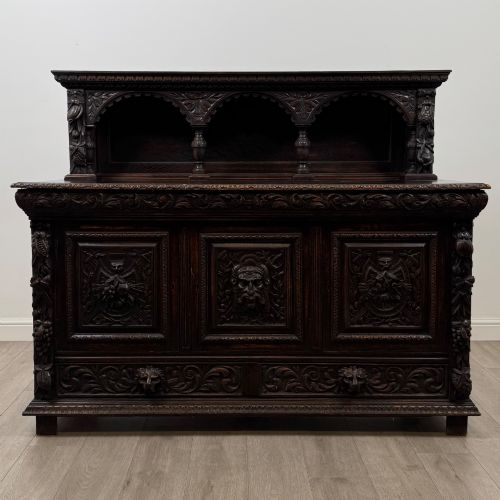
Carved wooden faces peer out from forest-inspired panels, watching quietly over generations of dinner parties.
Judging quality in oak servers
Quality rests upon the selection of timber figures and the crispness of hand-carved ornamentation rather than mechanical uniformity. Superior examples display carefully matched grain patterns across primary doors and drawer fronts, alongside deeply undercut carvings that retain sharp edges.
Construction integrity separates master workshop output from ordinary production. Fine servers feature well-fitted drawers with smooth interior runs, heavy brass or iron hardware original to the piece, and stable timber frames unaffected by improper past storage.
Heals of London
The Antique Oak Dining Server Glossary
- Dumbwaiter
- A multi-tiered freestanding serving piece designed to hold dishes without requiring constant servant attention during meals. These items feature rotating or fixed circular shelves supported on central pedestals.
- Dresser base
- A low wooden storage cabinet featuring cupboards and drawers beneath a flat top surface, historically used in dining spaces for food preparation and display. They originate from early country houses.
- Pollard oak
- Timber harvested from trees that were cut back heavily to promote a dense cluster of branches, producing a highly figured, mottled grain pattern. Cabinetmakers prized this wood for decorative veneers on high-status furniture.
- Court cupboard
- A heavy enclosed piece of dining furniture featuring an upper recessed cabinet supported by pillars above a broader lower section. They served to display plate and store provisions.
- Barley twist
- A turned wooden furniture leg or support shaped into a continuous spiral resembling a twist of barley. This decorative motif appears frequently on Edwardian and seventeenth-century revival oak pieces.
Antique Oak Dining Server: Frequently Asked Questions
How do I date an oak server?
Dating requires examining the construction techniques, hardware, and stylistic revival influences present in the woodwork. Pieces range from eighteenth-century provincial frames to Victorian Gothic interpretations and twentieth-century Arts and Crafts designs.
Tool marks, drawer linings, and specific carved motifs like Green Man masks or barley twists help place the piece within its historical manufacturing period.
Where should I place a server?
These large timber units suit dining rooms, large hallways, or spacious open-plan living areas where their considerable depth and weight can be accommodated safely. They require stable floor placement away from direct heat sources.
Ensure adequate clearance around the piece so that cupboard doors and deep drawers open fully without obstruction from dining chairs.
How do I care for antique oak?
Maintain antique oak furniture by dusting regularly with a dry, soft cloth and avoiding silicone-based polishes that build up sticky residues over time. Feed dry timber occasionally with traditional beeswax.
Protect the surface from direct sunlight and excessive humidity swings to prevent the solid oak panels and decorative veneers from splitting or warping.