
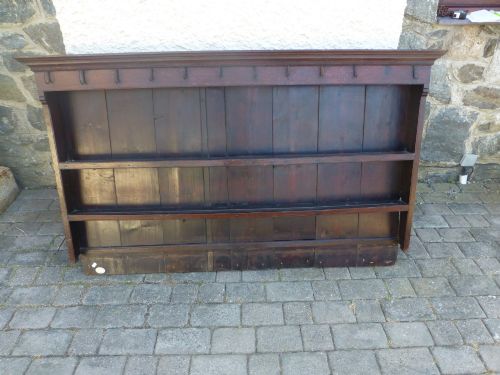
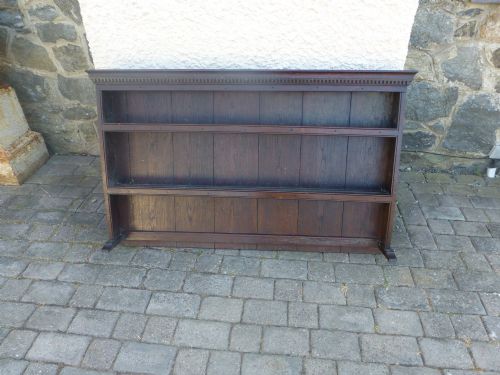
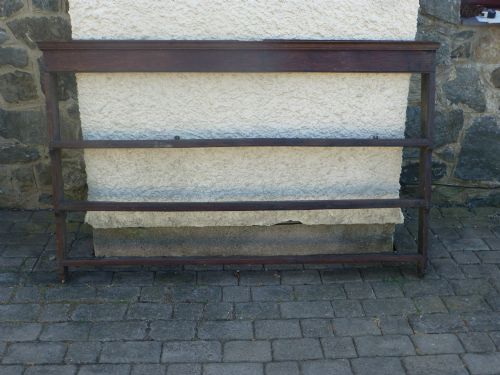
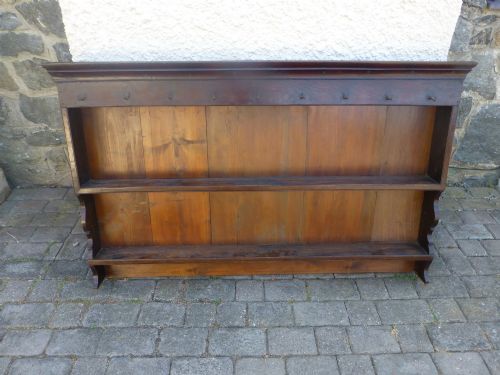
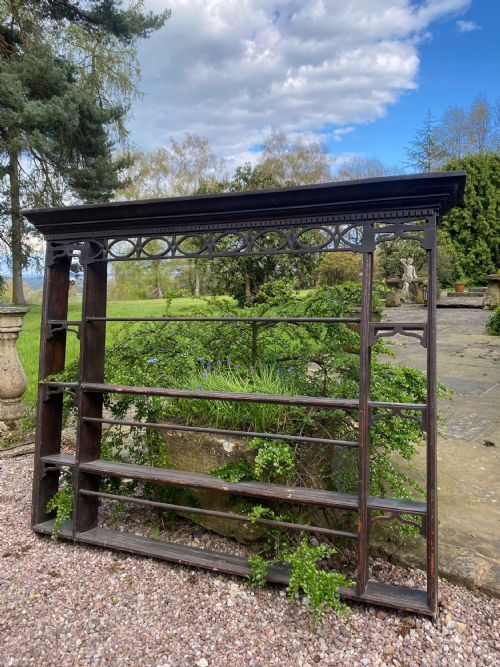
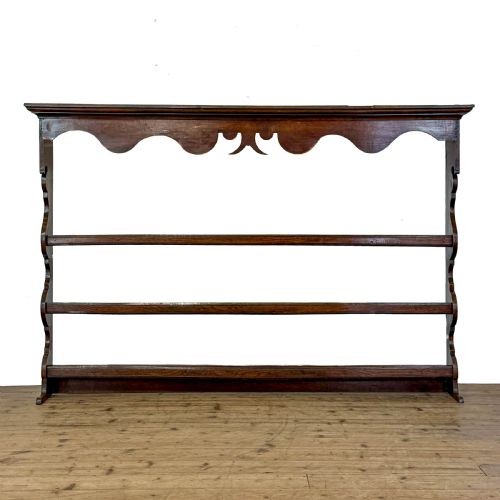


Antique Oak Delft Shelf
An antique oak delft shelf is a practical wall-mounted plate rack designed to display ceramics, most commonly encountered from the eighteenth century in sturdy timber.
Antique Oak Delft Shelf
When you search for an antique oak delft shelf, you are looking at wall shelves, plate racks, and dresser racks designed to hold household ceramics. These pieces originate primarily from the eighteenth century, alongside Georgian examples and occasional later revivals from nineteen hundred.
The versions you are most likely to meet on this page take the form of country oak plate racks and wall-mounted hanging racks. They serve to keep plates upright and visible, reflecting traditional domestic storage arrangements.
How they were made
The construction relies heavily on solid oak, frequently paired with pine for secondary boards and fitted with iron or brass elements. Workshops utilised traditional joinery to build sturdy wall-hanging frameworks capable of supporting heavy earthenware.
Some eighteenth-century plate racks feature tiny side hooks once used for hanging pocket watches or drying small straining cloths.
What varies in quality
Quality rests on the depth of the timber's grain, the integrity of the original construction, and the presence of period details like period mouldings or columns. Finer examples display harmonious proportions and honest surface patination accumulated over centuries.
Simpler country pieces contrast with more architectural Georgian interpretations, where decorative carving and balanced shelf spacing elevate the piece above utilitarian workshop production.
The Antique Oak Delft Shelf Glossary
- Plate rack
- A wall-mounted or dresser-top wooden frame featuring horizontal slats and rails designed to hold plates upright. These fixtures kept tableware accessible and dry in older kitchens.
- Delft rack
- A specific hanging shelf designed to display tin-glazed earthenware plates. The forward-leaning design or retaining rail prevents ceramic dishes from sliding forward.
- Corinthian column
- A classical architectural column featuring ornate acanthus leaves on the capital. Occasionally found flanking the sides of eighteenth-century racks as a decorative flourish.
- Gothic Revival
- A nineteenth-century design movement mimicking medieval architectural forms. Pieces in this style utilise pointed arches and heavier carved motifs.
Antique Oak Delft Shelf: Frequently Asked Questions
What is an antique oak delft shelf?
An antique oak delft shelf is a wooden wall fixture designed specifically to display ceramic plates and platters. These pieces date largely from the eighteenth century and earlier periods.
They combine utility with display, functioning as open storage in historic kitchens and dining rooms. The design keeps plates upright and secure against the wall.
How were these shelves used originally?
These racks were mounted above work surfaces or dining tables to store everyday ceramic tableware. The open slats allowed damp plates to air dry safely after washing.
Over time, they evolved from purely functional kitchen storage into decorative display furniture for prized imported ceramics. Plates rested safely against the backboards without sliding.
How do I date an oak plate rack?
Dating relies on examining the timber species, construction tool marks, and overall joinery techniques. Eighteenth-century examples show hand-cut boards and period fasteners rather than modern screws.
Stylistic cues such as Georgian proportions or Gothic Revival ornamentation help narrow down the decade of production. Secondary woods like pine can also indicate regional workshop practices.
Are these racks suitable for modern walls?
These sturdy wooden racks mount securely to modern walls provided appropriate fixings match the weight of the solid timber. Their shallow depth makes them practical for hallways, kitchens, and dining rooms.
They provide functional vertical storage without consuming valuable floor space in smaller rooms. Historic pieces require solid wall anchors to bear the load safely.