
Antique Oak Bobbin Table
An antique oak bobbin table brings the tactile warmth of spool-turned timber and centuries of domestic use into a modern room.
Antique Oak Bobbin Table
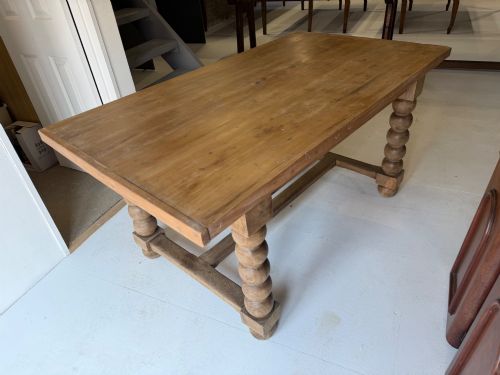
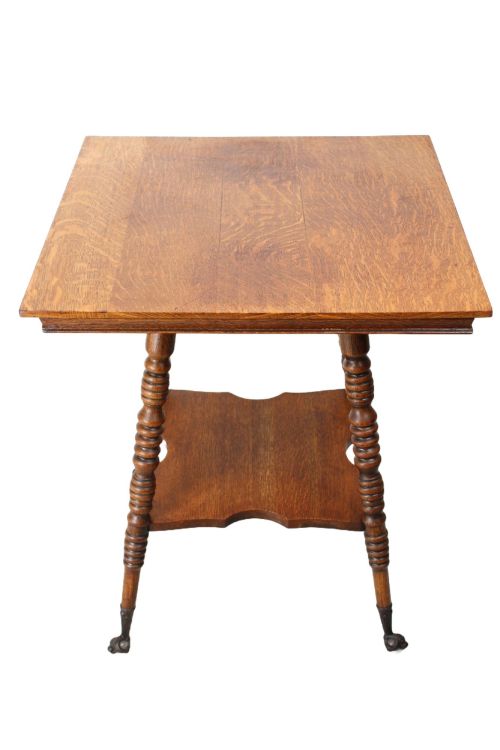
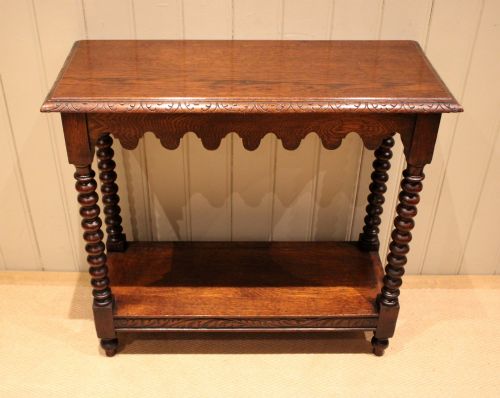
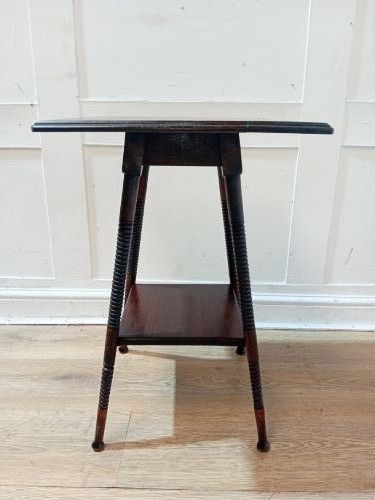
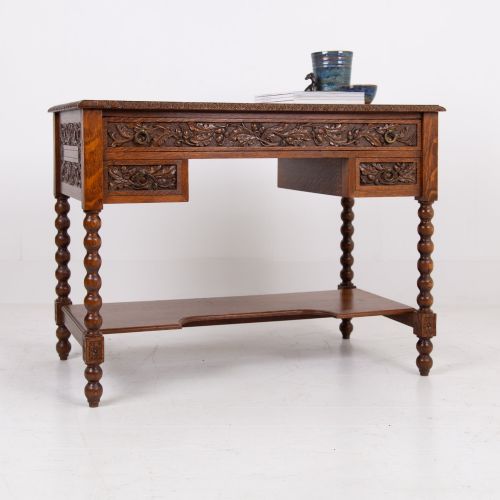
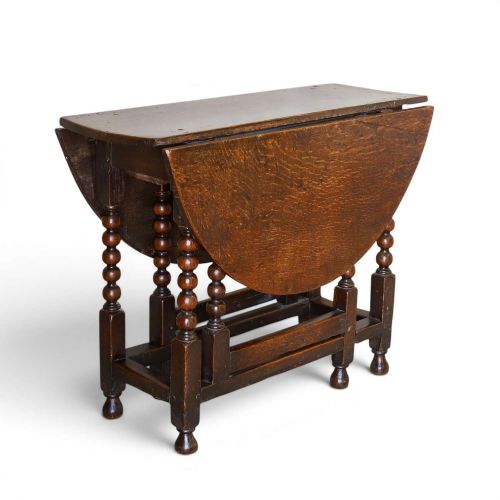
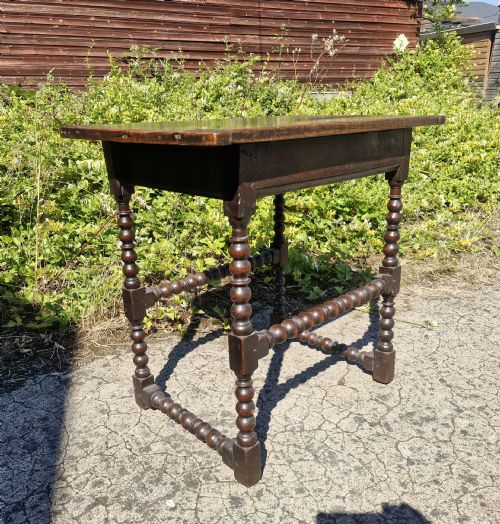
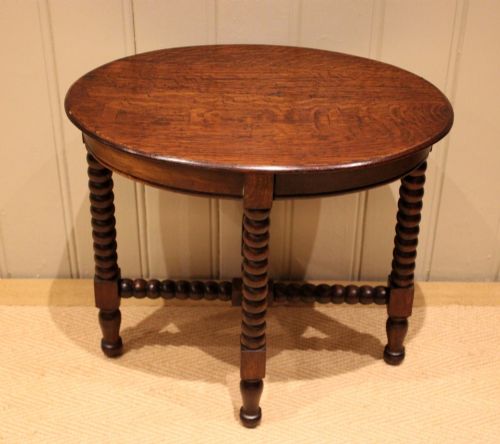
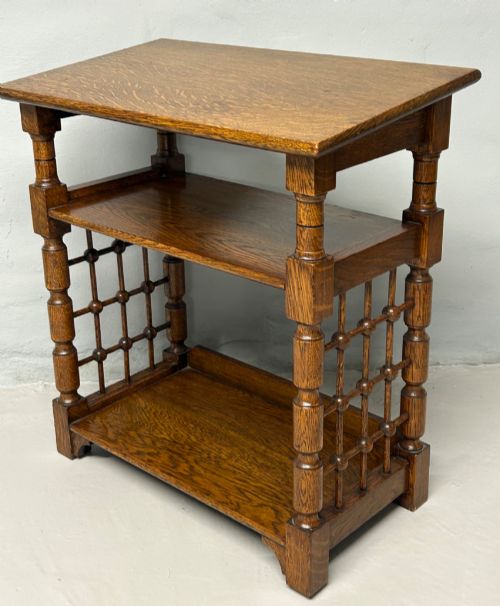
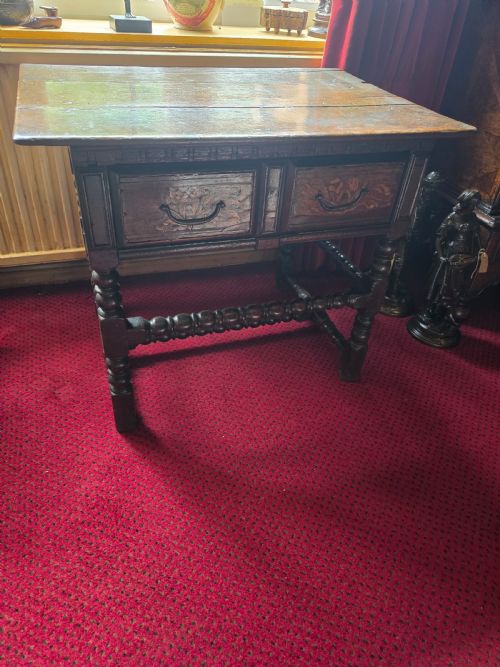
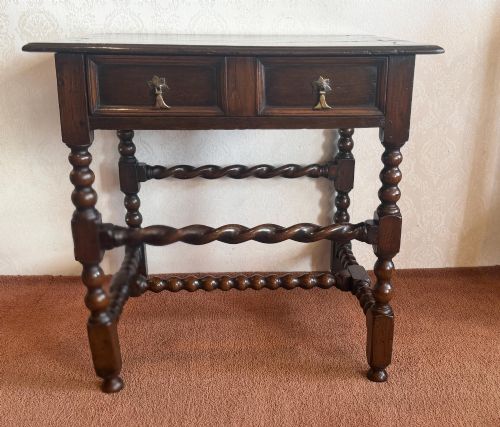
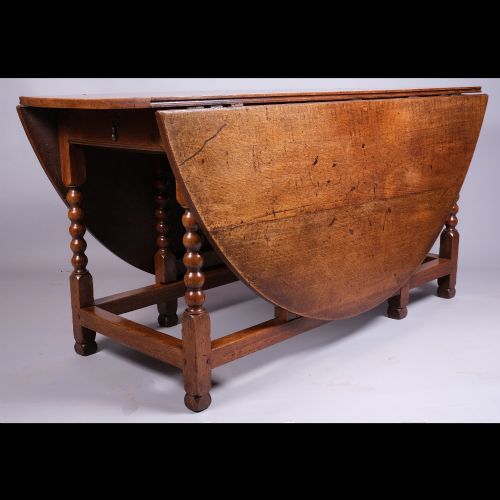
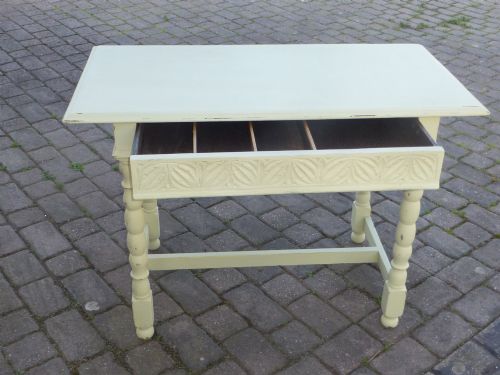
When you search for an antique oak bobbin table, you encounter items spanning from the seventeenth-century period of Charles II up through Victorian revivals and twentieth-century interpretations. The selection on this page ranges from compact side tables and writing desks to larger gateleg dining tables supported by distinctive spool turnings.
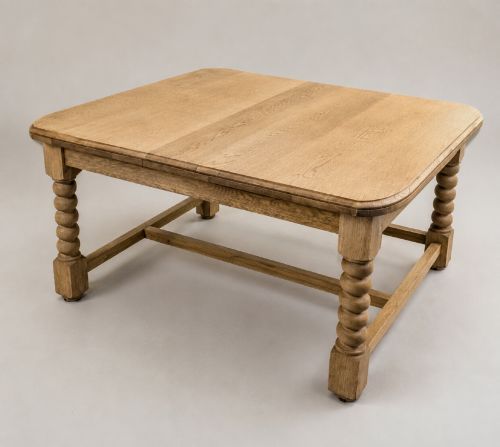
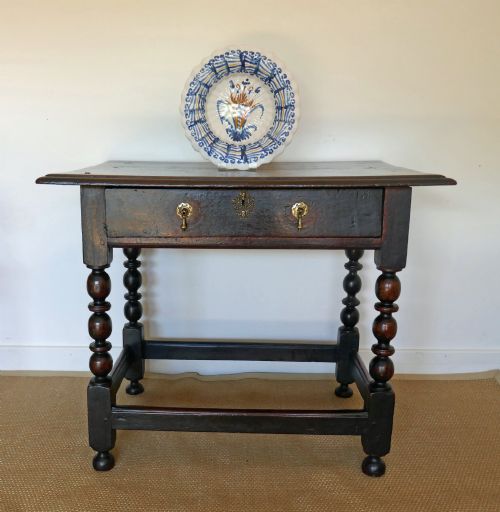
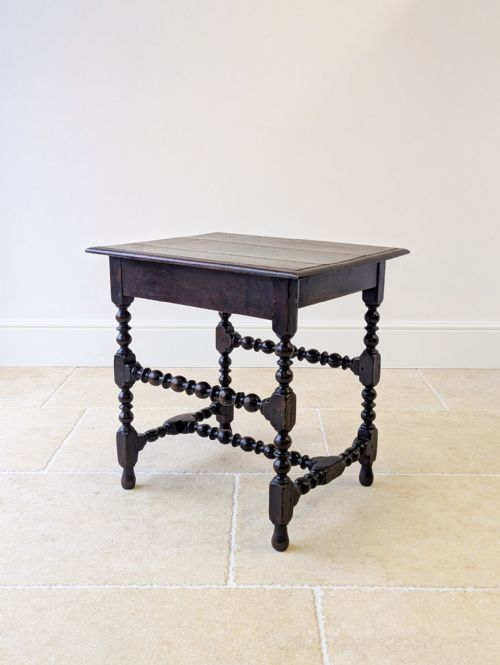
Seventeenth-century examples often display the bold proportions and dark patination typical of Jacobean craftsmanship, while later nineteenth-century revival pieces utilise bleached or solid oak to recreate that early aesthetic. Side tables and drop-leaf variations dominate the forms available, offering practical surfaces defined by their turned underframes.
Materials and turning techniques
The construction of these pieces relies heavily on solid oak, occasionally supplemented by elm, beech, or stained hardwood for secondary components or specific turned legs. Wood inlay, brass fittings, and iron hardware appear across various periods to accent the primary timber structure.
The defining characteristic is the bobbin or spool turning, executed on a lathe to create repeating rounded segments along the length of the table legs and stretchers. Joinery techniques range from early pegged mortise and tenon joints in seventeenth-century pieces to later industrial assembly methods in Victorian and Edwardian iterations.
Early turners sometimes repurposed scrap offcuts to test their lathe skills, meaning hidden stretchers occasionally reveal entirely different wood grains.
What separates examples across the range
Quality in these tables rests primarily on the crispness of the lathe work and the integrity of the timber's surface over time. Sharp, well-defined spool turnings on seventeenth-century pieces indicate superior craftsmanship compared to softer, more mechanically uniform later copies.
The depth of the natural patina and the presence of original structural timbers, rather than extensive modern replacements, dictate the standing of an individual piece. Proportion and balance between the substantial top and the intricate leg turnings also separate standard utility items from more exceptional examples.
LIBERTY of LONDON·WILLIAM BIRCH
The Antique Oak Bobbin Table Glossary
- Bobbin turning
- A form of lathe turning that produces a series of rounded, spool-like shapes along the length of a leg or stretcher. This decorative technique became particularly popular during the seventeenth century.
- Gateleg table
- A drop-leaf table with hinged legs that swing out to support the expanded leaves. This form allows the surface area to double when needed.
- Jacobean
- The style of English architecture and furniture design spanning the early to mid-seventeenth century under James I and Charles I. Pieces from this era typically feature dark oak and geometric ornamentation.
- Patina
- The surface sheen and colour developed by wood over decades or centuries through handling, polishing, and exposure to light. A deep patina is valued for showing age honestly.
- Stretcher
- A horizontal wooden rail connecting the legs of a table to provide structural stability. On bobbin tables, these stretchers are frequently turned to match the legs.
Antique Oak Bobbin Table: Frequently Asked Questions
How do I spot a seventeenth-century bobbin table?
Authentic seventeenth-century examples typically display pegged joints, hand-carved elements, and a deep, oxidized oak patina developed over centuries of use.
The turning on early legs is often slightly irregular due to hand-lathe work, contrasting with the uniformity found in later nineteenth-century revival pieces.
Were these tables used for dining?
Many larger formats, particularly seventeenth-century gateleg variants listed in the archive, served as primary dining surfaces for households.
Smaller side tables and console formats were intended for hallways, parlours, or against walls to hold lamps and decorative objects.
How do I care for an antique oak table surface?
Maintain the wood by applying traditional beeswax periodically to nourish the dry timber and preserve the natural sheen without building up heavy chemical residues.
Keep the piece away from direct heat sources and radical humidity shifts to prevent the solid oak panels and turned legs from splitting.
What is the difference between Jacobean and Victorian bobbin furniture?
Jacobean pieces date from the original seventeenth-century period of manufacture, utilising heavy native oak and traditional joinery dictated by the tools of the era.
Victorian revival pieces, often produced around the late nineteenth century, mimic these earlier styles using machinery that sometimes yields cleaner, more repetitive turning patterns.