



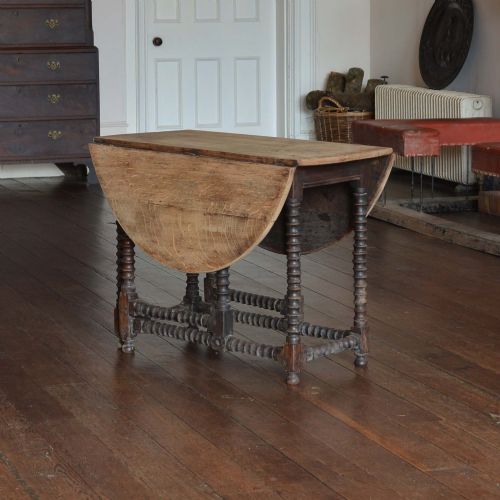


Spool Turned Table
A spool turned table brings rhythmic wooden circles and structural honesty to a room.
Spool Turned Table
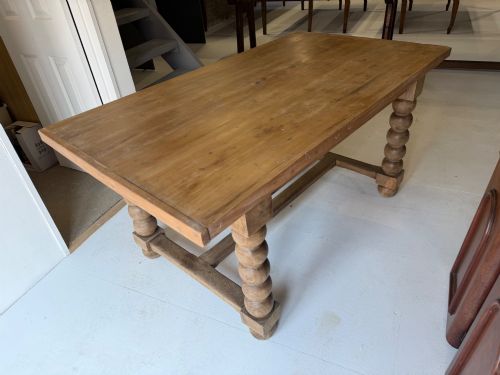
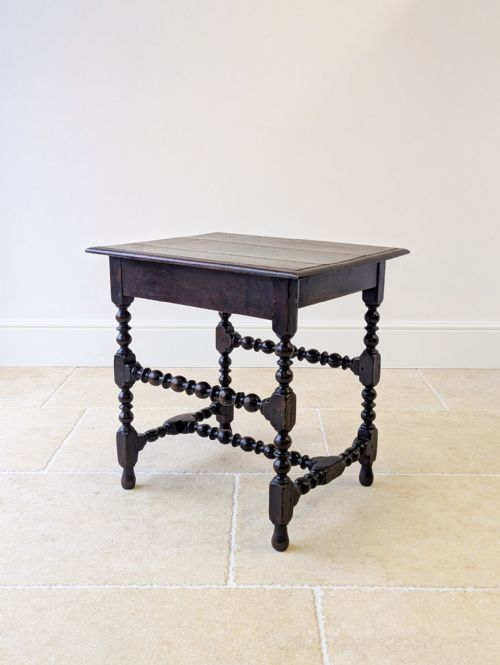
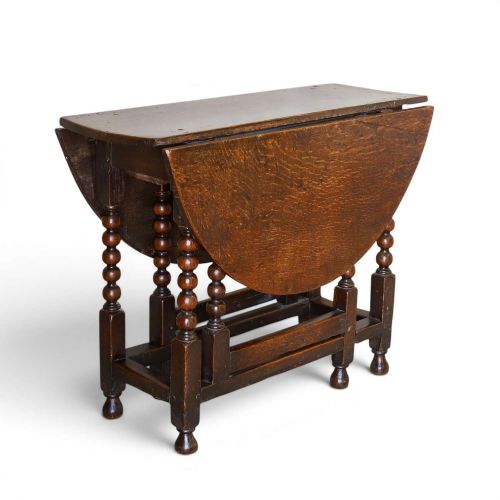
A spool turned table centres on legs shaped by a lathe into continuous sequences of rounded wooden discs, creating a distinctive profile found across several centuries. When searching for a spool turned table, a buyer encounters pieces primarily formed from oak, pine, and beech, ranging from small occasional surfaces to gateleg dining forms.
The selection includes robust examples spanning the seventeenth century up to the early twentieth century, reflecting revivals of early styles alongside period originals. Side tables, hall tables, and cricket tables dominate the available forms, often utilising timber tops paired with prominent bobbin supports.
Seventeenth-century origins appear alongside nineteenth-century Victorian interpretations and Jacobean revival pieces, showing how makers returned to this characteristic turning technique over generations. Oak versions dominate the record, though yew, pine, and occasional gilded or leather-topped variants also emerge.
Materials and construction
Makers fashioned these supports using a lathe to turn solid timber into repeating rounded segments, fixing the legs firmly into jointed frames. Oak and beech provide the structural stability required for these heavy-turned components, while pine and yew appear in specific regional furniture forms.
Surface treatments vary from plain timber finishes to gilded gesso and upholstered elements such as red velvet or leather inserts. Joinery methods rely on traditional pegged mortise and tenon joints to support the weight of the timber tops.
One unexpected table pairs severe bobbin turned legs with vibrant red velvet and gilded surfaces.
Assessing quality and craftsmanship
The crispness and uniformity of the lathe work define the character of the turned elements, distinguishing sharper seventeenth-century profiles from softer later revivals. Wood selection plays a significant role, with dense quarter-sawn oak timbers offering greater durability and richer grain patterns than softer secondary woods.
Proportion and structural integrity separate standard utility pieces from finer examples, particularly where gateleg actions or drawer constructions require precise carpentry. Original surface patination and minimal timber replacement preserve the historical integrity of older periods.
The Spool Turned Table Glossary
- Bobbin turning
- A form of woodturning on a lathe that produces a series of rounded, spool-like shapes along the length of a leg or stretcher. This technique defines the primary aesthetic of the furniture.
- Gateleg table
- A table with hinged leaves supported by legs that swing outward like a gate. This form allows the surface area to expand or contract.
- Cricket table
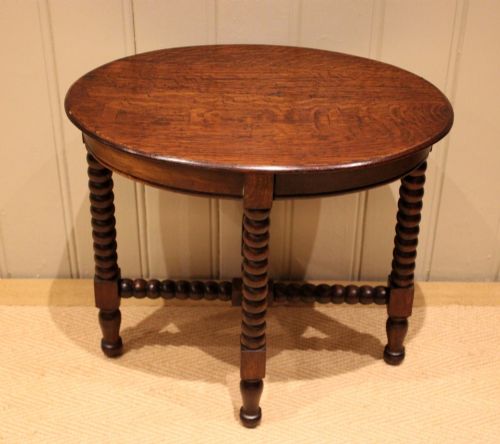
- A small, lightweight occasional table traditionally featuring three legs and a round wooden top. They frequently incorporate turned supports.
- Jacobean Revival
- A nineteenth-century design movement that copied or reinterpreted the heavy styles of the early seventeenth century. Pieces from this era often feature exaggerated turning.
- Quarter-sawn oak
- Timber cut radially from the growth rings, producing a stable board with distinctive figuring. This cut was favoured for high-quality period furniture.
Spool Turned Table: Frequently Asked Questions
What is a spool turned table?
A spool turned table is a piece of furniture featuring legs and stretchers shaped on a lathe into a sequence of rounded wooden beads or spools. This distinctive turning style creates a rhythmic, decorative profile.
These tables appear in various forms including side tables, hall tables, and gateleg dining tables, constructed primarily from timbers such as oak, beech, and pine.
How old are these tables?
The pieces available span from the seventeenth century through to the early twentieth century. Original seventeenth-century examples sit alongside nineteenth-century Victorian items and Jacobean revival pieces.
Makers continued to utilise bobbin turning techniques across multiple eras, leading to a diverse range of production dates within the listings.
Where were these tables used?
These tables served various practical functions in historic interiors, operating as side surfaces in parlours, hall tables for entryways, or drop-leaf tables for dining spaces. Smaller occasional versions fitted easily beside seating.
Cricket tables and small oval formats provided movable surfaces for domestic tasks before settling into decorative roles in modern rooms.
How do I distinguish periods?
Distinguishing periods relies on examining timber species, joinery construction methods, and the sharpness of the lathe work. Seventeenth-century pieces typically show hand-split or early sawn oak timbers with pegged joints.
Later Victorian and revival pieces often exhibit machine-turned uniformity and use secondary woods like pine or beech beneath the visible surfaces.