
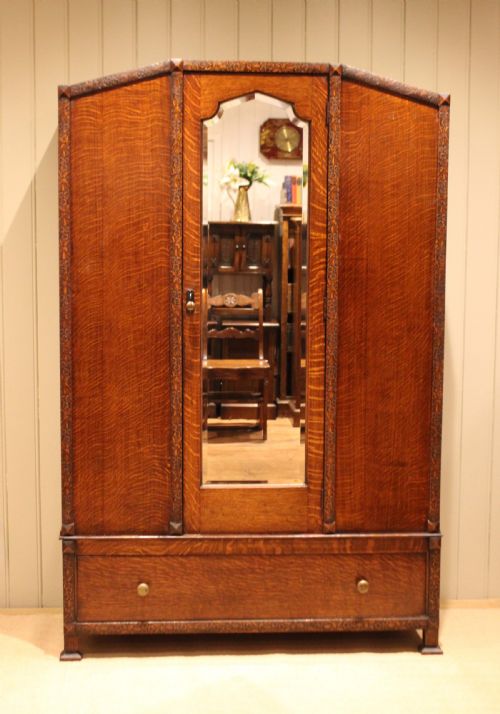


Antique Oak Bedroom Armoire
An antique oak bedroom armoire is a substantial storage piece built from solid timber, offering deep hanging space and shelving for period interiors.
Antique Oak Bedroom Armoire
When buyers search for an antique oak bedroom armoire, they encounter large timber wardrobes, linen presses, and compactums dating from the Georgian, Victorian, and Edwardian eras up through the 1930s. These storage items originate from British workshops and continental makers alike, reflecting regional cabinet-making traditions in solid oak and pollard oak.
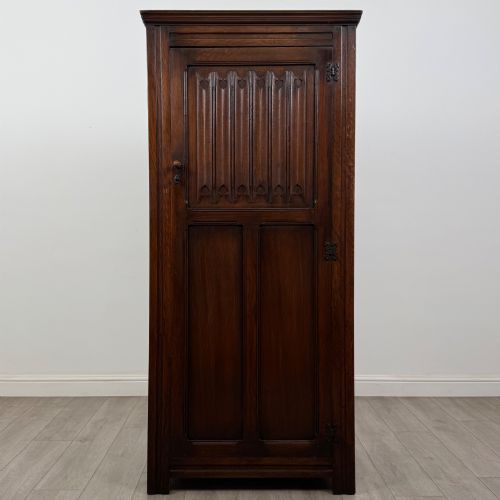
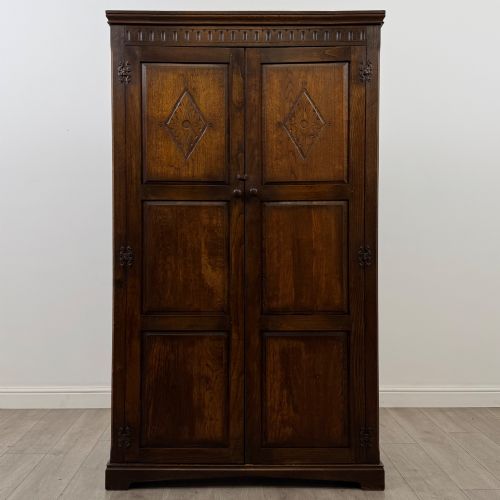
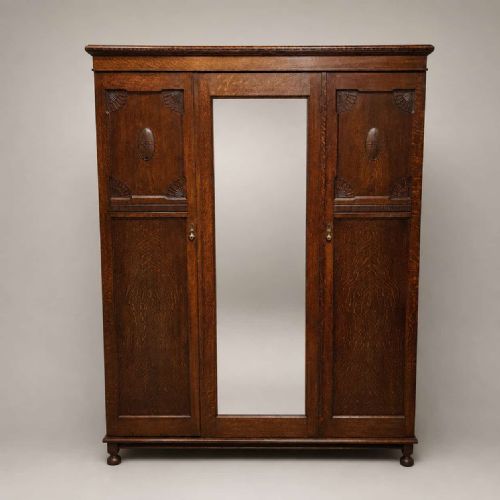
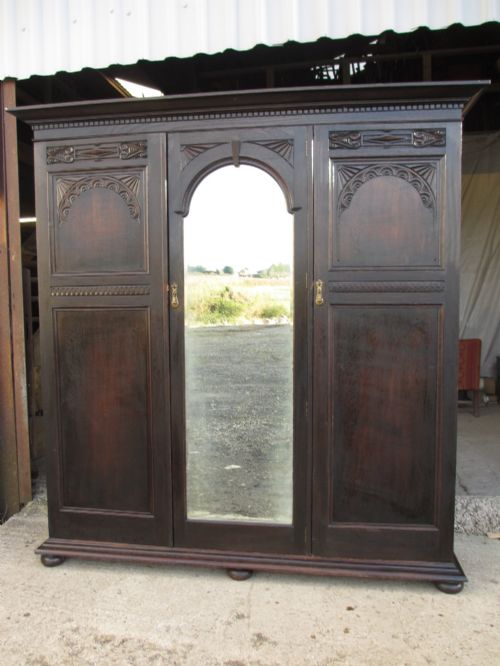
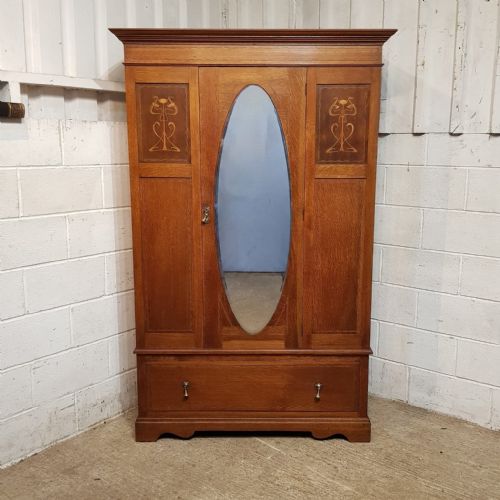
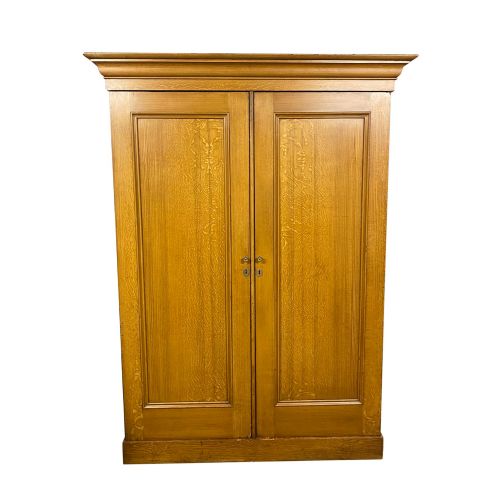
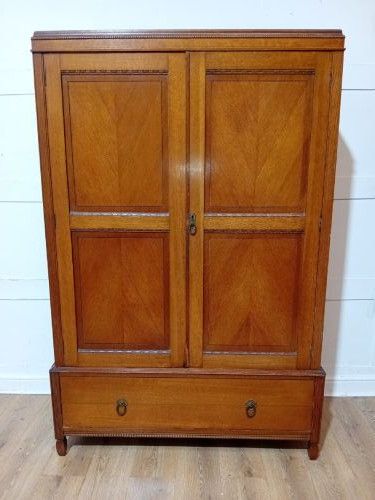
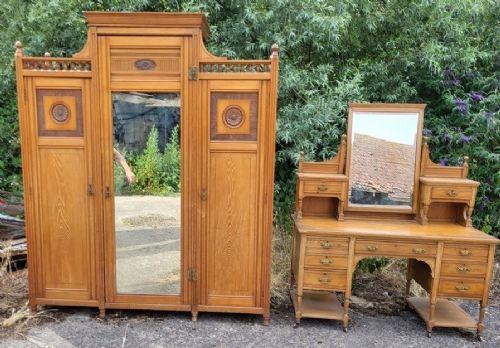
The pieces on this page span diverse forms, including triple mirror-door wardrobes, double door cupboards, and fitted gentleman's wardrobes with internal drawers and hanging rails. Arts and Crafts and Art Deco interpretations sit alongside French provincial and Gothic revival designs, demonstrating the wide variety of domestic storage solutions produced across different decades.
How they were made
Cabinet-makers constructed these wardrobes primarily from solid oak, frequently augmented by brass handles, iron hinges, glass mirrors, and occasional marquetry inlay or scumble paintwork. Interior components often incorporate secondary timbers such as pine alongside the main oak structure.
Construction techniques range from traditional panelled joinery and hand-carving seen in Edwardian and Victorian pieces to the clean geometric lines characteristic of early twentieth-century Arts and Crafts and Art Deco output.
Materials recorded across current inventory include solid oak, pollard oak, brass hardware, glass mirrors, and marquetry inlay.
What varies in quality
Quality in these wardrobes rests upon the selection of timber, the crispness of hand-carved details, and the integrity of the original hardware such as brass fittings and bevelled glass mirrors. Finer examples exhibit thoughtful integration of internal drawers, shelves, and hanging space within complex compactum layouts.
Maker attribution and original labelling elevate certain pieces, distinguishing standard workshop production from signed items produced by prominent firms and retail houses of the period.
Harris Lebus·Shapland and Petter·Maple and Co·Heals of London·Gaylayde·B Cohen and Sons·Gillows of Lancaster·Arnott and Co
The Antique Oak Bedroom Armoire Glossary
- Compactum
- A multi-functional wardrobe combining hanging space, drawers, and shelving within a single unified piece. This format maximised bedroom storage efficiency during the Victorian and Edwardian periods.
- Linen Press
- A traditional storage item featuring upper sliding trays or shelves enclosed by doors, positioned above a base section of wider drawers. Georgian and nineteenth-century examples often utilised sturdy oak construction.
- Marquetry Inlay
- Decorative patterns formed by fitting contrasting veneers into prepared recesses on the timber surface. This technique appeared on select Edwardian and Art Deco furniture.
- Scumble Paint
- A decorative finishing technique applied to create simulated wood grain effects over a base coat. Nineteenth-century examples occasionally employed this method to mimic higher-grade timber.
Antique Oak Bedroom Armoire: Frequently Asked Questions
How do I date an oak wardrobe?
Dating relies on stylistic clues, construction methods, and hardware signatures present on the piece. Georgian and Victorian examples display different structural characteristics compared to Edwardian and 1930s designs.
Examining internal components, backboards, and any maker labels helps establish the manufacturing period with greater accuracy.
What is a compactum wardrobe?
A compactum is a specialised multi-compartment wardrobe that integrates hanging space, shelving, and internal drawers into one footprint. These pieces were designed to hold a complete gentleman's or lady's wardrobe efficiently.
They frequently appear in Edwardian and early twentieth-century listings alongside traditional hanging wardrobes.
Are these wardrobes easy to dismantle?
Many large period wardrobes and armoires were constructed to be taken apart for ease of transport and installation into upper-floor bedrooms. The ease of dismantling depends on the specific era and whether it uses pegged joints or modern knockdown fittings.
Checking the construction reveals whether the cornice, base, and sides separate from the main carcass.
How should I care for antique oak?
Maintaining antique oak involves keeping the timber away from direct heat sources and extreme humidity fluctuations to prevent splitting. Regular dusting with a soft cloth preserves the polished surface without the need for heavy silicones.
Occasional application of traditional beeswax feeds the dry wood and maintains its natural lustre.