


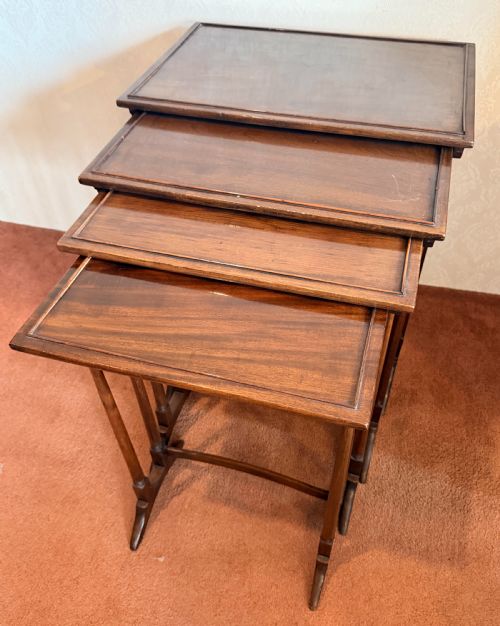
Antique Nested Tables Set
An antique nested tables set offers a clever tiered design that saves floor space while providing multiple surfaces for entertaining.
Antique Nested Tables Set
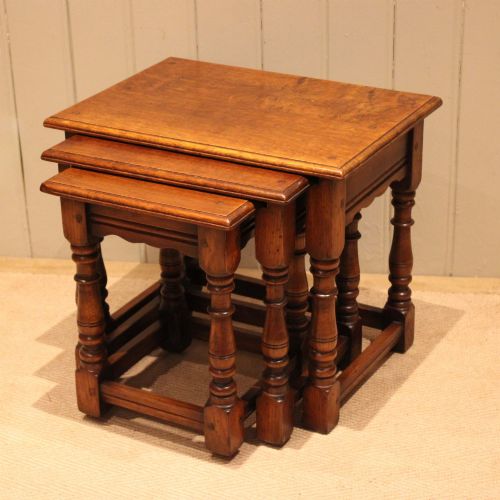
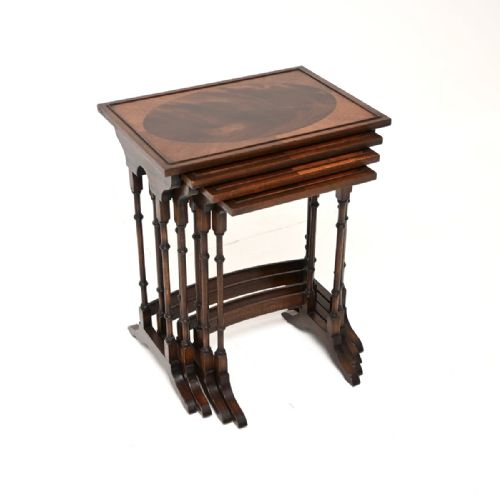
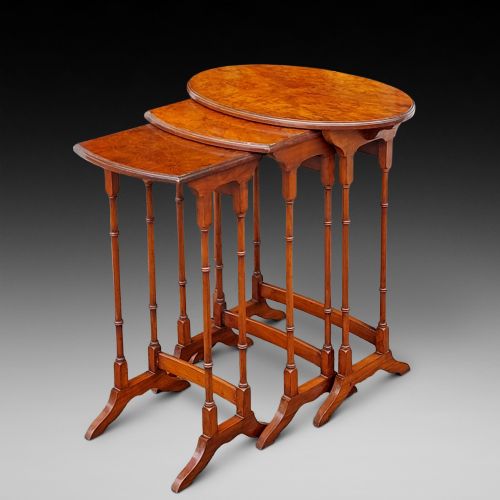
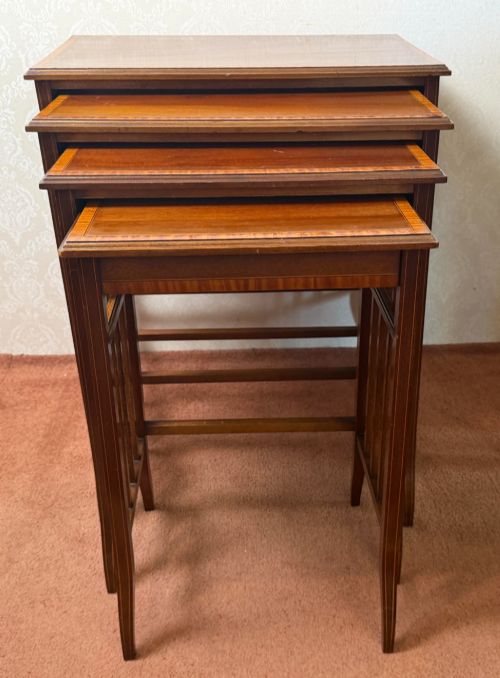
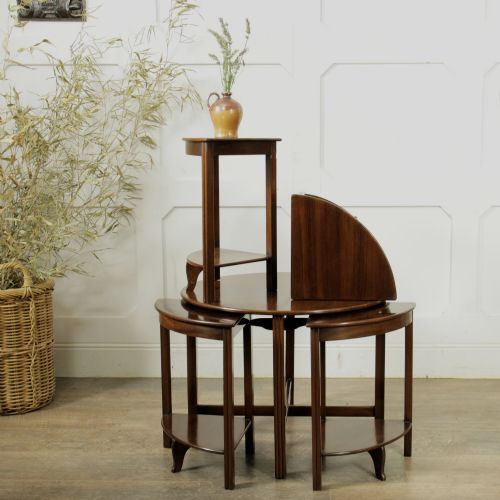
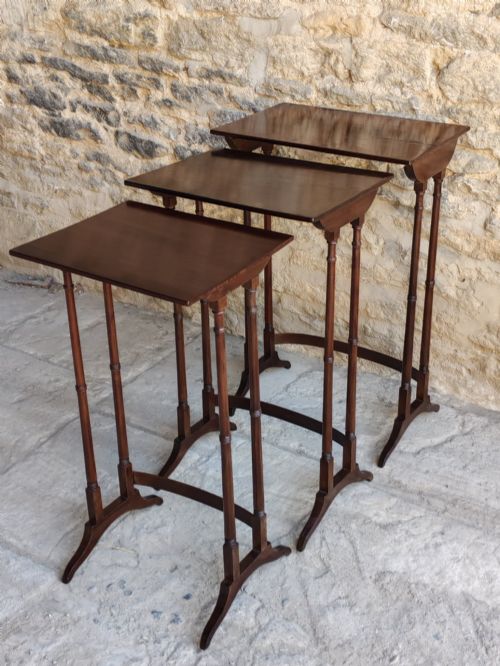
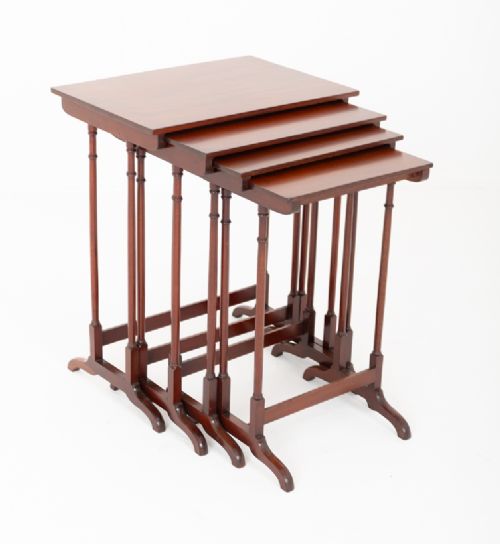
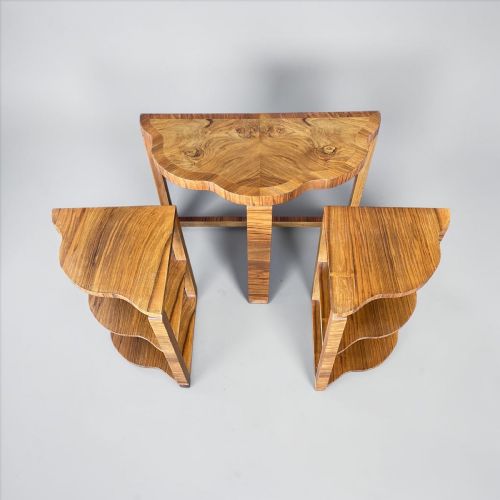
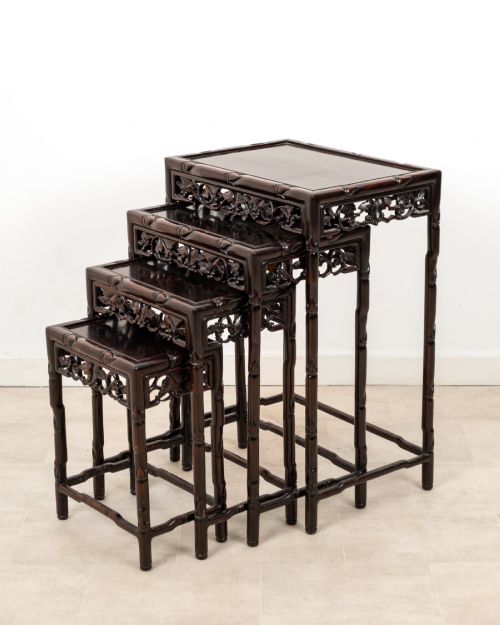
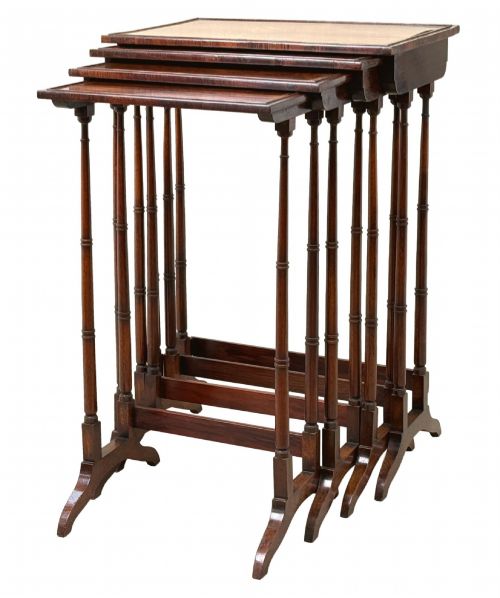
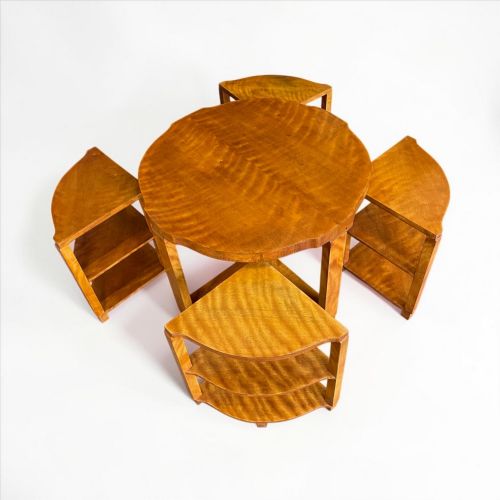
An antique nested tables set consists of several graduated tables designed to slide neatly beneath one another when not in use. These pieces appear in forms ranging from sets of three to sets of five, as well as specific groupings known as quartetto tables.
The pieces on this page span several periods, with Edwardian examples and nineteenth-century designs appearing frequently alongside Georgian styles and Art Deco iterations. Woods such as mahogany and walnut dominate the selection, often accompanied by rosewood, satinwood, oak, and burr walnut.
Makers and origins stretch across England, France, China, and Japan, yielding formats that include occasional tables, coffee tables, and side tables. Buyers seeking an antique nested tables set will encounter various decorative treatments, including floral painting, brass inlay, and Chinoiserie decoration.
What separates the finer examples
Quality in these sets often rests on the crispness of the secondary wood selection and the precision of the graduated sizing. Finer examples maintain smooth sliding action across all tiers without excessive looseness in the joints.
The choice of decorative embellishment also marks a distinction, where hand-painted floral motifs, delicate satinwood inlay, or skilled carving elevate a simple utility item into a refined piece of furniture.
Listings for nested tables span from the Georgian period through the Regency, Victorian, and Edwardian eras into the Art Deco years.
Heal's
The Antique Nested Tables Set Glossary
- Quartetto
- A matched set of four small tables designed to nest together. This term appears frequently in nineteenth-century and Edwardian furniture listings.
- Cross banding
- A strip of veneer applied around the border of a table top with the grain running perpendicular to the centre panel. It creates a neat visual frame on mahogany and satinwood pieces.
- Chinoiserie
- European imitation and adaptation of Chinese artistic traditions, often featuring hand-painted motifs on lacquered surfaces. It appears on select sets from the Edwardian and later periods.
- Satinwood
- A durable hardwood with a lustrous yellowish sheen used extensively for inlay and banding. Cabinet makers utilised it to highlight the edges of dark mahogany tabletops.
Antique Nested Tables Set: Frequently Asked Questions
What is a quartetto table set?
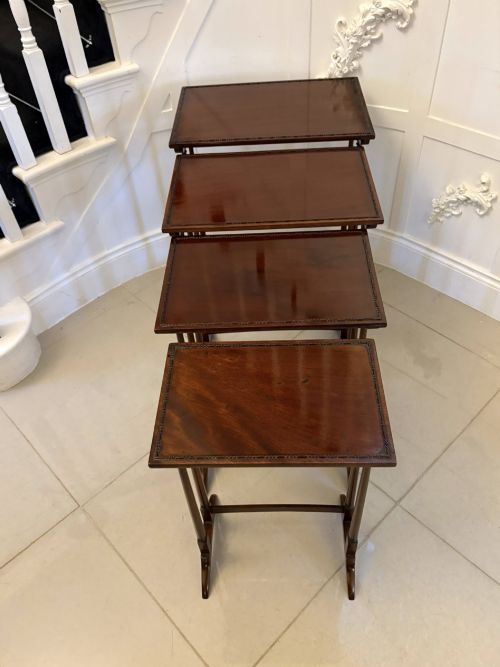
A quartetto set specifically consists of four graduating tables designed to fit neatly one beneath another. Makers during the nineteenth and early twentieth centuries produced these primarily as occasional furniture.
They offer flexibility in a drawing room or sitting room, expanding when guests arrive and occupying the footprint of a single small table afterward.
How do I identify Edwardian nesting tables?
Edwardian sets frequently utilise mahogany or burr walnut, often featuring satinwood inlay, stringing, or cross-banding along the borders. Their proportions tend to be light and elegant, reflecting the tastes of the early twentieth century.
Construction methods from this era typically show machine-cut components combined with traditional hand-finishing and polishing techniques.
Where were nested tables used in the home?
These tables served primarily as occasional or side tables for holding drinks, books, or sewing materials during social gatherings. Their multi-tiered design allowed households to maximise floor space in smaller reception rooms.
Today, they function well beside armchairs or sofas, offering adaptable surfaces that deploy independently when needed.
Are all nested tables sets made of mahogany?
While mahogany is the most common timber seen across these listings, makers also utilised rosewood, walnut, satinwood, oak, and exotic hardwoods. Some examples incorporate decorative elements like brass inlay, painted floral motifs, or Asian lacquerwork.
The choice of wood usually corresponds to the period of manufacture, ranging from rich nineteenth-century rosewood to lighter Edwardian satinwood details.