
Antique Nested Side Tables
These antique nested side tables provide flexible surface space that slides away neatly when not in use.
Antique Nested Side Tables
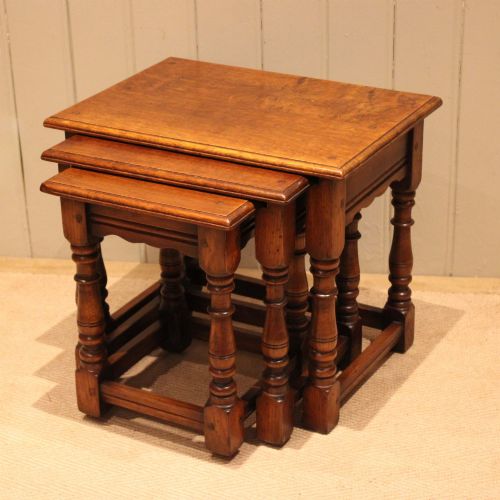
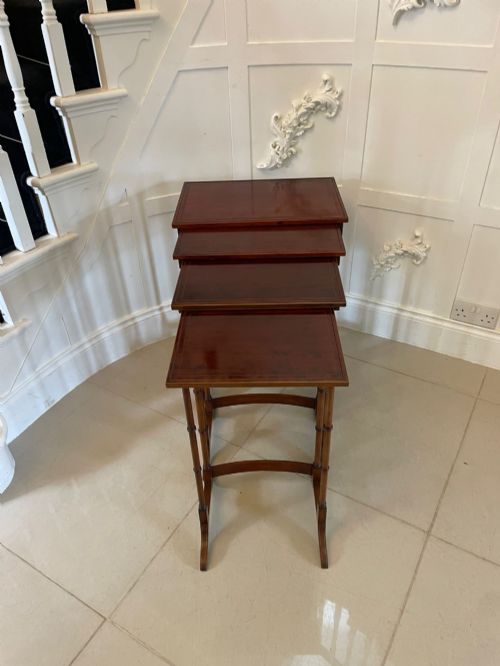
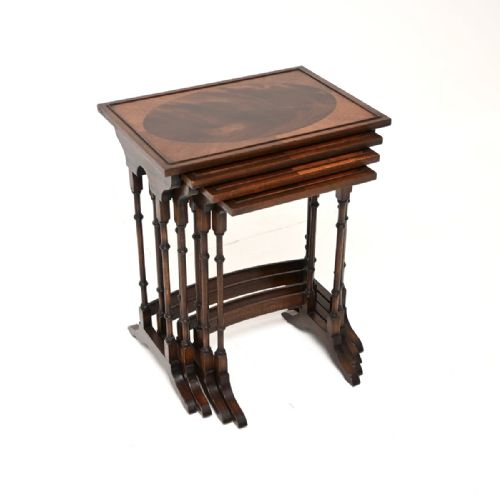
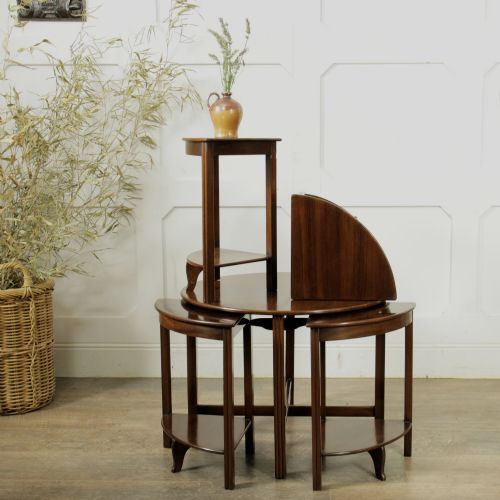
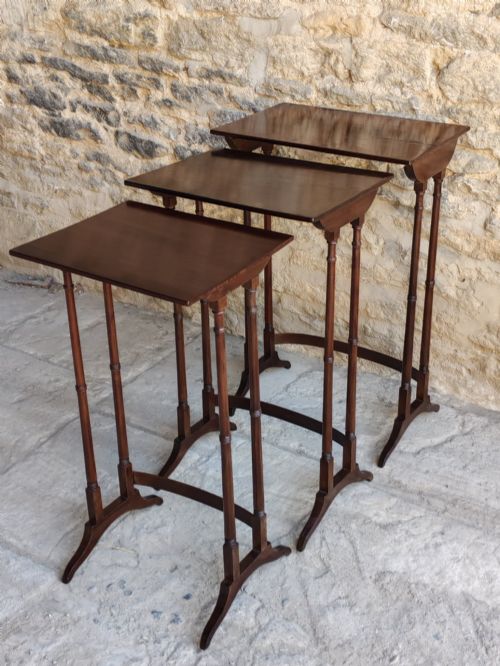
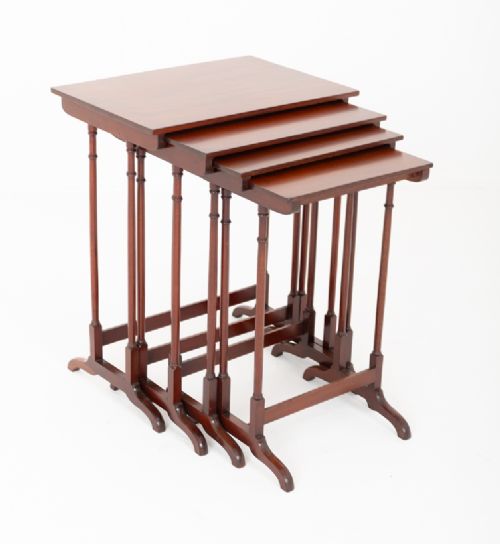
Antique nested side tables operate as multi-tiered furniture sets designed to slide inside one another to conserve floor space. The form includes sets of three, four, or five tables that share graduating proportions to fit a single footprint.
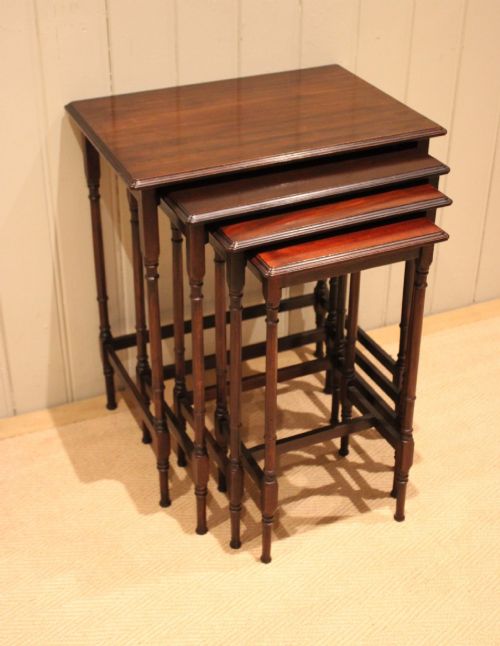
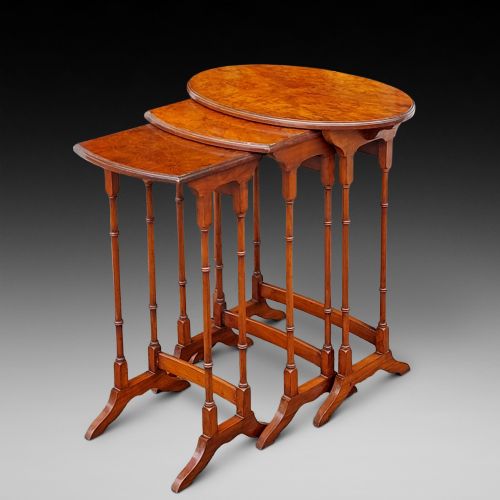
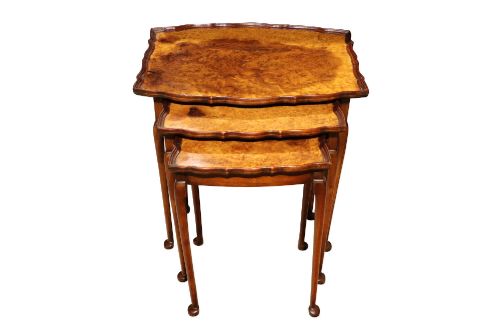
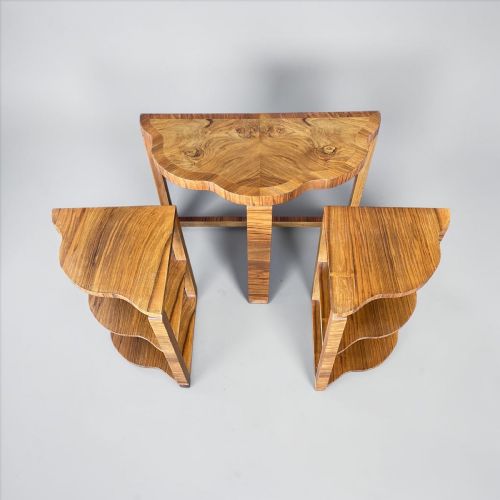
Mahogany and rosewood examples dominate the selection, often appearing in Edwardian, Victorian, and Regency periods. Makers also utilised burr walnut, satinwood, and hardwood to construct these versatile occasional surfaces.
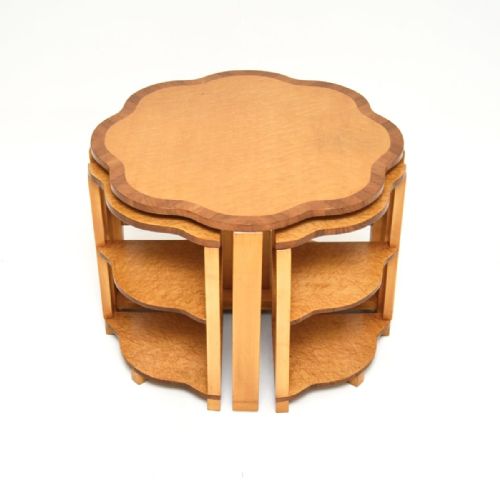
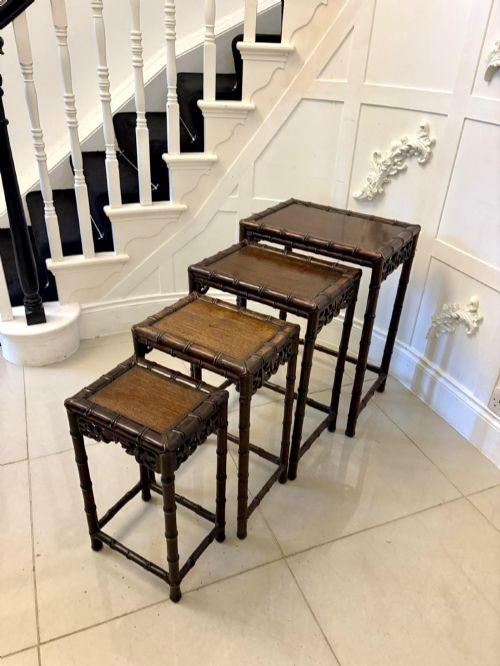
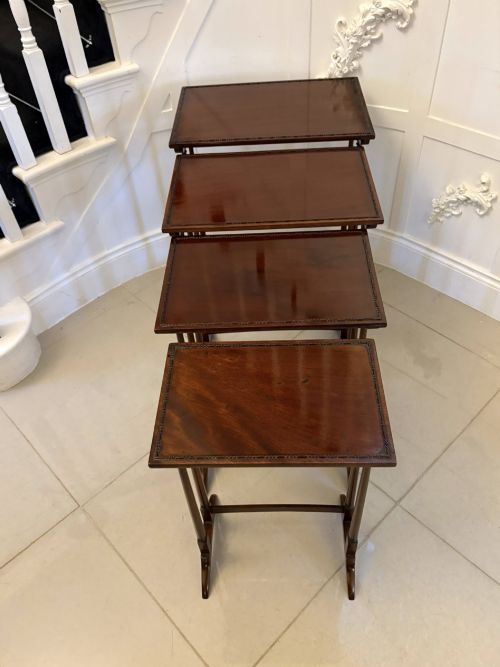
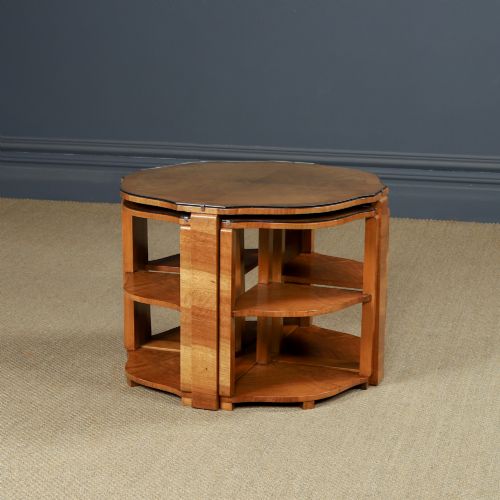
The buyer meets variations ranging from Georgian style mahogany quartetto sets to Chinese hardwood and Chinoiserie decorated pieces. Edwardian inlaid satinwood tables and Art Deco round coffee tables represent common configurations found in daily listings.
Materials and Technique
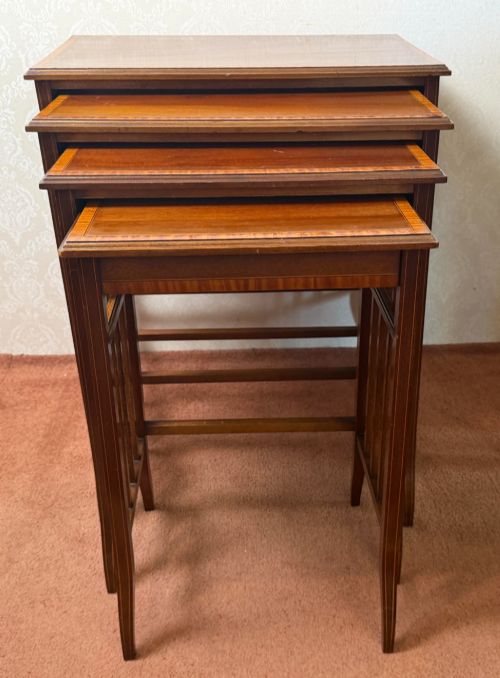
Cabinetmakers constructed these tables using solid hardwoods and decorative veneers, applying mahogany, rosewood, and walnut over stable secondary timbers. Crossbanding in satinwood and boxwood frequently borders the table tops to frame the grain.
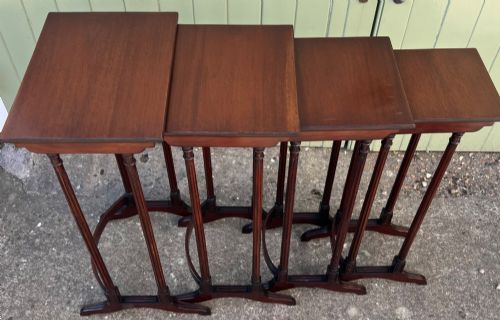
Joinery methods include precise slotting, fine turning on legs, and specialised framing to ensure each graduated table slides smoothly into the next. Brass inlays, faux bamboo carving, and floral painted lacquer appear on specific regional and period variants.
Listings feature nested tables spanning the nineteenth century through the Art Deco period, constructed in mahogany, rosewood, and burr walnut.
Assessing the Pieces
Quality rests upon the crispness of the timber selection, such as figured burr walnut or dense rosewood, coupled with the precision of the graduating frame dimensions. Tables that slide without friction and maintain structural rigidity across the smallest tiers demonstrate superior carpentry.
Decorative detailing distinguishes standard production from finer workshop output. Inlaid satinwood banding, hand-carved faux bamboo, or integrated chess boards elevate the craftsmanship of a set.
Émile Gallé
The Antique Nested Side Tables Glossary
- Quartetto
- A set of four graduating tables designed to nest together. This term appears frequently in Regency and Edwardian cataloguing.
- Crossbanding
- A strip of veneer applied to the border of a table top with the grain running perpendicular to the centre. This technique creates a contrasting decorative frame.
- Faux bamboo
- Wood turned and carved to imitate the segmented stalks of natural bamboo. It is found on specific nineteenth-century pieces.
- Satinwood
- A hard, yellow timber prized for its lustrous grain. It is often utilised for delicate inlay work on Edwardian tables.
- Chinoiserie
- European imitation of Chinese artistic motifs and lacquer techniques. These decorated surfaces appear on selected twentieth-century pieces.
Antique Nested Side Tables: Frequently Asked Questions
How were antique nested tables used?
These tables served primarily as mobile tea or sewing surfaces in nineteenth and early twentieth-century drawing rooms. Servants or hosts deployed the individual tiers around a room as guests required extra places for cups or books.
Once tea concluded, the smaller tables slid back into the largest frame to clear the floor space. This practical design suited smaller parlours and sitting rooms where permanent furniture clutter needed reduction.
How do I care for rosewood and mahogany surfaces?
Maintenance requires avoiding direct sunlight and maintaining stable room humidity to prevent veneer lifting or timber splitting. Gentle dusting with a dry lint-free cloth preserves the polish without introducing chemical buildup.
Occasional application of appropriate wax feeds the antique timber and maintains the natural sheen of the grain. Water spills require immediate drying to protect delicate crossbanding and polished finishes.
Are these tables sturdy enough for daily use?
Solid hardwood construction ensures that most sets remain robust for holding lamps, drinks, or books in a modern home. The smaller tiers possess lighter frames, so heavy objects should rest on the primary main table.
Careful handling when sliding the tables prevents unnecessary friction and preserves the original joints and timber runners over time.