
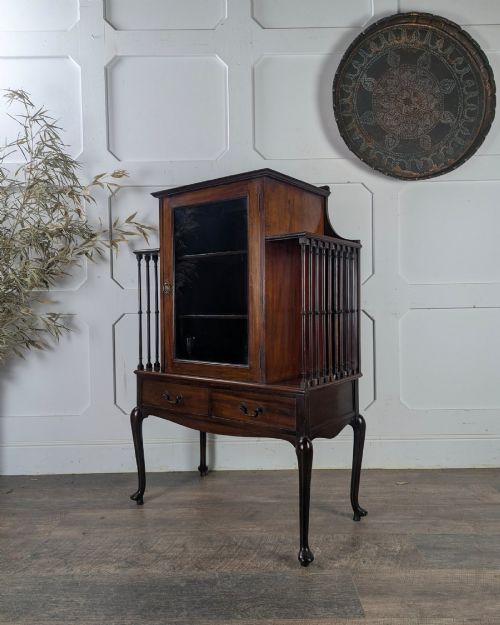
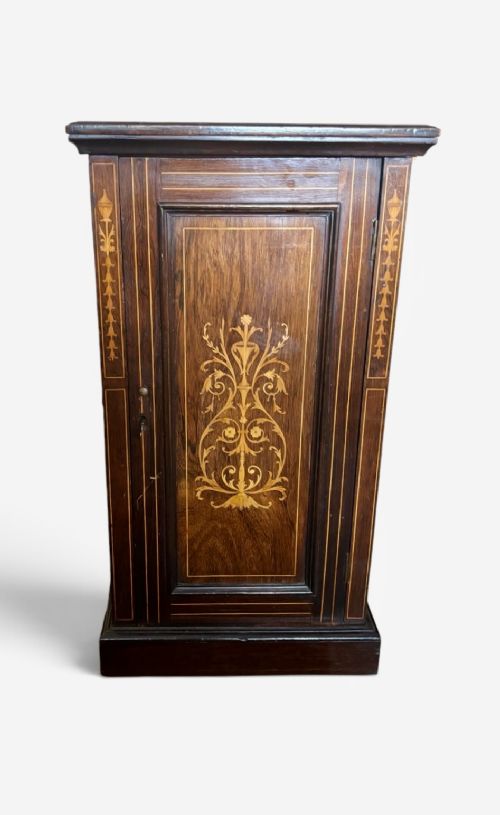
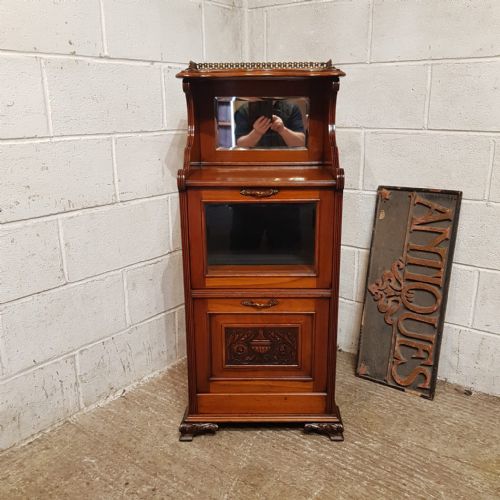


Antique Music Storage Display
These antique music storage display pieces combine practicality with period elegance, offering fitted shelving for sheet material alongside glass-fronted display compartments.
Antique Music Storage Display
An antique music storage display brings together several forms including music cabinets, side cabinets, pier cabinets, and whatnot stands. You will encounter these pieces chiefly from the Victorian and Edwardian eras, spanning the nineteenth and early twentieth centuries.
The primary function centres on housing sheet music while offering display surfaces or glazed upper sections for ornamental items. Mahogany, walnut, and rosewood dominate the surviving examples on this page, frequently enhanced with inlaid details.
Most items you meet here serve as multi-functional side furniture rather than dedicated institutional storage. Their proportions remain relatively narrow, suited to domestic parlours and drawing rooms.
Materials and construction
Cabinetmakers utilised rich timber veneers such as burr walnut, burr yew, and rosewood, applying them over sturdy foundational woods. Marquetry inlay and satinwood banding appear frequently across both Victorian and Edwardian specimens.
Glazing and brass hardware provide the structural contrast for the display elements, while internal timber shelving organises the sheet storage. Frame and panel construction ensures stability for the narrow upright proportions typical of these cabinets.
The listings span from the nineteenth century into the Edwardian era, featuring walnut, mahogany, and rosewood.
Judging the standard
Quality rests upon the selection of cabinet timbers and the crispness of any marquetry or satinwood inlay. Finer examples display carefully matched burr veneers and well-executed brass mounts rather than painted imitation details.
The integration of glazed doors with functional internal compartments distinguishes superior pieces from simpler utilitarian cupboards. Construction neatness in the secondary timbers and the retention of original glass add to the overall integrity.
The Antique Music Storage Display Glossary
- Pier cabinet
- A low freestanding cabinet designed to fit against the wall space between windows. These pieces often feature glazed doors for display.
- Whatnot stand
- An open shelved piece of furniture used for displaying ornaments or holding books and papers. The listings include examples combined with cupboard storage.
- Marquetry
- Decorative patterns formed by fitting together contrasting veneers of wood. This technique adorns many Edwardian and late Victorian specimens.
- Burr walnut
- A highly figured timber grain prized for its swirling patterns. Cabinetmakers utilised this material on prominent door panels and fronts.
- Canterbury
- A low stand traditionally fitted with vertical partitions for sheet music or folios. Several pieces incorporate this form into enclosed cabinet designs.
Antique Music Storage Display: Frequently Asked Questions
What is an antique music storage display?
These items are period cabinets designed to hold sheet music while providing surfaces or glass-fronted compartments for decorative objects.
They combine upright storage with display functions, originating mainly from nineteenth and early twentieth-century domestic interiors.
How were music cabinets used?
Pianists and musicians kept their sheet music, folios, and scores organised within the internal shelves or drawers of these specialised pieces.
The top surface or upper glazed section served to display ornaments, small clocks, or ceramic pieces in the family parlour.
How do I date these cabinets?
Dating relies on timber choices, stylistic markers, and construction methods associated with Victorian and Edwardian periods. Walnut and rosewood predominate in mid-nineteenth-century examples, while later Edwardian pieces often utilise mahogany with delicate marquetry.
Where should I place one?
These narrow cabinets suit alcoves, hallways, or reception rooms where floor space is limited yet vertical storage is useful.
Their glazed doors and inlaid wood surfaces complement traditional living spaces and study rooms alike.