
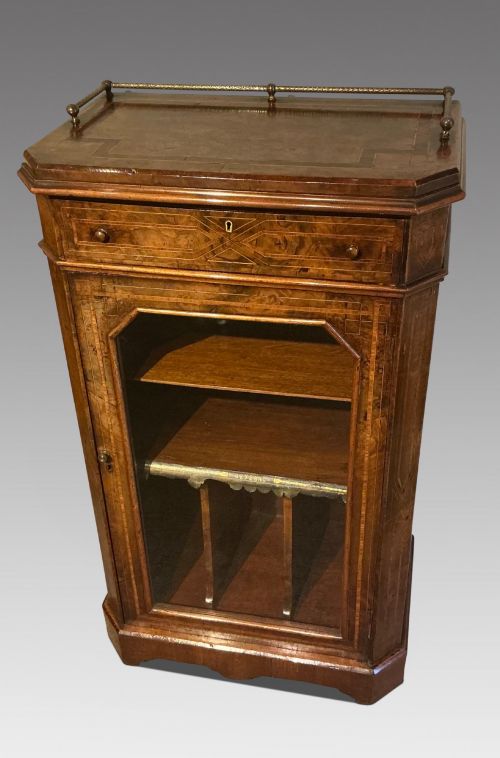


Victorian Marquetry Music Cabinet
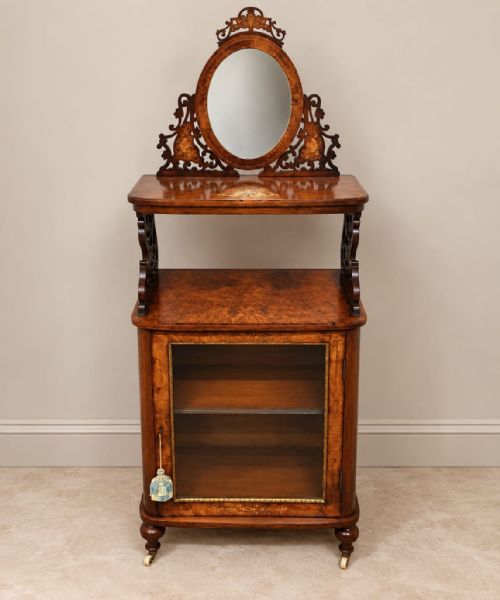
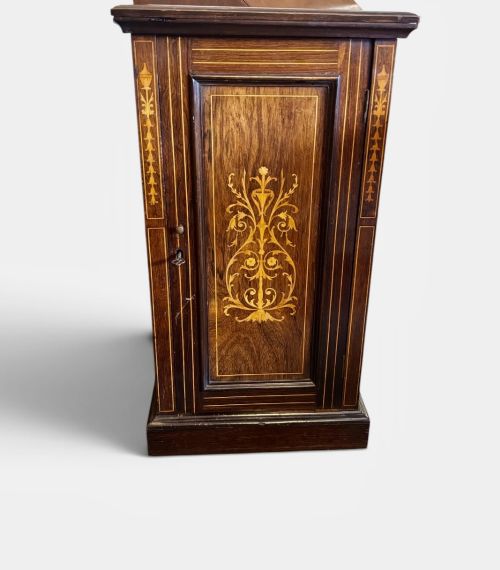
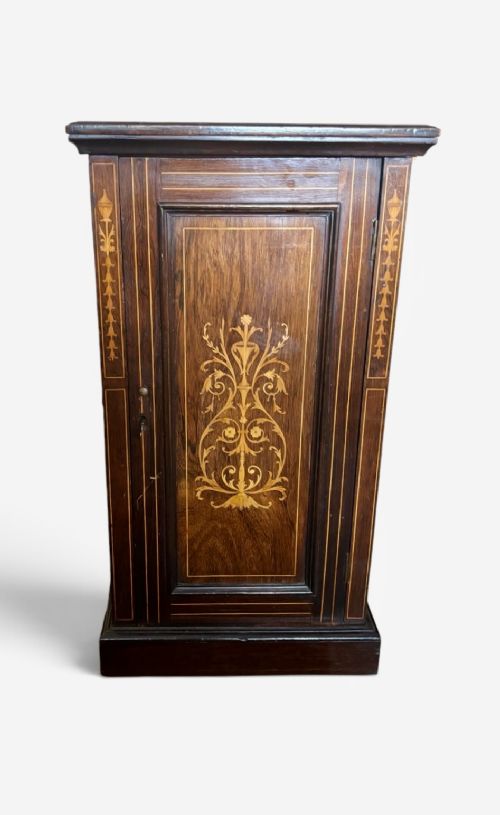
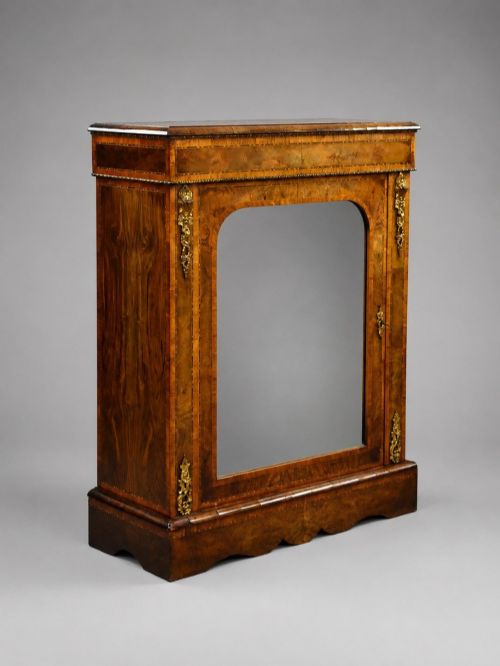
These Victorian marquetry music cabinets combine rich burr walnut and rosewood timbers with delicate inlaid patterns to store sheet music.
Victorian Marquetry Music Cabinet
A Victorian marquetry music cabinet is a functional piece of nineteenth-century furniture designed specifically to hold sheet music and scores. The selection on this page centres on pieces from the Victorian era, spanning decades from the eighteen-fifties through to the eighteen-eighties, alongside examples from the Edwardian period.
The form appears in various configurations, including tall narrow cabinets, pier cabinets, and music canterburys. Many feature glazed doors, mirror backs, or specialised internal shelving tailored for paper storage.
Makers and workshops of the period utilised rich timbers such as burr walnut, rosewood, and mahogany as a base for intricate decorative veneers. These pieces reflect the nineteenth-century domestic interior, where music-making formed a central part of family life.
Construction and Materials
Cabinet makers constructed the carcases using primary structural woods like walnut, rosewood, and mahogany, often applying burr veneers to external surfaces for dramatic figuring. Surfaces were then enriched with marquetry inlay, frequently incorporating lighter woods such as boxwood and satinwood to create floral and geometric motifs.
Brass hardware, including hinges, locks, and handles, provides functional detail, while glass panels and mirrors add reflective depth to the upper sections. Ebonized finishes and specialised compartments for sheet music demonstrate the technical precision applied to nineteenth-century cabinet making.
Victorian musicians stored their sheet music securely behind locked burr walnut doors while family members played the parlour piano.
Judging Quality
The distinction between standard production and finer examples lies in the selection of timber veneers and the precision of the marquetry inlay. Cabinets utilising highly figured burr walnut or rich rosewood with crisp, multi-wood inlay demonstrate superior craftsmanship.
Structural integrity and the retention of original brass fittings, glazing, and internal shelving elevate a piece. The refinement of the turning, the depth of the polish, and the subtlety of the botanical or geometric designs separate workshop output.
Keeble London
The Victorian Marquetry Music Cabinet Glossary
- Marquetry Inlay
- A decorative technique applying pieces of veneer to a structural surface to form pictorial or geometric designs. This method utilises contrasting timbers like boxwood and satinwood set into walnut or rosewood.
- Burr Walnut
- Timber taken from a tree growth that produces intricate, swirling grain patterns. Cabinet makers prized this wood for its decorative visual impact on principal surfaces.
- Music Canterbury
- A low stand or cabinet fitted with vertical partitions to hold sheet music, magazines, or folios. Some examples incorporate drawer space or table tops.
- Pier Cabinet
- A narrow cabinet designed to stand against a pier or wall space between windows. These pieces often feature glass doors to display contents.
- Ebonized
- Wood treated with a finish to imitate ebony. This dark surface treatment appeared frequently on nineteenth-century furniture.
Victorian Marquetry Music Cabinet: Frequently Asked Questions
What is a music cabinet?
A music cabinet is a nineteenth-century storage piece designed to hold sheet music, folios, and scores for domestic piano and parlour use.
These items feature specialised internal shelving or vertical compartments tailored to keep paper organised and protected.
Where were they placed?
These cabinets stood in nineteenth-century parlours, drawing rooms, and music rooms close to the family piano. Their narrow proportions allowed them to fit into limited wall spaces or pier locations.
They served both a decorative display function and a practical storage role within the home.
What woods were used?
Cabinet makers utilised dense hardwoods including walnut, burr walnut, rosewood, mahogany, and occasional yew wood. These dark timbers provided a strong visual base for lighter inlaid veneers.
Boxwood and satinwood details created contrast within the marquetry designs applied to doors and panels.