


Victorian Glazed Music Cupboard
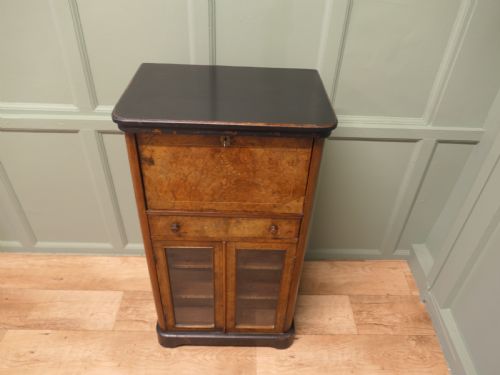
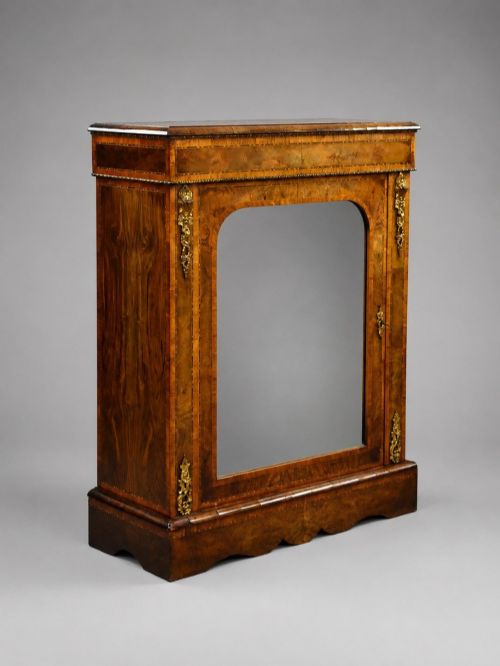
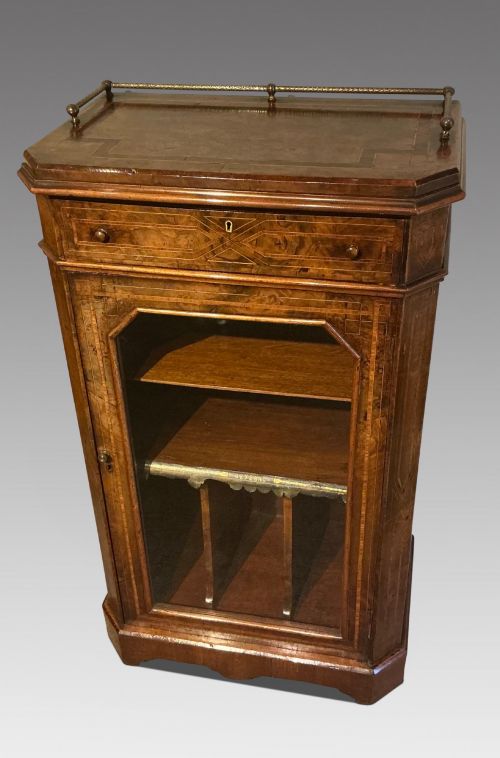
These victorian glazed music cupboard pieces are refined nineteenth-century storage cabinets designed for sheet music, combining glazed doors with burr walnut and marquetry.
Victorian Glazed Music Cupboard
A victorian glazed music cupboard sits within the broader category of nineteenth-century music cabinets, display cabinets, and pier cabinets from the Victorian era. These pieces primarily function as specialised storage for sheet music while offering a glazed display section for interior viewing.
Most examples found on this page date from the Victorian period, including pieces attributed to specific decades like eighteen-eighty, eighteen-seventy, and eighteen-sixty, alongside general nineteenth-century designations. Forms range from dedicated music filing cabinets and pianist lounge servers to inlaid side cabinets.
The buyer encounters various wood timbers and decorative treatments across these items, most frequently burr walnut, black walnut, and walnut, sometimes enhanced by ebonised wood or hardwood with inlaid marquetry.
Materials and construction
Cabinet makers constructed these pieces using primary timbers such as burr walnut, black walnut, standard walnut, rosewood, and hardwood, frequently applying marquetry inlay to enhance the exterior surfaces. Structural and decorative hardware typically includes brass mounts and ormolu details.
Pianists of the Victorian era relied on these petite cupboards to keep their sheet music tidy before playing Chopin in the parlour.
Distinctions in quality
Quality in a victorian glazed music cupboard depends largely on the choice of timber and the precision of the cabinet work. Highly figured burr walnut and intricate marquetry inlay distinguish finer examples from plain walnut or ebonised wood versions.
The integration of decorative mounts, such as ormolu and brass alongside porcelain accents, elevates the visual presence of the cabinet. Finer construction shows careful attention to the fit of the glazed doors and the alignment of internal sheet music storage compartments.
The Victorian Glazed Music Cupboard Glossary
- Burr walnut
- A highly prized timber featuring swirling, knotted grain patterns derived from the growth excrescences of walnut trees. It provides a highly decorative surface on nineteenth-century cabinet doors and panels.
- Marquetry inlay
- The art of applying small pieces of veneer to a structure to form decorative patterns. This technique appears across many Victorian music cabinets.
- Ormolu
- Gilded bronze ornamentation applied to furniture for decorative effect. It adds metallic contrast to the timber surfaces of the cabinet.
- Pier cabinet
- A low cabinet designed to fit against a narrow wall space between windows. Several examples of this form double as sheet music storage in the Victorian period.
- Ebonised wood
- Timber treated with a dark stain or finish to imitate ebony. This dark surface finish creates a formal appearance on Victorian cabinets.
Victorian Glazed Music Cupboard: Frequently Asked Questions
What is a victorian glazed music cupboard used for?
These cabinets were originally manufactured during the nineteenth century to store and organise sheet music for parlor pianos. The internal compartments kept paper scores flat and orderly while the glass door protected them from dust.
Today, buyers utilise them in living spaces as decorative display furniture that maintains a compact footprint while offering functional shelved storage for books or small collections.
How do I date a music cabinet?
Dating relies on identifying stylistic markers, timber preferences, and construction methods characteristic of the Victorian era. Cabinets from the mid to late nineteenth century often feature specific timber combinations like burr walnut paired with marquetry inlay.
Examining the hardware, such as brass fittings and ormolu mounts, alongside the cut of the glass helps narrow down the period between eighteen-sixty and eighteen-eighty.
What woods are common on these cabinets?
Walnut is the predominant timber seen across these pieces, particularly burr walnut with its distinctive figured grain. Other common variations include black walnut, rosewood, and hardwood finished with marquetry.
Some examples also feature ebonised wood surfaces, providing a contrasting dark aesthetic popular during the later Victorian period.
Are pier cabinets the same as music cabinets?
While both forms date from the Victorian period and share similar proportions, pier cabinets were originally built to stand against architectural wall piers, often incorporating display glass. Music cabinets are specifically engineered internally to hold sheet music scores.
Many pieces bridge these categories, functioning as pier display cabinets while retaining the internal configuration required for music storage.