


Victorian Sheet Music Chest
These Victorian sheet music chests are tidy cabinets designed to store scores, and you want one for its compact footprint and fine timber.
Victorian Sheet Music Chest
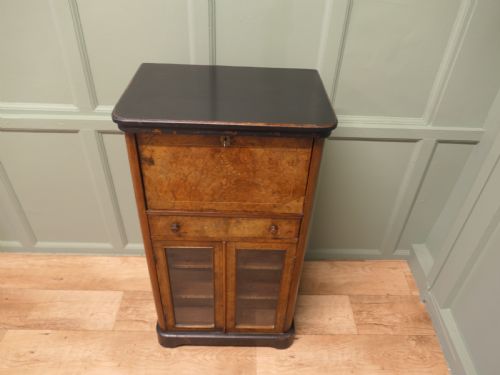
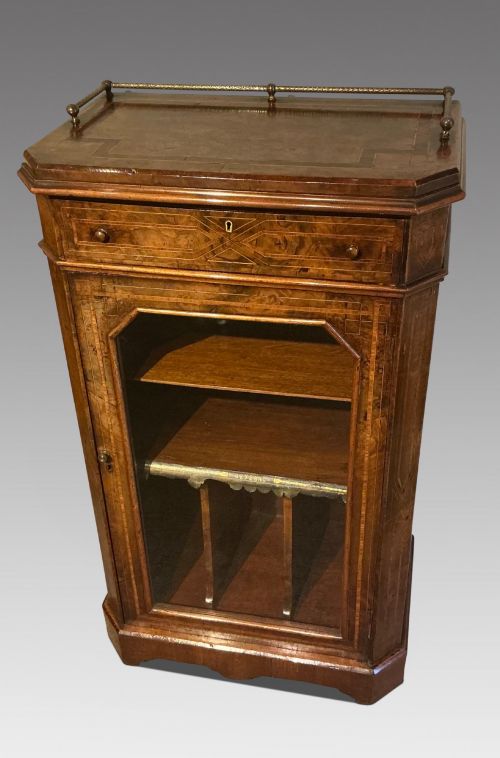
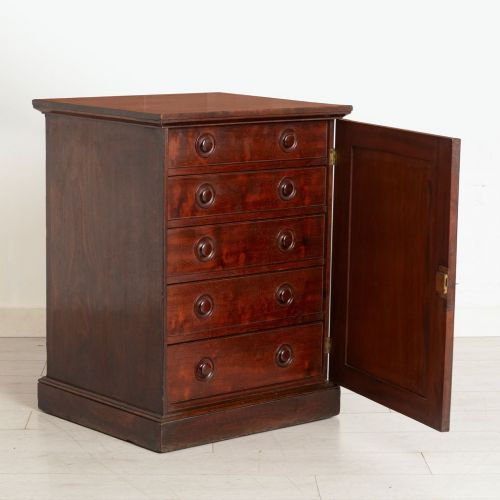
When you search for a Victorian sheet music chest, you encounter dedicated storage furniture built to hold large folios of unbound music. These pieces range from upright cabinets with multiple drop-down or sliding drawers to low canterbury stools and folio cabinets.
The versions you meet most frequently on this page date from the Victorian and Edwardian eras, spanning mahogany, burr walnut, and rosewood. They stand on upright legs or castors, designed to fit neatly beside a piano in a nineteenth century parlour.
The form prioritises organisation over bulk, presenting shallow compartments that keep paper flat and protected. Makers adapted the interiors with clever fall-front mechanisms and internal divisions specifically tailored for musicians.
How they were made
Cabinet makers utilised dense hardwoods such as mahogany and walnut, frequently enhancing the exterior surfaces with burr veneers and intricate satinwood inlay. These timbers provided the structural stability required for stacking heavy paper folios.
Details often include cast brass handles, glazed doors, and marquetry enrichment, reflecting the high standard of nineteenth century joinery. Interiors feature specialised shelving and fall-front mechanisms designed to drop open smoothly without jamming.
Listings feature periods spanning from the Victorian era into the 1920s, constructed in mahogany, walnut, and rosewood.
What varies in quality
The distinction between standard examples and the finest pieces rests upon the choice of timber figure and the restraint of the inlay. Richly figured burr walnut and crisp marquetry elevate a simple storage box into a decorative focal point.
Construction methods also divide the range, visible in the precision of the drawer dovetails and the smooth operation of internal fall-front mechanisms. Superior pieces retain original brass hardware and retain their structural integrity without heavy restoration.
Keeble, London·Liberty
The Victorian Sheet Music Chest Glossary
- Fall Front
- A hinged panel that drops forward to reveal interior compartments or shelves. This mechanism allows easy access to sheet music stored flat inside.
- Canterbury
- A low stand featuring vertical partitions, originally built to hold sheet music or folios. Some examples incorporate a seat on top, serving as a stool.
- Marquetry
- Decorative patterns formed by fitting contrasting pieces of veneer into a wooden background. This technique creates floral or geometric motifs across the cabinet doors.
- Burr Walnut
- Timber taken from a growth on a walnut tree, producing swirling and mottled grain patterns. Cabinet makers prized this wood for high-status Victorian furniture fronts.
Victorian Sheet Music Chest: Frequently Asked Questions
What is a sheet music chest?
A sheet music chest is a specialised piece of furniture built during the nineteenth century to store large paper folios flat and organised. They feature shallow drawers or drop-front compartments designed to keep musical scores clean and accessible.
These cabinets were essential fixtures in Victorian drawing rooms where families gathered around the piano to play music. Today, their compact proportions make them versatile storage units for hallways or studies.
How do I tell Victorian from Edwardian?
Victorian pieces typically display heavier timber construction, rich burr veneers, and dark finishes like mahogany or walnut. Decoration often includes elaborate marquetry, Gothic revival elements, or intricate brass fittings.
Edwardian examples tend to show lighter construction with simplified lines and restrained inlay work. They reflect a shift towards brighter, airier interiors while maintaining the functional compartmentalisation of earlier music cabinets.
Can I use one for modern storage?
These cabinets adapt exceptionally well to modern homes because their shallow drawers match the dimensions needed for paperwork, art supplies, or flat linens. The internal divisions keep small items sorted without taking up excessive floor space.
Placing one beside a desk or in a living room provides discreet storage for items that usually cause clutter. The rich timber surfaces also function effectively as display tables for lamps or small decorative objects.
What is a music canterbury?
A music canterbury is an open rack with vertical wooden slats designed to hold sheet music upright rather than flat. Many versions include a cushioned seat on top, doubling as a piano stool.
Originating in the late eighteenth century, the form remained popular through the Victorian period in mahogany and walnut. They offer a more casual storage solution than enclosed cabinets.