



Carved Mahogany Music Cabinet
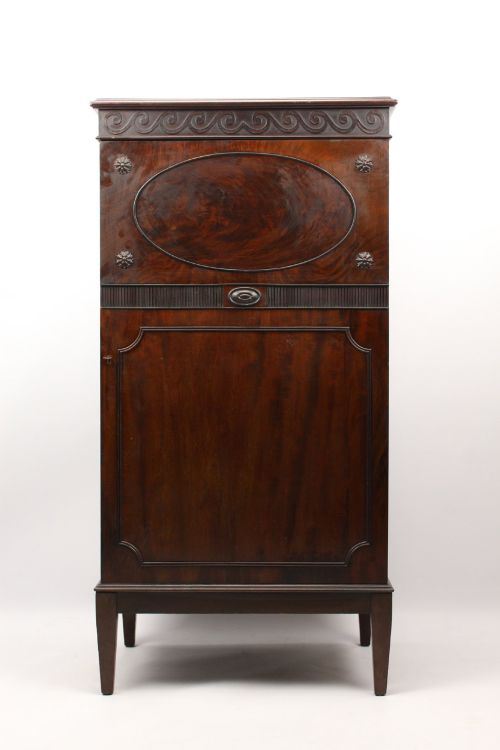
A carved mahogany music cabinet organises sheet scores with understated elegance, combining rich timber and practical interior shelving for the traditional parlour.
Carved Mahogany Music Cabinet
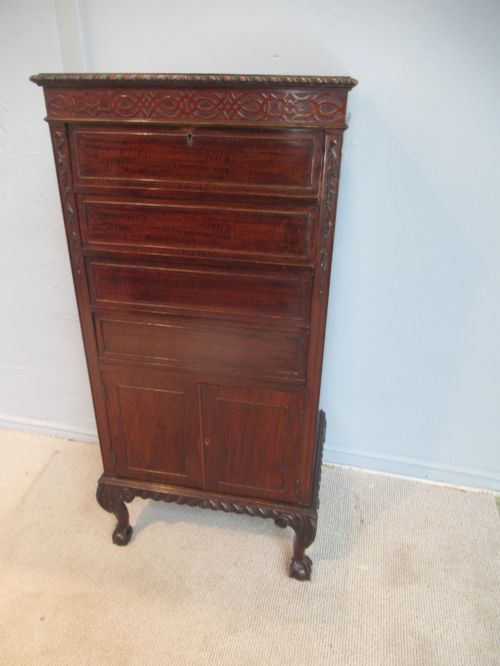
A carved mahogany music cabinet is a specialised form designed to store sheet scores, featuring compact proportions and internal shelving or drop-front drawers. The pieces seen span several eras, with Victorian and Edwardian examples appearing frequently alongside earlier William IV and Regency forms.
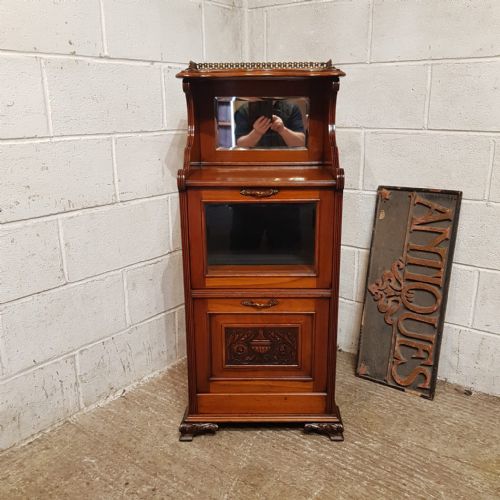
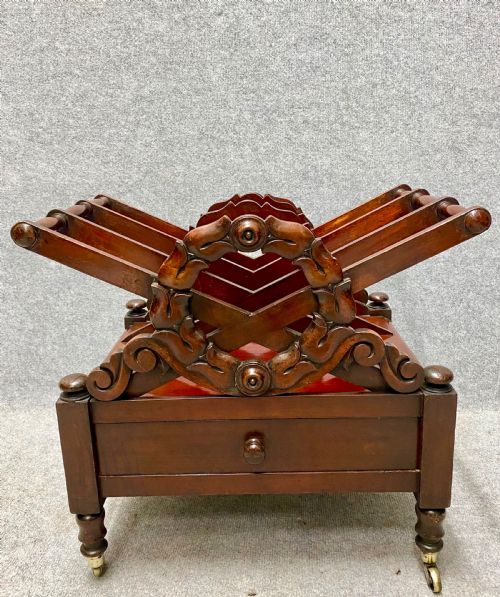
The objects take various shapes, from narrow side cabinets and pedestal units to fall-front designs and canterbury magazine racks. Mahogany provides the primary structure, often enriched with flame grain patterns, brass hardware, mirror glass, or delicate wood inlay.
Makers and designers from the late nineteenth and early twentieth centuries produced these pieces to suit formal drawing rooms and music rooms. Influences range from standard Victorian and Edwardian tastes to distinct Art Nouveau interpretations and Chippendale Revival styles.
Materials and construction
Makers relied primarily on solid mahogany and flame mahogany veneers to build the structural carcass and decorative exterior panels. This dense tropical hardwood offered stability and a rich reddish-brown colour that responded well to traditional hand-finishing.
Metal elements such as brass handles, hinges, and occasional racks provided functional support and visual contrast to the dark timber. Selected pieces incorporate glass panels or mirrors into the doors, reflecting light within compact interior spaces.
Current listings demonstrate a strong concentration of Edwardian and Victorian pieces, alongside earlier William IV and Regency examples built from mahogany.
Judging the quality
Quality rests upon the selection of the timber, particularly where figured flame mahogany veneer displays depth and careful book-matching across the door panels. Cabinetmakers who spent time aligning the grain achieved a far more coherent visual balance than those using plain stock.
Carving and detailing distinguish finer examples from standard production pieces. Crisp relief work executed directly into the solid mahogany framing demonstrates superior hand skills compared to shallow or cast ornamentation.
Denby & Spinks·J.C.Loudon
The Carved Mahogany Music Cabinet Glossary
- Canterbury
- A low stand fitted with vertical partitions for holding sheet music, folios, or magazines. The form often incorporates a carrying handle and a small drawer beneath.
- Fall-front
- A hinged front panel that drops down to form a writing surface or to provide immediate access to interior shelves. It operates via brass stays or side arms.
- Chippendale Revival
- A late nineteenth and early twentieth-century style reproducing or reinterpreting the mid-eighteenth-century designs of Thomas Chippendale. These pieces typically exhibit carved cabriole legs and classical motifs.
Carved Mahogany Music Cabinet: Frequently Asked Questions
What is a carved mahogany music cabinet?
A carved mahogany music cabinet is a specialist piece of antique furniture built to store sheet music and scores safely in the home. They combine internal shelving, drawers, or drop-front compartments within a compact wooden carcass.
Most examples date from the Victorian and Edwardian periods, utilising solid mahogany and flame mahogany veneers. Their narrow footprints made them ideal for placing beside a piano or in a congested drawing room.
How were music cabinets used originally?
Music cabinets kept unbound sheet scores, folios, and manuscripts clean, flat, and organised before the era of bound books. The internal partitions allowed musicians to separate pieces by composer or instrument.
Drop-front and pedestal variants gave quick access to scores while seated at the piano. Many included locking doors to protect valuable or delicate printed music collections.
How do I date a mahogany music cabinet?
Dating relies on observing construction methods, hardware, and stylistic indicators such as Art Nouveau curves or Chippendale Revival carving. Victorian pieces tend to be heavier with dark finishes, while Edwardian versions often display lighter inlay.
Makers' marks, brass lock stamps, and secondary woods inside the drawers provide further clues. Comparing the overall silhouette to documented nineteenth-century furniture catalogues narrows the period.
Can I use a music cabinet for modern storage?
These cabinets adapt readily to modern homes for storing paperwork, stationery, art supplies, or small collections. The internal shelves and shallow drawers accommodate tablets, documents, and media accessories effectively.
Placing them in a study, hallway, or living room preserves their original function as practical utility furniture. Their slim proportions allow them to fit into tight spaces where standard cupboards will not go.