
Antique Music Holder
An antique music holder is a practical piece designed to keep scores and folios tidy, spanning graceful Regency designs to ornate Victorian styles.
Antique Music Holder
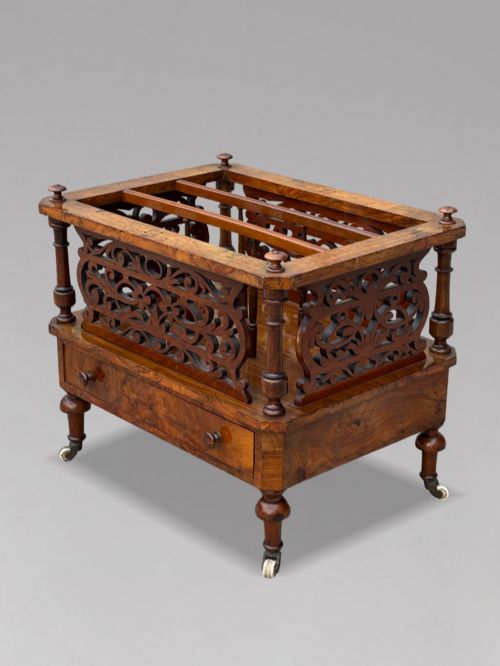
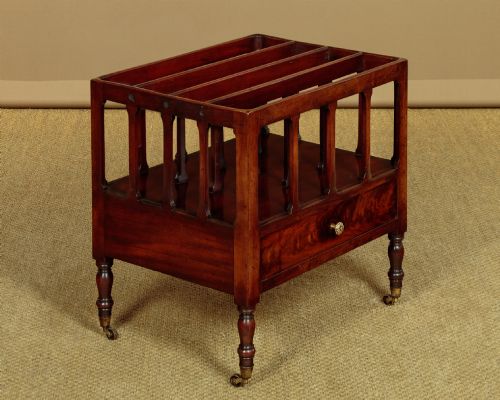
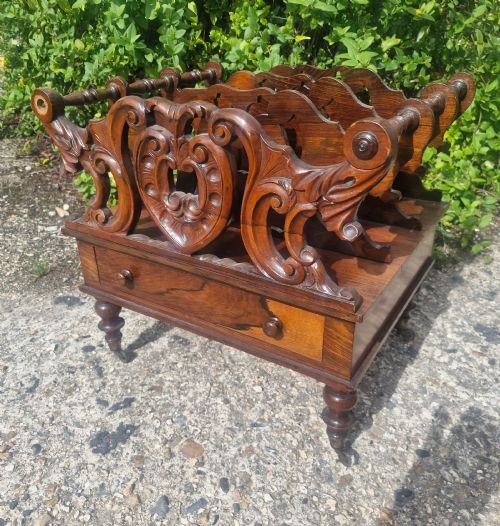
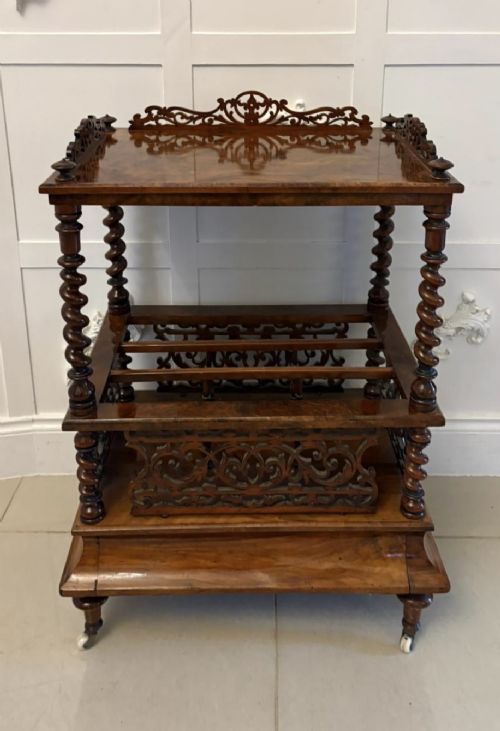
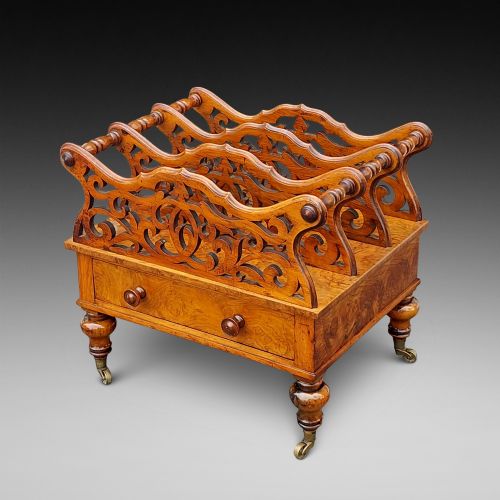
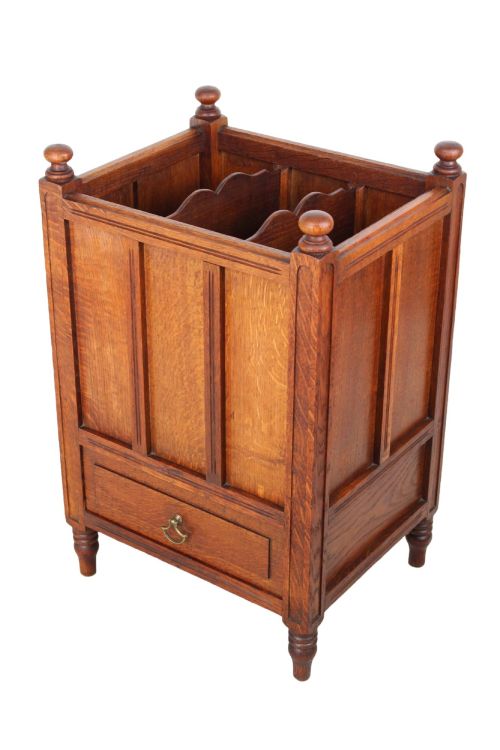
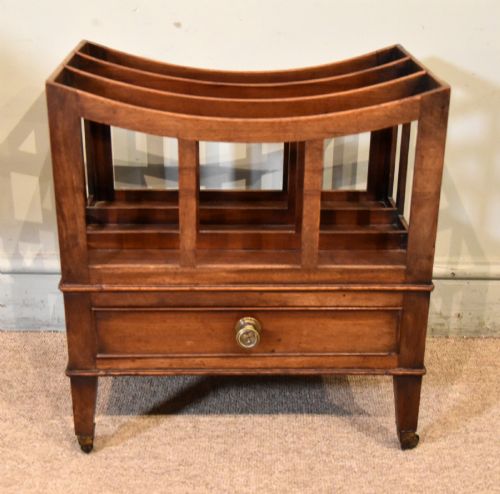
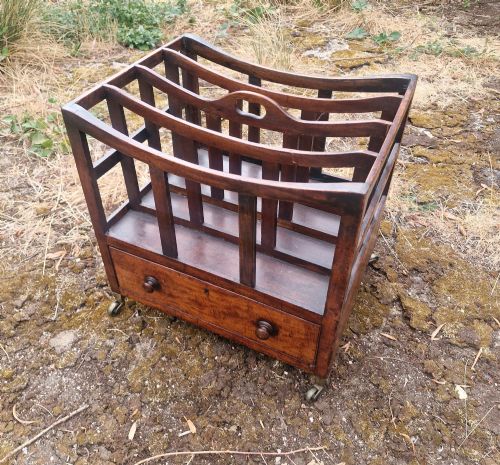
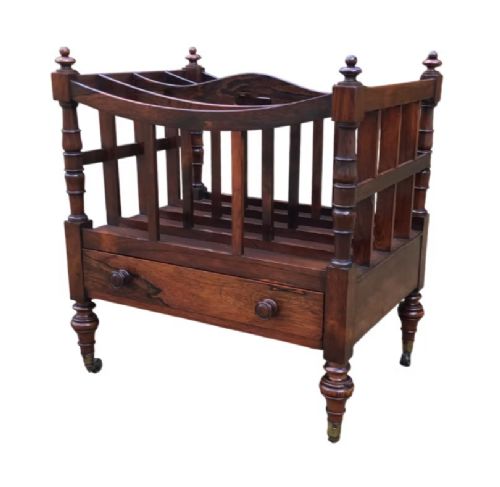
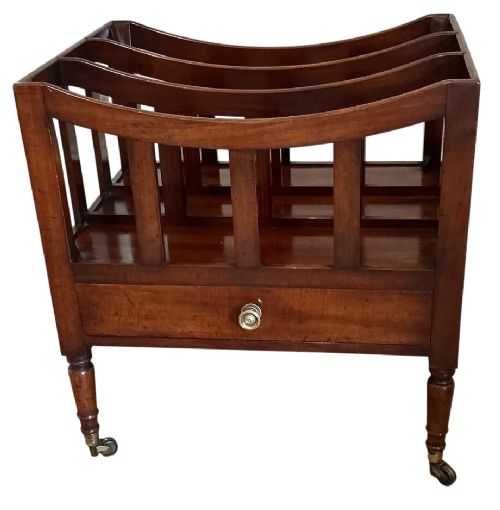
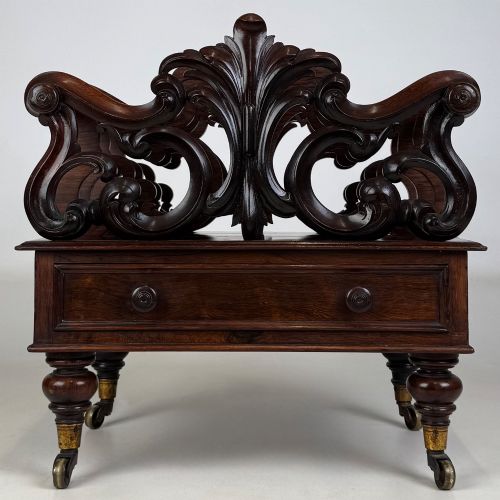
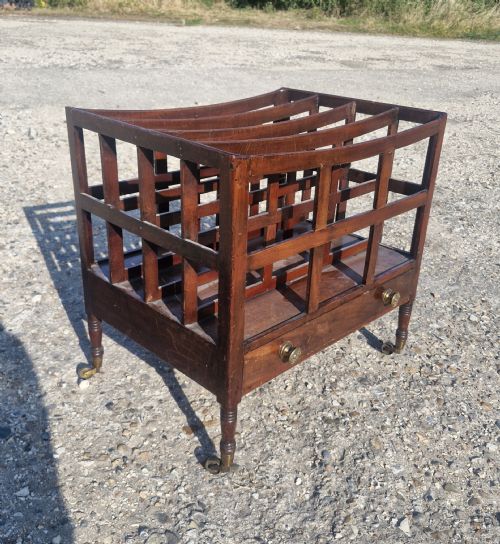
An antique music holder most frequently appears as a Canterbury, a compartmented stand designed for sheet music, folios and periodicals. These pieces emerge across Georgian, Regency, William IV, Victorian and Edwardian periods, evolving from simple floor-standing partitions into multifunctional furniture featuring drawers and work tops.
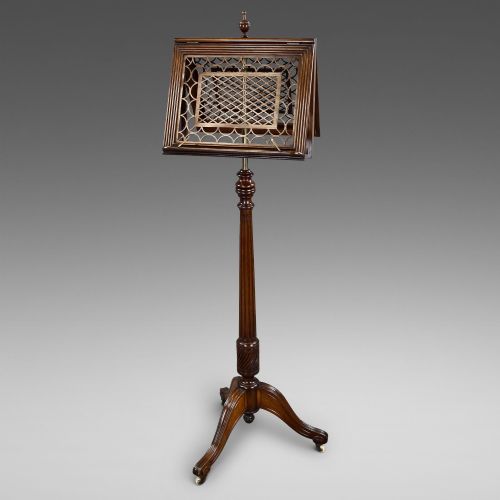
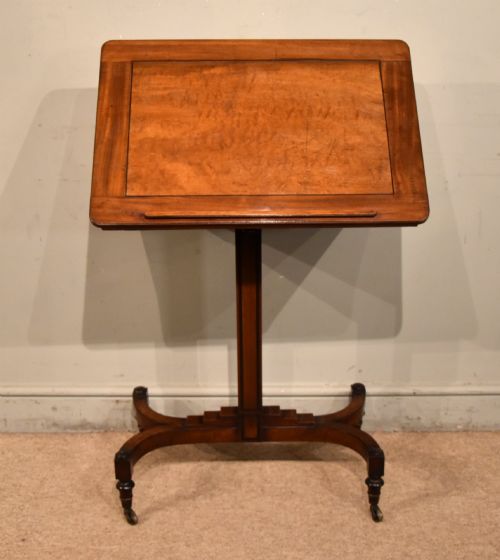
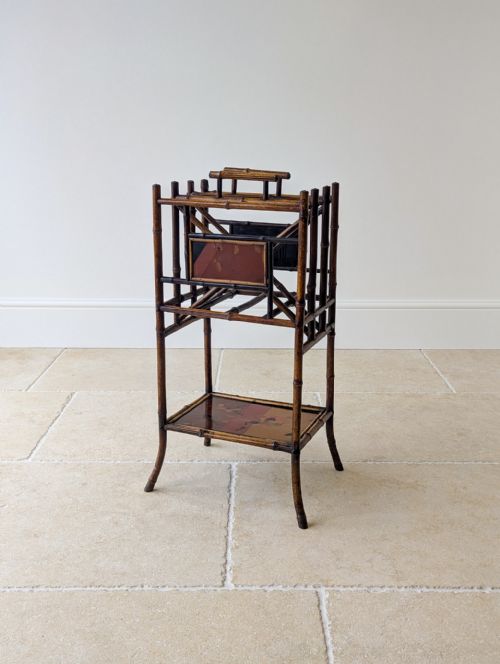
Buyers will encounter forms ranging from boat-shaped mahogany frames to burr walnut serpentine units and bamboo variations. Alongside traditional canterburys, listings include dedicated reading stands, duet music stands and magazine tidies tailored for domestic parlours.
Origins span English cabinet-making traditions alongside French carved examples, reflecting changing interior requirements from the eighteenth century through to the early twentieth century.
How they were made
Cabinet-makers relied primarily on timbers such as mahogany, walnut, burr walnut, rosewood and oak to construct these stands. These dense hardwoods provided the structural integrity needed for slatted dividers and supporting legs, often enhanced by decorative veneers and intricate grain patterns.
Brass fittings, castors and ceramic components frequently appear as functional or decorative details on nineteenth-century pieces. Certain stands also incorporate bamboo construction, particularly within later Aesthetic Movement designs from the late nineteenth century.
Certain Victorian music stands doubled as reception desk greeters before finding retirement in modern hallways.
What varies in quality
Quality rests upon the selection of timber figures, such as highly figured burr walnut or rich mahogany veneers, and the crispness of any carved detailing like lyre motifs or fretted panels. Finer examples display careful joinery in their slatted partitions and drawer construction rather than purely utilitarian assembly.
The integration of secondary functions, such as incorporating a lower drawer or an occasional work top, distinguishes more ambitious parlour pieces from standard floor racks.
Gillows·Edwards and Roberts
The Antique Music Holder Glossary
- Canterbury
- A low stand featuring upright dividers, originally intended for holding sheet music and folios before later adapting to newspapers and magazines.
- Lyre-form
- A decorative framework shaped like a classical lyre, commonly utilised for the central supports of music stands and reading tables.
- Serpentine
- A curved outline possessing a convex centre flanked by concave sides, frequently seen on the edges of premium Victorian walnut cabinet tops.
- Aesthetic Movement
- A late nineteenth-century design style favouring lighter forms, distinct materials like bamboo, and artistic rather than strictly historicist ornamentation.
- Regency
- A British design period spanning the early nineteenth century defined by classical restraint and polished mahogany surfaces.
Antique Music Holder: Frequently Asked Questions
What is a Canterbury music stand?
A Canterbury is a traditional piece of furniture featuring vertical partitions designed to keep sheet music, books and folios upright and organised.
Originating in the eighteenth century, these stands sit low to the floor and often include carrying handles or integrated drawers for smaller accessories.
How do I date an antique music rack?
Dating relies on observing the primary timber, decorative style, and structural hardware used in the construction of the piece.
Georgian and Regency examples tend to feature restrained mahogany lines, whereas Victorian pieces frequently showcase burr walnut veneers, serpentine shaping, or bamboo frames.
Can these stands hold modern magazines?
Most standard canterburys and magazine racks provide adequate depth and width to accommodate contemporary periodicals and large softcover books.
Buyers should check the specific spacing between internal slats, as earlier partitions were tailored specifically for bound musical scores and sheet music folios.
Where were music holders placed in a home?
These pieces traditionally occupied the drawing room or music parlour, positioned conveniently near a piano, harp or reading chair.
Their compact freestanding nature allowed them to be moved easily around the room to support daily practice or evening entertainment.