




Antique Paper Rack Table
An antique paper rack table is a refined spot for journals and letters, bringing period craftsmanship straight to the sitting room.
Antique Paper Rack Table
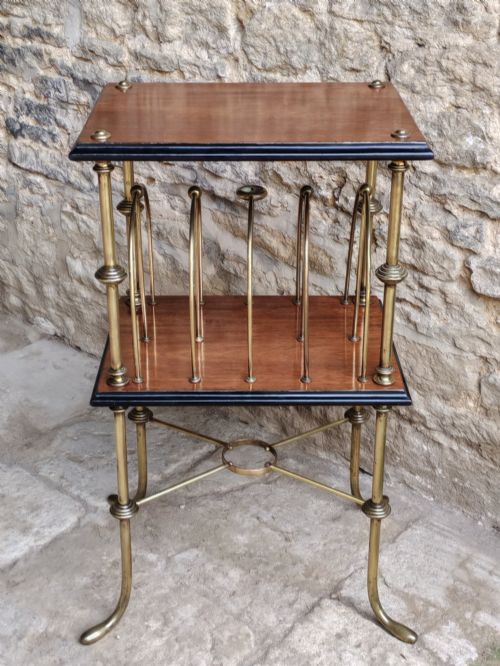
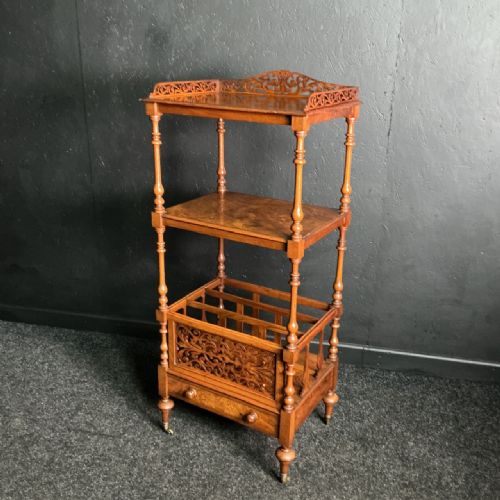
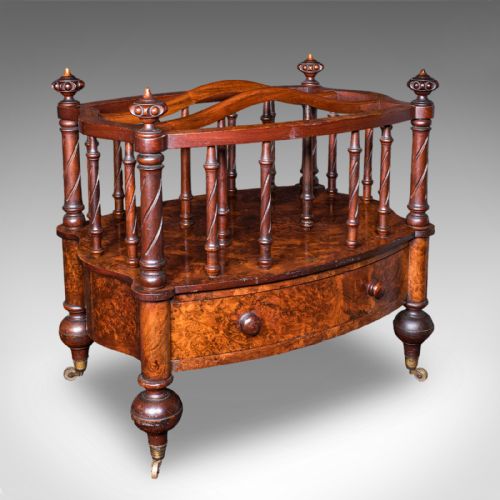
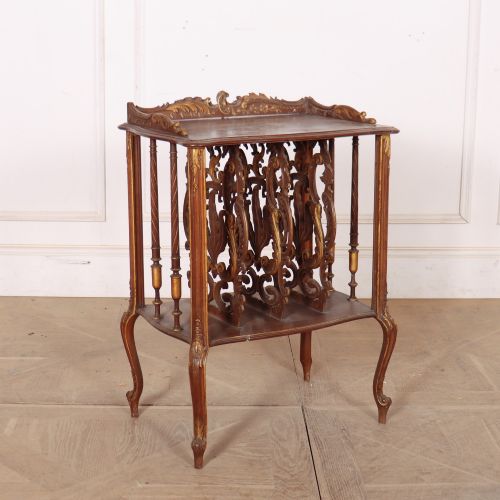
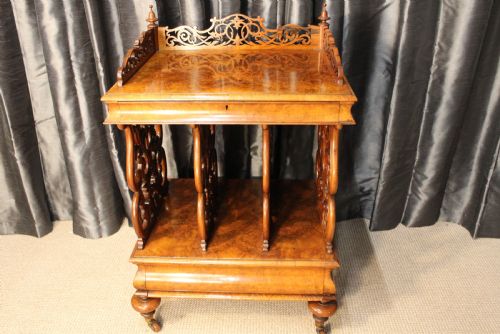
When you search for an antique paper rack table, you encounter versatile pieces designed to keep periodicals, sheets of music and correspondence neatly ordered. The most common forms on this page include canterburys, whatnots, and occasional lamp tables fitted with dedicated compartments.
The periods represented span from the Regency era through to the late Victorian years, encompassing aesthetic movement designs and French revival pieces. These items bridge the gap between functional office storage and elegant parlour furniture.
How they were made
Cabinetmakers utilised rich timbers such as mahogany, rosewood, and burr walnut, frequently enhancing the surfaces with boxwood and ebony inlay. Brass accents appear on handles, casters, and structural rails, adding durability and bright contrast to the dark woods.
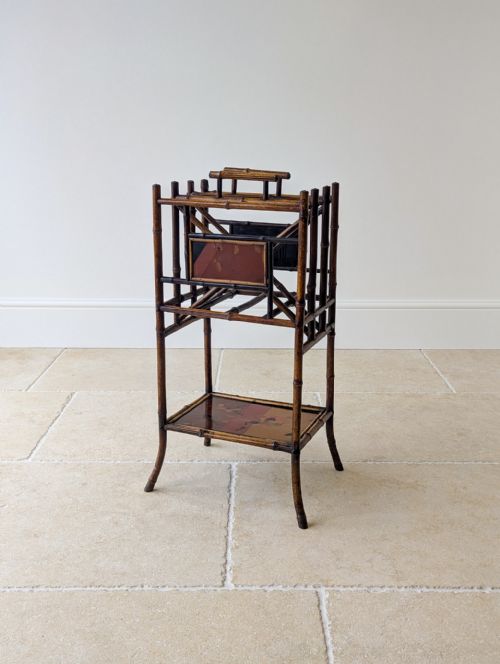
Some examples incorporate bamboo for a lighter aesthetic, whilst others rely on carved French rosewood and ceramic elements. Joinery techniques prioritize stability across multi-tiered whatnots and compartmentalised rack structures.
Some Victorian canterburys include hidden drawers beneath the paper dividers, perfect for stashing midnight ink cartridges.
What varies in quality
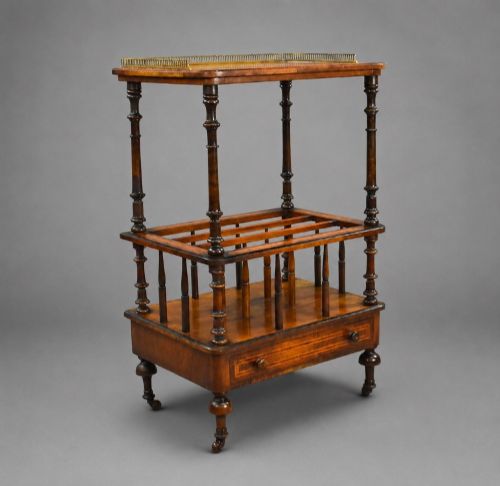
The distinction between standard examples and the finest pieces lies in the choice of veneer and the intricacy of the inlay work. Burr walnut figures prominently in superior items, showing rich grain patterns matched across the surfaces.
Structural complexity also dictates worth, with multi-functional designs featuring lower drawers and turned supports standing apart from simpler rack forms. The integration of brass fittings and the crispness of carved details further separate baseline items from top-tier specimens.
The Antique Paper Rack Table Glossary
- Canterbury
- A low stand with upright divisions, originally designed for holding sheet music and later adapted for newspapers and magazines. This form often incorporates a small drawer beneath the slatted dividers.
- Whatnot
- A piece of open shelving furniture with multiple tiers used for displaying ornaments or holding books and papers. They sit on slender supports and frequently combine storage racks with flat table tops.
- Burr walnut
- A highly prized wood grain taken from the warted growth of a walnut tree, creating swirling patterns. Cabinetmakers sliced this timber into decorative veneers for fine table tops and cabinet fronts.
- Aesthetic Movement
- A late nineteenth-century design style that emphasised artistic visual qualities over moral or narrative themes. Pieces from this movement often utilise bamboo or contrasting dark woods.
Antique Paper Rack Table: Frequently Asked Questions
How were paper rack tables used historically?
Households relied on these pieces to keep daily newspapers, writing paper, and sheet music close at hand yet tidy. The divisions kept documents upright and separated.
Upper surfaces served as lamp tables or display areas for small decorative objects in parlours and drawing rooms. They acted as central hubs for evening reading and correspondence.
How do I identify a Regency paper rack?
Regency pieces often display classical proportions, utilising dark timbers like mahogany and rosewood alongside brass inlay or mounts. Their lines tend to be clean and architectural.
They frequently pre-date the heavier ornamentation associated with later Victorian furniture. Brass castors and sabots are typical hallmarks of this period.
Where do I place these in a modern home?
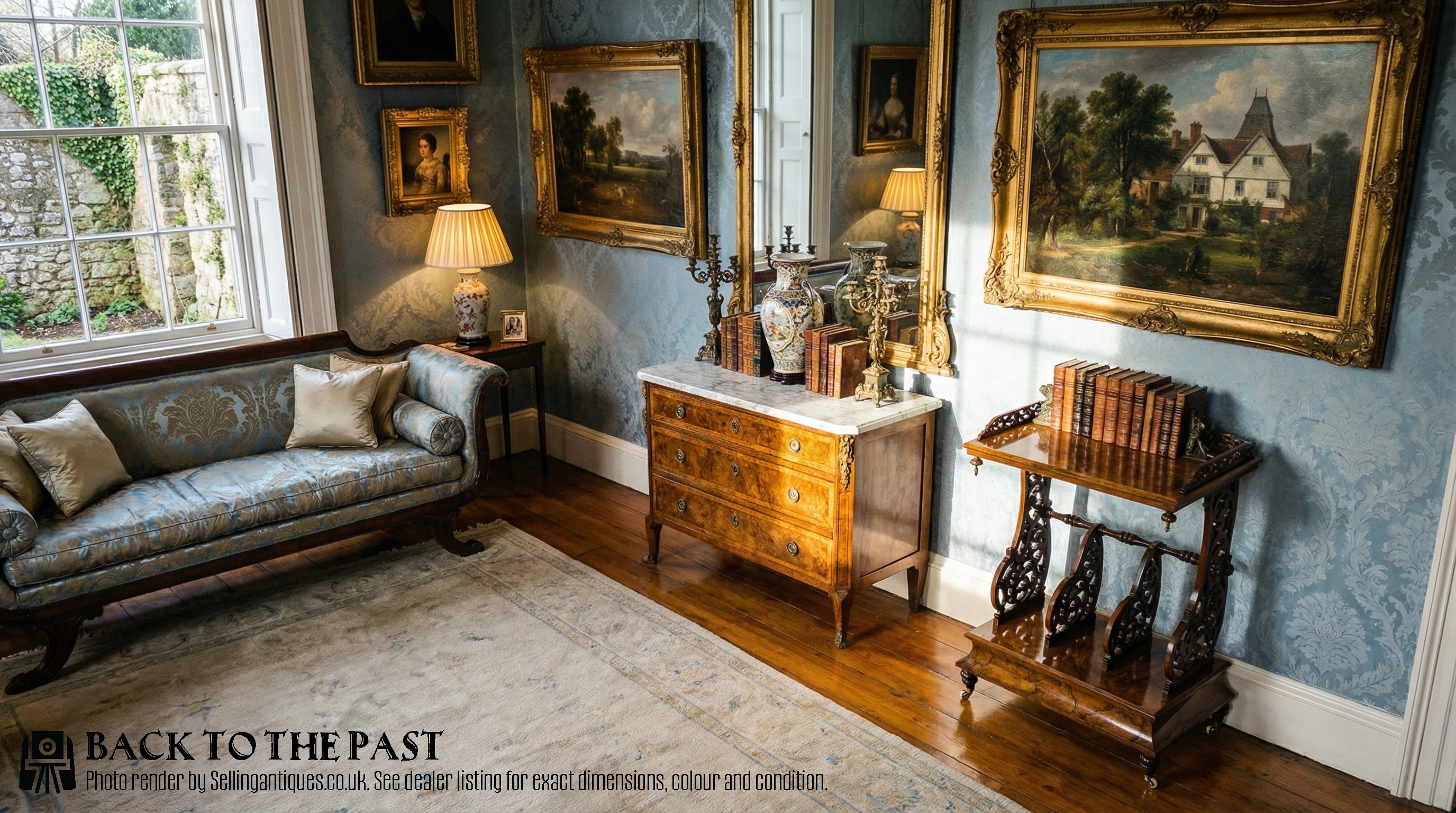
These pieces fit naturally beside a sofa or armchair to hold current reading material and modern periodicals. Their compact footprints make them practical for smaller spaces.
The top surface functions well for a small reading lamp or decorative items, whilst the lower racks store notebooks and magazines out of sight.