

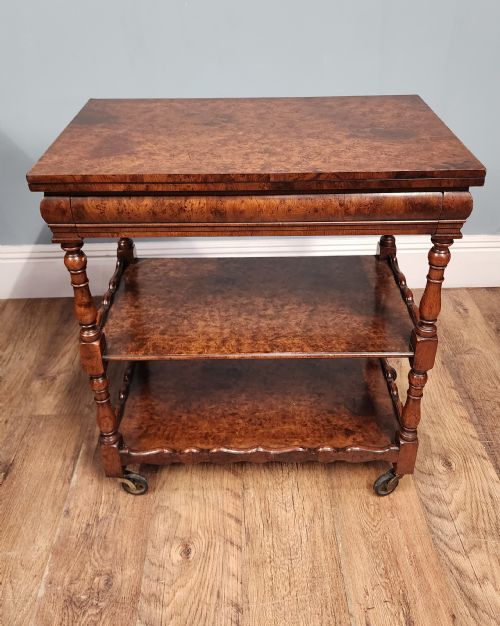


Victorian Whatnot Table
A victorian whatnot table provides tiered open shelving for display and utility, bringing distinctive timber grain and vertical proportion into a room.
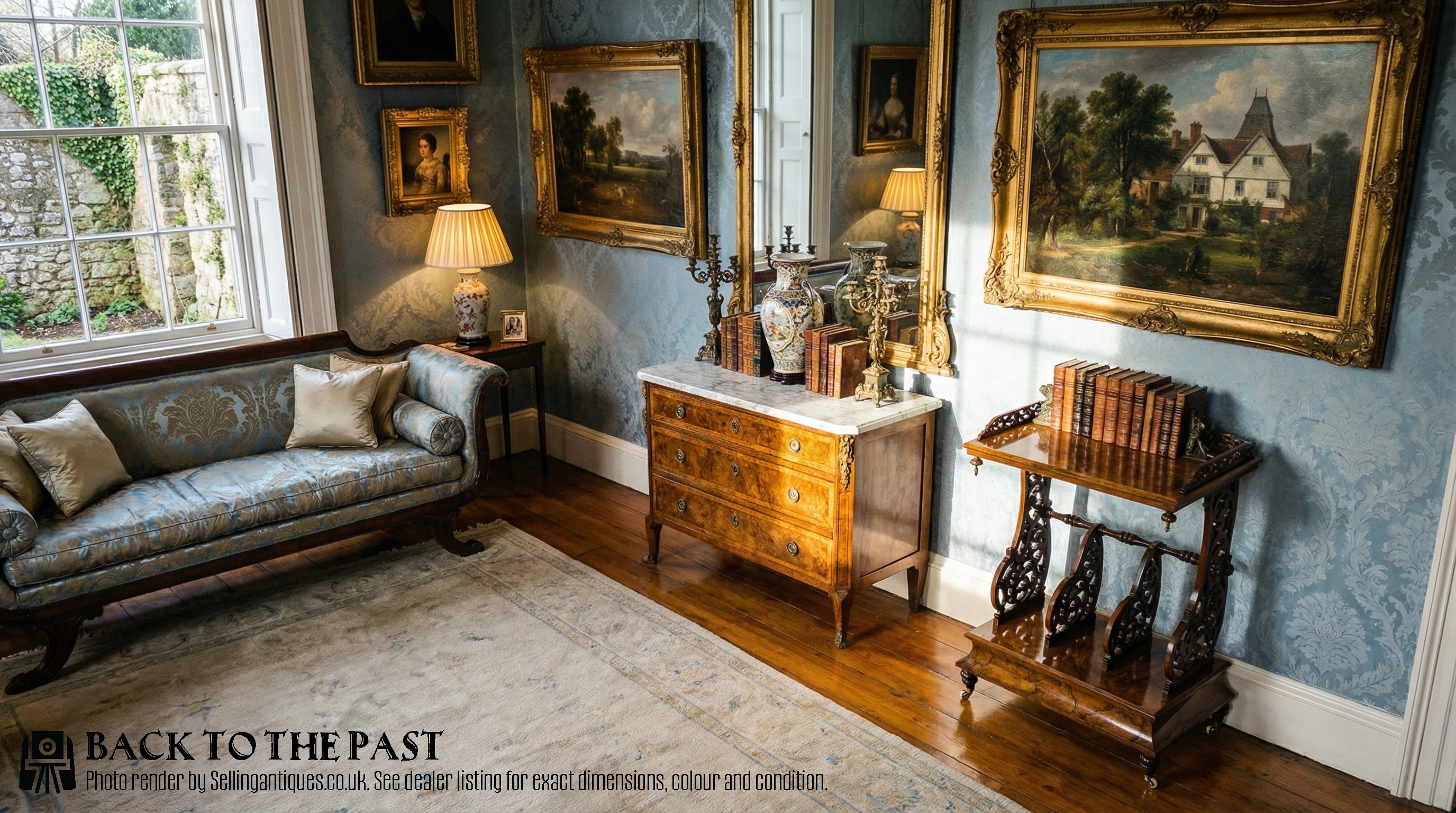
Victorian Whatnot Table
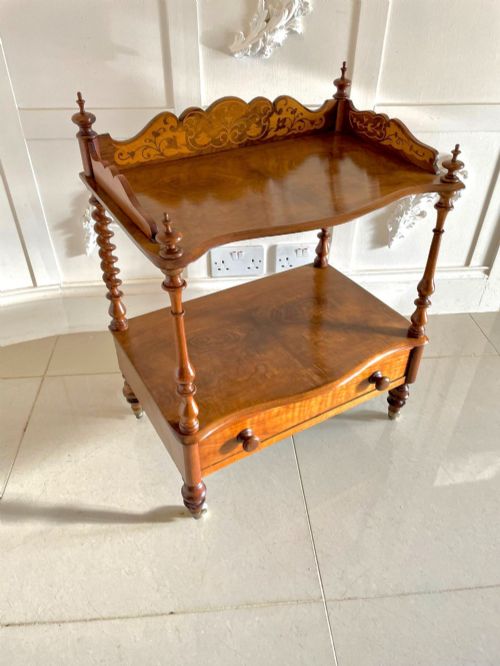
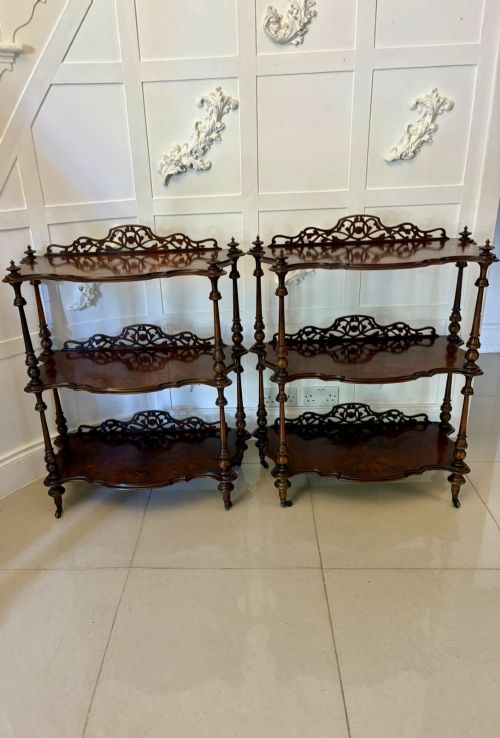
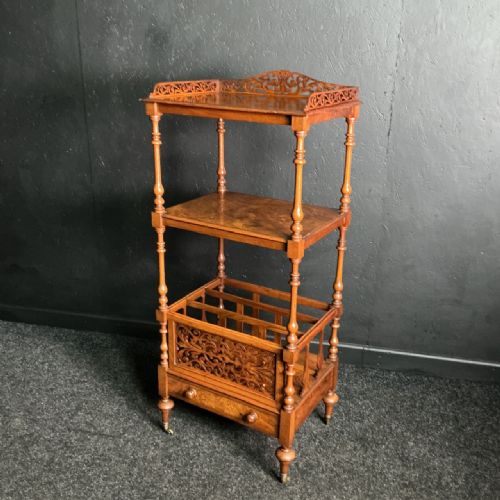
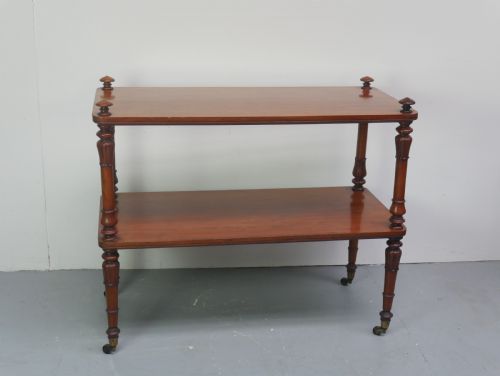
A victorian whatnot table organises display space across multiple stacked tiers supported by slender uprights or columns. These tiered pieces function as stands for lamps, books or ornaments, appearing in variants from simple three-tier stands to elaborate Canterbury combinations featuring fitted lower compartments.
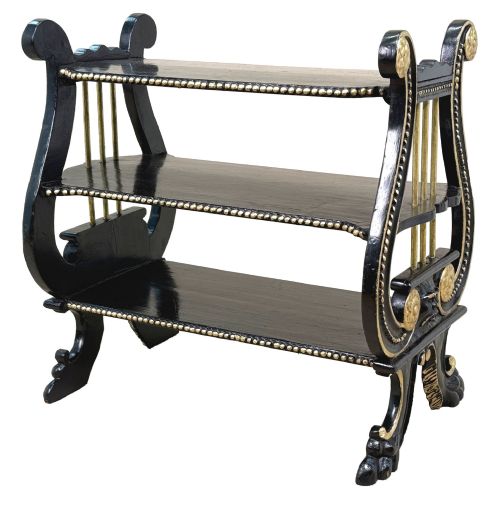
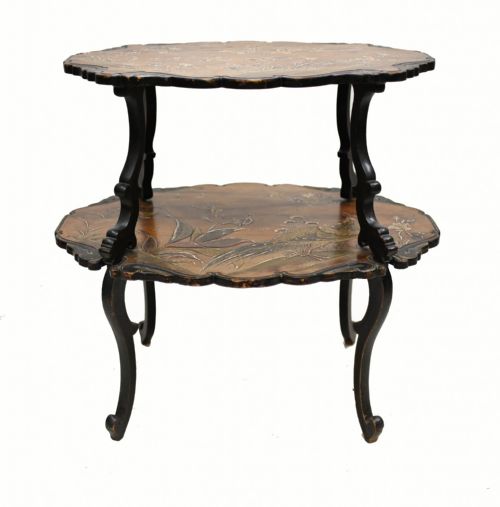
The materials span rich figured veneers alongside solid hardwoods, matching the domestic tastes of the nineteenth century. Walnut and burr walnut dominate alongside rosewood and mahogany, while ebonised wood and occasional gilt highlights appear on more decorative examples.
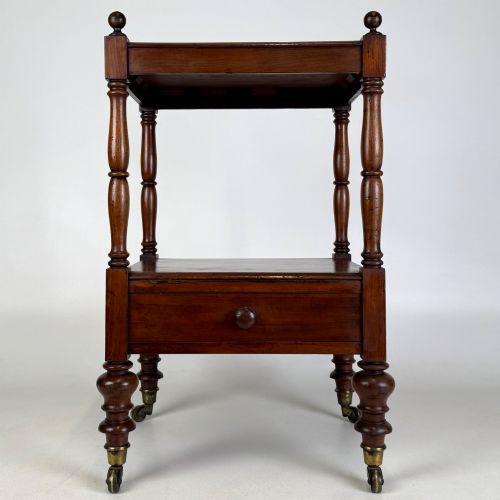
Makers and designers utilised styles ranging from straightforward Victorian utility to Gothic Revival, Aesthetic Movement, and Arts and Crafts influences. Pieces take rectangular, square, or octagonal formats, occasionally incorporating cabinets, drawers, or cellarettes beneath the open shelves.
Construction and Materials
Cabinet makers selected choice timbers like burr walnut, rosewood, and mahogany, often applying decorative veneers over stable secondary woods to showcase rich grain patterns. Inlays of lighter woods and brass details embellished the surfaces of finer tiers.
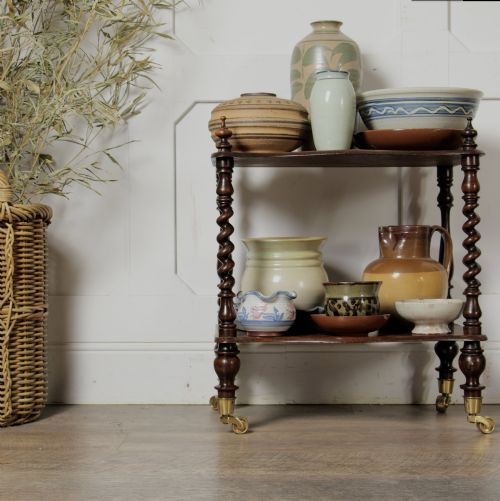
Uprights took various forms, from straightforward turned columns to intricate barley twist supports or bamboo structures. Joinery relied on precise fitting to support multiple tiers while maintaining visual lightness.
Several examples incorporate cellarettes and music racks, proving that Victorians wanted their display stands to hold drinks and sheet music simultaneously.
Assessing Quality and Execution
The choice of timber veneer establishes the baseline quality, with dense, highly figured burr walnut and richly grained rosewood marking superior examples. Finely executed marquetry inlay and crisp carving on the supports elevate a piece above standard utility furniture.
Proportion and structural rigidity determine the success of the design, as multiple stacked tiers require stable uprights that prevent wobbling. Refined turning on the columns and integrated lower sections such as drawer units or cellarettes indicate higher workshop standards.
Leonard Wyburd For Liberty & Co
The Victorian Whatnot Table Glossary
- Whatnot
- A piece of furniture consisting of a series of open shelves for displaying small objects. They became popular in the nineteenth century for parlours and drawing rooms.
- Etagere
- A French term for a piece of furniture with a set of open shelves for knick-knacks or display. These tier structures share close similarities with English whatnot tables.
- Canterbury
- A low stand with partitioned vertical sections designed originally for sheet music or books. Many Victorian examples combine this storage base with upper whatnot shelves.
- Burr Walnut
- Timber taken from the warted excrescences of walnut trees, producing swirling, highly decorative grain patterns. Cabinet makers prized this wood for high-status Victorian tables.
- Japanning
- A European imitation of Japanese and Chinese lacquerwork used on furniture surfaces. This technique involved dark finishes and gilt decoration during the late nineteenth century.
Victorian Whatnot Table: Frequently Asked Questions
What is a whatnot table used for?
These tiered pieces provided open display space for ornaments, books, and small lamps in Victorian parlours. The multi-shelf design allowed households to exhibit collections without cluttering floor space.
Today, they serve a similar decorative purpose in living rooms or hallways. Their vertical format makes them practical for holding everyday items while occupying a minimal footprint.
How do I identify a Victorian whatnot?
Look for stacked open shelves supported by turned wooden columns, barley twist uprights, or slender corner posts. Timbers typically include rich mahogany, rosewood, or burr walnut.
Many examples incorporate subtle decorative elements such as marquetry inlay, ceramic castors, or lower storage compartments like drawer units and canterbury racks.
Are whatnot tables sturdy enough for daily use?
Their multi-tier construction requires careful placement on even floors to maintain stability across the upper shelves. Solid hardwood frames and tight joints ensure adequate support for lamps and decorative items.
While they handle moderate everyday placement well, towering multi-tier variants benefit from considered loading where heavier objects rest on the bottom surface.