
Antique Music Drawers
Antique music drawers provide organised storage for sheet music and manuscripts while bringing period woodwork into a room.
Antique Music Drawers
When searching for antique music drawers, you encounter pieces designed to hold sheet music, manuscripts, and periodicals in domestic settings. These items span periods from the Georgian era through the Regency, Victorian, and Edwardian years.
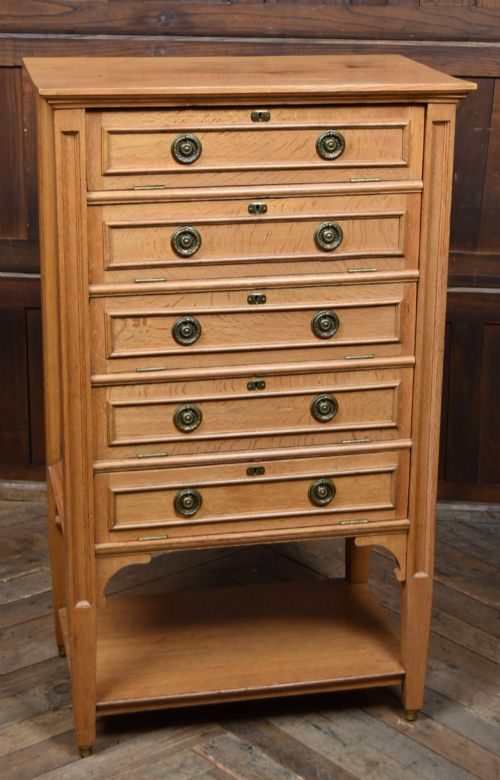
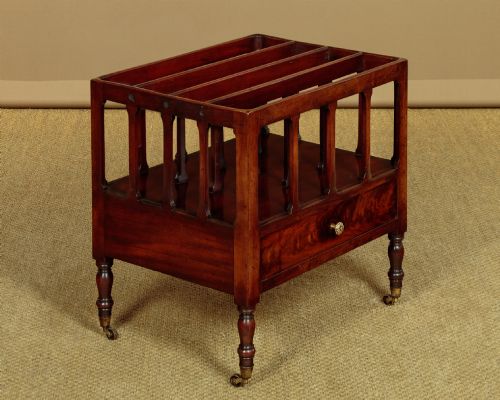
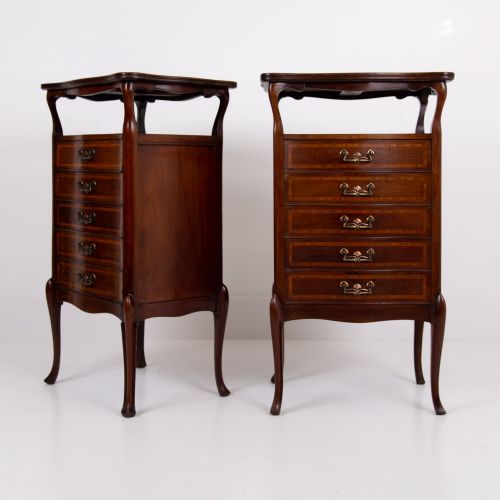
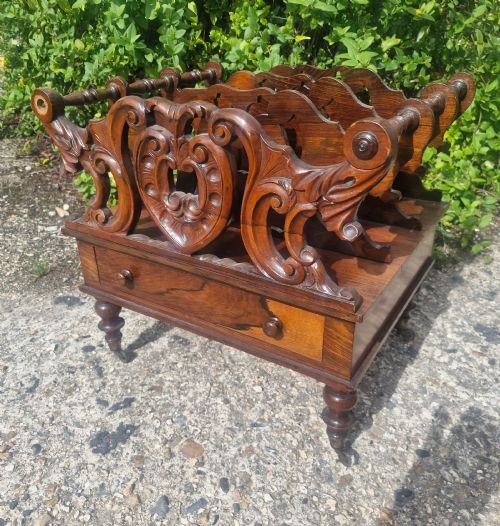
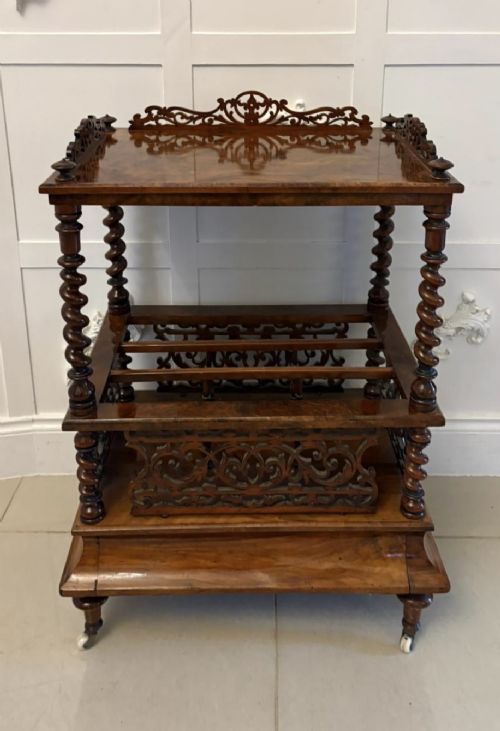
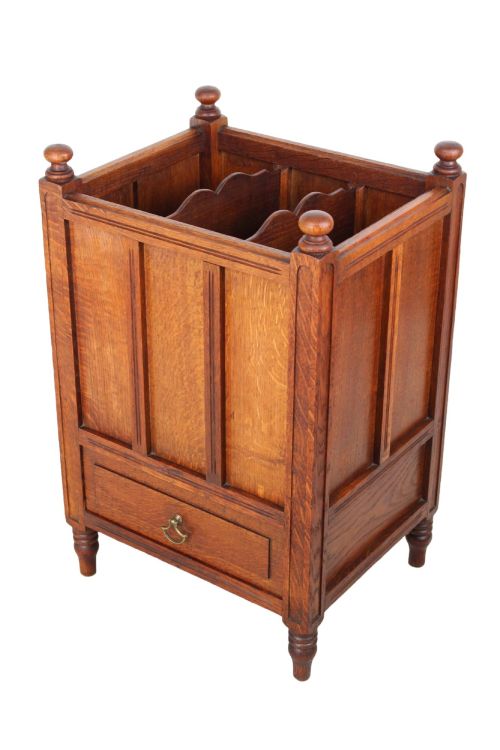
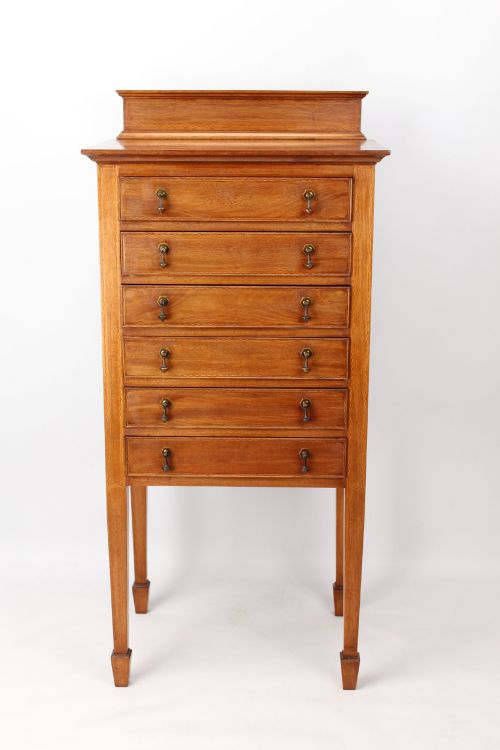
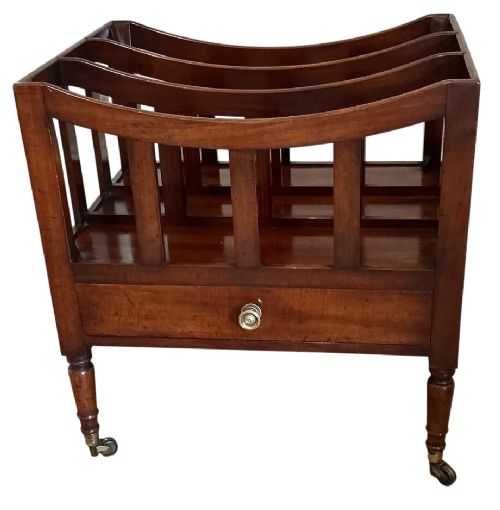
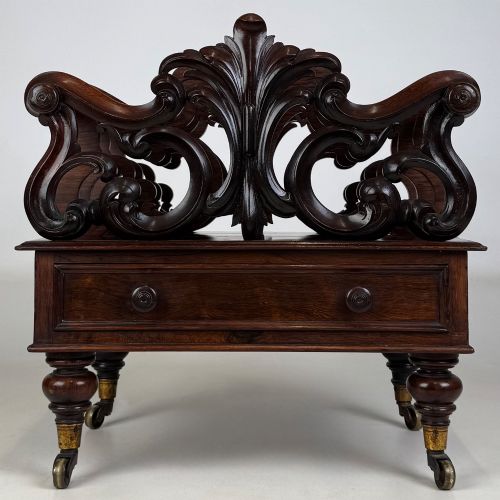
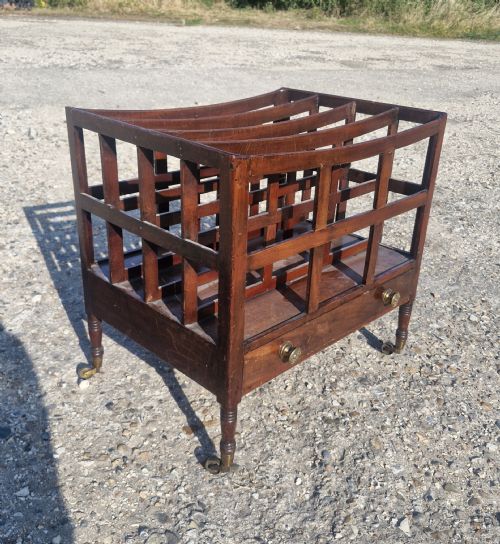
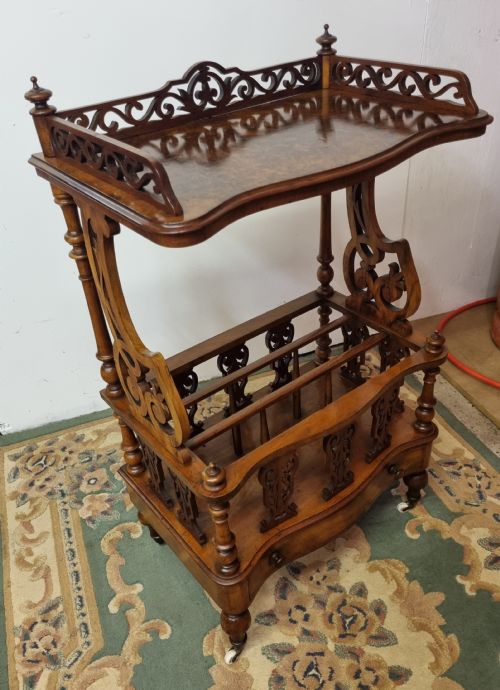
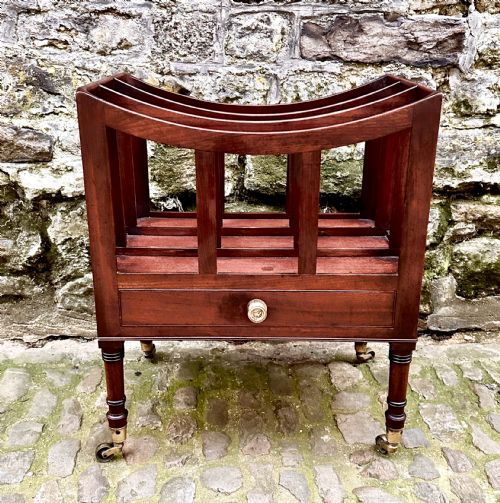
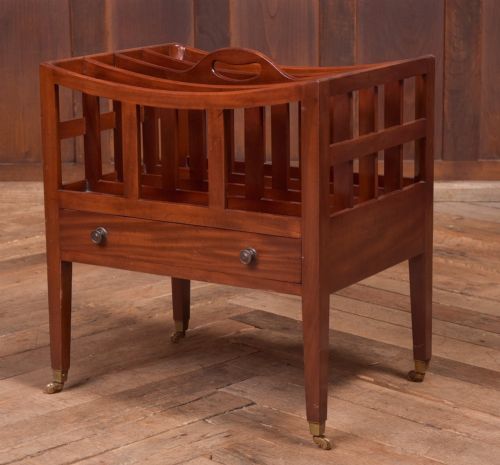
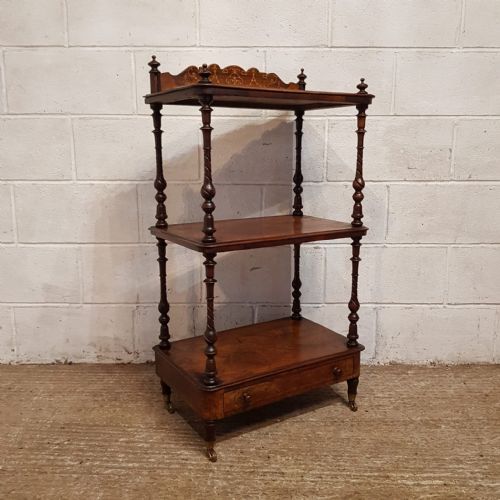
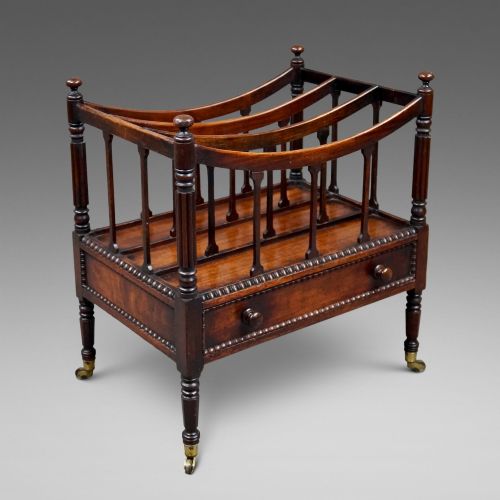
The forms appearing most often take the shape of dedicated music cabinets with drop-front drawers, tall chests with multiple shallow compartments, and open or divided canterburys. Woods such as mahogany, walnut, burr walnut, and rosewood predominate across these formats.
How they were made
Cabinet makers utilised dense timbers like mahogany and rosewood, frequently incorporating figured burr walnut veneers on drawer fronts and panels. Inlaid satinwood and brass details appear on Edwardian and Regency examples.
Internal construction relies on dovetailed drawer joints and turned supports, often mounted on castors for mobility. Drop-front mechanisms require precise engineering to allow smooth access to sheet music without damaging paper contents.
Some Edwardian music cabinets hide sheet music so securely behind drop fronts that pianists spent more time filing than playing.
What varies in quality
The standard of a piece rests on the selection of timber veneers and the crispness of any inlaid decoration. Matched grain patterns across multiple drawers indicate superior cabinet work compared to standard assembled stock.
Structural integrity of the internal dividers and the smooth operation of drop-front drawers distinguish finer items from simpler utilitarian versions. Original brass castors and turned legs add to the integrity of the design.
Edwards and Roberts
The Antique Music Drawers Glossary
- Canterbury
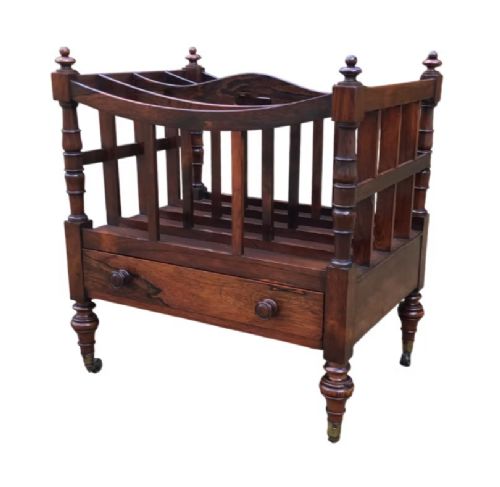
- A low stand with slatted divisions for holding music sheets, books, or newspapers, often fitted with a drawer below.
- Drop-front
- A drawer or cabinet door hinged at the bottom that tilts outward to provide easy access to the contents inside.
- Burr walnut
- Timber taken from the warted growth of a walnut tree, yielding highly figured patterns prized for cabinet fronts.
- Satinwood
- A durable, yellowish-orange wood native to India and Sri Lanka, utilised for contrasting stringing and marquetry inlay.
Antique Music Drawers: Frequently Asked Questions
What is the difference between a music cabinet and a canterbury?
Music cabinets generally feature enclosed drawers or doors to protect sheet music and manuscripts from dust and light. Canterburys incorporate open slatted sections designed for quick access to daily reading material.
Cabinets offer greater security and structured filing, while canterburys provide a lighter profile suited to living spaces.
How were music drawers used in period homes?
These pieces sat beside pianos or in drawing rooms to keep unbound sheet music, scores, and manuscripts flat and sorted. Drop-front drawers allowed musicians to slide papers out without bending or creasing the edges.
Later Edwardian versions adapted the same shallow drawer format for filing documents, magazines, and sheet music alike.
How do I identify a Regency period piece?
Regency items often display classical architectural influences, boat-shaped frames, and turned wooden legs fitted with brass castors. Mahogany and rosewood serve as the primary woods for this era.
Proportions remain balanced, with minimal carved decoration relying instead on the natural grain of the dark timber.
Are Edwardian music cabinets different from Victorian ones?
Edwardian examples frequently combine mahogany with light satinwood inlay and delicate stringing in the Sheraton revival style. Victorian pieces tend to be heavier in scale, utilising dark rosewood or highly figured burr walnut.
Edwardian workshops also produced more standardised drop-front drawer chests specifically sized for published sheet music.