



Antique Music Chair
An antique music chair is a purpose-built seat for instrumentalists and keyboard players, prized for adjustable height and revolving actions that offer practical utility at the instrument.
Antique Music Chair
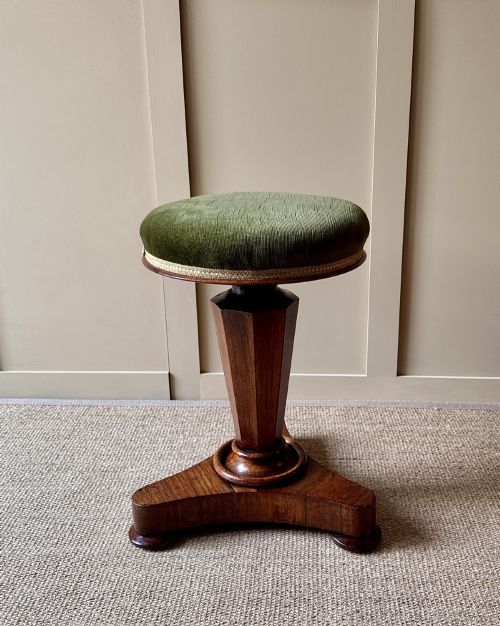
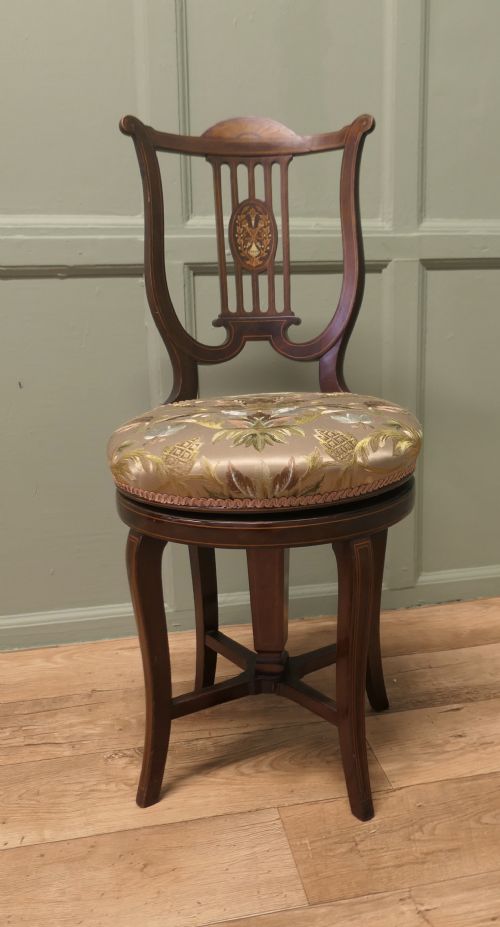
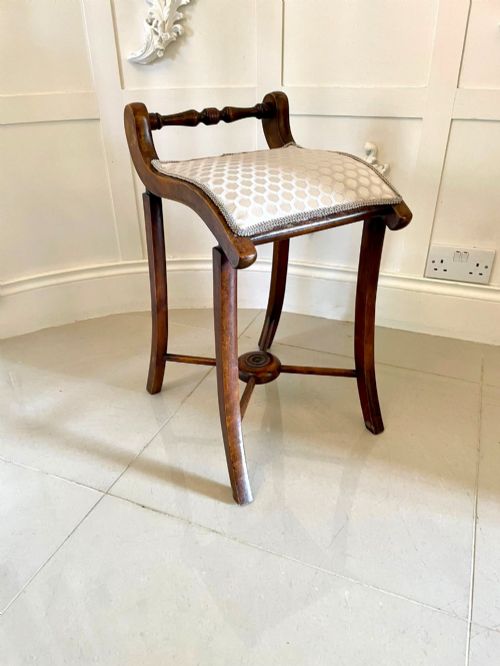
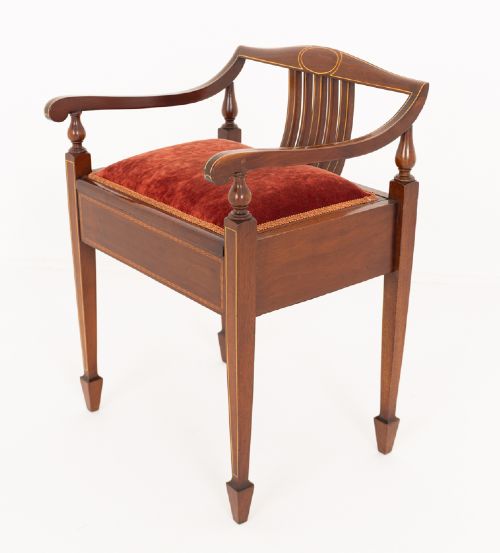
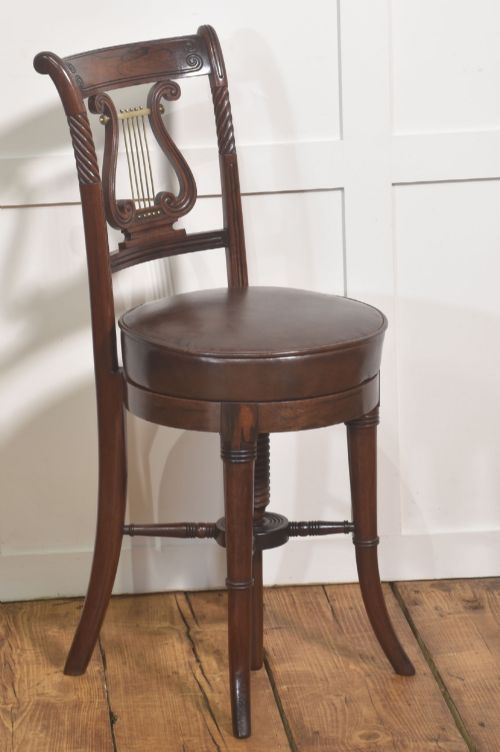
When you search for an antique music chair, you encounter a specialised form designed primarily for pianists, harpists, and organists. These pieces take the shape of revolving stools, armchairs, and rise-and-fall seats engineered to assist musicians during long periods of practice or performance. The selection spans the Georgian, Regency, and Victorian eras, alongside Edwardian and later twentieth-century iterations.
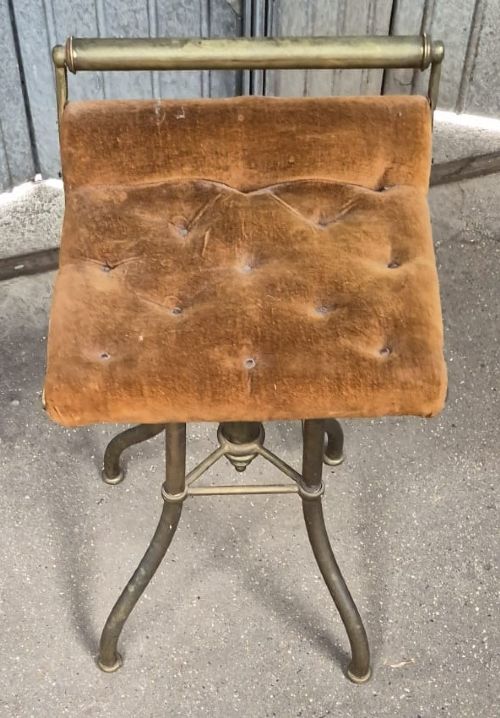
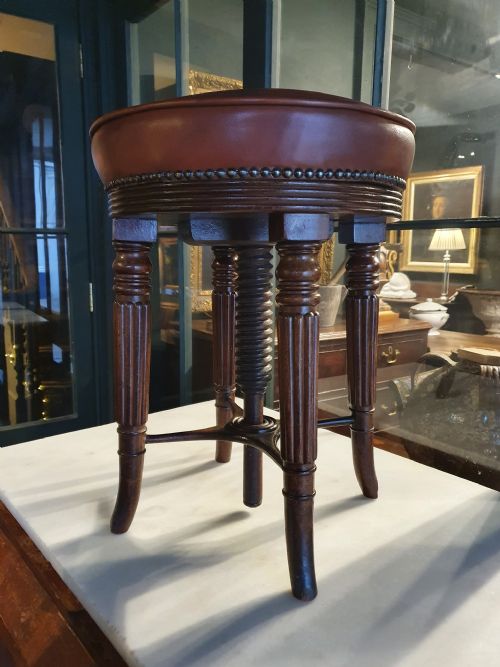
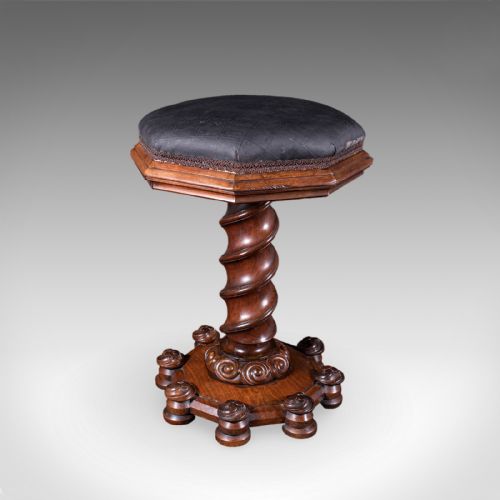
The version you are most likely to meet on this page is the Victorian revolving piano stool, often fashioned from mahogany or walnut with a circular upholstered top. Alongside these appear dedicated harpist chairs featuring modified or absent backs to accommodate the instrument, as well as organist stools originating from estate chapels and domestic settings alike. Forms range from simple three-legged swiveling seats to elaborate patent models with leather or fabric pads.
How they were made
Cabinet makers utilised dense hardwoods such as mahogany, rosewood, and walnut to construct the frames and robust central screw mechanisms of these seats. Timber was frequently turned, carved, or inlaid with brass and marquetry, reflecting the prevailing styles of the nineteenth century from William IV heavy proportions to Sheraton Revival delicacy. Papier-mâché also appears as a primary structural and decorative material in specific Victorian examples.
Upholstery completed the construction, employing durable fabrics like velvet, leather, and patterned textiles stretched over padded seats. Adjustable height was achieved through threaded wooden or metal spindles housed within the central pillar, allowing the player to raise or lower the sitting plane by rotation.
Antique Music Chair Retail Price Guide 2026
Typical asking prices for music chair among the pieces listed under this phrase on Sellingantiques today, from the lower quarter to the upper quarter. They describe what is for sale here now, not the wider market.
Listings feature music chairs from the Georgian, Regency, and Victorian periods, constructed primarily in mahogany, rosewood, and walnut.
What varies in quality
The standard of an antique music chair depends heavily on the complexity of its mechanical adjustment and the integrity of its timber turning. Superior examples feature smooth-operating screw mechanisms that elevate the seat without lateral wobble, paired with substantial hardwood frames that resist joint loosening over decades of rotation and weight shifting.
Design ambition and material selection further separate tiers of production. Plain utilitarian piano stools stand apart from finely carved rosewood or walnut pieces embellished with brass inlay, marquetry, or specialised configurations like harpist frames and patent leather upholstery.
Jennens & Bettridge·Gillows·James Shoolbred
The Antique Music Chair Glossary
- Revolving
- A seat constructed with a swivel top or central pivot allowing the sitter to turn in a circle. This action relies on a threaded wooden screw or a modern metal spindle concealed beneath the upholstery.
- Rise and fall
- An alternative description for an adjustable height mechanism. It permits the seating platform to move vertically.
- Harpist chair
- A specialised seat designed without standard arms or with a low backrest. This configuration provides clearance for the frame of a harp during performance.
- Patent music chair
- A piece incorporating a registered mechanical design for adjustment or movement. These mechanisms often utilise specific nineteenth-century engineering improvements.
- Papier-mâché
- A composite material formed from paper pulp or layers of paper mixed with glue, then moulded and lacquered. It provides a rigid, dark surface frequently decorated with inlay.
Antique Music Chair: Frequently Asked Questions
How do I adjust the height?
Most antique music chairs operate via a central wooden or metal screw mechanism concealed beneath the upholstered top. Rotating the seat clockwise or anti-clockwise raises or lowers the platform along the threaded central column.
Some models utilise a side lever or a rise-and-fall ratchet system depending on the patent or period of manufacture. Care must be taken not to unscrew the mechanism beyond its intended stopping point.
Why do some chairs lack backs?
Chairs designed without backs, particularly harpist chairs, were constructed to allow performers unrestricted movement while playing large instruments. The absence of a backrest prevents the wooden frame of a harp or cello from colliding with the chair during performance.
Standard piano stools also frequently omitted backs to encourage proper posture and allow the player to turn easily toward sheet music cabinets or neighbouring instruments.
How do I date a music chair?
Dating relies on identifying the prevailing timber, decorative motifs, and mechanical construction methods associated with specific periods. Georgian and Regency examples often feature rosewood with brass inlay and restrained classical turning, while Victorian pieces lean toward heavier carved walnut or ebonised surfaces.
Patent stamps, maker labels, or specific fastener types underneath the seat offer further chronological clues. Later twentieth-century versions display simpler hardwood turnings and modern hardware.
Are these chairs suitable for daily use?
These seats were originally built to withstand the regular physical demands of musicians during long practice sessions. Sturdy hardwood construction and robust central screws mean many examples remain fully functional for modern seating.
It is advisable to check the stability of the central swivel and the condition of the internal wooden threads before daily sitting. Gentle use preserves the historic mechanical components.