





Antique Mud Scraper
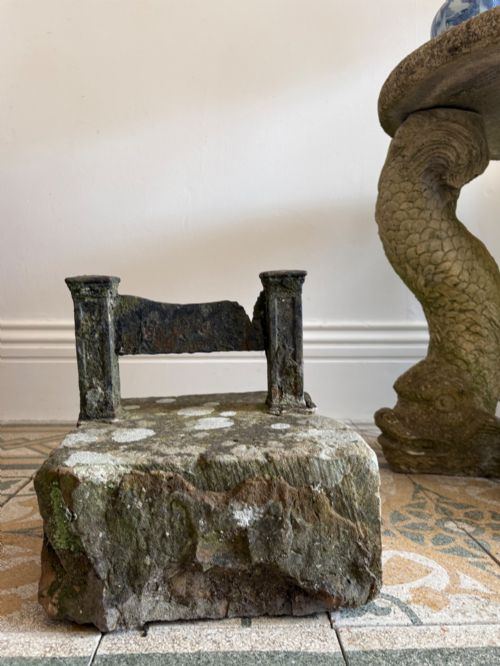
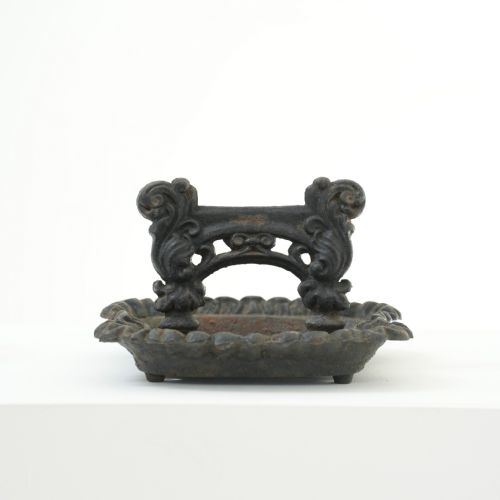
An antique mud scraper stands by the threshold, offering heavy iron blades to clear heavy soil before entering.
Antique Mud Scraper
An antique mud scraper is a sturdy doorway implement designed to clear dirt from footwear before entering the house, appearing most frequently in Victorian and Georgian forms. These iron blades were placed beside entrances to townhouses and country houses to keep muddy footprints off the hall floor.
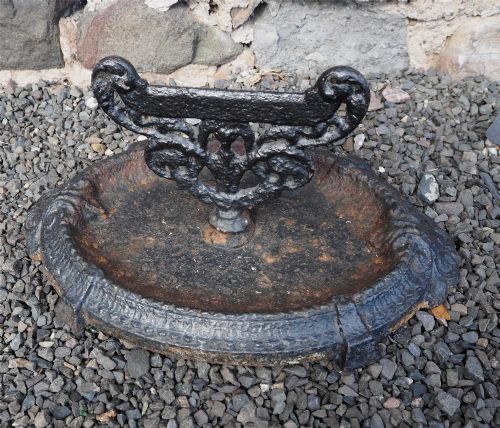
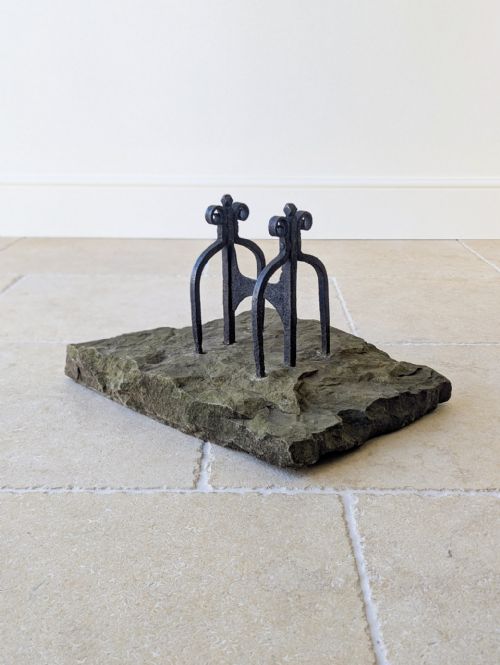
Most examples seen here combine a rigid metal blade with a heavy mounting block of cast iron or Yorkstone. Domestic versions range from simple utilitarian designs to decorative pieces incorporating shoe pulls and elaborate revival styles.
How they were made
Foundries cast molten iron into robust blades and frames, sometimes combining the metal with hewn stone blocks for stability. Wrought iron appears alongside cast iron, shaped by hand to form structural mounts and integrated boot pulls.
Makers often anchored the scrapers directly into stone bases or designed them with wide cast iron flanges to bolt beside a doorway. These dense materials withstand decades of heavy use and outdoor exposure.
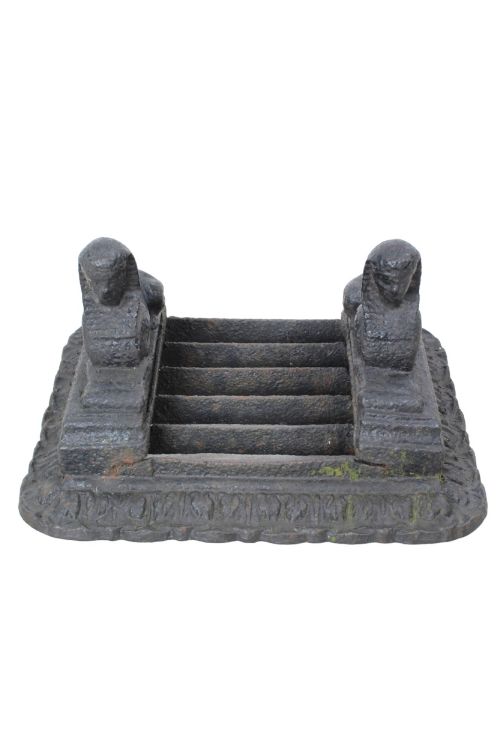
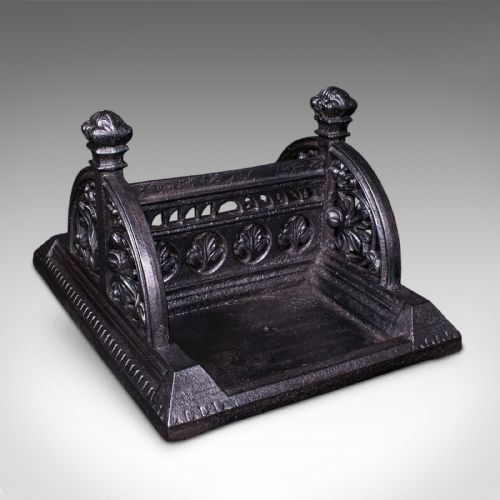
Architectural styles recorded include Gothic Revival, Egyptian Revival, and Late Georgian forms.
What varies in quality
Quality rests in the weight of the casting and the presence of integrated architectural details like shoe pulls or decorative mounting flanges. Simpler utility versions contrast with pieces featuring crisp ornamental ironwork or hewn Yorkstone foundations.
The sophistication of the design sets different examples apart, moving from straightforward blades to elaborate Gothic Revival or Egyptian Revival compositions. Heavier country house and townhouse variants display more substantial proportions than smaller domestic iterations.
Coalbrookdale
The Antique Mud Scraper Glossary
- Boot scraper
- A metal blade mounted near a doorway specifically for scraping mud and manure from the soles of boots. These fixtures became essential household hardware during the Georgian and Victorian periods.
- Boot pull
- An integrated iron loop or handle used to leverage the heel when pulling off muddy boots. This addition often accompanies the main scraping blade on townhouse models.
- Yorkstone
- A tough, durable sandstone quarried in Yorkshire and frequently used as a heavy mounting block for iron scrapers. It provides a solid foundation for outdoor threshold use.
- Cast iron
- Iron poured into a mould to create rigid shapes, widely utilised for nineteenth-century hardware and decorative bases. Its heavy weight keeps the scraper stationary during use.
- Gothic Revival
- An architectural and decorative style inspired by medieval forms, appearing on nineteenth-century metalwork with pointed arches and ecclesiastical motifs.
Antique Mud Scraper: Frequently Asked Questions
How do I clean an old mud scraper?
Remove loose dirt and surface grime using a stiff bristle brush without scratching the underlying metal or stone.
Apply a light coat of protective wax or oil to iron surfaces to halt further oxidation and preserve the dark finish.
Where were these scrapers originally placed?
Homeowners positioned them immediately outside front doorways, beside steps, or inset into exterior masonry walls.
Their location ensured visitors scraped their footwear before stepping onto interior carpets and wooden hallway floors.
Can I install one outdoors today?
Most pieces are built from heavy cast iron and stone, making them durable enough to withstand modern weather conditions.
Ensure the heavy base or mounting flanges are securely anchored to prevent movement or tipping during use.
How do I tell Georgian from Victorian examples?
Georgian versions often feature simpler wrought iron construction or heavy Yorkstone blocks associated with earlier townhouse architecture.
Victorian pieces frequently utilise more complex cast iron designs, incorporating maker marks, shoe pulls, and revival decorative motifs.