


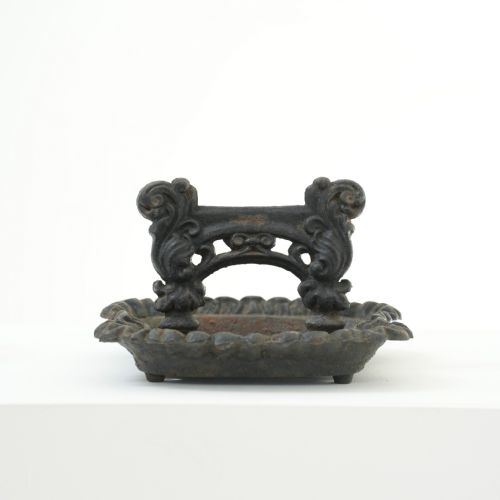


Vintage Boot Scraper
A vintage boot scraper clears mud from heavy boots before entering the house, combining sturdy ironwork with practical stone bases for daily utility.
Vintage Boot Scraper
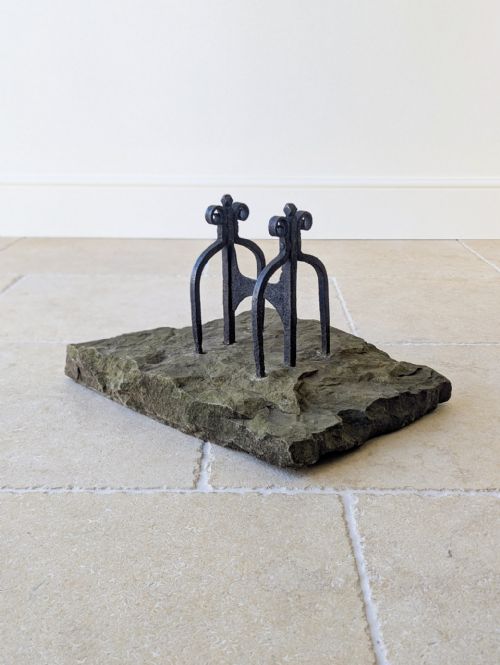
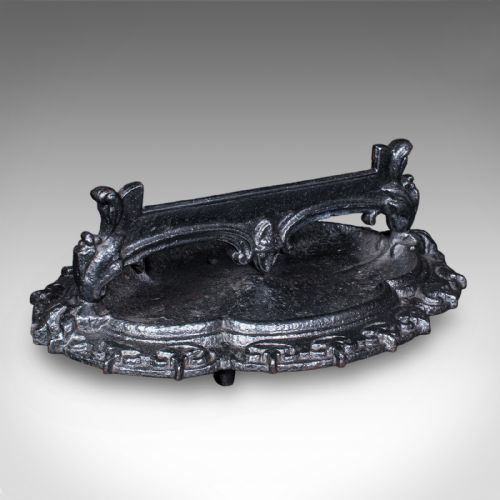
A vintage boot scraper sits outside a doorway to clear mud and soil from footwear, taking forms from simple country house irons to grand townhouse designs. These pieces range from substantial stone blocks fitted with iron blades to intricate Victorian castings.
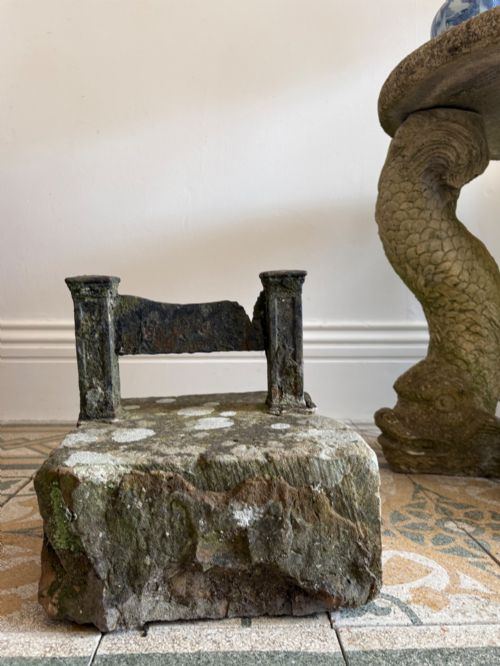
Most examples found here date from the Georgian and Victorian eras, reflecting the domestic needs of large country houses and urban townhouses alike. The selection leans heavily toward cast iron blades mounted in natural stone or hewn Yorkstone bases.
Beyond standard architectural fittings, the evidence includes smaller desk accessories such as novelty silver pen wipes. Buyers looking for authentic period entrance furniture will find substantial floor-standing scrapers designed to anchor beside a front door.
Materials and construction
Makers utilised durable cast iron and wrought iron to form the upright scraping blades and flanking shoe pulls. These metals withstand heavy downward pressure and outdoor weathering.
The iron components are typically socketed or bolted directly into heavy stone bases, including Yorkstone and hewn natural stone blocks. This substantial weight keeps the cleaner stationary during use.
The selection even strays onto the writing desk with a solid silver novelty pen wipe shaped to mimic domestic footwear.
Assessing quality and proportion
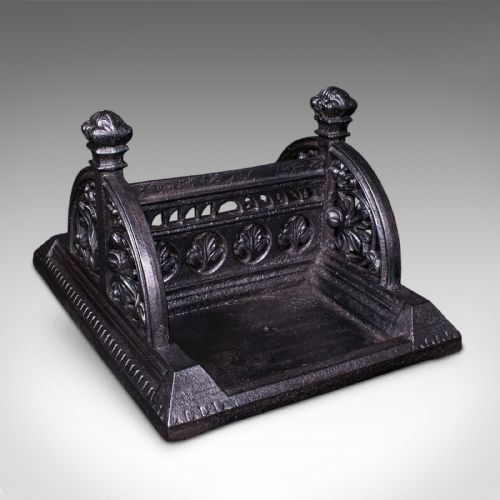
The distinction between standard utility items and finer examples lies in the ambition of the ironwork and the quality of the stone base. Heavier Yorkstone mounts and detailed Gothic Revival casting separate the better pieces from plain workshop items.
Proportion and architectural presence dictate the visual success of a piece. Larger townhouse and country house variants display more confident forging and more substantial stone work than smaller domestic iterations.
Coalbrookdale
The Vintage Boot Scraper Glossary
- Boot scraper
- A fixed metal blade mounted near an entrance for cleaning mud off footwear. These fixtures were standard outside nineteenth-century doorways.
- Cast iron
- An iron-carbon alloy poured into moulds to create rigid shapes. It allowed Victorian foundries to produce decorative architectural hardware.
- Wrought iron
- Iron heated and hammered into shape by a blacksmith. This material offers fibrous strength for functional outdoor ironwork.
- Yorkstone
- A tough sandstone quarried in Yorkshire, frequently used for paving and heavy building foundations. It provides the dense foundation block for many floor-standing scrapers.
- Shoe pull
- An integral loop or handle attached to a scraper frame. It allowed residents to steady their foot while scraping muddy soles.
Vintage Boot Scraper: Frequently Asked Questions
Where were vintage boot scrapers placed?
These scrapers stood immediately outside the primary entrance doors of country houses and urban townhouses. They were positioned to catch mud before visitors stepped onto the threshold.
Property owners often bolted them to stone steps or sank them directly into the ground beside the pathway.
How do I clean an iron boot scraper?
Remove loose dirt and surface debris using a stiff natural bristle brush. Avoid harsh chemical cleaners that might strip the protective dark finish of the metal.
Applying a light coat of specialist wax can help protect outdoor iron from damp weather conditions.
Can these scrapers be used outdoors today?
Cast iron and stone are naturally resilient materials suited for outdoor display beside a modern doorway. The heavy stone bases keep them stable against wind and daily use.
Ensure the stone sits on a well-drained surface to prevent standing water from gathering around the iron fixings.
What is the difference between Georgian and Victorian examples?
Georgian scrapers tend to feature hand-forged wrought iron blades mounted in simple stone blocks with restrained utility in mind. Victorian pieces often display more ornate cast iron work, sometimes incorporating Gothic Revival decorative motifs.
Foundries of the later nineteenth century also produced standardised iron castings in larger quantities for expanding urban terraces.