
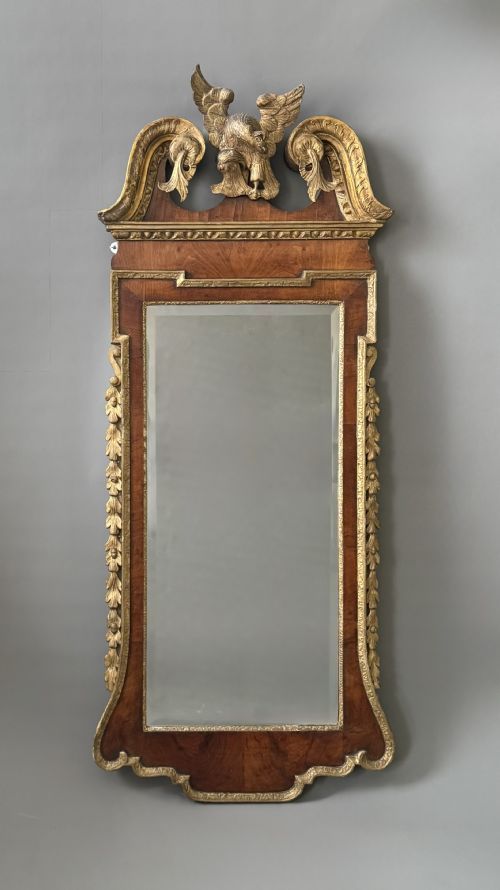
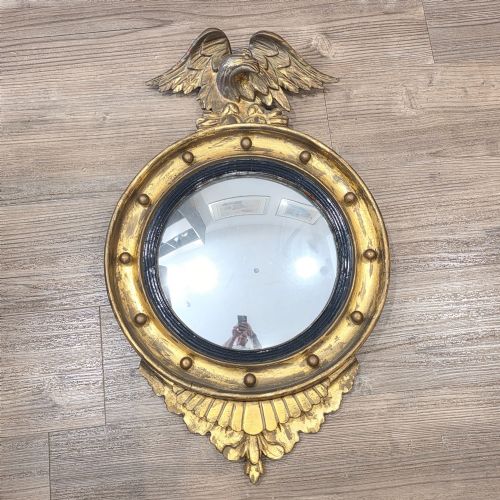
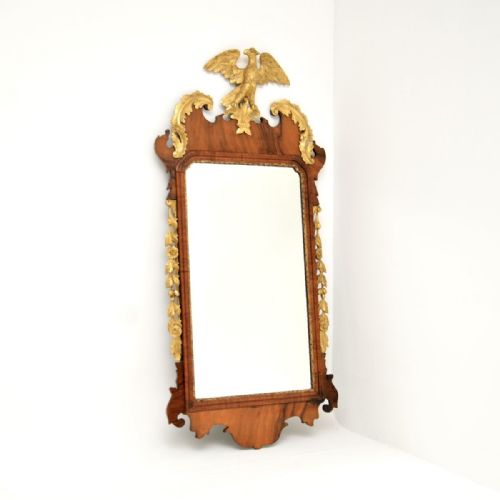
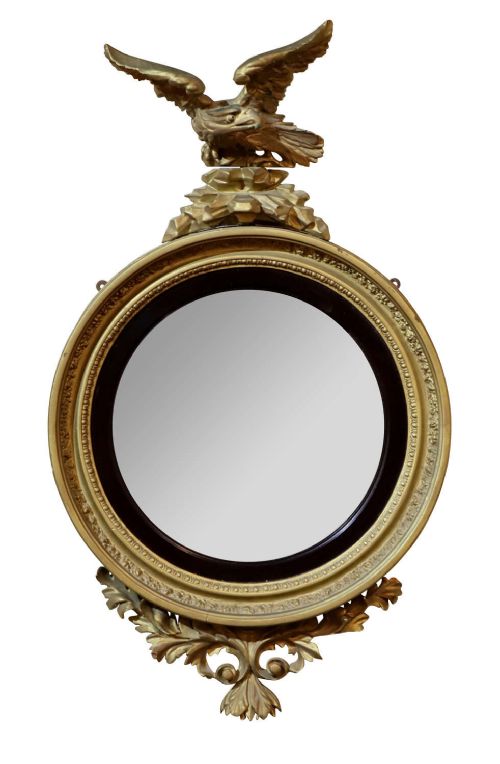


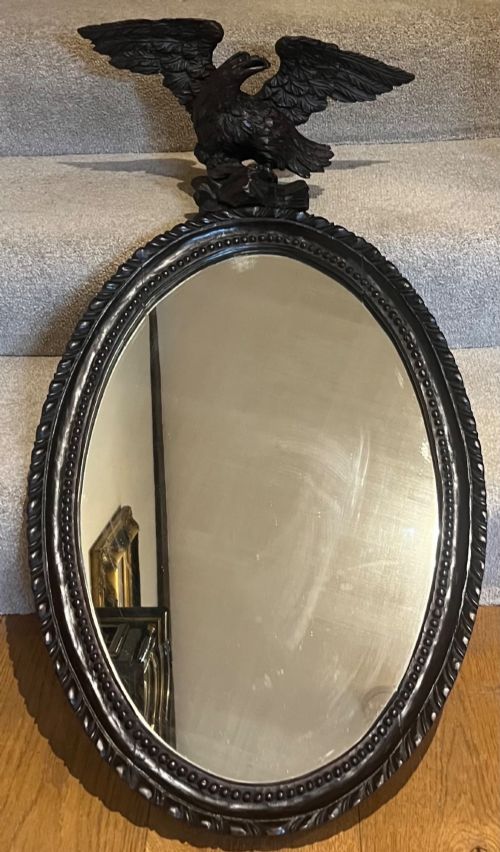

Antique Mirror with Eagle
An antique mirror with eagle brings a commanding neoclassical presence to a room, catching the light in convex glass and carved crests.
Antique Mirror with Eagle
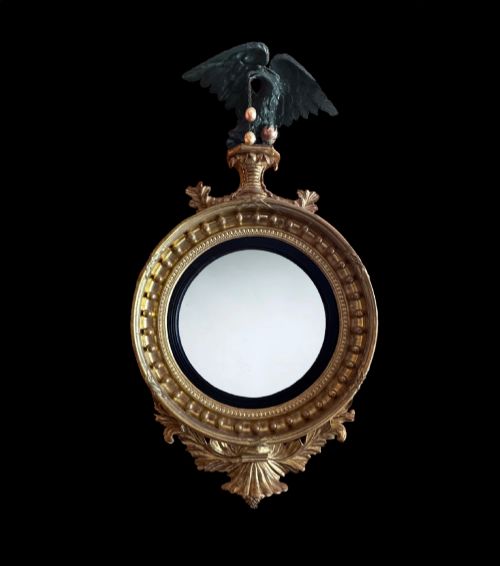
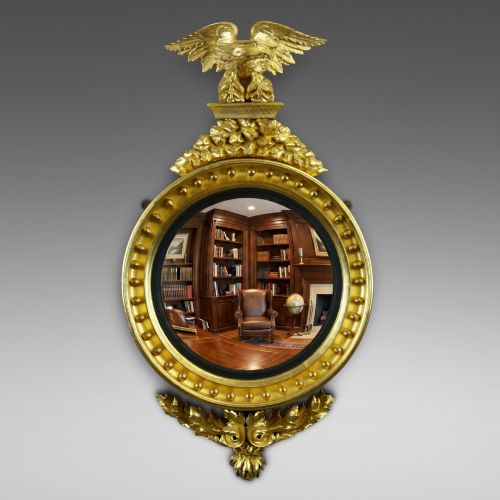
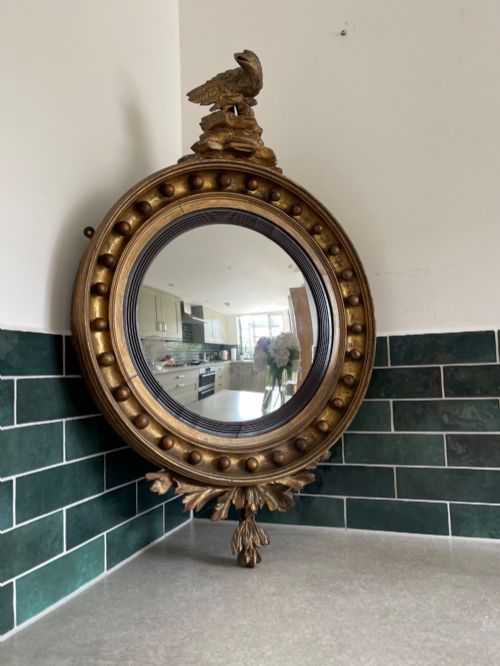
An antique mirror with eagle typically takes the form of a circular convex wall mirror crowned by a carved bird surmount, reflecting the room in miniature. These pieces draw the eye immediately with their bold crests and circular frames, originating from periods such as the Georgian, Regency, and Victorian eras.
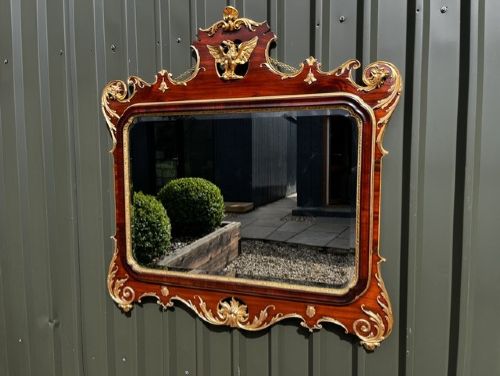
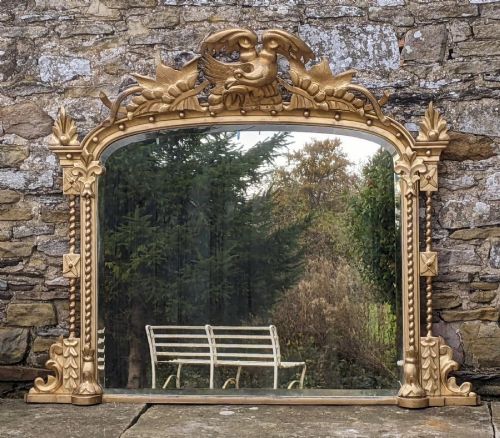
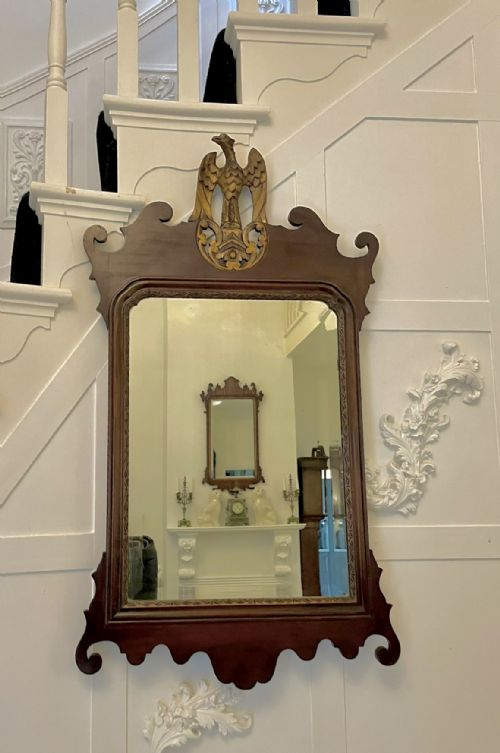
Most examples encountered on this page date from the nineteenth century, including both Regency originals and later revivals. Alongside the circular convex forms, buyers will also find rectangular and oval mahogany and gilt wall mirrors featuring bird crests or shelf attachments.
The combination of gilded wood surfaces and deep-set glass creates a focal point that historically served to illuminate darker corners of formal reception rooms. The eagle motif, rich in patriotic and classical symbolism, dominates the design of these wall mirrors across the listed periods.
How they were made
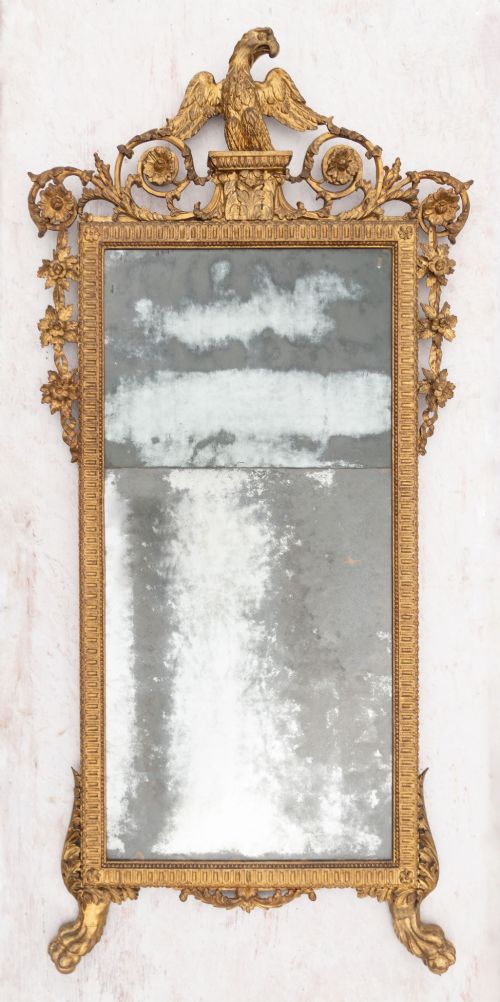
Makers constructed the primary frames of an antique mirror with eagle using carved wood, mahogany, or ebonised wood, applying gesso to prepare surfaces for gilding. Giltwood finishings catch the light through layers of gold leaf applied over the prepared gesso mouldings.
The distinctive curved plates found in convex wall mirrors required specialised glass-blowing techniques to achieve the spherical shape before silvering. Carvers shaped the intricate eagle and hoho bird crests by hand, attaching them securely to the top of the timber frames.
Materials across the selection include giltwood, mahogany, ebonised wood, and brass.
What varies in quality
The refinement of the carved eagle surmount separates standard production from exceptional examples, with deeper detail and more spirited posture indicating superior craftsmanship. Crisp execution in the gesso and giltwood ornamentation maintains clarity across the decorative motifs.
Proportion between the circular or rectangular frame and the commanding bird crest dictates the visual balance of the piece. The depth and clarity of the original glass plate further distinguish finer specimens from later replacements.
The Antique Mirror with Eagle Glossary
- Convex mirror
- A round mirror with an outward-curving glass surface that offers a wide-angle reflection of the interior space. This form was especially popular during the Regency period.
- Giltwood
- Timber coated with fine gold leaf over a prepared gesso ground. It provides a luminous surface that reflects candle or window light.
- Gesso
- A plaster-like mixture applied to wood frames to create a smooth surface for carving and gilding. It allows for crisp decorative details.
- Girandole
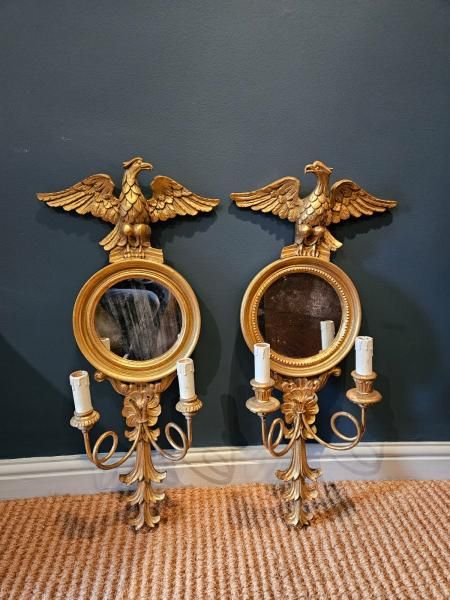
- A wall mirror featuring attached candle sconces designed to multiply ambient light in a room. The reflective glass enhances the glow from the candles.
- Surmount
- The decorative crest or ornament fixed to the top of a mirror frame. In these pieces, it frequently depicts an eagle or hoho bird.
Antique Mirror with Eagle: Frequently Asked Questions
What periods do these mirrors come from?
The pieces span the Georgian, Regency, and Victorian eras, with many originating from the nineteenth century.
Revival pieces also appear alongside genuine period examples from the early decades of the eighteen-hundreds.
How did people use convex mirrors?
Historically, convex mirrors were placed in grand reception rooms to monitor activity and distribute light.
The curved glass captures a wide field of vision, brightening darker corners before the advent of electric lighting.
Are the frames made of solid gold?
No, the frames consist of wood, such as mahogany or carved timber, finished with a thin layer of gold leaf.
A gesso base lies beneath the gilding to support the fine details of the surface.
What is the difference between an eagle and a hoho bird?
An eagle is a classical motif representing power and status, frequently shown with spread wings atop the frame.
A hoho bird draws on Asian decorative traditions, featuring a stylized phoenix-like form used during the Georgian and Regency periods.