




Antique Micro Mosaic
These pieces of antique micro mosaic bring together minute glass tesserae and turned woods, capturing the souvenirs of the Grand Tour and the precision of Victorian craft.
Antique Micro Mosaic
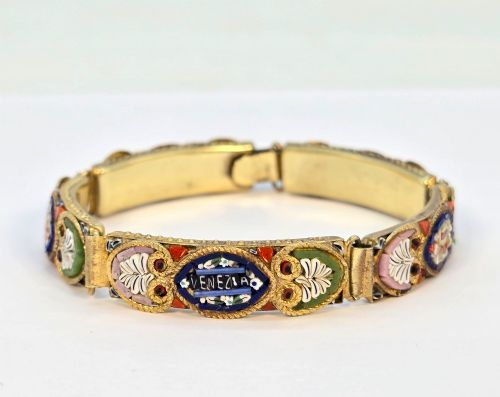
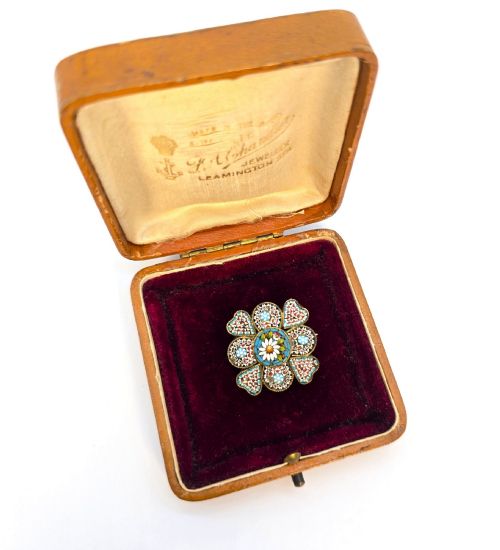
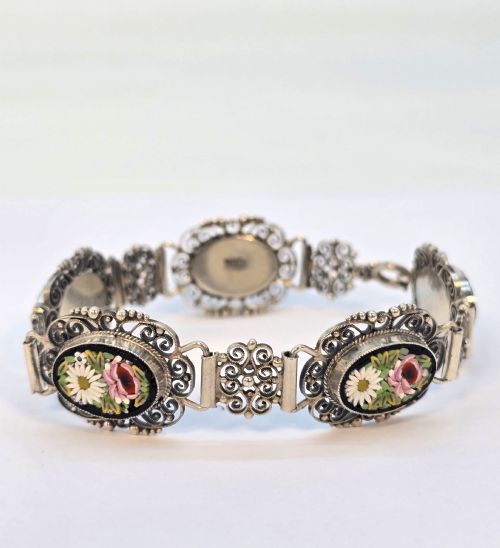
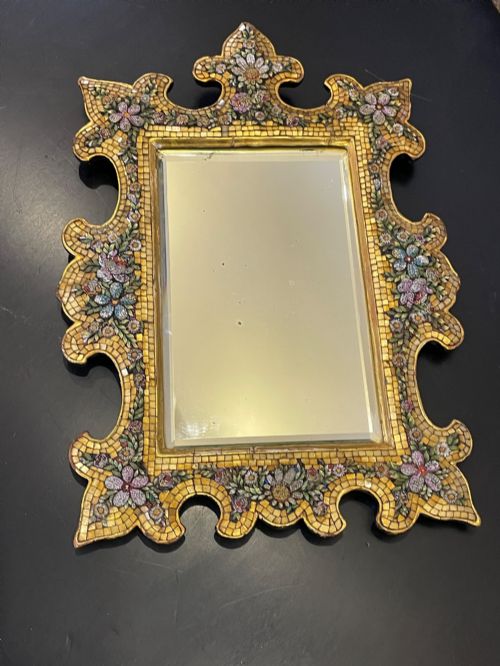
When you search for antique micro mosaic, you are looking at intricate works built from thousands of microscopic glass tiles fused together to form pictorial scenes. The most common forms on this page include wearable items like brooches, earrings, bracelets, and pendants, alongside desk accessories such as paperweights, plaques, and picture frames.
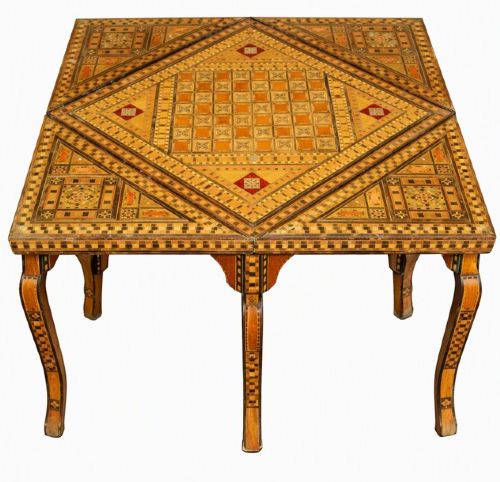
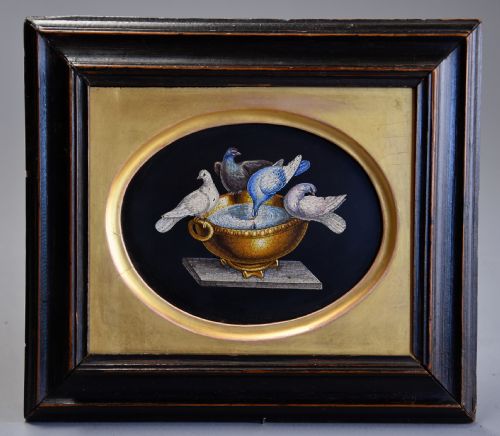
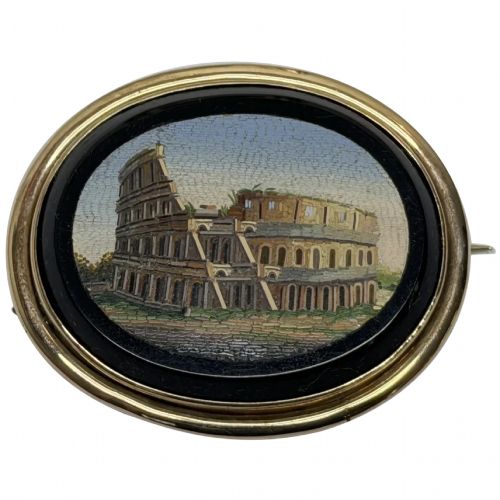
Many of these objects originate from the Italian Grand Tour, featuring classical Italian subjects like the Doves of Pliny, the Roman Colosseum, and Venetian views. Alongside these Italian works, English Tunbridge Ware boxes, tea caddies, and book-slides utilise wood mosaic techniques, while Anglo-Indian and Damascan pieces bring bone, sadeli mosaic, and arabic inlay into the selection.
How they were made
Makers constructed micro mosaics by pulling heated glass canes into microscopic threads, then slicing them into tiny tesserae. These glass fragments were set tightly into a matrix of wax or mastic within metal frames, gold mounts, or marble bases to form detailed images.
For wooden pieces, craftsmen arranged thousands of precisely cut coloured wood blocks to form complex geometric or pictorial motifs. Walnut, rosewood, boxwood, and sycamore provided the natural colour palette, assembled into boxes, tables, and desk wares before being polished smooth.
Antique Micro Mosaic Retail Price Guide 2026
Typical asking prices for micro mosaic among the pieces listed under this phrase on Sellingantiques today, from the lower quarter to the upper quarter. They describe what is for sale here now, not the wider market.
Materials recorded across the archive include glass tesserae, rosewood, marble, bone, and yellow gold mountings.
What varies in quality
The density and regularity of the glass tesserae define the standard of a mosaic piece. Finer works employ microscopic tiles packed so tightly that the ground is invisible, creating smooth pictorial gradients that resemble oil paintings.
Mount materials also divide the range, moving from base metals and gilt brass to solid yellow gold settings, such as fifteen or eighteen carat mountings. In wooden works, the precision of the timber tessellation and the choice of dense hardwoods like rosewood mark out superior production.
Henry Hollamby·G.Roccheggiani Rome
The Antique Micro Mosaic Glossary
- Tesserae
- The individual small blocks of coloured glass used to build up the mosaic image. These microscopic pieces form the pictorial surface of the work.
- Grand Tour
- A cultural journey undertaken by wealthy Europeans through France and Italy during the nineteenth century. Travellers collected micro mosaic jewellery and marble views as souvenirs of this travel.
- Sadeli Mosaic
- A traditional craft of geometric micro mosaic work from British India. It utilises alternating slivers of bone, horn, and metal to decorate wooden boxes.
- Millefiori
- A glasswork technique that produces distinctive patterned designs. Pieces featuring this style display floral cane sections within the mosaic composition.
Antique Micro Mosaic: Frequently Asked Questions
What are micro mosaics made of?
These objects are constructed using tiny glass sections known as tesserae, which are set into a base of wax or mastic. The surrounding structures incorporate yellow gold, silver, marble, or turned woods.
Wooden variations utilise natural timbers such as rosewood, boxwood, and walnut arranged in geometric patterns. Bone and brass elements also appear in specific Anglo-Indian and Victorian boxes.
How do I care for an antique micro mosaic?
Keep these pieces away from moisture and direct heat to protect the wax or mastic holding the glass tesserae in place. Gentle dusting with a soft dry brush is sufficient for cleaning.
Avoid using liquid cleaners or polishing agents on the mosaic surface. Store wearable items in dedicated boxes to prevent scratching the glass or metal mounts.
Where were antique micro mosaics made?
The primary production centres were in Italy, particularly Rome and Venice, where craftsmen created Grand Tour souvenirs for travellers. These depicted local landmarks, ruins, and classical motifs.
Other traditions developed in England, notably Tunbridge Wells for wood mosaic boxes, alongside workshop traditions in India and the Middle East for inlaid games tables and stationery boxes.
How can I tell the age of a piece?
Dating relies on the style of the mount, the subjects depicted, and the materials used in the construction. Pieces tied to the nineteenth-century Grand Tour often feature specific architectural views and gold or silver settings characteristic of the period.
Maker signatures on the reverse, along with recorded wood mosaic patterns from makers like Henry Hollamby, help narrow down the production decade within the Victorian era.