




Antique Metal Desk Tidy
An antique metal desk tidy corrals your letters, pens and ink with the weight and heft of a bygone working day.
Antique Metal Desk Tidy
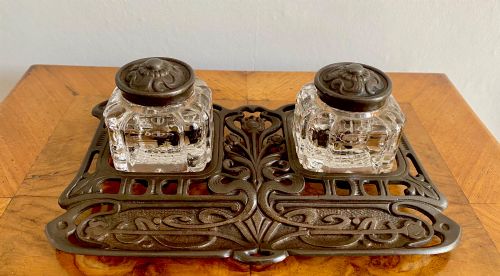
An antique metal desk tidy takes many forms, appearing as simple card trays, letter racks, and elaborate inkstands fitted with glass bottles. These desktop accessories served the Victorian and twentieth-century writer, holding the implements needed for daily correspondence before the digital age.
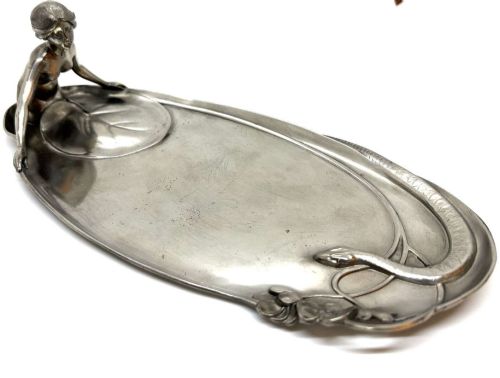
You are most likely to encounter pieces from the early twentieth century executed in the Art Nouveau and Art Deco styles. Copper, brass, and pewter dominate the offerings, frequently incorporating glass inserts or stone bases like onyx and marble.
Origins stretch from English workshops to continental Europe, encompassing Austrian cold-painted bronzes and German metalwork. Makers ranged from large manufacturing firms like WMF to luxury retailers such as Asprey of London.
Materials and construction
Metals such as bronze, brass, copper, and pewter form the structural bodies of these items, shaped through casting, hammering, and cold-painting techniques. Bronze and pewter allowed makers to achieve intricate figural details, from animal studies to sinuous plant forms.
Combination pieces integrate natural materials directly into the metal framework, mounting bronze animals onto solid onyx or marble bases. Fitted glass inserts and original ink bottles complete the functional design of the desk stands.
Materials represented across the inventory include bronze, copper, brass, pewter, glass, onyx, and marble.
Distinguishing quality
Quality reveals itself in the crispness of the casting and the preservation of original surfaces, such as cold-painted enamel or patinated bronze. Finer examples display meticulous attention to detail in figural elements, including original glass eyes on animal subjects or hand-chased ornamentation.
The integration of materials also defines the hierarchy, where heavy stones like onyx and marble provide stability alongside robust metal mounts. Original components, such as matching glass ink bottles and fitted trays, elevate the completeness of a desk set.
WMF·Asprey Of London·Zimmermann·Maurice Dufrene
The Antique Metal Desk Tidy Glossary
- Cold-painted bronze
- A manufacturing technique where bronze casts are painted with oil or enamel colours rather than subjected to high-temperature firing. This finish is susceptible to flaking over time if handled roughly.
- Art Nouveau
- A decorative style characterised by flowing, organic lines inspired by natural forms such as plants and flowers. It is frequently seen on desk trays and inkstands from the turn of the twentieth century.
- Ormolu
- Gilded bronze ornamentation applied to furniture and decorative objects during the nineteenth century. The process involves treating the metal with a gold amalgam.
- Boulle work
- A type of marquetry using tortoiseshell and brass inlay developed in France. It appears on the wooden bases of more elaborate nineteenth-century desk sets.
- Pewter
- A malleable metal alloy consisting primarily of tin, often used in Arts and Crafts and Art Nouveau desk accessories for its dark, muted lustre.
Antique Metal Desk Tidy: Frequently Asked Questions
What was a desk tidy used for?
These accessories kept writing tools organised on a desk, holding everything from dipping pens and blotting paper to stamps and wax.
They provided a designated spot for inkwells and letter racks, protecting fine wooden furniture from ink spills.
How do I clean an antique metal desk tidy?
Dust gently with a soft, dry cloth to preserve the existing patina and any applied colour finishes.
Avoid commercial metal polishes, as they can strip away aged surfaces and damage delicate cold-painted details.
Are the ink bottles usually original?
Many surviving desk sets retain their original cut-glass or moulded glass ink bottles, often fitted with hinged metal lids.
Replacements are common due to breakage over the decades, so matching glass inserts add significantly to a piece.
How do I date an Art Nouveau desk accessory?
Look for characteristic whiplash lines, stylised floral motifs, and hallmarks associated with turn-of-the-century European metalwork.
Materials like silvered pewter and copper were heavily favoured by workshops operating between eighteen-eighty and nineteen-twenty.