



Antique Meal Chime
An antique meal chime summons households with a rich resonance, bringing distinctive period character and traditional craftsmanship to any dining room.
Antique Meal Chime
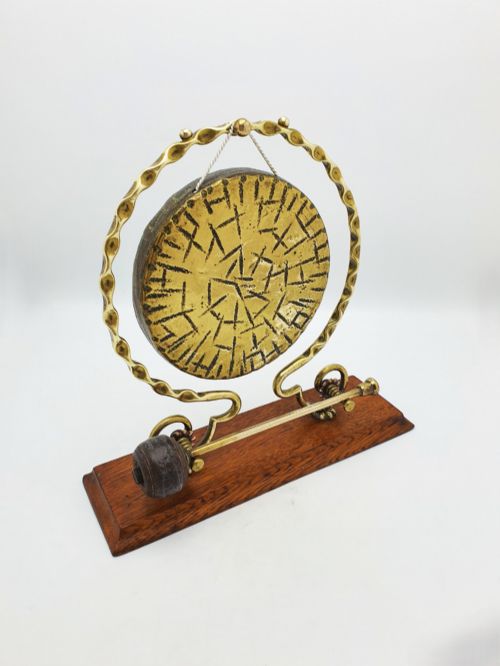
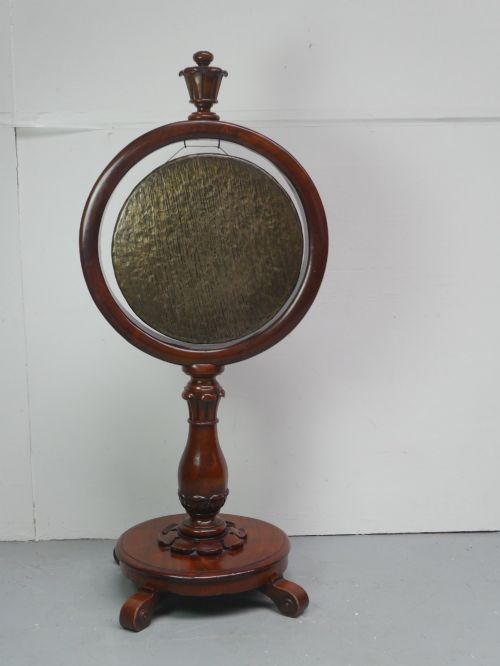
An antique meal chime, frequently listed as a dinner gong or table gong, serves as a traditional domestic signal for gathering at the table. These pieces combine a striking metal disc or tube with a sturdy wooden or metal support structure, accompanied by a handheld striker.
The selections encountered here span the nineteenth century through the early twentieth century, encompassing Victorian, Edwardian, and later periods. Forms range from compact table models to substantial wall-hanging units and monumental floor designs.
Originating in grand country houses and urban homes alike, these chimes reflect diverse stylistic influences including Gothic Revival, Arts and Crafts, and Aesthetic Movement designs. Buyers often encounter pieces mounted on seasoned timber bases or framed in wrought iron.
Materials and construction
Maker construction relies heavily on durable hardwoods such as oak, walnut, and mahogany for the supportive frames and mounting boards. These timbers are frequently carved, polished, or combined with alternative natural materials like bamboo, cattle horn, and carved mango wood.
The sound-producing elements utilise resonant metals including brass, bronze, copper, and silver plating, sometimes paired with cast iron frames. Cord suspensions and wrought iron mountings provide the necessary hanging mechanics to allow the metal gongs to vibrate freely when struck.
Some nineteenth-century households dined alongside cattle horn and bamboo resonators, proving Victorian dining could get delightfully wild.
Assessing quality in a meal chime
Quality reveals itself in the acoustic resonance of the metal gong and the stability of its mounting framework. Superior examples feature heavier, well-cast bronzes or brasses paired with dense, properly joined timbers that sustain a clean tone.
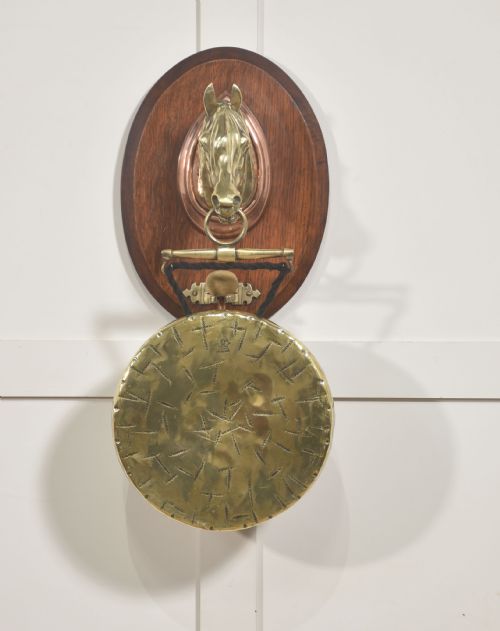
Fine craftsmanship shows in the subtlety of decorative details, from hand-carved woodwork and equestrian mounts to integrated striking implements that match the integrity of the main assembly.
The Antique Meal Chime Glossary
- Dinner Gong
- A suspended metal disc or tube struck with a mallet to announce meals. This forms the primary functional component of any meal chime.
- Striker
- A handheld mallet or hammer used to hit the gong. These often feature matching wooden handles or padded heads.
- Gothic Revival
- An architectural and decorative style popular in the nineteenth century. It is characterised by pointed arches, heavy timberwork, and medieval ecclesiastical motifs.
- Aesthetic Movement
- A late nineteenth-century design ethos prioritising visual beauty over narrative or moral function. Pieces from this movement often display refined metallic finishes and stylised motifs.
- Japonisme
- The influence of Japanese art on Western design during the late nineteenth century. This aesthetic appears in exotic decorative details and bronzework.
Antique Meal Chime: Frequently Asked Questions
How do I clean the metal gong?
Dust the metal gently with a dry, soft cloth to preserve any patination accumulated over the decades. Avoid abrasive chemical polishes that strip away historical surface character.
For stubborn grime, a light wipe with a damp cloth followed by immediate drying is sufficient. Keep moisture away from any wooden mountings during cleaning.
Can I still strike the dinner gong?
Most antique meal chimes remain fully functional and produce a deep, resonant tone when struck properly. Use the original or a suitably weighted soft-headed striker to prevent denting the metal.
Striking the gong with excessive force or hard implements can stress the suspension cord and damage the alloy. Moderate taps yield the best acoustic quality.
How do I hang a wall-mounted chime?
Wall-hanging models require secure fixings into structural timber or masonry due to the combined weight of the wood and metal. Ensure the bracket or cord suspension takes the load safely without straining the frame.
Leave sufficient clearance around the suspended metal disc so it does not touch the wall when swung. This free movement allows the full resonance to develop.
What is the difference between table and wall gongs?
Table gongs feature compact bases designed for placement on sideboards or dining tables during service. They offer portability and smaller resonant plates suited to intimate rooms.
Wall-hanging gongs are secured permanently to architectural surfaces, often featuring larger plates and heavier timber frames. These monumental pieces were designed to project sound across sprawling country houses.