



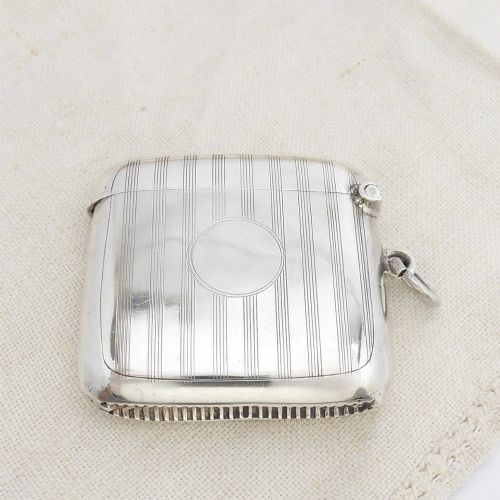
Antique Match Safe Box
These antique match safe box pieces are pocket containers designed to carry and ignite matches safely, prized for their intricate silver and enamel craftsmanship.
Antique Match Safe Box
When searching for an antique match safe box, collectors encounter various pocket and tabletop containers designed to hold matches securely before safety matches became universal. These items protect delicate matches from moisture and friction while offering a convenient striking surface on the base.
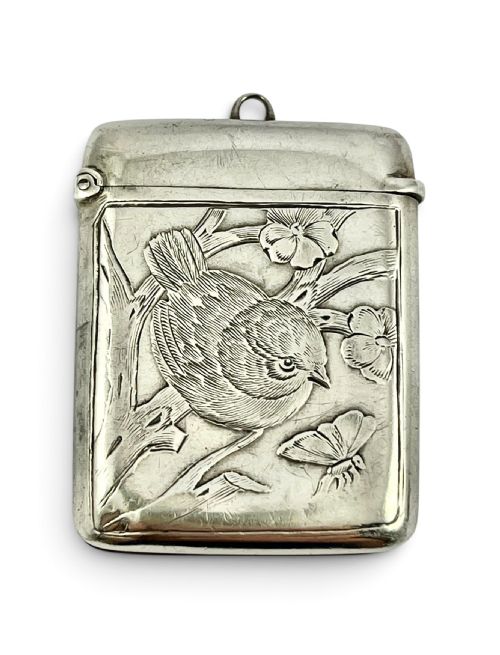
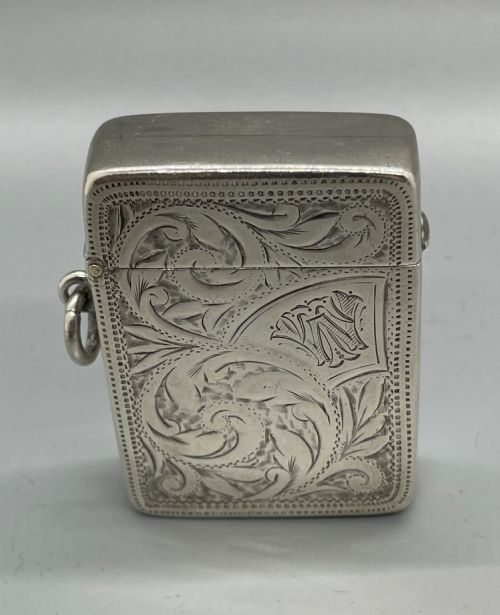
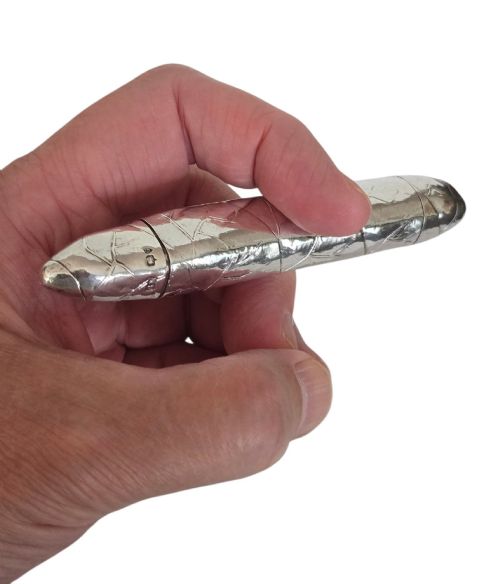
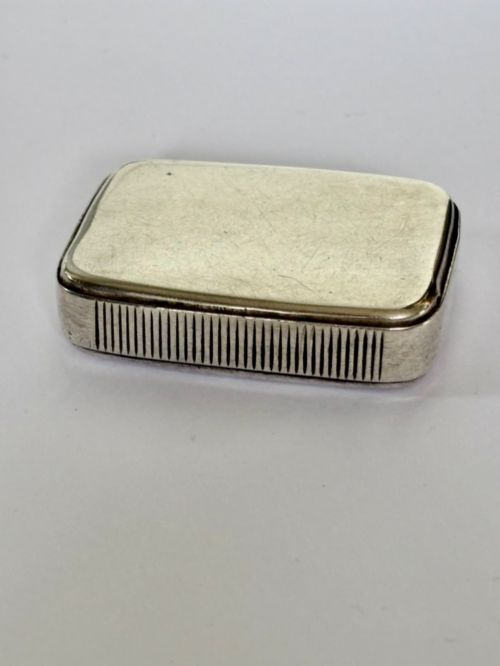
The pieces appearing on this page span the Victorian and Edwardian eras through to the 1920s, encompassing sterling silver, brass, and carved limewood forms. Vesta cases and match holders dominate the selection, alongside specialised novelty shapes and combination pieces.
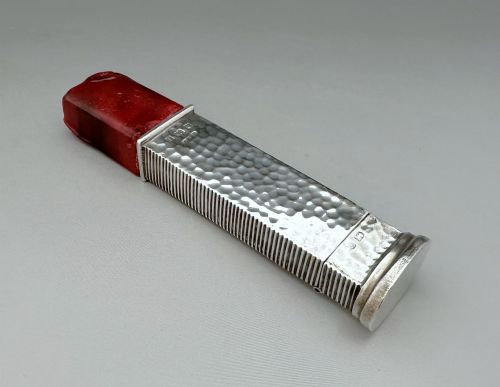
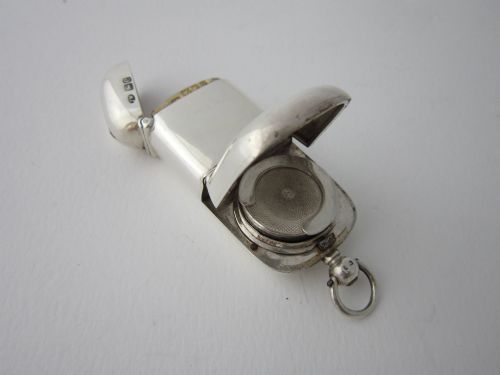
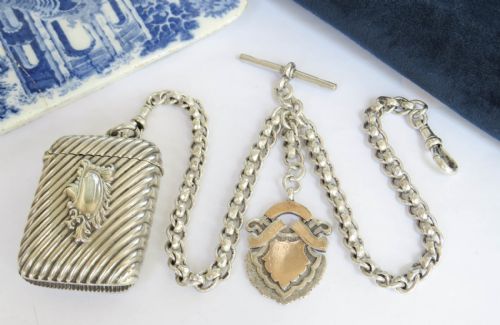
Makers produced these containers in diverse configurations, from simple engraved silver rectangles to whimsical animal figures and portrait faces. Buyers frequently find dual-purpose designs that incorporate sovereign holders, wax seals, or watch fobs.
How they were made
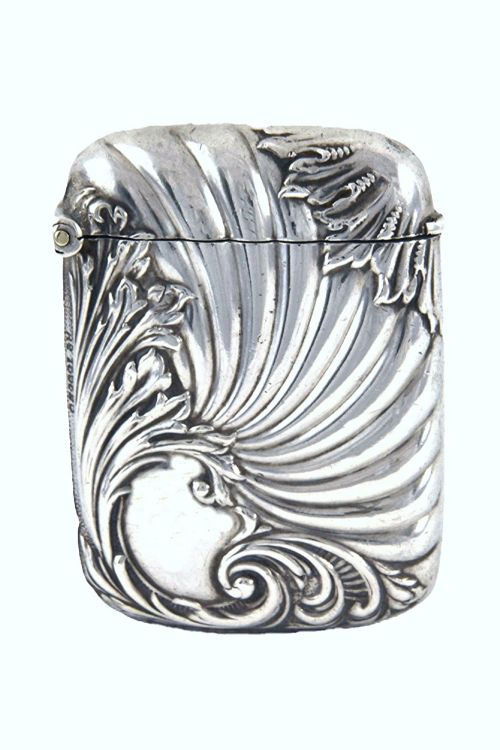
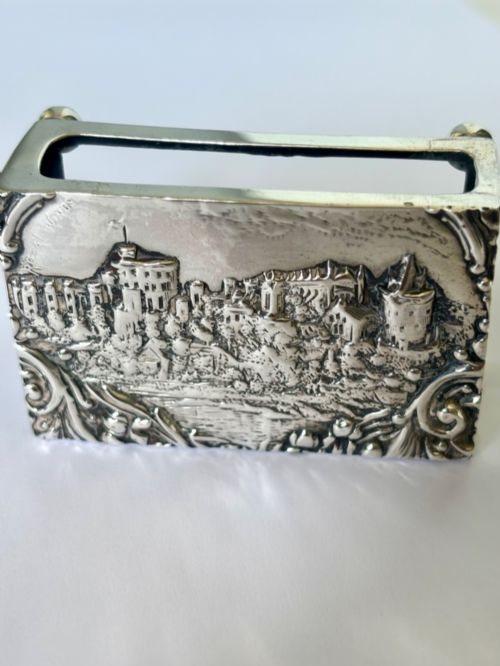
Silversmiths constructed most metal examples using sterling silver, employing stamping, casting, and hand-engraving to achieve detailed leaf, scroll, and castle top motifs. Workshops utilised silver gilt and rose gold accents to highlight specific decorative elements.
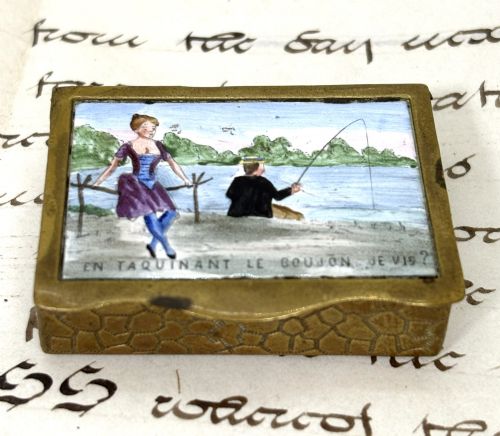
Enamel work frequently adorns the metal surfaces, creating vibrant portraits, crests, and animal depictions through vitreous glazing techniques. Artisans also worked in carved limewood and brass, producing folk art and tramp art pieces that relied on traditional woodworking and joining methods.
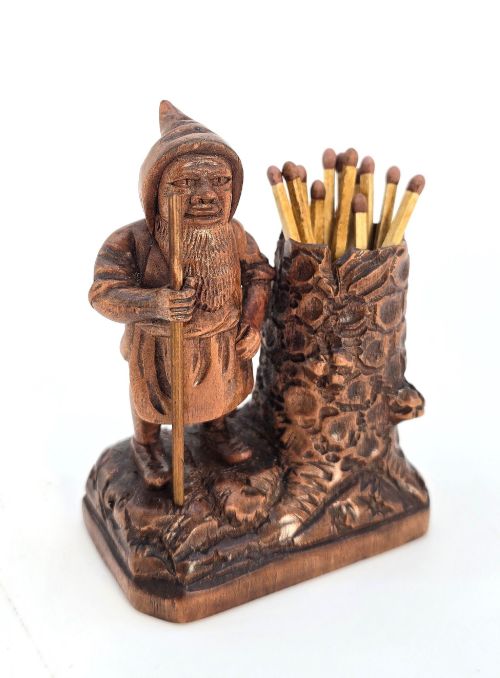
A gnome carved from limewood serves as a match holder, complete with a signed and dated wooden surface.
What varies in quality
The distinction between standard production items and exceptional pieces rests upon the crispness of the chasing, the complexity of the mechanism, and the presence of specialised enamel or novelty forms. Animal figural designs and intricate trick opening mechanisms demand superior metalworking skill.
Makers' marks and legible hallmarks from established assay offices confirm the origin and silver standard, elevating the standing of a piece. Well-preserved enamel without loss and tight hinge action distinguish the finest examples from heavily worn counterparts.
Sampson Mordan and Co·A and J Zimmerman·Robert Pringle·J B Bennet
The Antique Match Safe Box Glossary
- Vesta case
- A small pocket container specifically made to hold short wax matches known as vestas. These boxes feature a corrugated striking strip on the bottom.
- Sterling silver
- An alloy consisting of silver and other metals, predominantly copper, standard for high-grade British plate. Most Victorian and Edwardian examples carry full hallmarks confirming this composition.
- Sentry box
- A vertical novelty vesta case shaped like a sentry box, often opening to reveal a hidden enamel scene or figure. These pieces represent specialised Victorian craftsmanship.
- Castle top
- A decorative design technique featuring a detailed engraving of a specific building or landmark on the lid. Royal Windsor serves as an example seen on these covers.
- Watch albert
- A chain used to attach a pocket watch to a waistcoat, frequently adorned with match holders and vestas as fobs. Gentlemen carried these everyday accessories.
Antique Match Safe Box: Frequently Asked Questions
How do I identify a Victorian match safe?
Victorian pieces typically display date letters and assay office marks stamped directly into the metal, corresponding to hallmarking records from the nineteenth century.
Stylistic elements like heavy scroll engraving, floral motifs, and figural animal designs also point toward Victorian production methods.
What is the difference between a vesta case and a match safe?
The terms are often used interchangeably to describe pocket containers for matches, though British makers more commonly referred to them as vesta cases.
Both items served the same fundamental purpose of protecting wax vestas and providing an integrated striking surface.
How were combination match safes used?
Combination pieces integrated secondary functions into the match safe housing, such as compartments for sovereigns, sealing wax, or watch fobs.
Edwardian gentlemen carried these versatile accessories to consolidate everyday pocket items into a single silver container.
Are novelty match safes authentic?
Novelty match safes take imaginative forms such as animals, figures, and trick opening boxes, all produced by period manufacturers using traditional techniques.
Authentic examples bear clear hallmarks and show the appropriate wear and construction methods consistent with late nineteenth and early twentieth-century metalwork.