


Edwardian Silver Match Safe
These edwardian silver match safe items are pocket vestas carried to keep matches dry and ready, prized by collectors for their clever smithing and miniature forms.
What they are
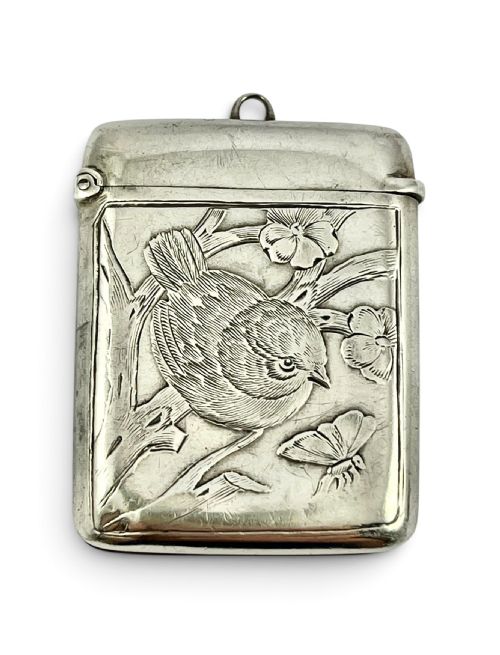
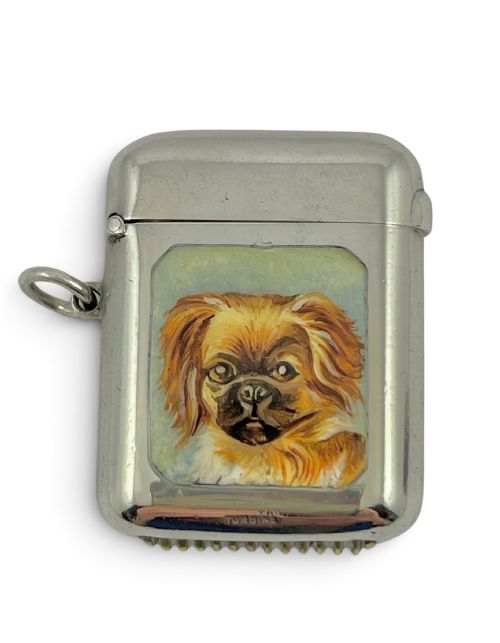
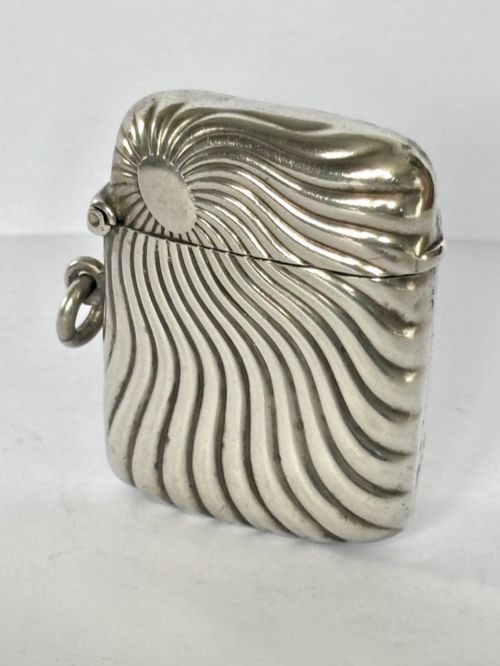
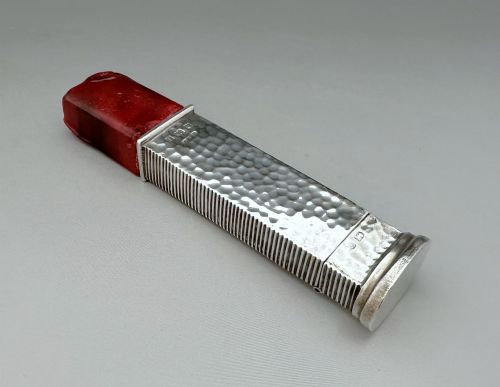
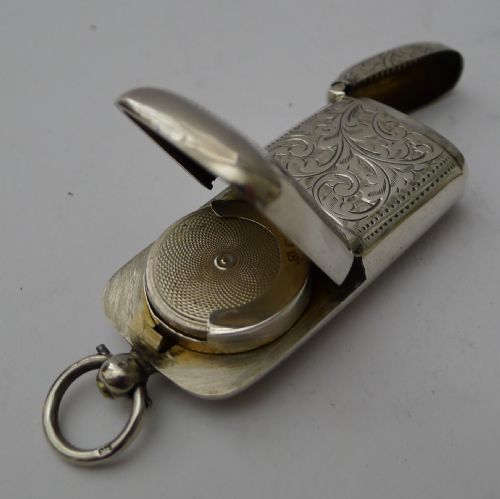
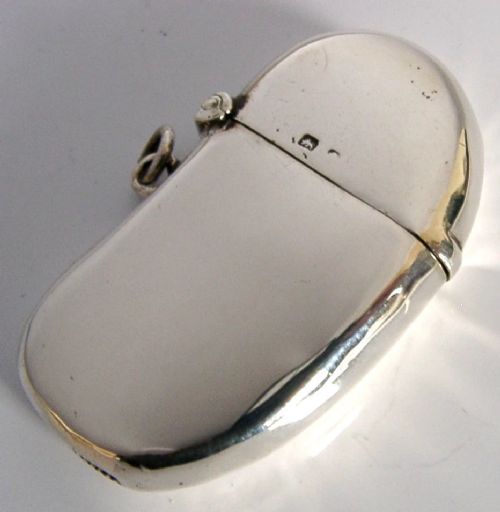
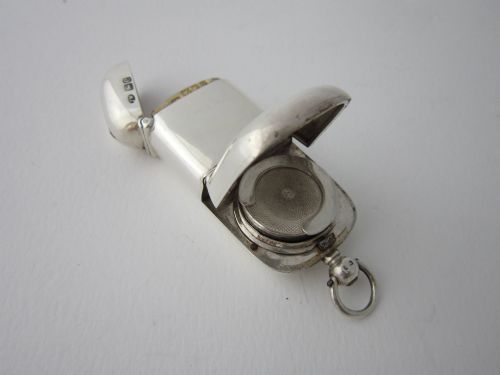
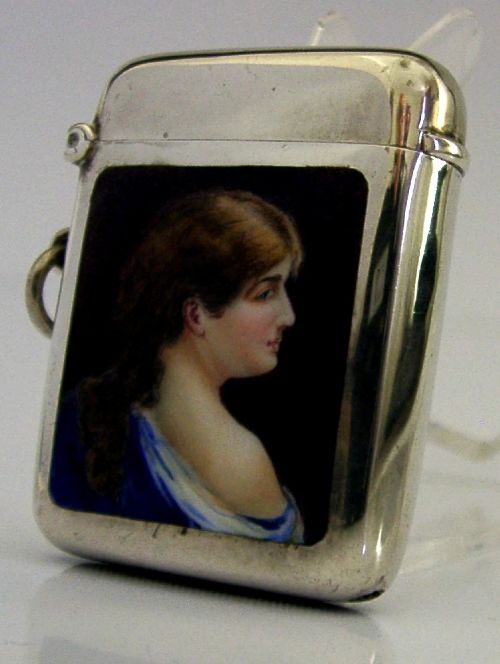
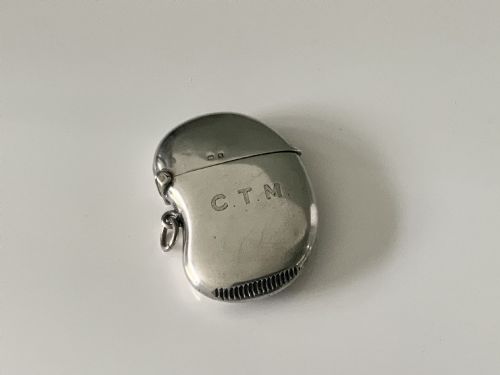
An edwardian silver match safe, commonly known as a vesta case, is a small pocket container designed to hold matches safely while preventing them from dampness or accidental friction. These containers served a daily practical purpose when smoking was widespread and lighting a pipe, cigar or cigarette required a dependable flame close at hand. The pieces recorded on this page span the Victorian, Edwardian, and mid-twentieth-century eras, though the Edwardian period forms the core of the selection.
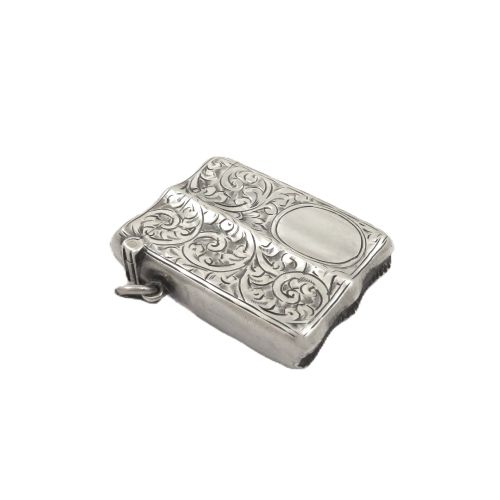
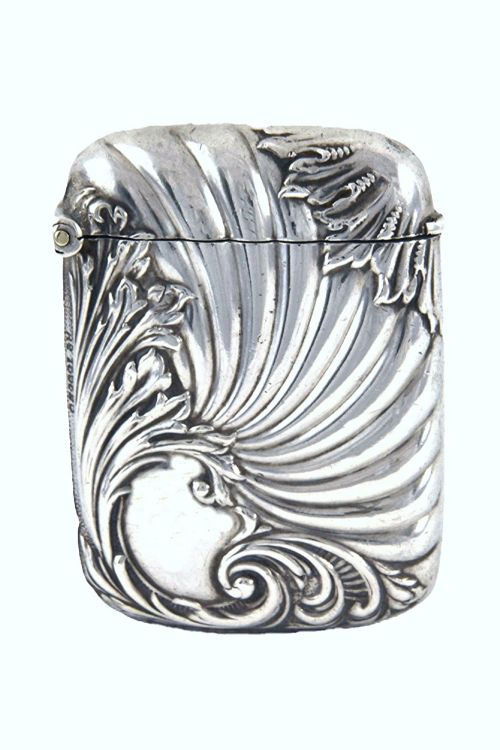
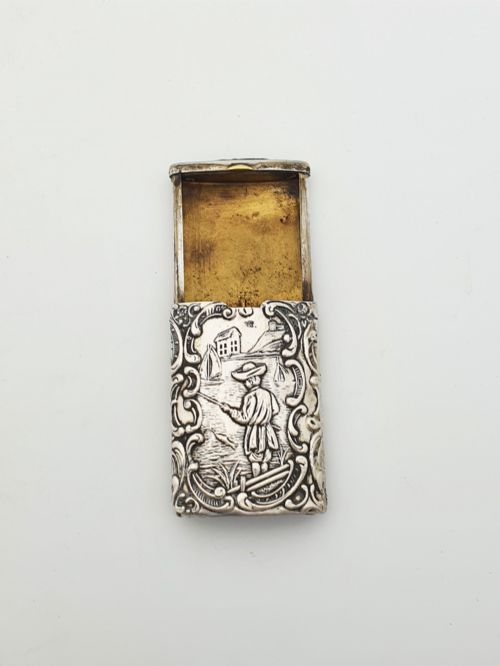
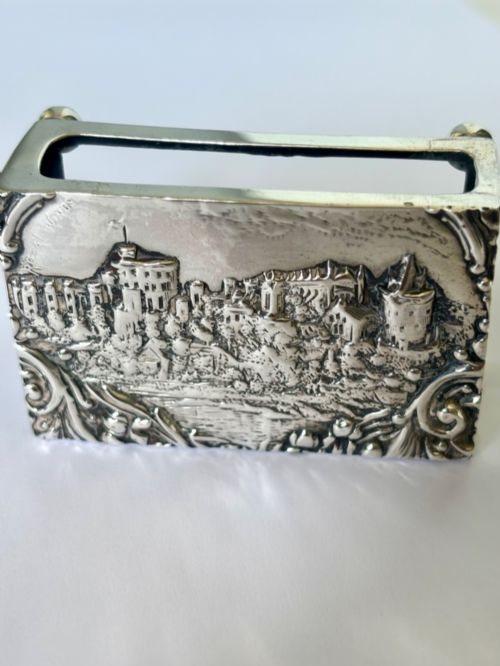
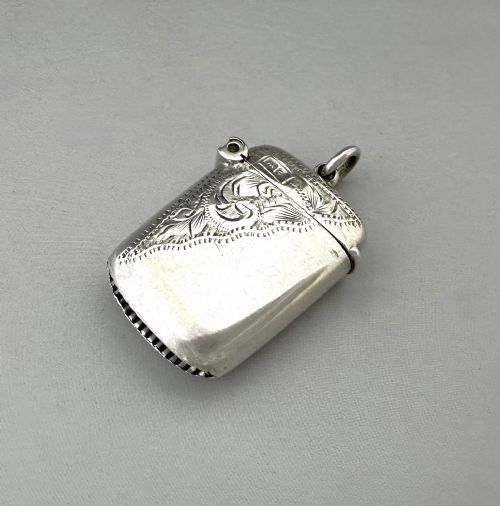
Most examples take the form of small rectangular boxes with hinged lids and striking serrations on the base, while figural and novelty designs appear alongside standard geometric shapes. Novelty forms include animals such as cats, alongside natural motifs like leaves and scrolls. These items originate from British assay offices, including Birmingham and Chester, reflecting the industrial scale of silver production during the early twentieth century.
How they were made
Silversmiths constructed these match safes using sterling silver and silver gilt, shaping sheet metal through stamping, pressing, and hand-soldering. Exterior surfaces were frequently embellished using techniques like leaf and scroll engraving, creating textured patterns that caught the light.
Hinges and spring-loaded lids required precise mechanical alignment to ensure the case snapped shut securely and protected the matches inside. Assay office hallmarks stamped directly onto the metal recorded the standard of silver, the town of origin, and the exact year of manufacture.
Retail Price Guide 2026
Typical UK retail prices for edwardian silver match safe, calculated from the Sellingantiques database of over a million retail prices indexed since 2003. This retail price guide relies exclusively on Sellingantiques data; no external sources or auction records are used, so the figures do not describe the wider market.
Recorded periods span from Victorian times through the Edwardian era up to nineteen sixty.
What varies in quality
Quality rests upon the crispness of the engraving and the originality of the form, separating standard utilitarian boxes from sculptural novelty pieces. Pieces shaped as animals or plants demand greater artisan skill in modelling and detailing than plain rectangular vestas.
The integrity of the hinge and the legibility of the hallmarks further distinguish superior examples. A well-preserved piece retains sharp relief in its decorative motifs and a precise closure without looseness in the lid.
WILLIAM HAIR HASELER
The Edwardian Silver Match Safe Glossary
- Vesta Case
- A small pocket container designed to hold matches and strike them on an integrated serrated surface. These items became essential daily accessories during the nineteenth and twentieth centuries.
- Hallmark
- A series of official marks stamped onto precious metals to guarantee purity, origin year, and assay office. British silver typically carries a lion passant, a date letter, and a town mark.
- Silver Gilt
- Silver that has been coated with a thin layer of gold on its surface. This technique provided a rich golden appearance while utilising a silver base.
- Novelty Vesta
- A match safe manufactured in an imaginative pictorial shape rather than a standard geometric box. Collectors prize these for their sculptural qualities and humour.
Frequently Asked Questions
What is a vesta case?
A vesta case is a small pocket container built to hold matches and protect them from moisture. They were carried daily in pockets or attached to watch chains.
Most feature a hinged lid and a striated strip on the bottom for striking the match before lighting tobacco.
How do I read the hallmarks?
British hallmarks consist of stamped symbols indicating the silver standard, the assay office town, and the year of manufacture. Chester and Birmingham offices are common origins for these pieces.
The date letter pinpoints the exact year the item was tested and passed for sale.
Did Victorians use match safes?
Victorian gentlemen and ladies carried match safes to manage the loose matches required for daily lighting needs. The introduction of safety matches made secure containers necessary to prevent accidental ignition.
Production continued from the Victorian era through the Edwardian period and beyond.