
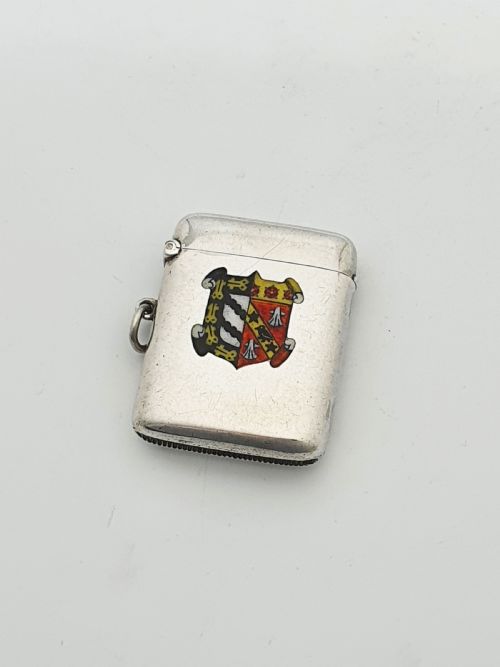


Vintage Match Container
These vintage match containers span from Georgian oak to Edwardian silver and carved limewood, offering both pocket portability and fireside charm.
Vintage Match Container
When you search for vintage match containers, you encounter a practical domestic item designed to keep matches dry and ready for use. The selection brings together pocket vestas and small stationary holders that reflect daily habits across multiple decades.
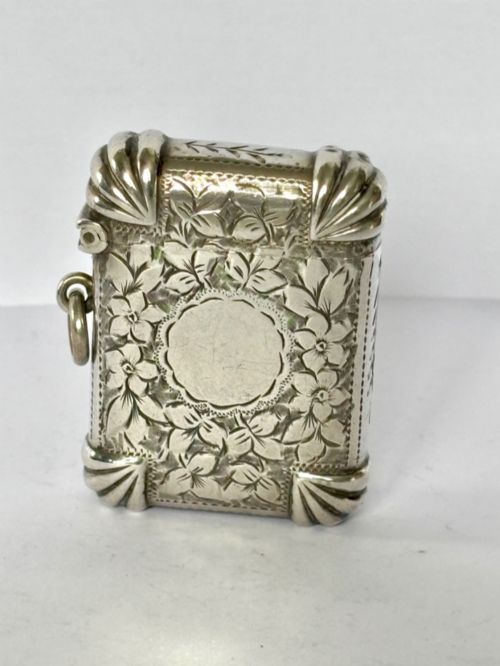
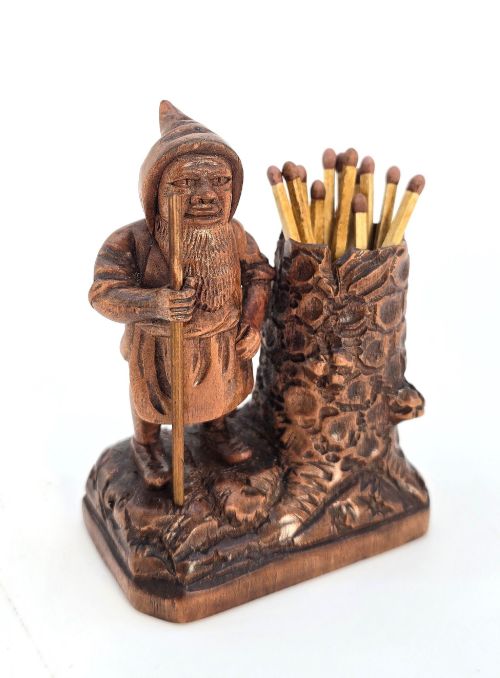
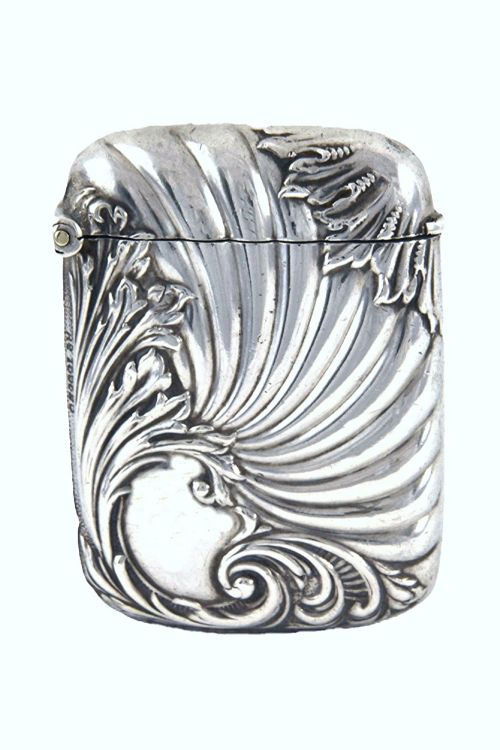
You are most likely to meet silver vesta cases dating from the Victorian and Edwardian eras, alongside carved wooden match holders and larger oak boxes. These pieces range from plain pocket accessories to novelty forms shaped as animals and figures.
The objects cross several historical periods, moving from Georgian tinder boxes through nineteenth century silver pieces up to mid twentieth century designs. Each form serves a specific function, whether carried in a pocket or placed upon a table.
How they were made
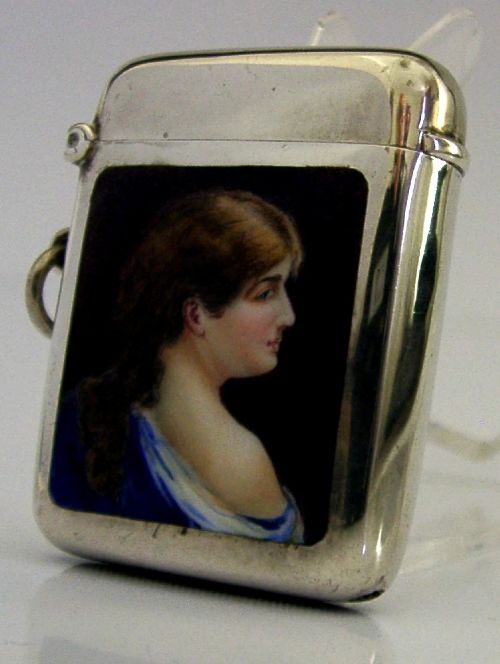
Silver containers utilise sterling silver formed into hinged cases, often bearing hallmarks that record the year and town of assay. Enamel decoration and hand painted details appear on selected metal pieces to add colour and pattern.
Wooden examples rely on carved limewood and oak, displaying traditional hand woodworking skills such as shaping and surface detailing. Folk art traditions emerge in carved figural forms, while vernacular treen highlights simpler turned and joined construction.
What varies in quality
The standard of craftsmanship separates standard utility items from pieces showing exceptional artistic execution, particularly in hand carved figural subjects and detailed enamel work. Crispness in the definition of a carved gnome or the precision of an enamel crest indicates superior execution by the maker.
Material choice and decorative ambition also divide the range, with plain metal cases sitting alongside intricately painted or sculpted variants. Survival of original components, such as hinges and integrated strikers, influences the overall integrity of the piece.
EV PLEDGE & SON
The Vintage Match Container Glossary
- Vesta Case
- A small pocket box designed to hold wax matches, known as vestas, fitted with a striking surface at the base. These cases typically feature a hinged lid and a loop for attachment to a chain.
- Treen
- Small handmade wooden objects for domestic use, shaped by turning, carving, or joining. The term encompasses everything from utilitarian boxes to decorative holders.
- Hallmark
- An official stamp applied to precious metals indicating the purity, the maker, and the year of testing. British silver hallmarks provide reliable dating evidence.
- Tinder Box
- An early container used to house flint, steel, and tinder before the invention of safety matches. Georgian examples represent the earlier stages of fire starting technology.
Vintage Match Container: Frequently Asked Questions
What is a vesta case?
A vesta case is a small pocket container built to hold matches and protect them from moisture. They feature a textured striker on the exterior.
Most examples include a hinged spring lid that snaps shut securely to keep the contents safe during daily transport.
How do I date a silver match container?
Silver pieces usually carry British hallmarks that include assay office marks and date letters. These stamps allow accurate identification of the year of manufacture.
Style, engraving techniques, and maker marks also help narrow down the period when hallmarks are worn or absent.
Where were match holders kept?
Pocket vestas were carried by individuals in waistcoats or handbags for lighting tobacco or candles on the go. Table versions sat in rooms throughout the house.
Larger wooden boxes remained near hearths or desks to supply household fires and lamps with fuel.
How do I clean silver match holders?
Silver match cases require gentle cleaning with a soft cloth to preserve the original finish and any engraved details. Harsh abrasives can damage delicate hallmarks and surface highlights.
Enamelled and carved wooden pieces need different care, avoiding liquid immersion to protect the painted or organic surfaces.