

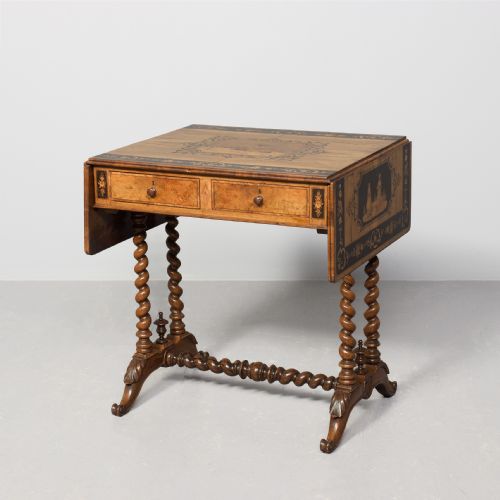
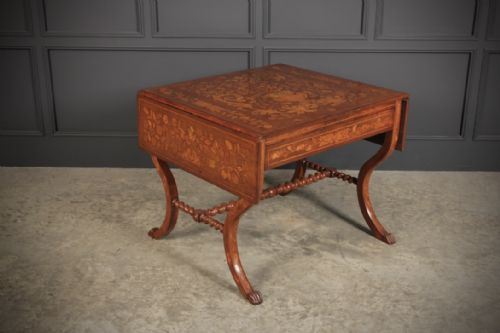

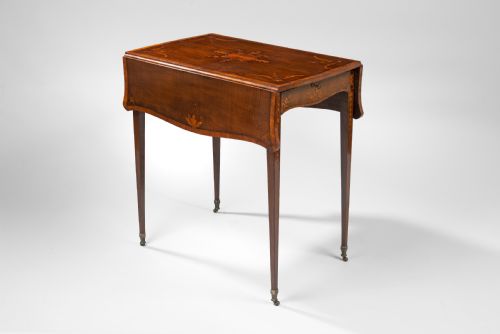


Antique Marquetry Sofa
These pieces bring floral and geometric marquetry into the sitting room on timber frames spanning the Victorian and Edwardian periods.
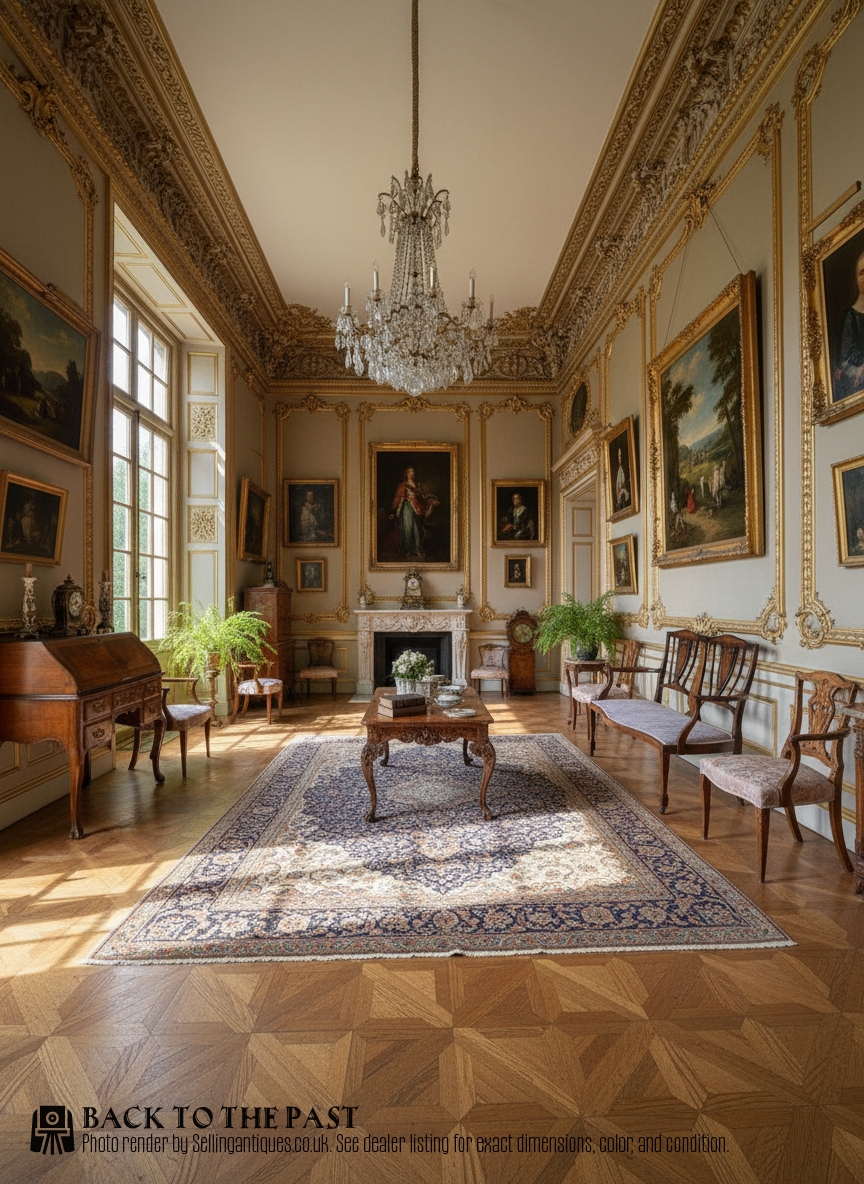
Antique Marquetry Sofa
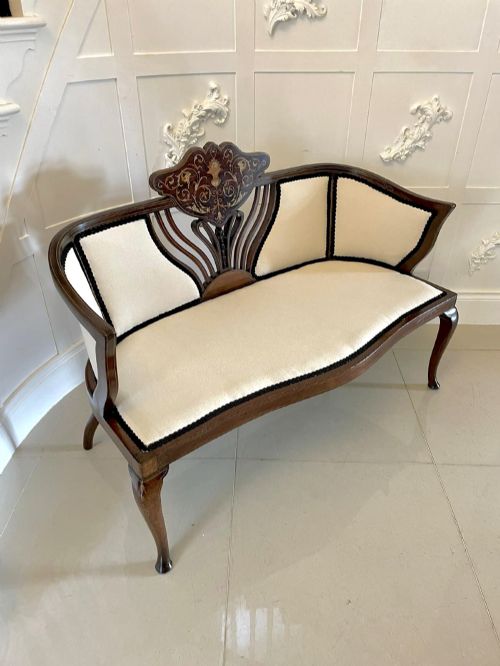
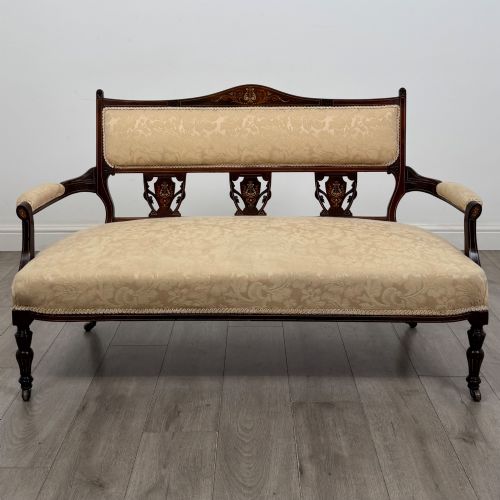
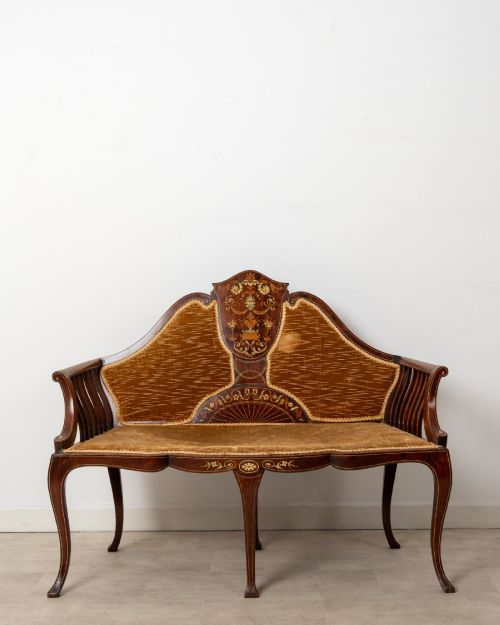
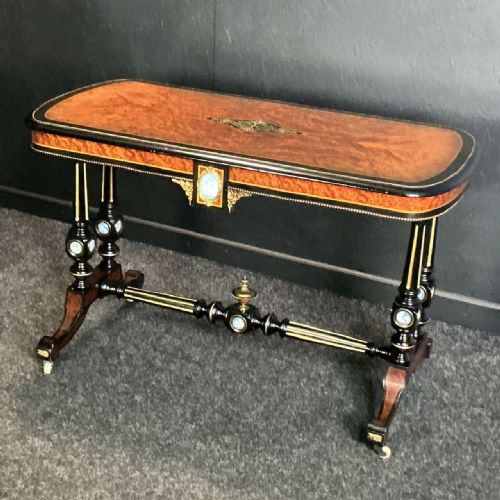
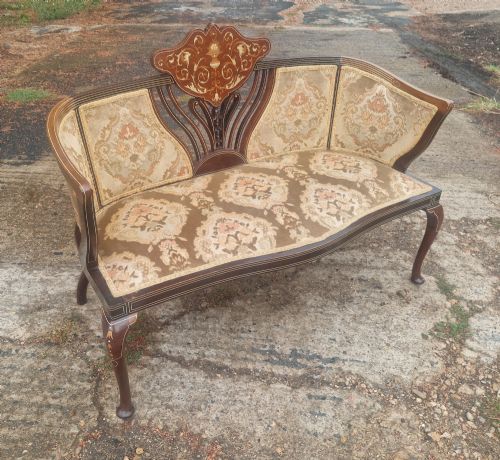
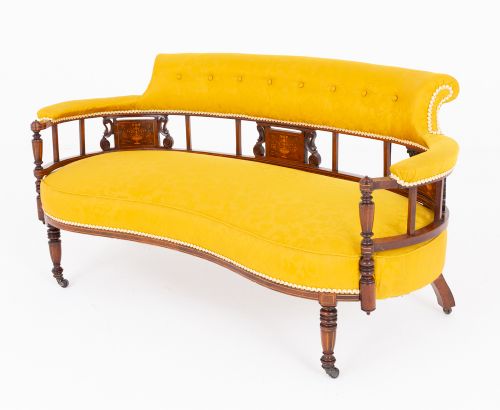
When you search for an antique marquetry sofa, you encounter upholstered seating framed in richly figured hardwoods and finished with contrasting veneer work. These pieces take the form of salon settees, window seats, and end-of-bed couches designed for formal entertaining and leisurely repose.
Victorian and Edwardian examples dominate the selection, often pairing mahogany or rosewood structures with delicate satinwood and bone inlay. Makers of these periods drew on Sheraton and French revival influences to shape curved backs, open arms, and sprung seats.
The term also encompasses multi-piece salon suites that match the main sofa with paired armchairs, creating a unified decorative scheme for the drawing room. Lower frames frequently feature floral motifs, scrolling foliage, and urns rendered in contrasting timber slices.
How they were made
Cabinetmakers constructed the foundational frames from solid mahogany, walnut, or rosewood, relying on mortise and tenon joints to secure the load-bearing sections. Selected primary timbers provided a stable, dark canvas for the lighter veneer work applied to the crest rails and aprons.
Marquetry decoration involved cutting thin sheets of satinwood, harewood, and fruitwoods, then fitting the pieces together like a puzzle before pressing them into recessed channels on the wood surface. Engraved lines and shaded shading elements created depth within floral and ribbon motifs.
Upholstery completed the construction, utilising traditional webbing, coil springs, and horsehair stuffing beneath outer layers of decorative fabric. Fine bone or brass stringing occasionally outlined the marquetry panels to accentuate the geometry of the frame.
Several makers tucked bone inlay into rosewood frames, proving that Victorians loved a little literal flash in the dark.
What varies in quality
The precision and complexity of the timber inlay separate standard production from exceptional examples, with master workshops utilising a wider range of contrasting woods and finer shading. Simpler pieces rely on repetitive geometric borders, whereas superior work incorporates detailed pictorial urns and naturalistic foliage.
Frame selection dictates the structural integrity and aesthetic weight of the seating, as dense burr walnut and figured rosewood command greater visual presence than plain secondary hardwoods. The crispness of the carving on wooden arm supports and legs further indicates the level of craftsmanship invested in the piece.
The retention of original upholstery foundations and harmonious secondary woods influences the overall integrity of the furniture. Pieces that preserve their matching companion armchairs demonstrate a higher degree of initial commission value.
Edward’s And Robert’s
The Antique Marquetry Sofa Glossary
- Marquetry
- Decorative veneer work assembled from thin pieces of wood, bone, or shell to form pictorial or geometric patterns on a furniture surface. This technique differs from simpler inlay by covering the entire background field.
- Settee
- A small upholstered seat with a back and arms, designed to accommodate more than one person. These forms vary from compact window seats to grand salon couches.
- Satinwood
- A lustrous, yellow-brown timber prized for its bright contrast against darker woods like mahogany and rosewood. It frequently appears in ribbon and floral marquetry panels.
- Rosewood
- A heavy, dark timber featuring prominent black or purple grain patterns, widely utilised in high-status Victorian and Edwardian frames. Its natural oils give the surface a deep polish.
- Sheraton
- A neoclassical furniture style characterised by straight tapering legs, delicate proportions, and restrained classical ornamentation. 19th-century makers frequently revived these motifs.
Antique Marquetry Sofa: Frequently Asked Questions
How do I clean marquetry furniture?
Dust surfaces regularly with a soft, dry cloth to prevent grit from settling into the veneer joints. Avoid applying modern liquid polishes, which can seep beneath lifted veneer edges and weaken the old animal glue.
Nourish dry timber periodically with a traditional beeswax polish applied sparingly and buffed to a soft sheen. Keep these pieces away from direct sunlight and strong heat sources to prevent the marquetry timbers from shrinking and cracking.
Are these sofas comfortable for daily use?
Most antique salon seating was built for upright posture during formal entertaining rather than relaxed lounging. The sprung bases and horsehair stuffing provide firm support rather than deep, sink-in comfort.
Placing decorative cushions against the back rail can improve comfort for modern seating habits. Ensure that any weight placed on the upholstered arms remains light to protect the internal joinery.
How do I date a marquetry sofa?
Examine the primary wood and the style of the inlay work to establish a broad period. Mahogany and rosewood frames with classical satinwood details often point toward the Victorian era, while lighter floral motifs suggest Edwardian production.
Look underneath the frame for tool marks, screw types, and construction methods that help narrow the decade of manufacture. Comparing the upholstery webbing style to documented period examples also aids dating.
Can I reupholster an antique settee?
Reupholstery is common and often necessary to restore structural support and refresh stained or worn fabric. Traditional materials like horsehair and hessian maintain the historical integrity of the piece.
Select a fabric weight and pattern scale that complements the period of the frame without overwhelming the delicate marquetry. Consult a professional restorer who understands how to attach new covers without damaging the wooden show-frame.