
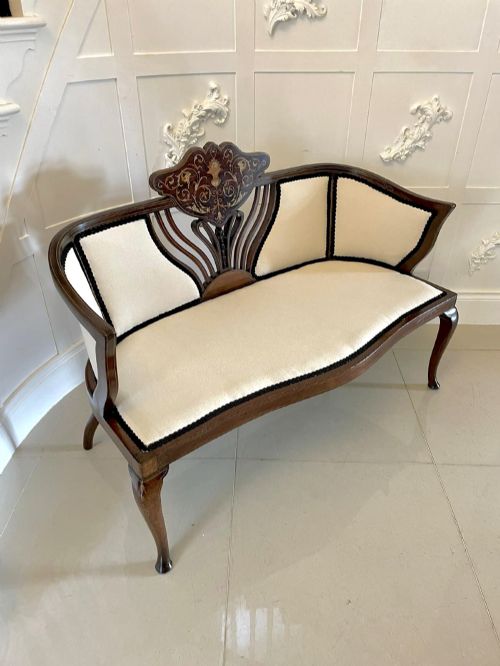
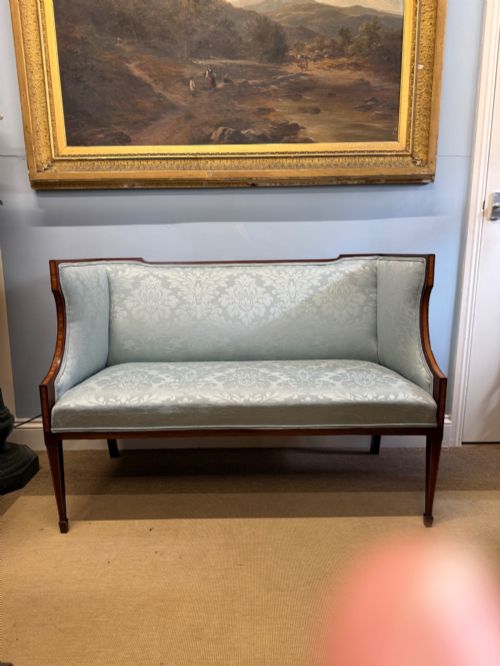


Inlaid Two Seater Sofa
These inlaid two seater sofa examples combine mahogany and satinwood with precise marquetry, offering refined seating for a period interior.
Inlaid Two Seater Sofa
When you search for an inlaid two seater sofa, you encounter compact upholstered salon seating dating primarily from the Victorian and Edwardian periods. These pieces are designed for intimate drawing rooms and bedrooms rather than heavy daily family use.
The most common version on this page is the Edwardian mahogany sofa featuring contrasting satinwood and boxwood inlay along the top rail or splats. Late Victorian examples also appear regularly, often showing a heavier mahogany frame with marquetry details.
Makers fashioned these settees as part of broader salon suites or as standalone pieces of decorative furniture. They combine structural woodwork with upholstered seats covered in velvet, damask, or modern replacement fabrics.
Materials and construction
Cabinetmakers constructed the frames predominantly from solid mahogany, selecting figured timbers for the show wood on the arms and back rails. Satinwood and boxwood provide the contrasting light tones necessary for intricate floral and ribbon inlay.
Marquetry inlay involves fitting thin veneers of different woods into a pre-cut ground to create pictorial or geometric designs. Artisans occasionally integrated bone alongside wood to add bright highlights to the decorative panels.
Upholstery techniques varied from traditional stuffed horsehair on webbing to modern foam replacements found on pieces requiring re-upholstery. Frames utilise pegged mortise and tenon joints to ensure rigidity across the two seater span.
Makers occasionally tucked tiny carved bone details into the floral inlays, giving unsuspecting sofas secret ivory-white smiles.
Distinctions in quality
The crispness of the marquetry and the choice of contrasting timbers separate standard production pieces from finer work. Superior examples display tightly fitted satinwood and boxwood inlays with minimal filler, whereas lesser pieces rely on simpler painted or stamped imitation details.
Timber selection dictates the overall presence of the settee, with rich, highly figured mahogany frames commanding greater attention than plain, straight-grained alternatives. The retention of original upholstery frames and intact bone details also elevates a piece.
Proportion and structural integrity define the better specimens from the period. A sturdy frame with balanced arm supports and cleanly carved or shaped woodwork indicates superior cabinetmaking workshop standards.
The Inlaid Two Seater Sofa Glossary
- Inlay
- A decorative technique where pieces of contrasting material are inserted into a recessed cavity on the wooden surface. This method creates flat ornamental patterns across the backrest and rails.
- Marquetry
- The art of applying fitted veneers to a structure to form decorative pictures or scrollwork. It differs from simple inlay by covering large sections of the wooden background.
- Satinwood
- A durable, lustrous yellow-gold timber imported from tropical regions and utilised extensively for stringing and panel details. It provides the bright contrast against dark mahogany.
- Settee
- A medium-length upholstered wooden bench with a back and arms designed for multiple sitters. The term is used interchangeably with sofa in nineteenth-century inventory records.
- Salon suite
- A matching set of seating furniture, including settees and armchairs, built for formal entertaining rooms. These matched sets share identical inlay motifs and wood grains.
Inlaid Two Seater Sofa: Frequently Asked Questions
Where did these sofas sit in the home?
These compact settees were placed in formal drawing rooms, parlours, or large bedrooms for light entertaining and reading. Their modest proportions allowed them to fit against walls or beneath windows where heavier seating would overwhelm the floor plan.
Today, they function well in hallways, sitting rooms, or as decorative end-of-bed seating. Their shallow depth keeps them practical for modern living spaces while retaining a distinct period character.
How do I date an inlaid sofa?
Dating relies on identifying the prevailing style of the woodwork and the specific character of the inlay work. Victorian examples typically display heavier proportions and darker mahogany frames, while Edwardian pieces often feature lighter satinwood contrasts and slender tapered legs.
Examining the construction methods underneath the upholstery also helps determine age. Hand-cut joinery and traditional hardware point towards the nineteenth or early twentieth century.
Are these sofas comfortable for daily use?
These pieces were built for formal posture rather than lounging, featuring upright backs and firm padded seats. The two seater design provides neat proportions but lacks the deep cushioning of modern upholstered furniture.
Many surviving pieces require re-upholstery to meet individual comfort preferences. Upgrading the internal webbing and padding allows them to handle regular daily seating without losing their historic profile.
What is the difference between a settee and a sofa?
In historical terminology, settee often denoted a lighter wooden bench with upholstery, whereas sofa implied a larger, more deeply padded piece. By the late Victorian period, the terms became largely interchangeable in trade catalogues.
On this page, both labels describe two seater upholstered seating framed in mahogany. The choice of word depended more on the manufacturer's regional cataloguing than any strict structural difference.