

Antique Marble Top Commode
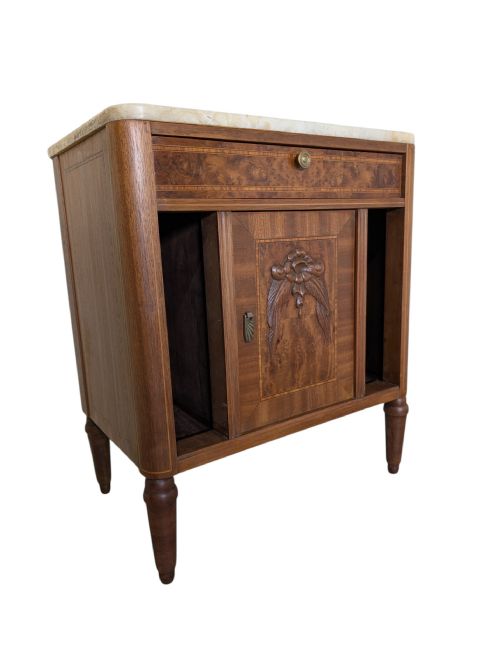
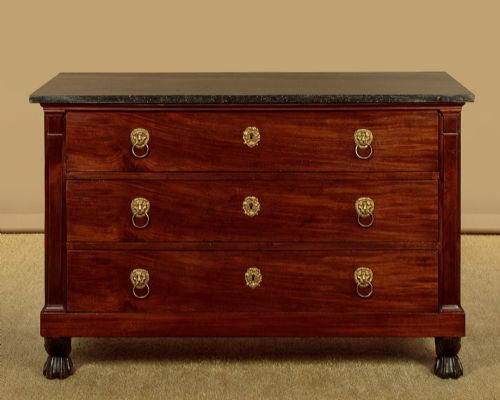
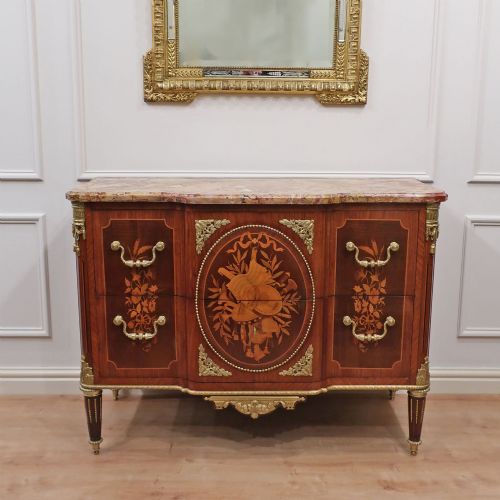
An antique marble top commode brings solid stone and figured timber together in a single low storage piece designed for formal rooms.

What an antique marble top commode is
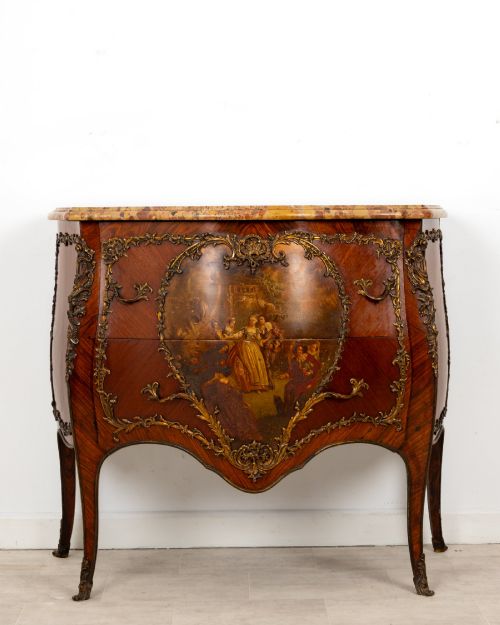
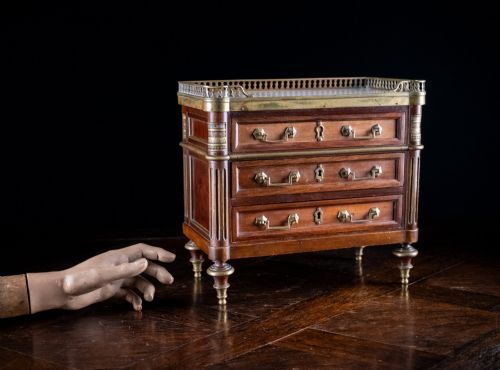
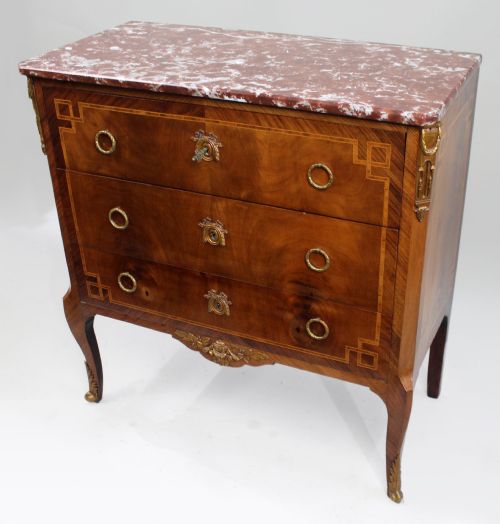
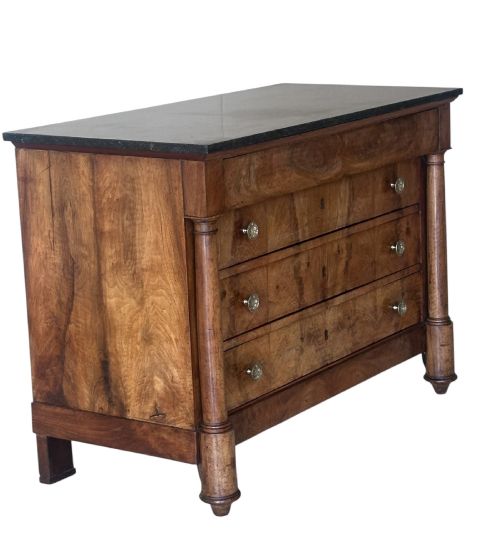
An antique marble top commode functions primarily as a low chest of drawers, cabinet or console table designed for domestic storage and display. The form appears across the eighteenth and nineteenth centuries, taking shape through periods such as the Louis XV, Louis XVI, Louis Philippe and Victorian eras.
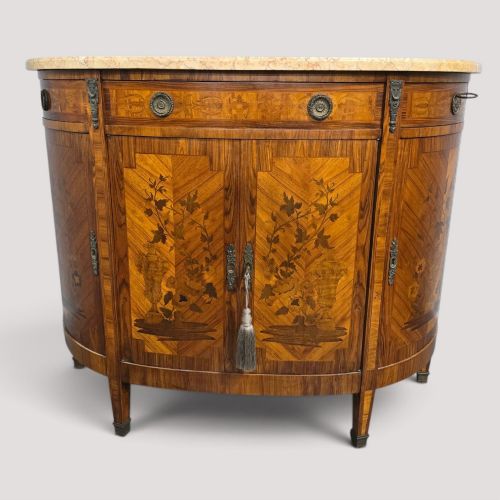
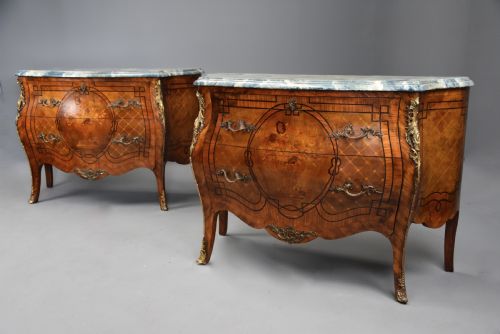
Buyers meet variations ranging from serpentine and bow-fronted shapes to straight-sided chests and demi-lune cabinets. Oak, mahogany, walnut, kingwood and painted timbers form the carcasses, whilst fitted stone provides a heavy, functional upper surface.
French origins dominate the record, alongside provincial and later nineteenth-century interpretations. Pieces emerge in styles spanning neoclassical restraint, rococo revival and elaborate marquetry inlay.

How they were made
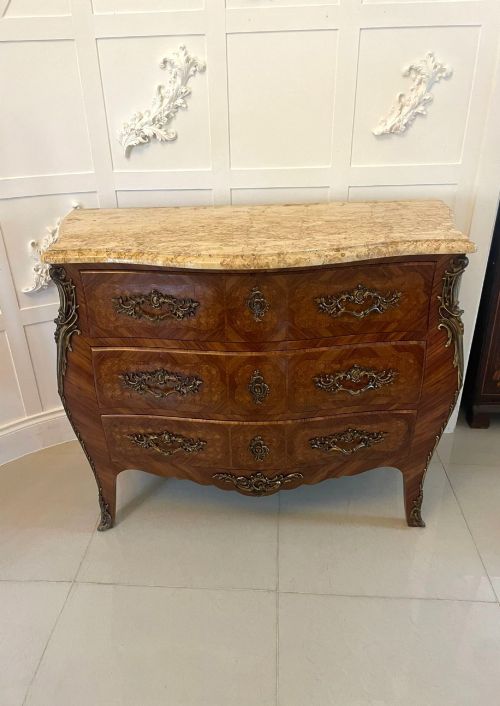
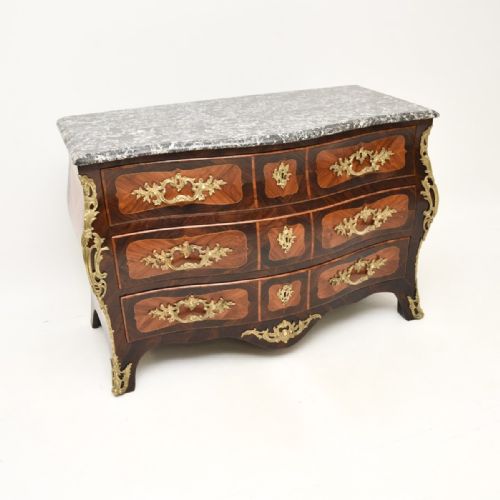
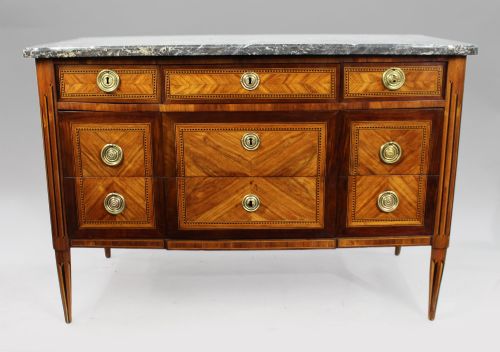
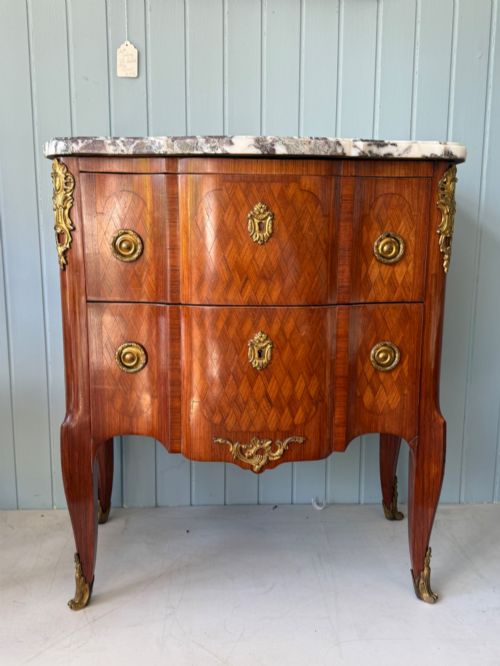
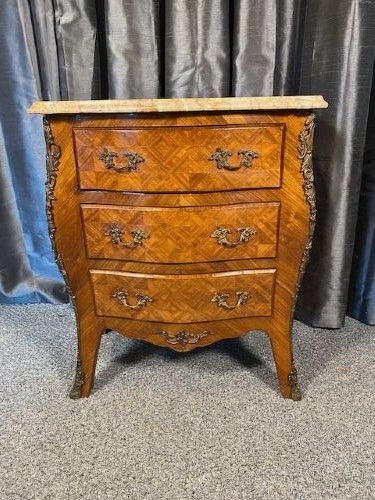
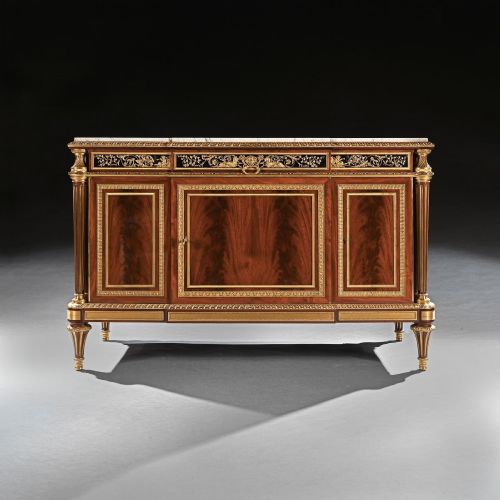
Cabinetmakers constructed the main body using native and exotic timbers such as oak, mahogany, walnut and kingwood, often applying marquetry or parquetry veneers in geometric and floral patterns. Brass handles, escutcheons and cast ormolu mounts punctuate the exterior surfaces, secured to the drawers and corners.
Heavier stone slabs sit directly on the timber carcass, matching the serpentine, bombe or straight contours of the commode underneath. These stone tops provide a solid, water-resistant counter that requires precise shaping to follow the timber frame.
Retail Price Guide 2026
Typical UK retail prices for marble top commode, calculated from the Sellingantiques database of over a million retail prices indexed since 2003. This retail price guide relies exclusively on Sellingantiques data; no external sources or auction records are used, so the figures do not describe the wider market.
One notable piece carries the provenance of having been owned by Lilly Langtry.
What varies in quality
The sophistication of the timber veneer work and the precision of the parquetry or marquetry patterns separate standard production from finer cabinet work. Grain selection in flame mahogany, walnut and kingwood dictates the visual depth of the facade.
The weight, colour and thickness of the marble slab, paired with the casting quality of any ormolu mounts and brass hardware, signal the original maker's investment in materials. Heavier, deeply moulded stone and finely chased bronze mounts elevate the piece.

Mon Krieger·Jacques Bircklé·Bruneau
The Antique Marble Top Commode Glossary
- Commode
- A low piece of furniture containing drawers or doors, functioning primarily as a chest of drawers or cabinet.
- Marquetry
- The art of applying decorative pieces of veneer to a structure to form intricate floral or pictorial designs.
- Parquetry
- A geometric mosaic of wood pieces used for decorative floors and cabinet surfaces.
- Ormolu
- Gilt bronze mounts applied to furniture for decorative enrichment.
- Demi-lune
- Half-moon or semicircular in shape, often describing a console table or cabinet.
Frequently Asked Questions
What rooms suit an antique marble top commode?
These low cabinets fit comfortably in bedrooms, living rooms and hallways where surface space and enclosed storage are both required.
The stone top offers a practical, durable shelf for lamps and decorative objects whilst the drawers house clothing or household items.
How do I identify a Louis XV commode?
Louis XV pieces typically display curved serpentine lines, cabriole legs and asymmetrical rococo ormolu mounts. The overall silhouette avoids straight edges in favour of flowing, organic contours.
Drawer fronts often feature intricate kingwood and floral marquetry veneers that wrap around the rounded corners of the carcass.
Are the marble tops original?
Most antique commodes retain their fitted stone slabs, which were cut specifically to follow the serpentine, bombe or straight profile of the timber below.
Inspect the underside and edges of the stone to check that it matches the exact proportions and period wear of the cabinet.
What is the difference between marquetry and parquetry?
Marquetry involves arranging thin slices of coloured wood and other materials into pictorial or floral motifs. It creates curved, organic designs across drawer fronts and tops.
Parquetry uses geometric shapes like squares, triangles and cubes to form repeating patterns such as herringbone or chessboard layouts.